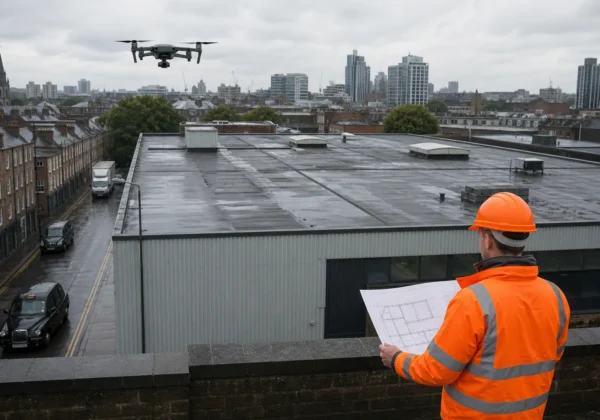
The price of a commercial roof drone survey depends on what you need the inspection to tell you. A quick visual check and a survey with thermal imaging or a 3D model have different scopes. Set your goal first, then ask for quotes that spell out the same work.
That makes it easier to plan a budget and judge what each fee covers. It also helps you avoid paying for data your team won’t use.
Step 1: Define the Roof Survey You Need
Start with the decision the survey needs to support. Are you checking the roof’s general condition, investigating a reported leak, or gathering evidence before planned work? A clear purpose helps the survey team choose the right capture method and level of reporting.
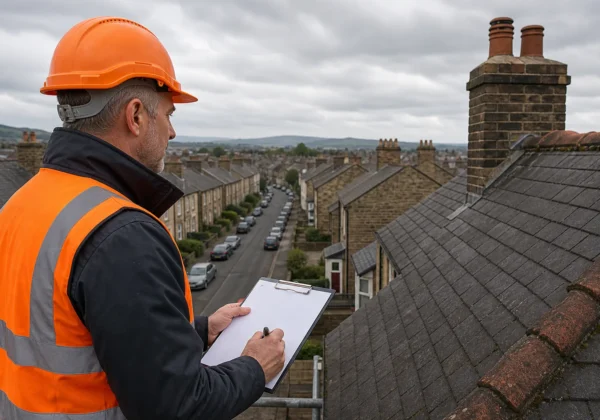
For a condition check, list the roof areas and features you want examined. These might include the membrane (the roof’s waterproof layer), drainage points, roof edges or plant equipment. If there’s a known concern, share its location and any past inspection notes. That gives the pilot a clear area to capture in detail.
If you’re budgeting across several public buildings, say whether you need a single visit or repeat inspections. A programme may need consistent image angles and file names so your asset team can track change. A one-off inspection may call for a focused report instead. Our guide to planning a roof survey by drone can help you turn an initial concern into a survey brief.
Ask for a short written scope that states the site, roof areas, purpose and expected outputs. Add a sketch or mark-up if the site has several blocks. Include the building’s address and any site rules that could affect the visit.
Milestone: You should have a brief that names the roof areas and the decision the data must support. A well-defined scope gives your project team a sound basis for the next steps.
Step 2: Check What the Survey Includes
The sensor and the final files shape much of the survey’s value. Standard visual imagery can show surface damage, blocked drainage or loose materials where the camera has a clear view. Photogrammetry combines overlapping images into a map-like image or 3D model. Ask what the model will let your team inspect, and whether it can support measurement or design work.
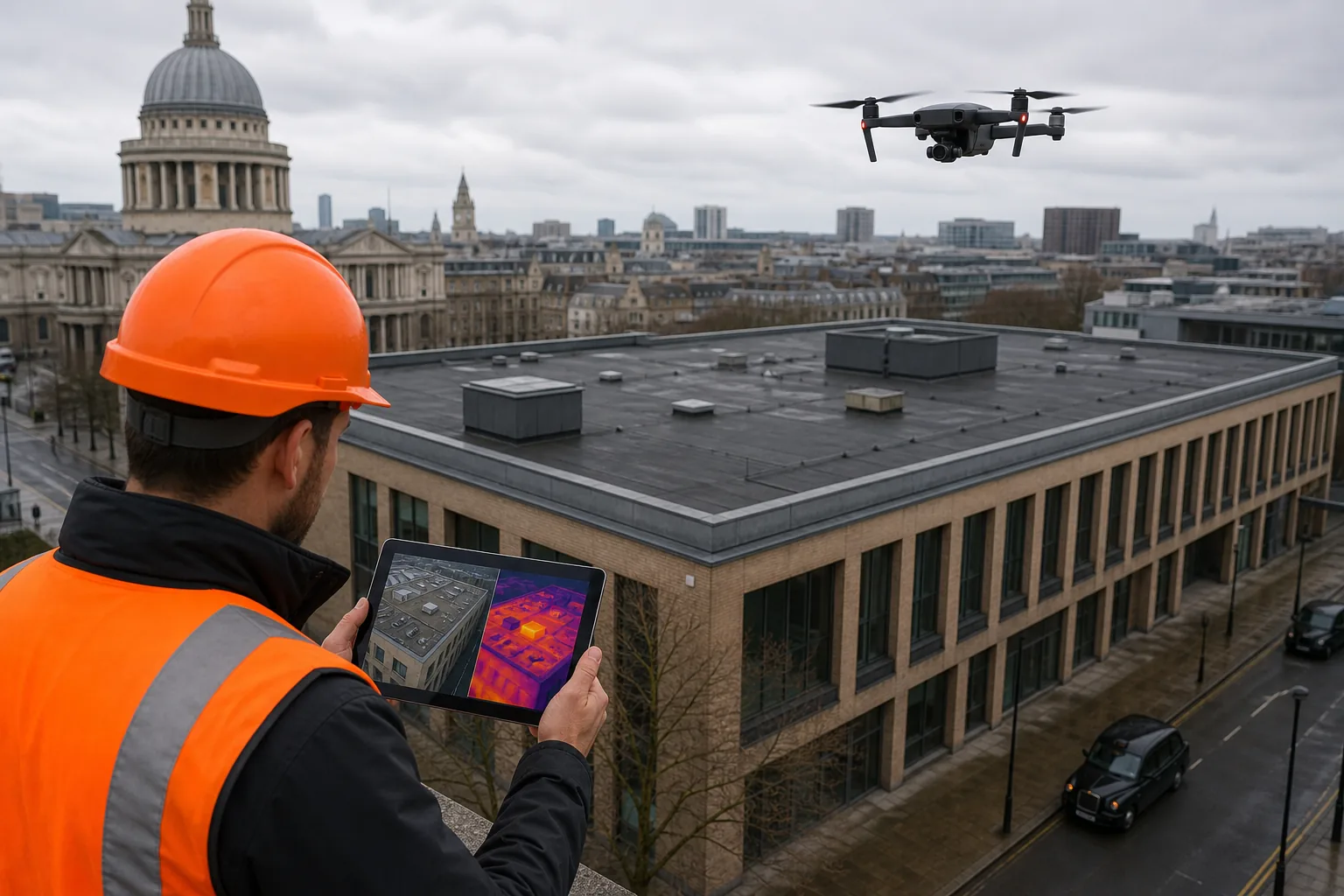
Thermal imaging records surface temperature patterns. It can help flag areas for closer review, but it doesn’t see through a roof or prove the cause of a defect. Ask whether the survey includes thermal capture, how findings will be checked and whether the report will explain limits on what the images can show.
LiDAR uses laser measurements to build a 3D point cloud. It may be useful when the job needs measured geometry, but it isn’t required for every roof inspection. BIM-ready files can also matter if your project team needs to bring survey data into a building model. Confirm the file format before booking rather than assuming that “3D” means the files will work in your system.
Request a sample deliverable or a written list of outputs. Check whether the fee includes annotated images, a defect report, a 3D map or model, and a live-stream walkthrough if one is needed. Also ask who reviews the findings and how defects are located on the roof plan.
Visual Perspectives Limited provides managed drone inspections with high-resolution 3D mapping, thermal imaging, defect diagnostics and actionable reports. The right mix depends on your brief, so agree each item before work starts. Our guide to roof survey costs in the UK covers how scope affects the quote.
Milestone: You should know which data types and report files are included, and which are optional. That detail helps you compare like with like.
Step 3: Account for Access, Site Conditions and Safety
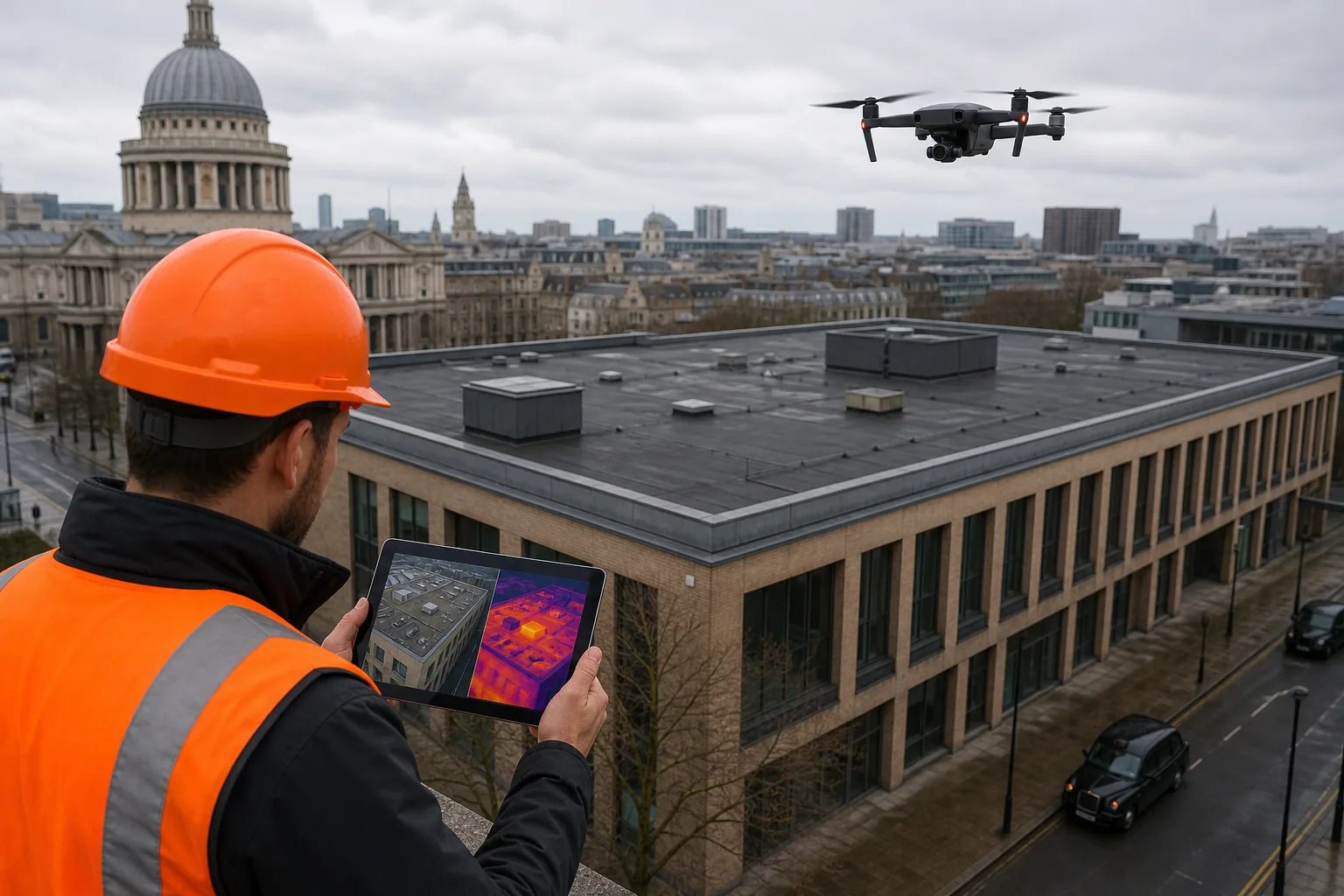
A roof’s size is only one part of the job. Height, nearby buildings, trees, roof levels and the space available for take-off can affect flight planning. So can site controls such as security checks, permits and induction requirements. Share these details early so the quote reflects the actual visit.
A drone can capture images without placing an inspector on the roof. That can reduce the need for access equipment when the task is visual inspection. But a drone survey doesn’t replace every hands-on check. A close-up assessment or repair may still need safe physical access, so ask the surveyor to state what the images can and can’t confirm.
Ask the operator to explain how they’ll manage the flight and what permissions apply to the site. Check that the operator has suitable insurance for the work and can provide evidence. A drone inspection may reduce work at height, but site risks still need a planned response.
Weather can affect the visit. Wind, rain and poor visibility may make it unsafe to fly or reduce the quality of images. Agree how a weather delay will be handled, including whether a new visit would change the fee. For a multi-site estate, ask whether sites can be grouped into one planned programme.
Milestone: Your scope should cover site access, flight planning, insurance and weather arrangements. Clear plans help avoid last-minute changes on the day.
Step 4: Compare Quotes on Scope, Not Price Alone
Put each quote beside your brief and check that it covers the same roof areas and outputs. A lower fee may reflect a shorter capture, fewer report details or a different data set. The headline alone won’t tell you whether the survey answers your question.
Ask for the quote to separate the main work from any optional items. Look for flight planning, on-site capture, image processing and report writing. Check whether travel is included. If you need a 3D model or thermal analysis, ask whether processing and interpretation sit within the quoted scope.
Published UK price examples use different charging models, so a price for one roof may not match a project fee for a larger site. Some services may price by roof, by area or by project. The most useful quote is the one that explains what the fee buys for your specific site, rather than a number detached from the scope.
Include VAT in your comparison. Ask about extra visits, access changes and data storage if these could affect your project. Also check the planned delivery format and turnaround, especially if the report needs to feed a tender, condition review or funding decision.
A drone survey can be a lower-access option than scaffolding for an inspection that only needs visual evidence. But don’t treat the two methods as interchangeable. Scaffolding may be needed for repair work or close physical checks. Compare the survey fee with the access work your task actually requires, not with a hypothetical full scaffold setup.
Milestone: You should be able to explain the difference between each quote in terms of scope and deliverables. Choose the option that gives your team enough evidence to make the next decision.
Step 5: Set a Budget and Plan the Next Inspection
Build your budget from the work the building needs, not from a single headline rate. Separate the inspection itself from any follow-up survey, repair access or specialist testing. This makes it clear which cost relates to evidence gathering and which belongs to later work.
For one building, start with the agreed scope and keep a small allowance for a weather delay or a change in access needs if your project rules allow for it. For an estate, group roofs by type and purpose. You might inspect a known leak first, then schedule broader condition checks as part of a planned asset review.
Use the report to plan action. If the survey flags a concern, assign someone to review the evidence and decide whether a closer inspection is needed. Record the location and date so the next inspection can focus on the same area. That helps your team judge whether a condition has changed rather than relying on memory.
Consider the cost of access as well as the survey fee. If a drone can gather the evidence needed for a visual check, it may avoid some access setup for that inspection. It won’t remove the need for safe access where repair or close contact is required. The saving depends on the task, so don’t assume a drone replaces every scaffold visit.
For repeat work, ask for a consistent data format and naming system. Your facilities team can then file the images with the building record and compare later visits. Visual Perspectives Limited works across the UK on drone-based aerial inspections, including detailed roof and façade surveys. Share your brief to discuss a suitable scope; our overview of roof inspection cost factors can also help you prepare questions.
Milestone: Your budget should link each fee to a decision, task or planned follow-up. That keeps inspection spend tied to how your team manages the building.
Commercial Roof Drone Survey Price: FAQs
How much does a commercial roof drone survey cost in the UK?
There’s no single fee for every commercial roof survey. The price depends on the roof, site access, sensors and report detail. Ask for a quote against a written brief, then check whether travel, processing, VAT and any extra visit are included. Without a matching scope, two prices may cover different work.
What affects the price of a drone roof survey?
Roof size and complexity affect the amount of capture and processing needed. The chosen data also matters: visual imagery is a different scope from thermal analysis or a 3D model. Site access, flight planning and report depth can change the work too. Share site rules and the reason for the inspection before requesting a quote.
Can a drone survey replace scaffolding?
A drone can collect visual roof evidence without placing an inspector on the roof, so it may reduce the need for access equipment during an inspection. It doesn’t replace scaffolding or other safe access where workers need to repair or examine materials at close range. Ask the surveyor to set out what the images can establish.
What should a commercial roof drone survey report include?
Agree the report contents before booking. Depending on your brief, it may include annotated images, a roof plan, defect locations or a 3D model. If thermal imaging is part of the work, ask how the findings will be explained. Confirm the file format and whether your team can use it in its existing records.
Conclusion
Set the survey goal first, then compare quotes against the same scope and outputs. If you’re planning an inspection, share the roof details and the decision your team needs to make with Visual Perspectives Limited. A clear brief is the best next step towards a useful budget.