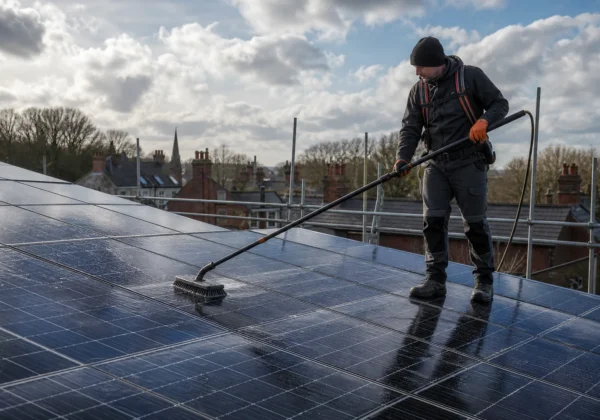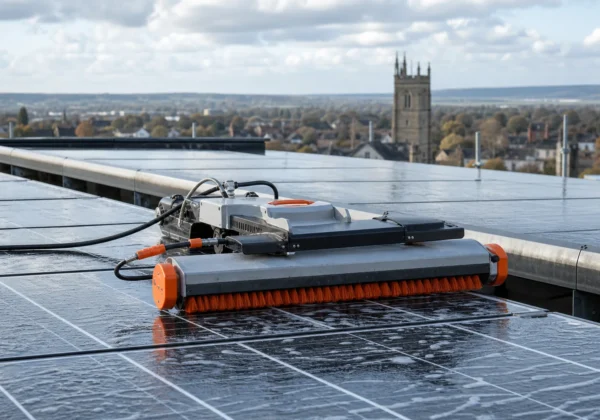
Solar panel warranty inspection is a documented process that verifies your commercial PV installation meets the conditions required to keep its warranty valid. For commercial rooftop arrays, this means checking both the roof condition before installation and the ongoing performance of the panels. A drone-based thermographic survey following IEC 62446 is the most efficient way to satisfy these requirements.
Why Pre-Installation Roof Inspection Is Critical for Warranty Validity
Many commercial building owners assume their roof warranty stays intact after solar panels go up. That is not always true. If the roof has hidden defects , like a saturated insulation layer or damaged membrane , the added weight and penetrations of a solar array can turn a small issue into a major failure. And once the panels are installed, those defects become nearly impossible to fix without removing the whole system.
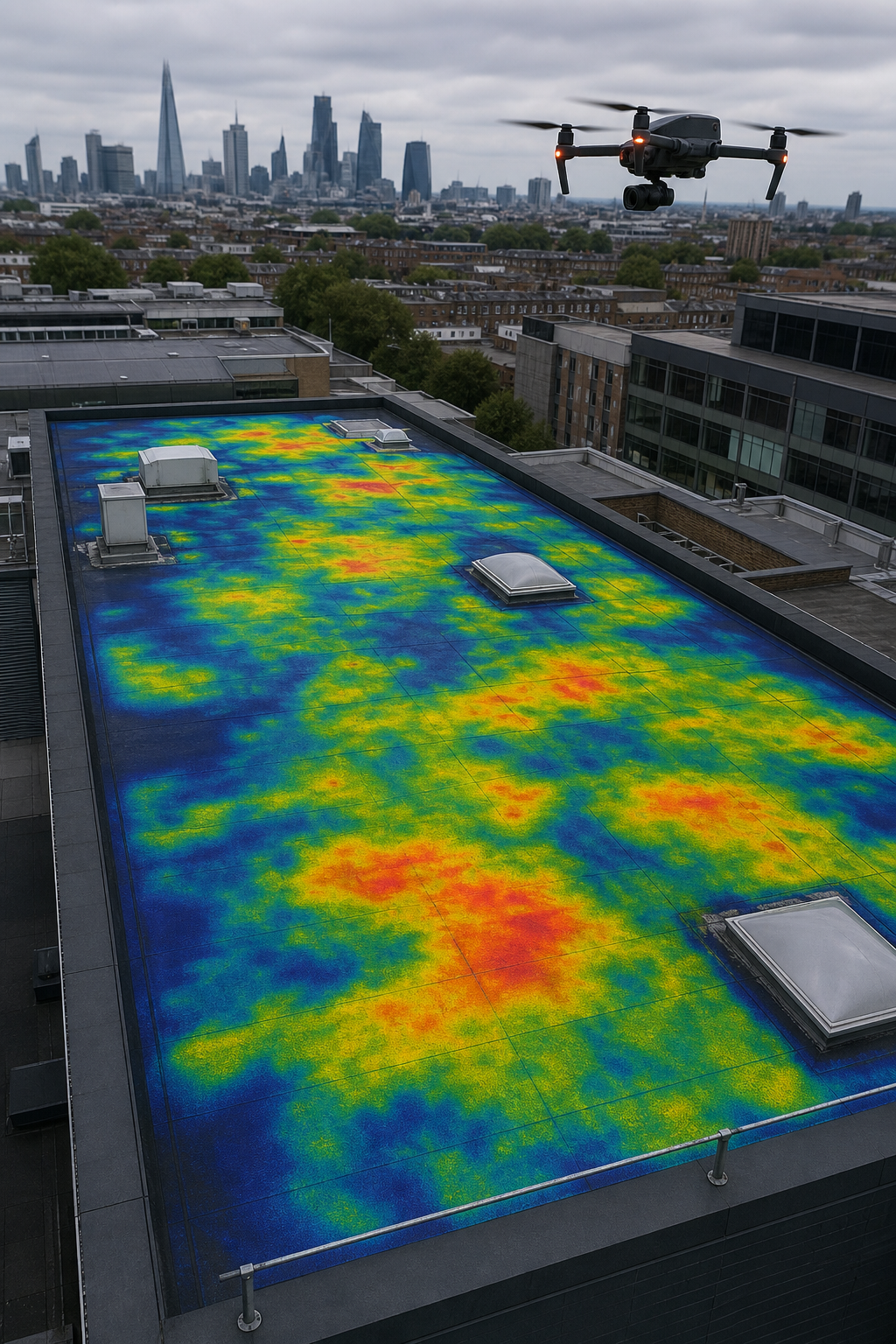
A pre-installation roof survey catches these problems early. Using drone-mounted thermal imaging, we can detect areas of moisture entrapment, “under membrane saturation” that looks fine on the surface but is already compromising the roof structure. Industry guidance makes it clear: most roof warranties require the roof to be in good condition before solar installation , otherwise, the warranty can be voided if a pre-existing defect worsens.
For commercial flat roofs, the risk is even higher. Water can migrate under the membrane for years before it shows on the surface. A drone survey with a high-resolution thermal camera , at least 640×512 pixels , can map the entire roof in a single flight, pinpointing areas of concern. We then produce a detailed report that can be shared with the roofing contractor before any solar hardware touches the roof. For more on how we conduct these surveys, visit our Drone Building Inspection page.
This step also protects the solar panel warranty. Many PV module warranties require the roof to be “suitable and structurally sound“. If a leak develops after installation and is traced back to a pre-existing defect, the panel manufacturer may deny the claim. The cost of a drone roof survey is a fraction of what one rejected warranty claim can cost.
By investing in a pre-installation inspection, you avoid the “he said, she said” argument later. The thermal data provides objective evidence of the roof condition at the time of installation, making it clear who is responsible if something goes wrong. For facilities managers and building surveyors, this is a low-cost risk management tool that pays for itself.
Understanding IEC 62446 and Its Role in Warranty Compliance
IEC 62446 is the international standard for testing, documentation, and maintenance of grid-connected photovoltaic systems. Part 3 of the standard, IEC 62446-3:2017, specifically covers outdoor infrared thermography of PV modules. If you want your warranty claims to hold up, your inspection must follow this standard.
The standard sets out clear requirements: thermal imaging must be performed under controlled conditions , clear sky, irradiance above 600 W/m², and limited wind. The camera must have a minimum resolution of 640×480 pixels, and the operator must be certified. Compliance with IEC 62446-3:2017 ensures that thermal anomalies are correctly identified and not dismissed as artifacts. For a deeper dive into how this applies to commercial solar, see our guide on Best Solar Panel Thermal Imaging Inspection Services 2026.
Why does this matter for warranty? Because a non-standard inspection report will be rejected by the manufacturer or insurer. They want proof that the inspection was done properly, with calibrated equipment and under the right conditions. A report that simply says “we took some thermal pictures” is not enough. The standard demands documentation of the survey methodology, environmental conditions, equipment specifications, and a clear defect log.
At Visual Perspectives, our solar PV thermography service is fully compliant with IEC 62446. We use a drone equipped with a 640×512 pixel thermal sensor and RTK GPS for precise geo-tagging of each module. The result is a report that includes as-built drawings, temperature readings, and a prioritised defect list , exactly what warranty holders require.
What the Standard Covers
IEC 62446-3:2017 specifies the following key elements for a valid inspection:
- Environmental conditions: Irradiance ≥ 600 W/m², clear sky, wind < 5 m/s
- Thermal camera: Minimum 640×480 pixel resolution, with at least 5×5 pixels per solar cell
- Inspection procedure: Full coverage of all modules at a consistent altitude and angle
- Reporting: Geotagged thermal images, anomaly classification, and recommended actions
Following this standard is not optional for warranty compliance. Many manufacturers now explicitly reference IEC 62446 in their warranty terms. If your inspection does not meet the standard, you are essentially flying blind when you need to make a claim.
Common Warranty-Voiding Defects Detected by Drone Thermography
Drone thermography can identify defects that would otherwise go unnoticed until they cause a failure or a fire. These defects are exactly the kind that manufacturers point to when denying a warranty claim. Infrared thermography reveals temperature anomalies that indicate electrical or mechanical problems.
The most common defects detected by drone thermography include:
- Hotspots: Individual cells overheating due to shading, damage, or manufacturing defects. A hotspot can degrade the entire panel and reduce output. Warranty claims for hotspots are often denied if the inspection was not done within the first year.
- Bypass diode failures: When a bypass diode fails, the entire string can overheat. This increases fire risk and nullifies the performance warranty.
- Potential Induced Degradation (PID): PID causes power loss that may not be visible on the surface. Thermal imaging detects early-stage PID, allowing corrective action before the warranty expires.
- Connector and junction box overheating: Loose connections create resistance and heat. If a fire starts at a connector, the warranty is likely void due to improper installation or maintenance.
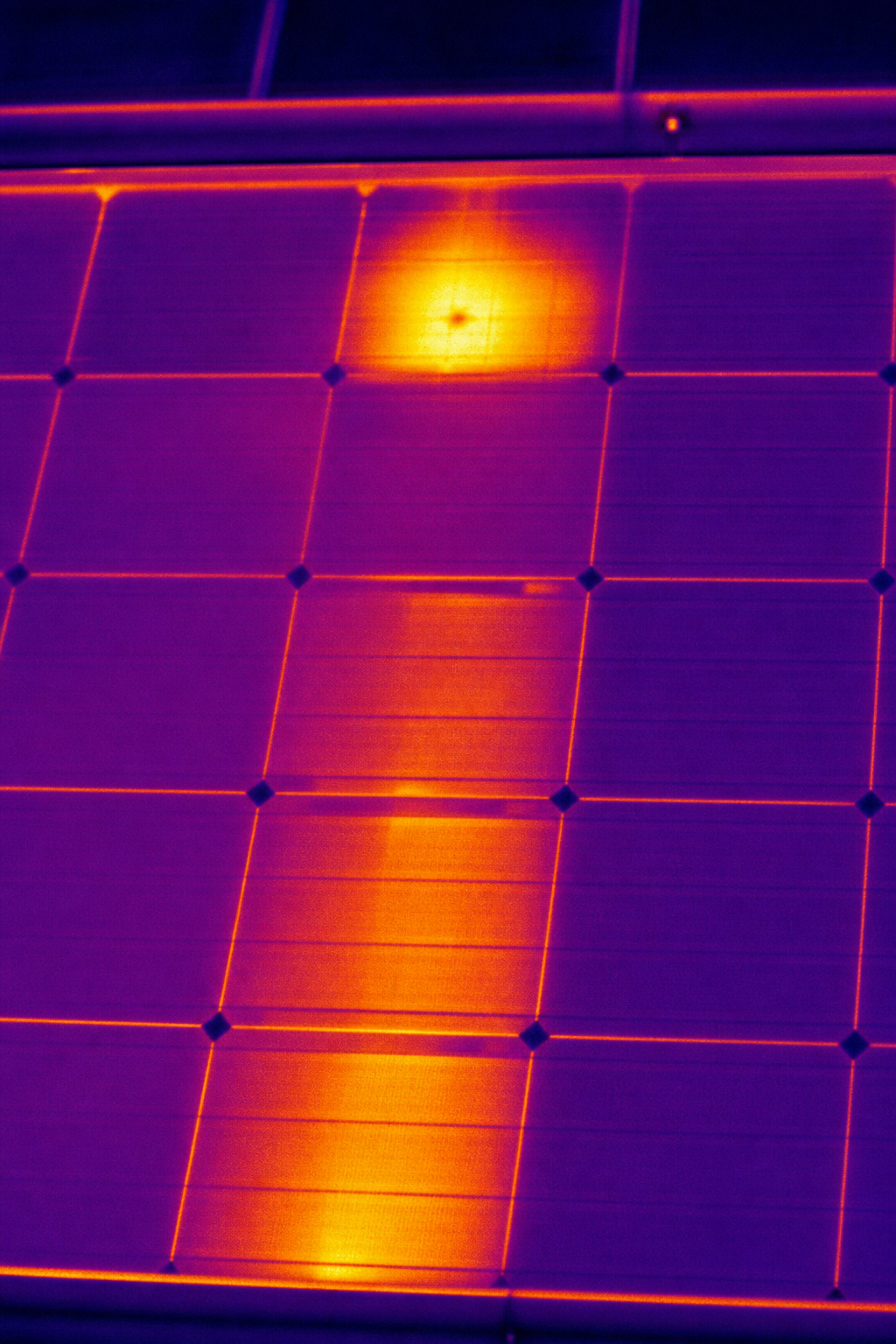
Drone thermography can survey an entire commercial roof in a single flight, covering thousands of panels. The data is processed to create a thermal map that highlights every anomaly. At Visual Perspectives, we deliver a defect log that ranks issues by severity, so you know which ones require immediate action to protect your warranty.
How Drone Thermography Supports Warranty Claims and Insurance Compliance
When a warranty claim is filed, the manufacturer or insurer will ask for proof of regular inspection and maintenance. Without documented evidence, the claim is often denied. Drone thermography provides that evidence in a format that satisfies IEC 62446 and insurance standards.
Insurance companies increasingly require a periodic inspection of PV installations to assess fire risk and technical safety. A drone thermography report that includes thermal anomalies, string-level data, and a compliance statement is exactly what insurers want to see.
For commercial building owners, this means scheduling an annual drone thermography inspection , ideally in late spring or summer when irradiance is highest , and keeping the reports on file. If a panel fails or a fire occurs, the report proves that the system was being monitored and that the failure was not due to neglect.
At Visual Perspectives, we provide an IEC 62446-compliant report that includes:
- A thermal orthomosaic of the entire array
- Temperature data for each module with GPS coordinates
- A defect log with severity ratings
- As-built drawings showing module layout
- A compliance certificate stating the inspection was performed according to the standard
This documentation package aligns with insurance requirements for commercial PV, which many UK insurers now mandate for commercial PV. By having a compliant inspection on record, you significantly improve the chances of a warranty or insurance claim being honoured.
FAQ
What is a solar panel warranty inspection?
A solar panel warranty inspection is a formal assessment of your PV system to verify it meets the conditions required to keep the warranty valid. It typically includes thermal imaging to detect defects, electrical testing, and documentation review. For commercial systems, drone-based thermography following IEC 62446 is the standard approach.
Does a thermal drone inspection satisfy insurance requirements?
Yes, if it is done in accordance with IEC 62446-3:2017. Many insurers now require a documented inspection that includes thermal imagery, defect analysis, and a compliance statement. A qualified provider like Visual Perspectives delivers a report that fulfils both warranty and insurance conditions.
How often should I have my commercial solar panels inspected?
Most standards recommend an annual inspection for commercial rooftop systems. Larger utility-scale sites (>10 MW) may require inspections twice a year. Additionally, an inspection should be performed after any major weather event, such as a hailstorm or high winds, to catch damage early.
Can a pre-installation roof survey void my roof warranty?
No , in fact, it helps preserve it. By documenting the roof condition before solar installation, you protect against claims that installation caused pre-existing damage. Many roof warranties actually require the roof to be in good condition before any work begins, so a pre-installation survey supports your warranty.
What equipment is needed for a compliant thermography inspection?
The standard requires a thermal camera with at least 640×480 pixel resolution, a minimum of 5×5 pixels per solar cell, and RTK GPS for accurate positioning. The operator should hold a Level 1 or Level 2 thermography certification. Environmental conditions must include irradiance above 600 W/m² and limited wind.
What defects can void a solar panel warranty?
Common warranty-voiding defects include hotspots, bypass diode failures, Potential Induced Degradation (PID), and connector overheating. If a defect is found but not addressed in a timely manner, the manufacturer may deny subsequent claims. Regular thermography inspections catch these issues early.
Conclusion
A solar panel warranty inspection is not a paper exercise , it is a critical risk management tool for any commercial building with a PV array. A pre-installation roof survey prevents future disputes, and annual drone thermography ensures you have the evidence needed to back up warranty and insurance claims. Trust a provider that understands the standards , Visual Perspectives delivers IEC 62446-compliant inspections with the precision and documentation your investment deserves. Book your inspection today to protect your assets.
Ready to put this into practice? Visual Perspectives Limited was built for exactly this.