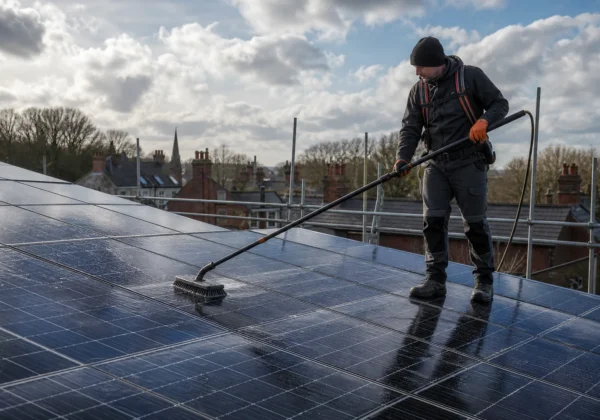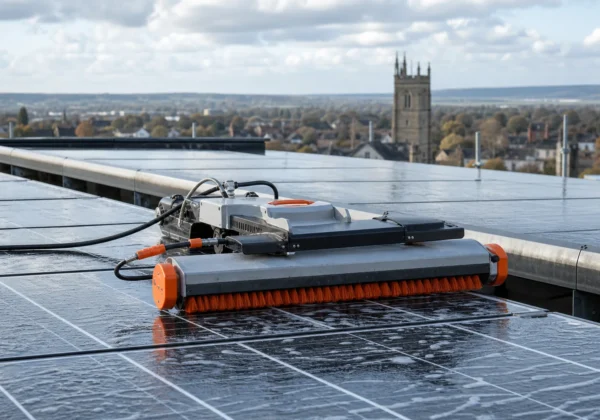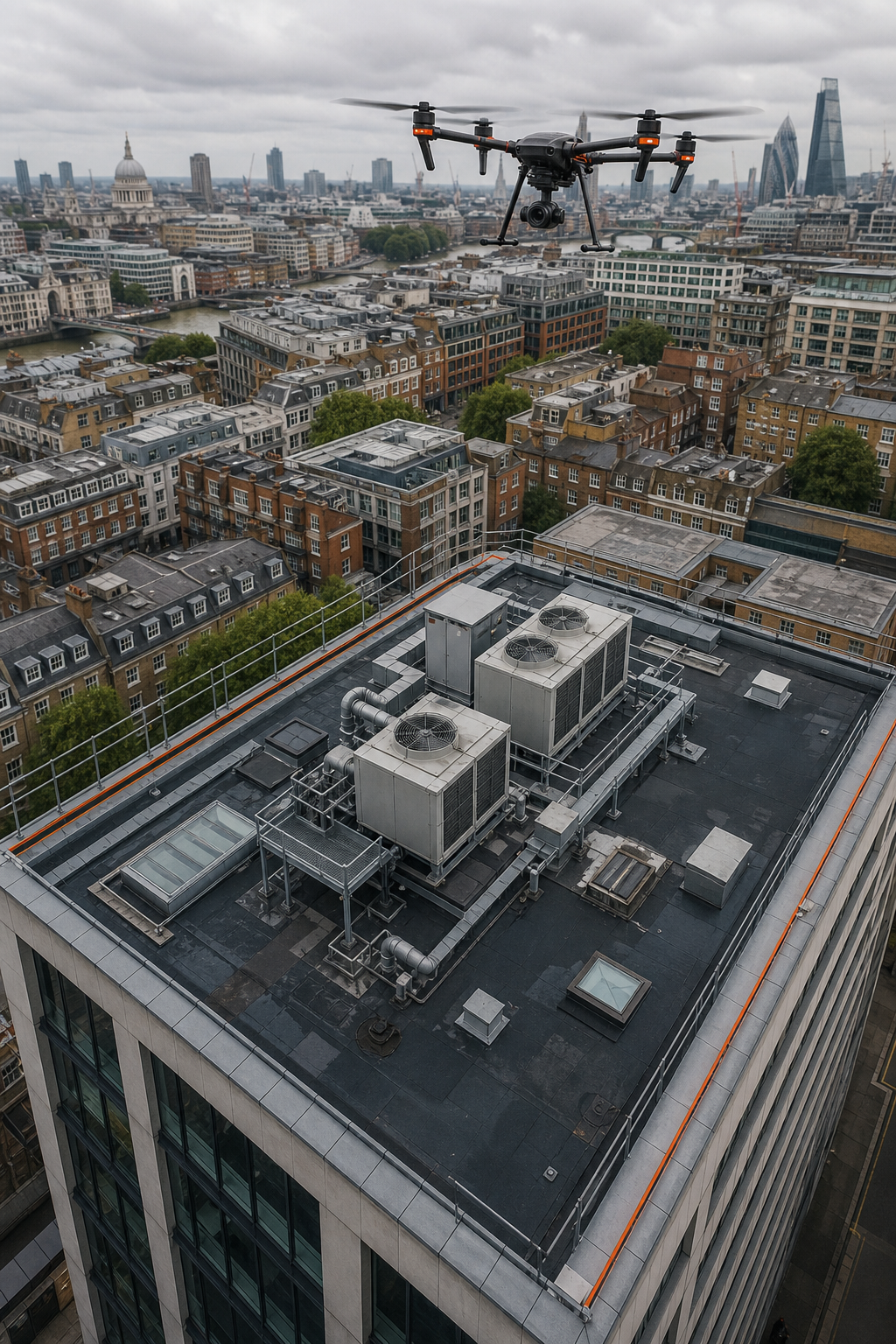
If you manage commercial property, you know roof inspections are critical , but the cost can be a black box. Drone roof inspection cost UK varies based on building size and survey requirements, but the real question is what you get for that price. This guide walks you through five steps to understand pricing, avoid compliance traps, and make a smart investment for your building.
Step 1: Understand the Factors That Influence Drone Roof Inspection Cost
Drone roof inspection cost UK depends on several variables. Commercial buildings are more expensive than residential because of size, complexity, and access requirements. A typical commercial drone survey starts around £700, but can go much higher for large or complex roofs.
Key factors that drive price up:
- Roof size and complexity, A flat roof with simple geometry is faster than a multi-level pitched roof with parapets.
- Location, Urban areas like London or Manchester may have higher fees due to travel and airspace restrictions.
- Inspection type, Basic visual imaging is cheapest; adding thermal or 3D mapping increases cost.
- Compliance requirements, Surveys that need to meet IEC 62446 or provide a formal MRICS report are more expensive but essential for insurance and warranties.
- Turnaround time, Rush jobs cost more. Most providers don’t disclose SLAs, so ask upfront.
Step 2: Get Quotes from Compliant Operators
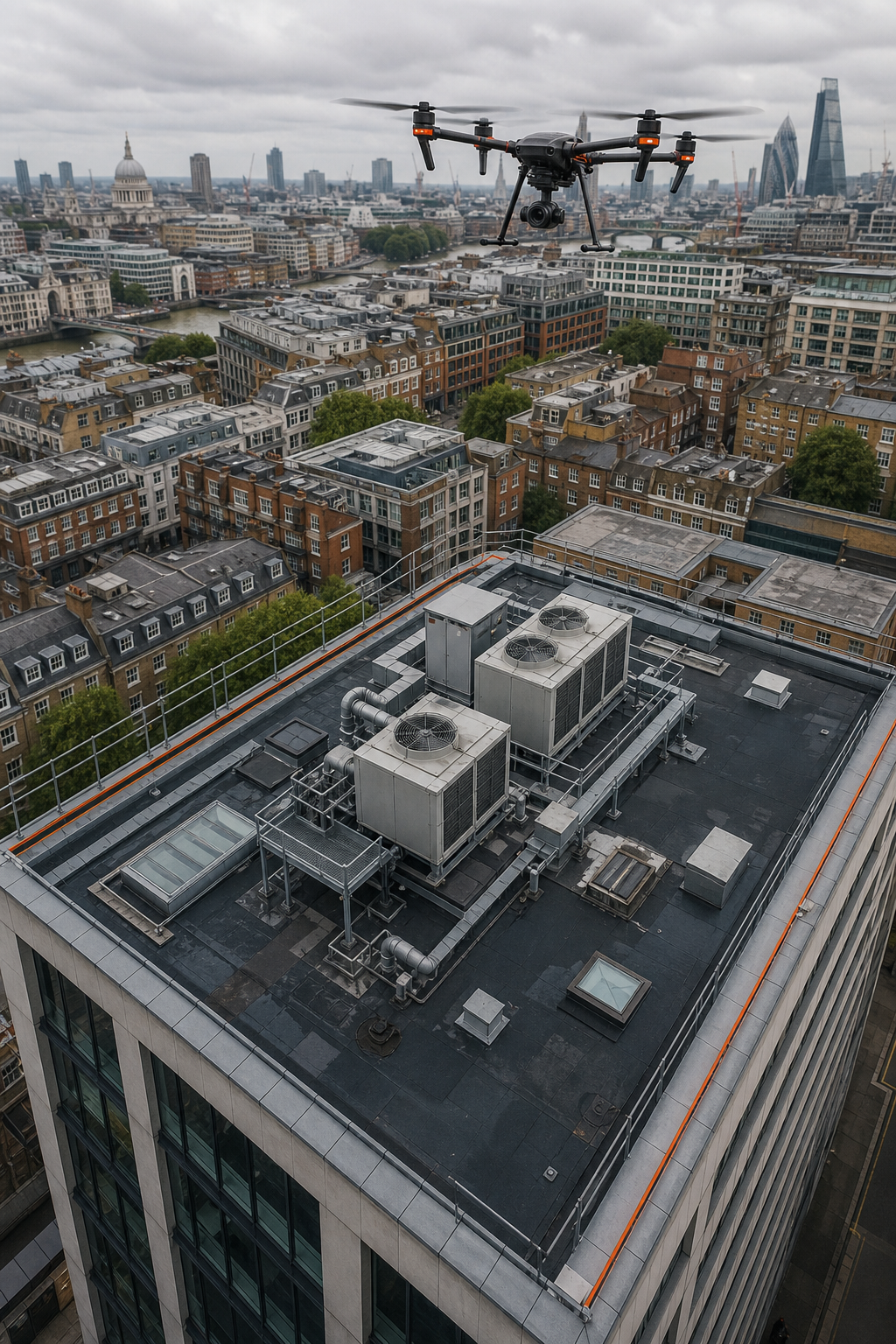
Not all drone operators are created equal. In the UK, commercial drone flights require authorisation from the relevant aviation authority. Operators must hold permissions relevant to the operation, including beyond visual line of sight (BVLOS) when needed. Always ask for proof of compliance before you accept a quote.
When you collect quotes, compare more than just the price. Check what certifications the operator holds: ITC thermography levels, insurance (at least £5 million public liability), and familiarity with commercial roof systems. Drone survey cost for UK commercial buildings can be misleading if the operator skimps on training or reporting quality.
Ask for a sample report. A good report includes annotated imagery, defect locations, severity ratings, and actionable recommendations. If the operator can’t provide one, that’s a red flag.
Step 3: Compare What’s Included: Visual vs Thermal vs 3D Mapping
Drone roof inspection cost UK varies greatly by what’s inside the package. Understand the three main types:
- Visual inspection, High-resolution photos and video. Good for spotting cracked tiles, blocked gutters, or vegetation.
- Thermal imaging, Infrared cameras detect heat signatures. Ideal for finding moisture ingress, insulation gaps, and solar panel defects. This is where the real value lies, especially for commercial roofs with membrane systems.
- 3D mapping / photogrammetry, Creates a scale-accurate 3D model for measurements and defect mapping. Additional cost depends on project scope.
Thermal imaging is not just a nice-to-have , it’s often required for solar PV compliance under IEC 62446. Drone thermography explained for commercial roofs shows how defects that are invisible to the naked eye , like under-membrane saturation or failing bypass diodes , become clear. Don’t pay for a visual-only survey if you need thermal data for insurance or warranty purposes.
Step 4: Budget for Pre-Solar Roof Surveys and IEC 62446 Compliance
If you’re planning a solar PV installation on a commercial roof, a pre-solar survey is non-negotiable. The cost of a drone roof inspection that includes IEC 62446-compliant thermography varies based on scope and is quoted individually. Why so important? Because installing panels on a roof with existing defects , like blistering membrane or trapped moisture , can void warranties and lead to costly failures.
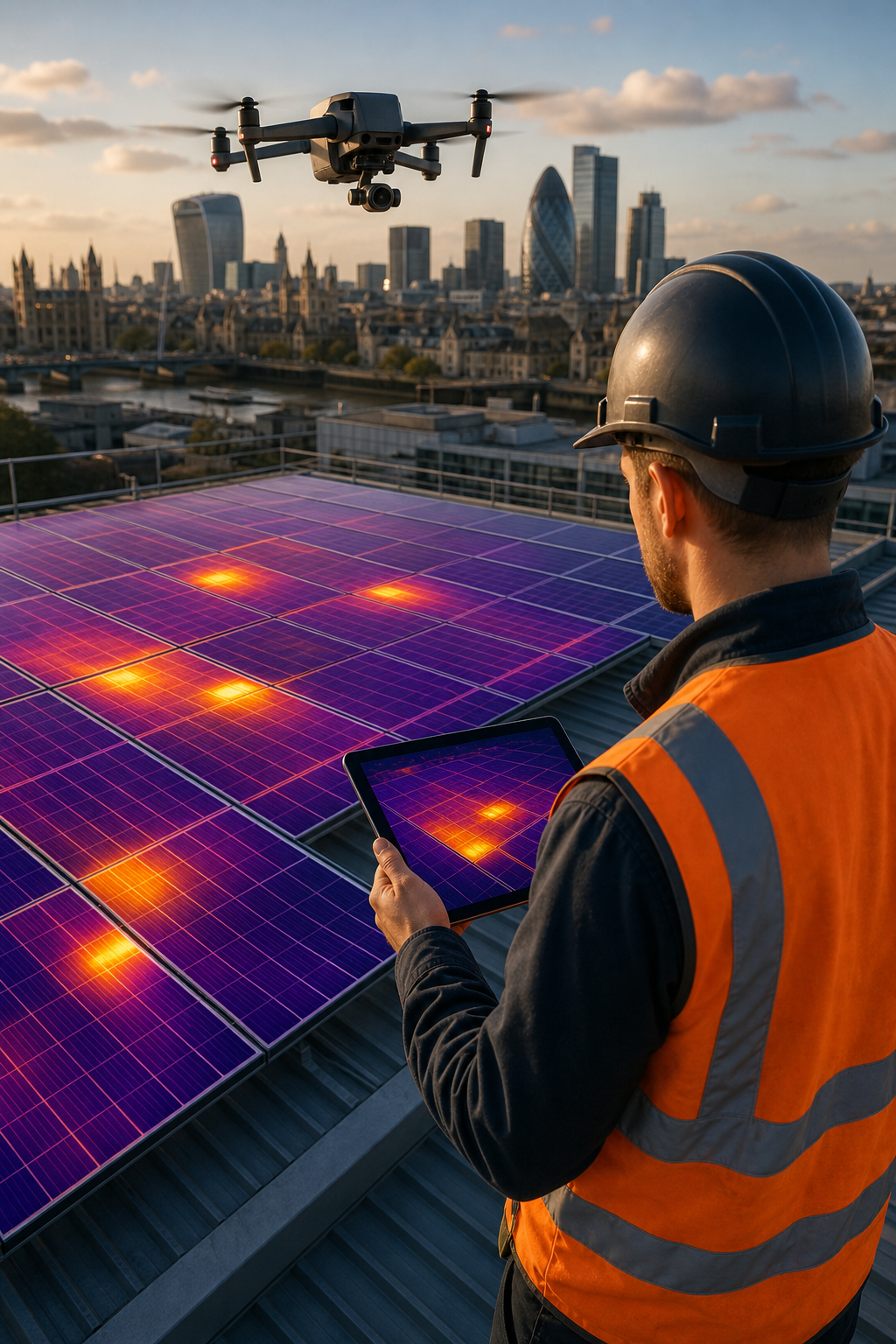
IEC 62446 is the international standard for testing and documentation of grid-connected PV systems. A compliant inspection checks for string faults, cell cracks, and bypass diode failures. Many operators claim to do thermal imaging but don’t mention this standard. Visual Perspectives is one of the providers that explicitly ties its thermal service to IEC 62446, and also holds ITC Level 1 and 2 thermography certifications and £5M insurance.
But monitoring systems that track performance at the panel or string level , they can tell you if output drops, but they can’t detect a hot spot on a single cell that will eventually lead to a failure or fire. Thermal imaging catches those micro-defects early. Together, they give you complete protection. And for post-install validation, insurance companies increasingly demand an IEC 62446-compliant thermal report within the first year.
Step 5: Evaluate the Value: Cost vs Risk Reduction
Drone roof inspection cost UK might seem like an expense, but compare it to the risks. A single undetected leak can cause significant internal damage. A roof collapse due to ponding water? Even more. The table below shows typical inspection costs versus potential savings.
A drone inspection from a provider like Visual Perspectives delivers high-resolution data, thermal diagnostics, and a compliant report, all for a fraction of traditional methods. Their 20 years of surveying experience and £5M insurance mean you’re not just getting a flight; you’re getting a strong asset management tool.
Don’t forget the hidden costs of poor data. A report that misses a defect means repair costs later. Insist on a provider that can produce a detailed, actionable report with GPS-tagged defects. Drone building inspection services for commercial roofs vary, choose one that treats your roof like the asset it is.
FAQ
How much does a drone roof inspection cost for a commercial building in the UK?
Pricing for a commercial building survey with thermal imaging varies according to the scope of work. Visual-only surveys are available at competitive rates. The wide range depends on roof size, complexity, location, and whether compliance standards like IEC 62446 are included.
Why is thermal imaging more expensive than a visual drone survey?
Thermal cameras and certified thermographers cost more. You’re paying for the ability to see moisture, insulation gaps, and solar panel defects invisible to the naked eye. For commercial roofs, thermal data often saves far more than it costs by preventing hidden damage.
Do I need an IEC 62446-compliant inspection for my solar panels?
If your solar PV system is grid-connected, many insurers and warrantors require an IEC 62446-compliant thermographic inspection within the first year and annually thereafter. It verifies that the installation is safe and performs as designed, reducing the risk of electrical faults and fires.
Can a monitoring system replace a thermal drone inspection?
No. Monitoring systems track output but miss micro-defects like single-cell hot spots that can escalate into fires. Thermal imaging detects those defects early. Both are complementary , use monitoring for continuous data and thermal drone inspections for complete diagnostics.
What should I ask before hiring a drone inspection company?
Ask for their regulatory authorisation, public liability insurance amount (minimum £5M), thermography certifications, sample reports, and whether they follow IEC 62446 for solar. Also confirm turnaround time and what deliverables you’ll receive , raw images, annotated report, 3D model?
Conclusion
Drone roof inspection cost UK is a smart investment when you understand what drives it. Focus on value over cheapest price: a properly certified, CAA-compliant provider like Visual Perspectives gives you a compliant report that protects your asset and meets insurance requirements. Start by getting quotes from at least three operators, comparing their certifications and report quality, and choose one that specialises in commercial and solar PV inspections. Your roof , and your budget , will thank you.
Ready to put this into practice? Visual Perspectives Limited was built for exactly this.