Solar panels can lose output when dust, pollen, bird fouling, or other deposits reduce light reaching the glass. A suitable solar panel cleaning service can remove surface contamination, but cleaning is not a substitute for checking the array, roof condition, mounting system, cabling, and thermal performance. Below, we explain what cleaning involves, when it is justified, how to manage the risks on commercial and public-sector roofs, what affects cost and frequency, and how Visual Perspectives Limited can provide independent inspection evidence for better solar PV decisions.
What a Solar Panel Cleaning Service Involves
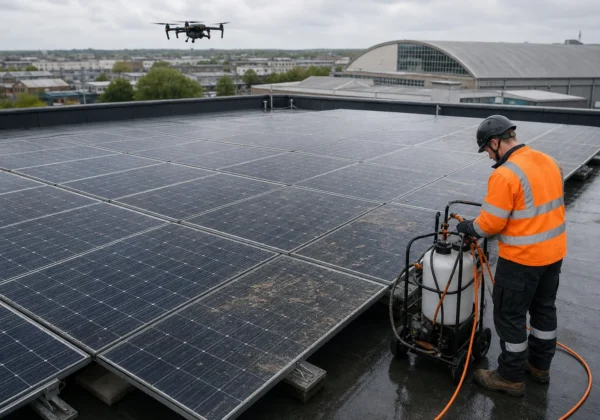
A solar panel cleaning service starts with a site assessment. The team checks panel layout, roof type, water supply, and any air‑space restrictions before any equipment arrives. This step ensures the method, ground‑based water‑fed poles, ladders, or drones, matches the site’s constraints.
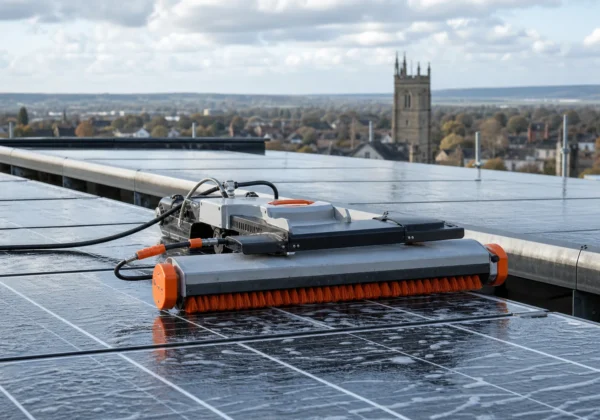
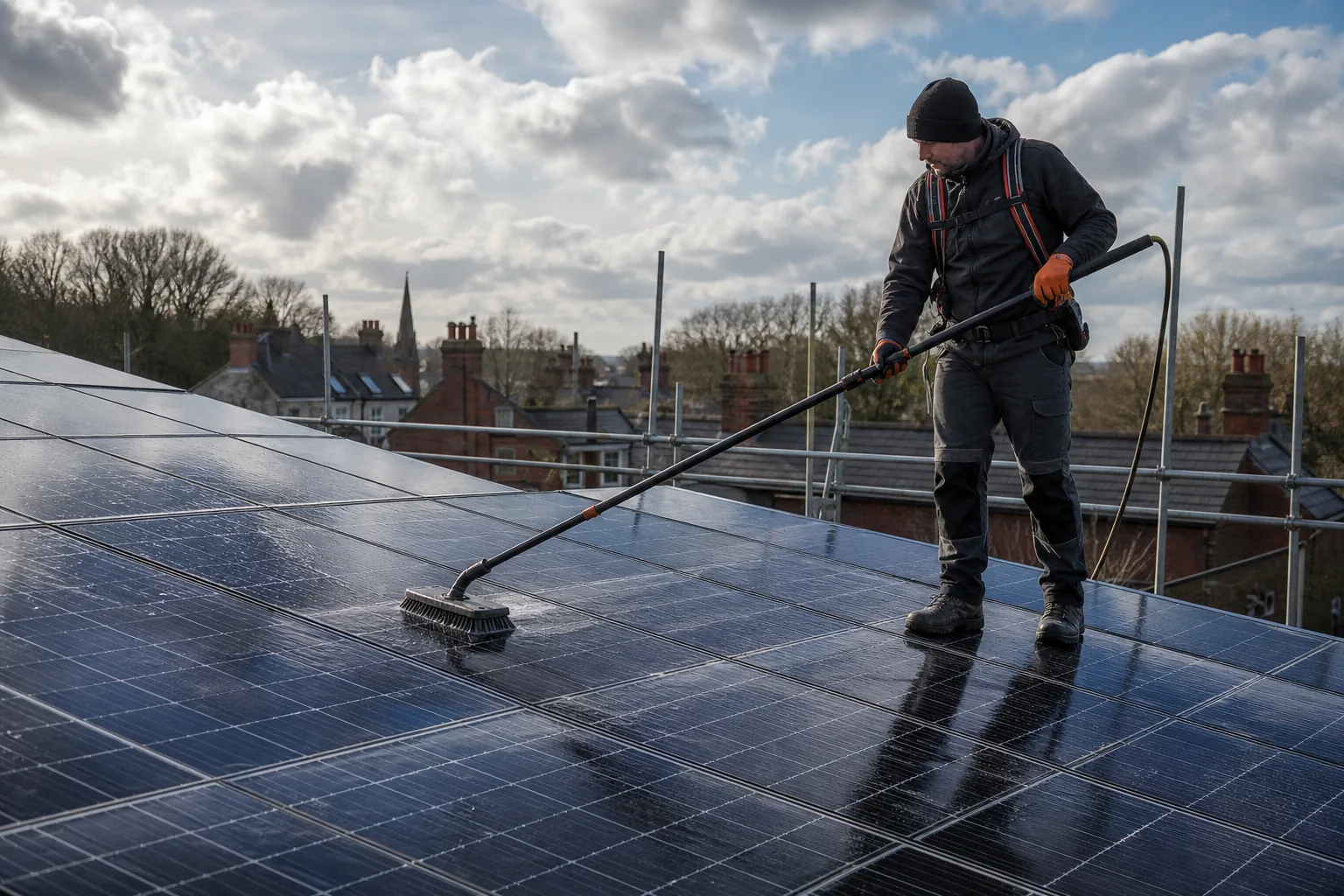
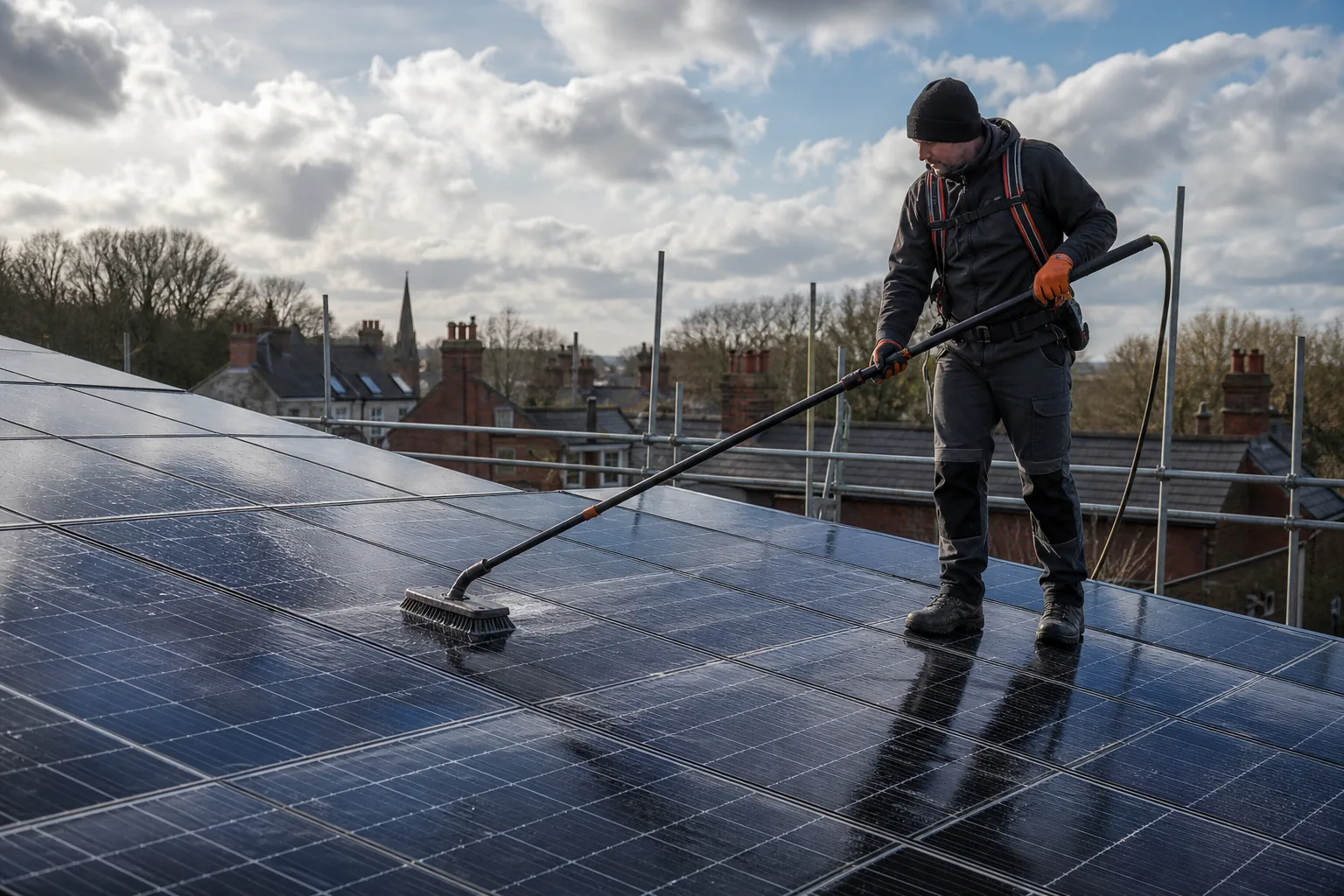
On a typical commercial job, technicians use de‑ionised water and soft brushes. The water is filtered on‑site to remove minerals that could leave spots on the anti‑reflective coating. No detergents or high‑pressure jets are used because they can damage the sealants around the cells.
After cleaning, the crew provides before‑and‑after photos and a brief report that notes any visible damage or debris that may need further attention. The report also confirms that the cleaning did not interfere with live DC wiring, a key safety requirement.
Our own Solar Panel Cleaning – Visual Perspectives follows this exact workflow, delivering a “quickly, precise, and detailed” service that fits into your maintenance window.
Drone‑based cleaning is an option for roofs that are hard to reach. Some specialist providers describe a drone method that can wash selected panels while keeping workers on the ground, but it only works on flat, unobstructed surfaces and after a feasibility check.
Because the service does not include electrical testing, any suspected wiring issues still need a qualified electrician or a dedicated PV inspection.
When Solar Panels Need Cleaning—and When They Need Inspection
Most UK panels lose 2 to 6 % of output each year from light soiling such as dust and pollen. In dusty or urban locations, the loss can rise to 10 % or more. A reduction of that size is usually noticeable when you compare actual generation with the expected output for the system.
Cleaning is worth considering when the loss exceeds about 5 % of expected output, or when a single bird dropping is shading a string of panels. One heavily fouled panel can reduce the output of a whole string by 20 to 30 %.
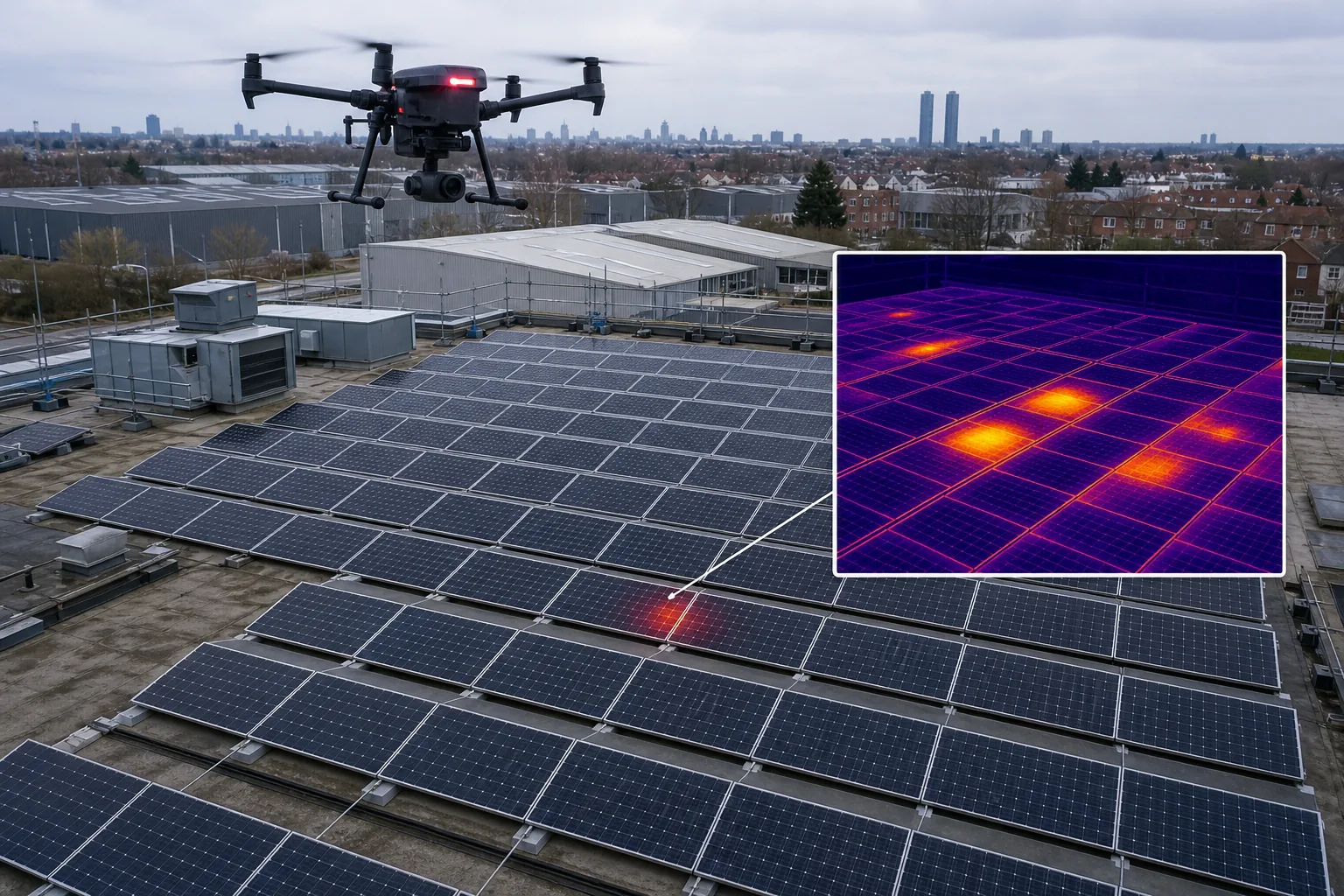
Inspection, on the other hand, looks for hidden faults that cleaning will not fix. After five to ten years, cables can sag, connectors can corrode, and frames can loosen. These problems may appear as hotspots in a thermal image before any obvious performance drop.
Thermography services follow IEC 62446 standards, scanning the whole array for temperature anomalies that may signal electrical or mechanical issues. Inspection reports should include fault locations, supporting images and recommended remedial actions.
In practice, we recommend a visual check each spring, a professional clean every two to three years, and a thermal inspection at the five-year mark or before major warranty milestones. Visual Perspectives Limited can support inspection-led assessments where cleaning alone does not explain reduced generation.
When you see a gradual loss that matches the age-related degradation curve, focus on inspection. When the loss spikes after a storm or a period of heavy pollen, schedule a clean and check for physical damage at the same time.
Safe Cleaning Methods for UK Commercial and Public‑Sector Roofs
Working at height on a commercial roof carries strict legal duties. A risk assessment, fall‑prevention measures, and competent workers are needed for any activity above ground level. The key points are:
- Plan the job and assign a competent supervisor.
- Prefer ground‑based tools where possible; extendable water‑fed poles can reach most low‑rise panels.
- If you must work on the roof, use guardrails, scaffolding, or a mobile elevating work platform (MEWP).
- When personal fall protection is required, equip workers with a harness, lanyard, and a secure anchor.
- Maintain three points of contact on ladders and ensure ladders are set at a 1:4 ratio.
- Wear electrically insulated gloves and non‑slip boots, especially on wet surfaces.
- Keep a minimum three‑metre clearance from overhead power lines; more distance may be needed for higher voltages.
Our own Solar Panel Cleaning: 7 Essential Tips for 2026 includes a checklist that mirrors these safety principles, helping facilities managers stay compliant.
Drone cleaning reduces the need for scaffolding on suitable roofs. A drone can create an exclusion zone and operate only when wind speeds are below the manufacturer’s limit, further lowering risk. This approach still requires a documented method statement, site controls and competent operators.
Regardless of method, always isolate the PV system where possible and follow the Electricity at Work Regulations 1989. Turn off the inverter and, if the panels are still live, keep a safe working distance and wear PPE.
You’ll be in good hands if you verify that the contractor holds a CAA‑approved operational authority and carries public‑liability insurance.
Costs, Frequency and Procurement Considerations
Pricing in the UK typically runs £4‑15 per panel, depending on access difficulty. Ground‑level, bungalow‑type arrays sit at the low end (£2‑4 per panel), while three‑storey roofs or awkward angles push rates above £8 per panel.
Most cleaners also charge a minimum call‑out fee of £50‑£90. That means a small six‑panel system can cost £8‑12 per panel, whereas a larger 20‑panel array on the same street may drop to £4‑5 per panel.
Annual maintenance contracts that bundle inspection, cleaning, and emergency call‑out typically range from £120‑£200 per year for a mid‑size commercial roof.
When you request a quote, give the contractor:
- Panel count and layout.
- Roof type and height.
- Any visible contamination (dust, bird droppings, moss).
- Last cleaning date.
- Photos or a short video of the array.
Providing these details speeds up the feasibility check and helps you compare offers fairly.
We recommend budgeting for a clean every two to three years, with a shorter interval (once a year) for sites near heavy traffic or agricultural dust.
Remember that a clean only pays for itself if it recovers enough generation to offset the cost.
How Independent Inspection Supports Better Solar PV Decisions
Independent inspections give you an unbiased picture of a PV system’s health. Visual Perspectives Limited conducts drone‑based thermal imaging that complies with IEC 62446‑3, delivering high‑resolution heat maps that pinpoint hotspots, shading, or connector failures.
Because the inspection is separate from the installer or cleaning contractor, the findings carry weight with insurers and warranty providers. A clear report can be the difference between a warranty claim being accepted or denied.
Our process follows three steps: Survey, Analyse, Report. First, a drone flies over the array, capturing infrared data and a 3‑D model of the roof. Next, engineers compare the thermal signatures to the system’s design parameters, flagging any anomalies. Finally, we hand you a concise PDF that lists defects, recommends actions, and includes photographic evidence.
Thermal imaging also helps you plan future cleaning cycles. If a hotspot appears after a cleaning, it may indicate residual bird droppings or a loose connector that needs attention.
For public‑sector estates, an independent inspection can support ESG reporting by providing verifiable data on energy performance and asset condition.
How to Carry Out Solar Panel Testing Safely. The insight you gain helps you schedule cleaning only when it will make a measurable difference.
We also advise pairing the inspection with a cleaning contract that respects the same safety standards, ensuring the work is performed without compromising the system’s electrical integrity.
Solar Panel Cleaning Service FAQ
Do I need to turn off my solar panels before cleaning?
Yes. You should isolate the inverter and, if possible, shut down the DC side. Panels remain live when exposed to sunlight, so a safe working distance and PPE are essential.
How often should commercial panels be cleaned?
Most UK commercial roofs benefit from a clean every two to three years, but sites near heavy traffic, dust, or birds may need an annual clean.
Can I clean the panels myself?
You can clean low‑rise, easily reachable panels with a soft brush, lukewarm water, and a squeegee. Do not use high‑pressure washers, detergents, or climb on the roof without proper fall protection.
What is the typical cost per panel?
Professional cleaning usually costs £4‑8 per panel for standard two‑storey roofs. More complex access can push the price to £10‑15 per panel.
Will cleaning improve my system’s performance?
Yes. In the UK, dirty panels lose 2‑6 % of output on average. A clean that restores even a few percent can offset the service fee within a year.
Is a thermal inspection required for warranty compliance?
Many manufacturers ask for a certified inspection every one to two years to keep the warranty valid. Our IEC‑compliant thermography meets that requirement.
Conclusion
Choose a cleaning provider that does a full site review, uses de‑ionised water, and follows HSE safety rules. Pair the clean with an independent thermal inspection to verify that the work actually improves performance and protects your warranty. Contact Visual Perspectives today to arrange a safe, precise, and detailed service for your estate.