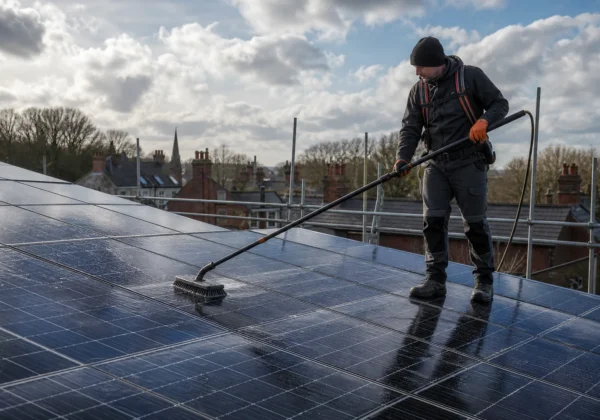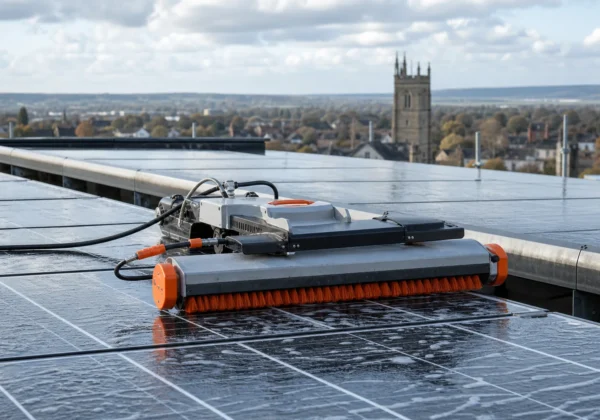
Solar panel cleaning prices in the UK are harder to pin down than you might think. Only one‑quarter of providers publish a rate, and the figure that does appear is £0.15 per m². Below we break down the mechanics, the levers that move a quote, what you should expect in a service, and how to decide if a clean will pay for itself.
How solar panel cleaning prices are usually calculated
Most firms start with the surface area they need to treat. A flat‑roof array of 200 m² will carry a higher raw labour cost than a pitched 50 m² system. From there they add access costs. A basic access method works up to about eight metres, but anything higher or a flat industrial deck may require additional access equipment, which adds £200‑£400 per visit.
Urgency is another multiplier; a next‑day slot can be 20 % more expensive than a scheduled visit in a low‑traffic period.
Most professional cleaners use de‑ionised water, pure water with a total dissolved solids (TDS) level below 1 ppm, because it dries without leaving mineral streaks that can block light.
Cleaning rates vary with the area to be treated and the access requirements. A commercial clean on a flat site may cost more once access fees are included.
For a quick reference on what to watch for, see our guide Solar Panel Cleaning: 7 Essential Tips for 2026. It walks through the equipment, safety steps and cost drivers in plain language.
What makes a cleaning quote higher or lower?
System size is the first driver. A small domestic array of 10 panels may be quoted per panel (£4‑£15 each), while a 100‑panel commercial site is usually priced per square metre. The reason is that larger sites benefit from economies of scale, the same crew can treat many panels in one visit.
Roof pitch matters too. Panels on a steep pitch (>15°) may be reachable from ground level, keeping labour low. Flat roofs need specialist access equipment or rope access, which pushes the price up. If the roof is higher than six metres, elevated access equipment may be required, adding another £200‑£400.
Location influences both travel time and local environmental factors. Coastal sites suffer from salt‑mist soiling and often need a bi‑annual clean, while inland urban sites may only need an annual visit. Some providers bundle gutter clearance or other additional work, with the price depending on the work involved.
Extra services such as additional inspections or reporting are optional add‑ons. These can add £150‑£300 per visit but give you data that ties cleaning to actual output gains.
Our own experience shows that bundling cleaning with a broader maintenance contract can shave 10‑20 % off the standalone cleaning price. The bundled model spreads the access fee across multiple visits and reduces admin overhead.
When you request quotes, ask providers to break down the price into base cleaning, access, travel and any optional extras. Clear itemisation helps you compare apples‑to‑apples.
What should the service include—and what is separate?
A standard cleaning visit covers three core actions: a de‑ionised water wash applied with a suitable cleaning tool, a visual inspection of panel glass and mounting hardware, and before‑and‑after photo documentation. The visual check flags cracked glass, loose brackets or corrosion, but it does not fix those issues.
Most contracts also provide a short performance note that compares post‑clean generation data against the pre‑clean baseline. This ties the clean to a measurable uplift, often a 2‑5 % gain on heavily soiled panels.
What is usually excluded are structural repairs, panel replacements and electrical fault diagnosis. If the inspection uncovers a corroded bracket, the contractor will give a separate quote for repair. Likewise, electrical faults are handled by a qualified solar electrician, not the cleaning crew.
Unsuitable cleaning equipment and detergents are off-limits; they can erode the anti-reflective coating and void the manufacturer warranty.
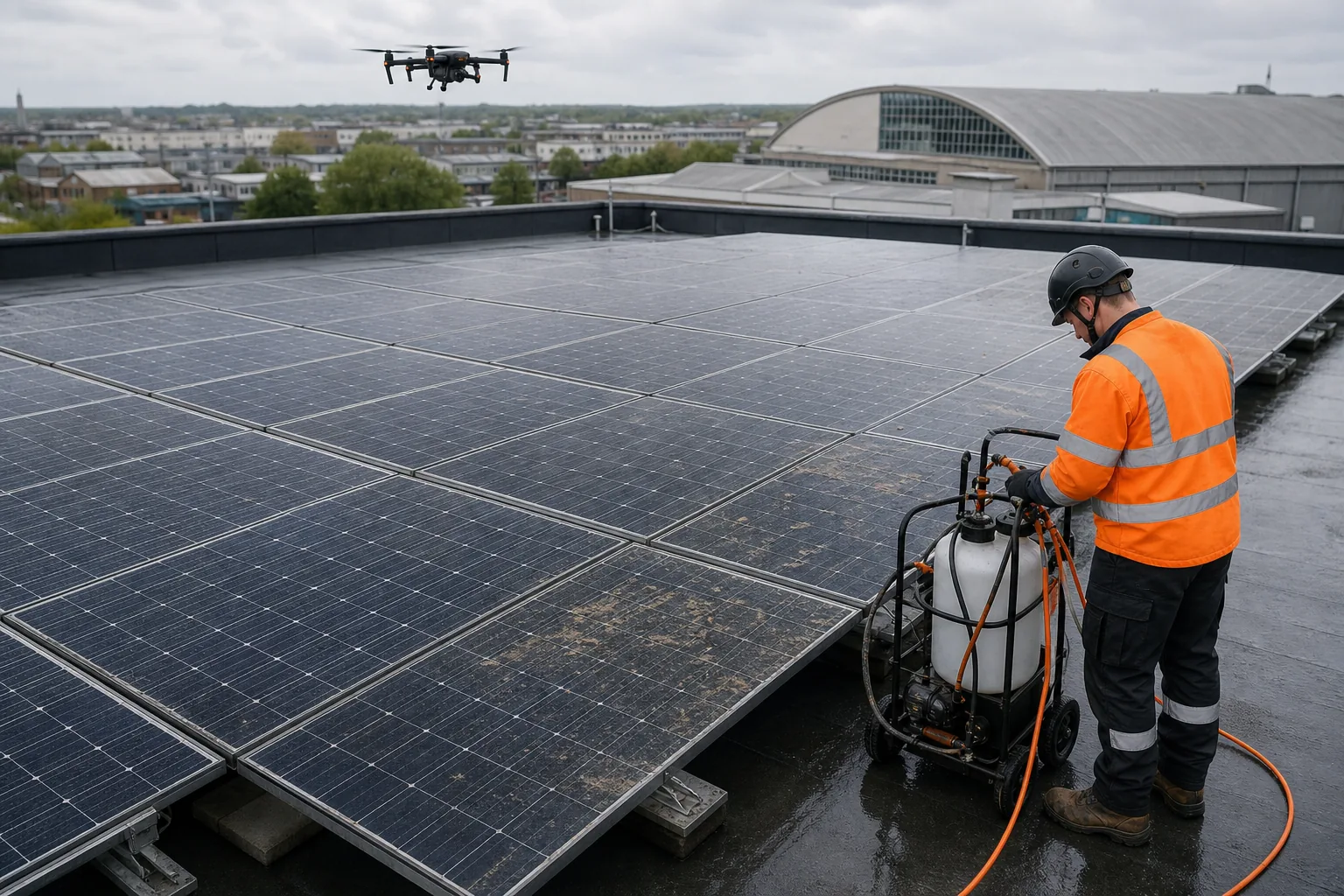
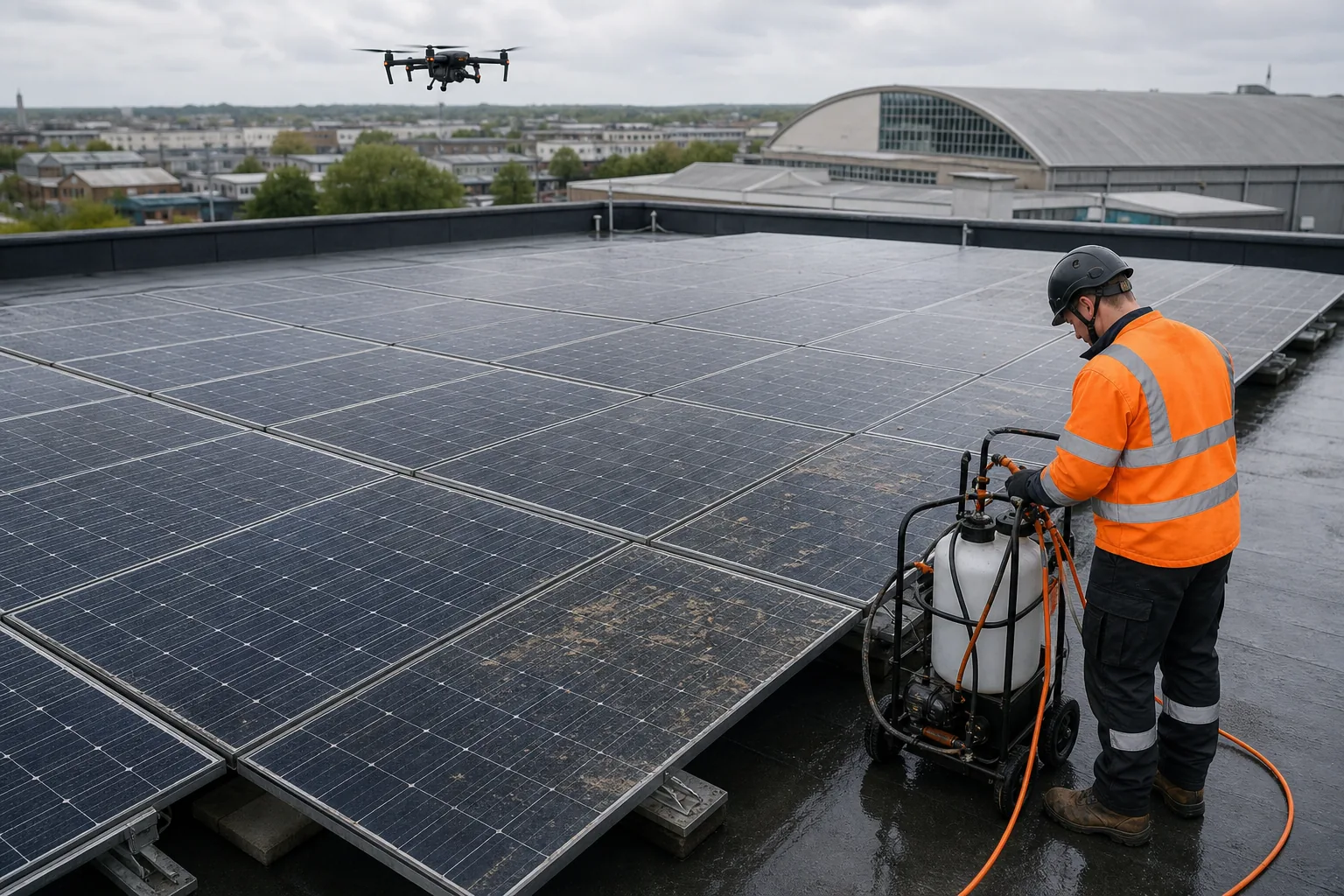
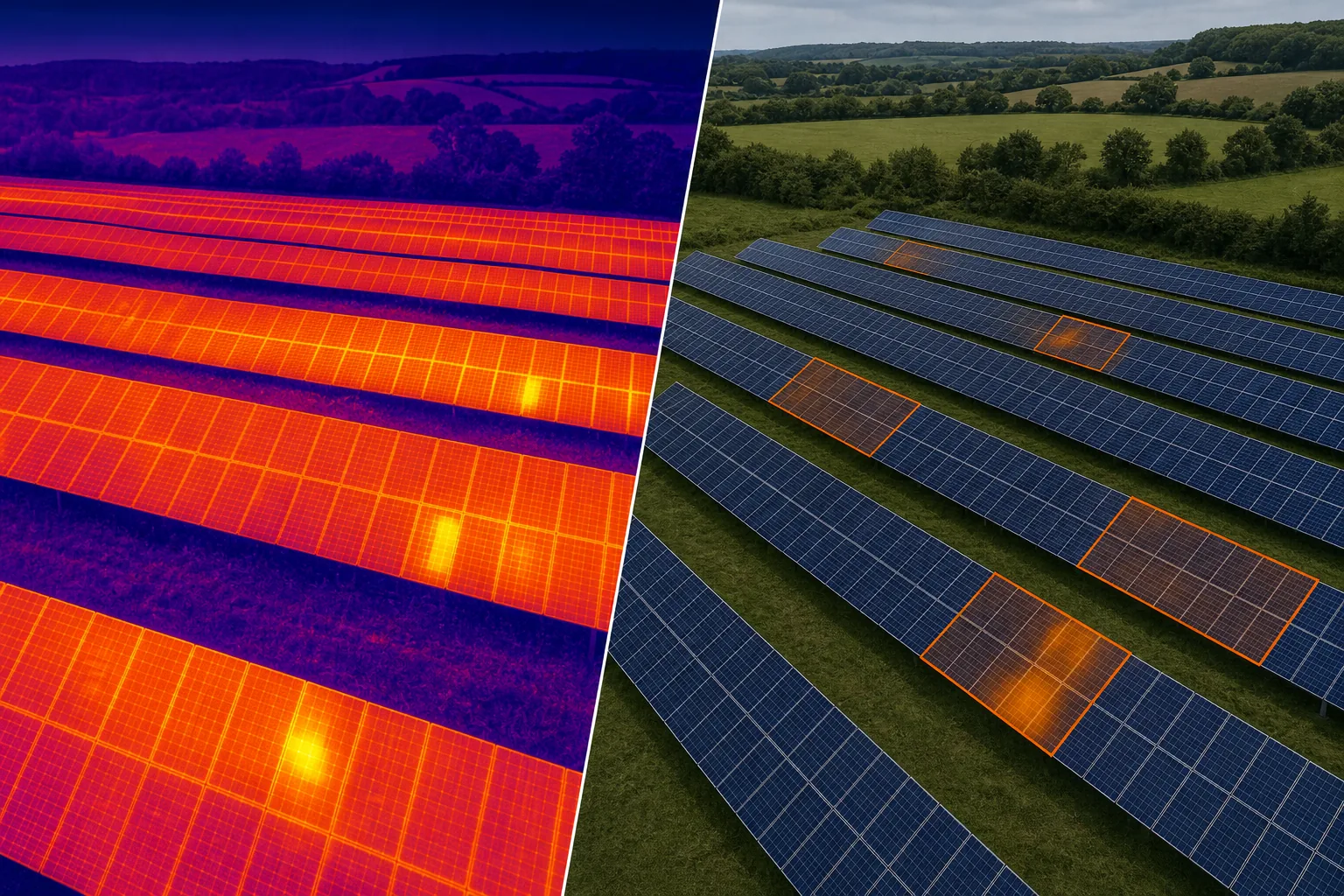
Our own drone‑based inspections can capture the visual state of every panel before a clean, then verify that the cleaning has not introduced new defects. Learn more in Commercial Solar Panel Inspection Resources.
When is cleaning worth the cost?
Soiling losses in the UK typically sit between 2 % and 5 % per year on flat roofs, and less than 3 % on pitched roofs that benefit from rain‑wash. If performance data show a drop of more than 5 % on a sunny day, cleaning is likely to recover that loss.
Sites near heavy traffic, agricultural activity or coastal locations lose more to grime, bird droppings and salt. For those, a bi‑annual clean can keep output within 1‑2 % of the clean‑panel baseline.
Financially, compare the cleaning cost to the value of the extra electricity generated. A 5 % loss on a 50 kW system in the UK translates to roughly 2 500 kWh per year. The value of that lost generation depends on the applicable export rate and can be compared with the cost of a single clean on a flat roof.
When the uplift exceeds the cleaning spend, the return on investment is positive within a year. For low‑soiling sites, the break‑even point stretches to three or four years, making cleaning less urgent.
In practice we recommend an annual inspection for all sites, with a clean scheduled only if the performance data or visual check flags a significant loss. This approach keeps costs in line with actual benefit.
Comparing quotes and planning wider roof inspections
When you receive multiple quotes, line‑up the itemised components: base cleaning, access equipment, travel mileage, regional uplift and any optional add‑ons. A quote that lumps everything into a single figure hides the true cost drivers.
Ask each provider whether they assess the roof alongside the clean. This can uncover hidden defects, damaged flashing, cracked tiles or roof ponding, that could affect panel performance or future maintenance costs.
Our drone surveys map the entire roof in 3‑D, capture roof details and flag trouble spots in millimetre accuracy. The data feeds directly into a compliance‑ready report that aligns with IEC 62446 and PAS 2035 standards, which many insurers and building regulators now require for commercial assets.
The available pricing information does not establish whether bundling cleaning with a preventive maintenance contract costs less than buying each service separately. For a 200 kW system, compare the bundled annual price with the itemised cost of stand‑alone cleaning and inspection.
Finally, factor in the lifecycle. Panels are warranted for 25‑40 years, but inverter replacements typically occur around year 10‑15. Scheduling cleaning to coincide with those larger service windows can reduce the number of separate site visits and minimise disruption.
FAQ
What is a typical solar panel cleaning price in the UK?
Costs vary by system size and access requirements; rates are available on request.
Do I need to clean my panels every year?
Not always. On pitched roofs, rain often keeps soiling under 3 % annually, so an annual clean is enough. Flat roofs or high‑soiling environments may need cleaning every 12‑18 months.
Can I clean the panels myself?
You can clean them from the ground using de‑ionised water, but you must avoid ladders, pressure-based cleaning and abrasive tools to protect the warranty.
What safety standards apply to cleaning work?
Cleaning work should be carried out with appropriate safety precautions for the site and access conditions.
How do I know if cleaning will improve output?
Check available system data; a drop of more than 5 % on a clear‑sun day usually signals soiling that a clean can recover.
Conclusion
If your performance data shows a clear dip and you operate on a flat or high‑soiling site, schedule a professional clean and pair it with a drone roof inspection. Contact Visual Perspectives Limited to arrange a survey and get an itemised quote that separates cleaning from any structural work.