A solar farm can keep producing power while a fault quietly reduces output. Good operations and maintenance (O&M) pairs routine site checks with performance data, so teams can spot changes and decide what needs attention.
The right plan sets out the work, how often it happens, who responds to faults and what evidence you’ll receive. Here’s what to check when shaping that plan for a UK site.
What solar farm maintenance covers
Solar farm maintenance covers the planned and corrective work needed to keep an installation safe, accessible and operating as intended. Operations is the oversight: checking performance, alarms and service records. Maintenance is the site work, such as inspecting equipment or repairing a confirmed fault.
A contract may include remote monitoring, scheduled inspections, vegetation control, cleaning when needed and fault response. It may also cover reporting, warranty support or help with insurance claims. These items aren’t automatic. Ask for each one to be listed in the scope, with clear limits and exclusions.
Site size and layout shape the work. A large, spread-out array may need a different inspection plan from a compact site. So can steep ground, poor access, nearby trees or a history of water ingress. Planning conditions may also set requirements for landscaping or access. Review relevant local planning material alongside site-specific conditions.
Agree who can approve repairs and how urgent faults are escalated. A monitoring alert may point to a problem, but it doesn’t tell you which component failed or what repair is safe. Keep diagnosis separate from authorising work where your governance requires an independent review.
For a closer look at routine checks, our commercial solar panel maintenance inspection guide explains how visual and thermal checks fit into an asset plan.
How monitoring data helps identify faults
Monitoring gives O&M teams a way to see changes between site visits. A supervisory control and data acquisition system, or SCADA, gathers operating readings and alarms so staff can review how the plant is performing. Depending on the system, data may include inverter output, voltage, current and equipment status.
A dashboard is useful when it helps someone make a decision. First check that data is arriving. Then compare the readings with the site’s normal pattern, allowing for weather and planned shutdowns. A sudden fall in output from one inverter is different from a gradual change across the whole array. Both need context before anyone books a repair.
Set a review rhythm and name who owns it. Weekly checks of online monitoring can help reveal missed alarms or gaps in data. A site visit can then focus on the affected area rather than starting with a general search. For larger estates, a fixed asset name and inverter reference make it easier to match an alert to the right part of the site.
Weather data can help explain changes in generation. Irradiance is the sunlight reaching the array; temperature readings give further context. If a weather station or reference sensor is misaligned, dirty or offline, the comparison may mislead. Include sensor checks in the maintenance scope, and record any changes made to the monitoring setup.
For site-level monitoring routines, our guide to solar panel monitoring sets out ways to check a baseline and investigate an alert.
Data points to where to look; it doesn’t prove the physical cause. Confirm a persistent or safety-related concern with an inspection and, where needed, electrical testing by qualified staff.
Inspecting modules, electrical equipment and structures
Inspections turn a suspected issue into evidence that can guide a repair. A visual check can find broken glass, loose or damaged cables, corrosion, water entry and signs of impact. Inspectors should also look at module frames, junction boxes, combiner boxes, isolators and meter enclosures.
Inverters need checks too. Dust around vents or blocked filters can affect cooling. Staff can review alarms and inspect for signs such as corrosion or heat damage, following the maker’s safe shutdown and access instructions. Transformers and other high-voltage equipment require suitable electrical expertise. Don’t treat an ordinary walk-round as permission to open live equipment.
Thermal imaging shows temperature patterns that a standard photograph can’t. A radiometric thermal image records temperature data across the scene. Under suitable operating and weather conditions, it can help locate unusual heat at a module or connection. It doesn’t replace electrical tests or confirm every suspected defect on its own.
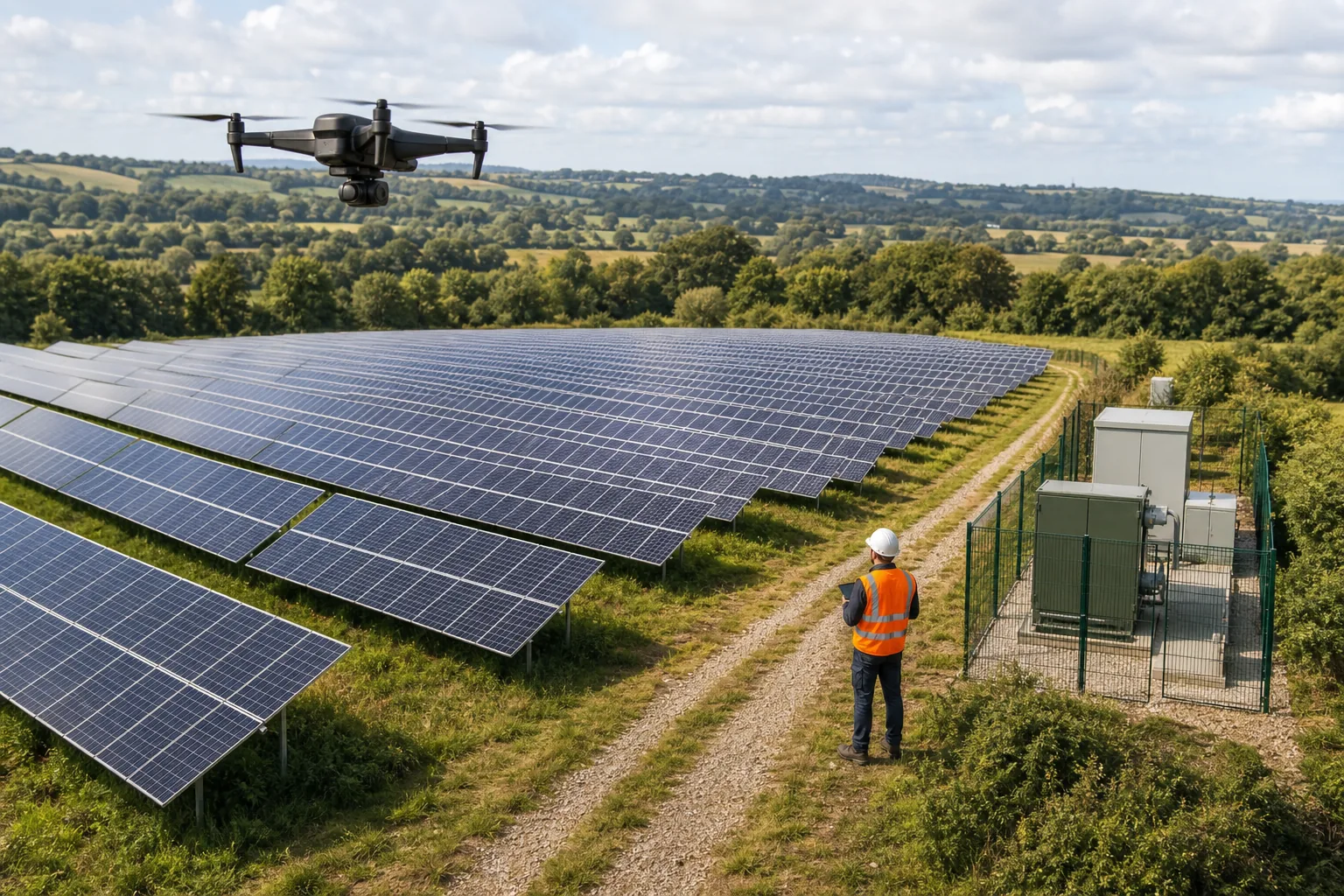
Drone surveys can help inspect extensive arrays without asking staff to walk every row. Visual Perspectives Limited provides managed drone-based aerial inspections across the UK, including high-resolution 3D mapping, thermal imaging and reports aligned with IEC 62446. The inspection findings can help an asset team locate issues and plan follow-up work; repair decisions remain with the responsible owner and qualified technical staff.
Our commercial solar panel inspection process explains how image records and location references can support a clear handover from inspection to repair planning.
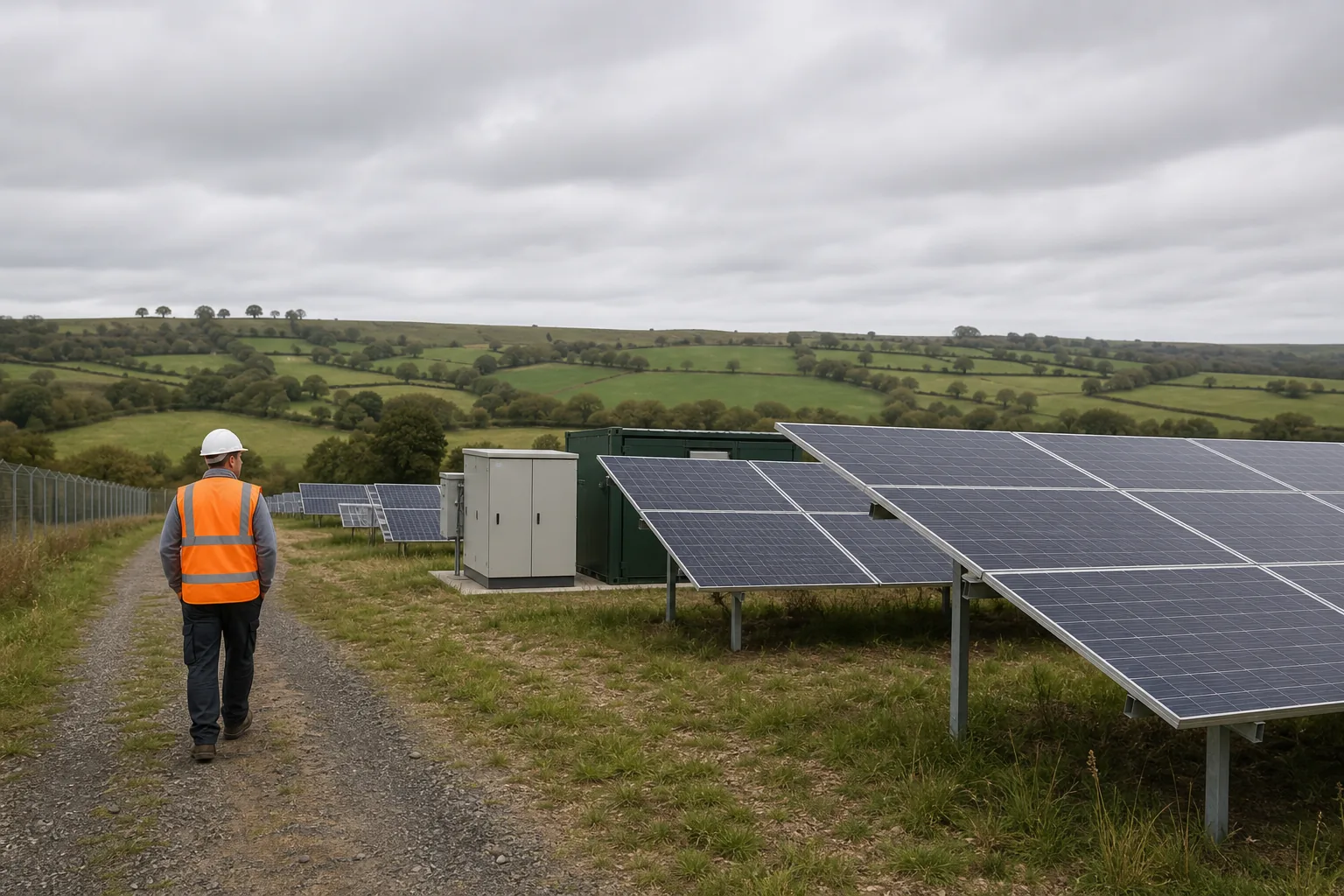
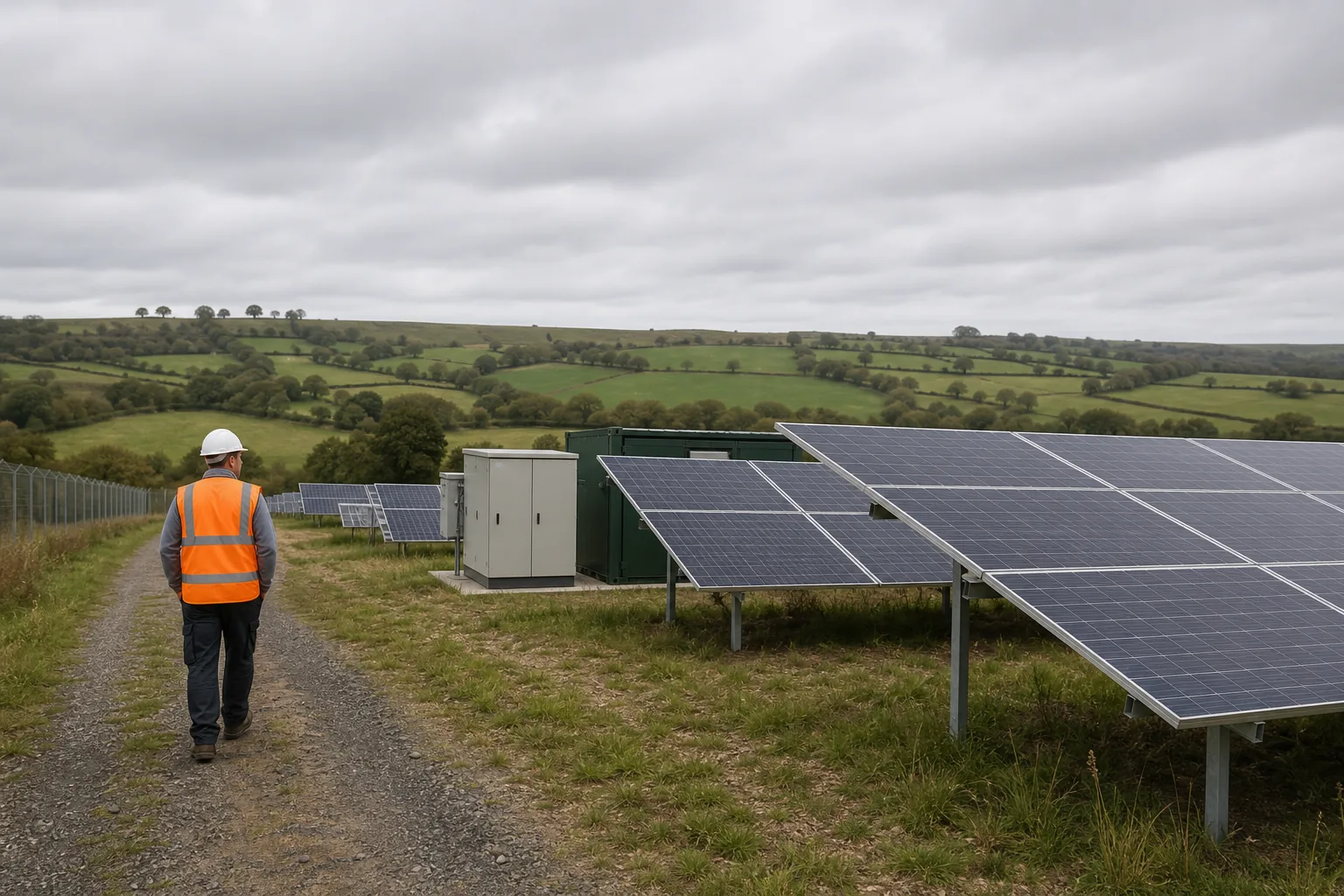
Structure checks matter as well. Look for loose fixings, corrosion, movement, damaged cable supports or signs of erosion near foundations. A ground-mounted site may need attention after heavy weather or where water runs across the land. Record the location and condition, then refer structural concerns to an appropriately qualified person.
Managing vegetation, access and site safety
Vegetation control is part of solar farm maintenance because tall growth can shade modules and make equipment harder to reach. It can also hide uneven ground or damage to cables. The right approach depends on the planting plan, ground conditions, season and any site restrictions.
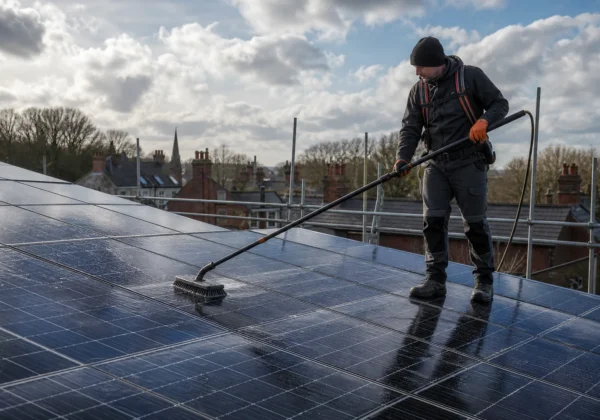
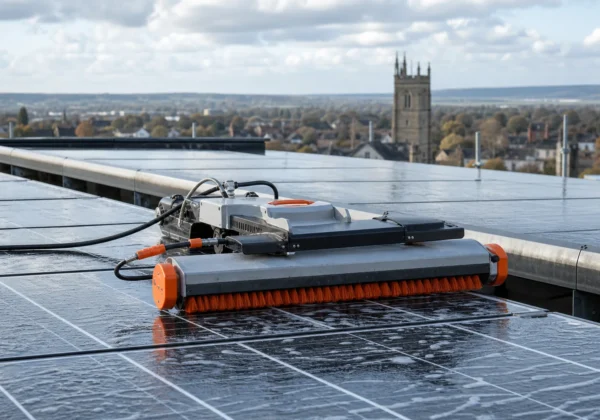
Set out where growth must be cut back and how often the site should be checked. A fixed mowing date may not suit every year or every part of a site. Give extra attention to panel edges, drainage routes, access tracks and areas where growth could obscure signs of damage. Cleaning should also be based on observed soiling and performance, rather than assumed to be needed on a fixed cycle.
Access routes need the same care. Keep gates, tracks and turning areas usable for planned visits and urgent repairs. After storms or prolonged wet weather, check for fallen branches, washouts or standing water that could block a route. Note any access limits in the site plan so a response team knows what to expect before arriving.
Work planning should cover electrical hazards, moving vehicles, uneven ground and lone working. Agree access permission before a visit. Staff should know the site emergency plan and the limits of their training. Work near electrical equipment must follow the site’s safe system of work, with isolation and access controlled by authorised personnel.
Night-time work may be needed for some tasks, but it changes the risk picture. Lighting can create glare or shadows, while wet ground and poor visibility make movement harder. Set out when work can happen after dark, who approves it and how the team will keep in contact. Don’t assume an urgent repair should proceed if the site isn’t safe to access.
A useful plan links each task to a place, a trigger and a responsible person. That gives the land-management team and the electrical team a shared view of what must be kept clear and when to raise a concern.
Records, warranties and the long-term value of O&M
Good records make a maintenance plan usable over time. Keep the current site layout, asset identifiers, inspection findings, fault alerts and work orders together. Add dates, image references and the name of the person who closed each action. If a fault returns, the team can see what was checked and what changed.
Warranty conditions may require specific records or timely notification of a defect. Keep the relevant terms with serial numbers, commissioning documents and service reports. When a possible claim arises, check the warranty wording before arranging work that could affect the claim. The owner, operator and maintenance team should know who submits the notice and who keeps the evidence.
A complete handover should show what was inspected, what was not accessible and what needs follow-up. For a thermal inspection, the report should help a reader link each finding to a location and understand the next action. Visual Perspectives Limited provides thermal inspections of solar PV systems on commercial roofs and public buildings, with reporting compliant with IEC 62446. The same focus on clear locations and evidence is useful when planning inspections across a wider estate.
O&M costs depend on the work included, site area and layout, travel, access needs, vegetation growth, reporting detail and the response time promised. A low annual fee may exclude call-outs, replacement parts or specialist testing. A higher fee may include a wider scope, but only if the contract says so. Compare the same items before deciding.
- Which inspections are planned, and what triggers an extra visit?
- Are monitoring checks continuous, scheduled or both?
- What response time applies to urgent faults, and when does the clock start?
- Are parts, electrical testing, vegetation work and cleaning included or charged separately?
- What records will you receive, and who owns the inspection data?
Ask for examples of report formats and a sample schedule before signing. Check how findings are ranked, who can approve extra work and how the provider reports work that could not be completed. A clear scope lets you compare service on what it actually includes, rather than a headline fee alone.
For public-sector estates, this record trail can support planned investment decisions and make it easier to explain why a repair was prioritised. It also gives future teams a usable history when staff or contractors change.
Solar farm maintenance FAQs
How often should a solar farm be inspected?
There isn’t one inspection interval that suits every solar farm. Set the schedule around the site’s age, equipment guidance, fault history, access and operating risk. Many plans combine routine remote checks with planned site inspections. Review the schedule after major weather events or repeated faults, and record why any inspection interval changes.
What does solar farm O&M include?
Solar farm O&M usually combines operational monitoring with planned and corrective maintenance. The scope may include alarm review, site inspections, vegetation control, fault response and reporting. Some contracts also include cleaning, warranty support or insurance-related administration. Ask for a written list of included tasks, exclusions, response times and charges for extra work.
How much does solar farm maintenance cost in the UK?
Solar farm maintenance costs vary with site size, layout, location and contract scope. Access needs, vegetation work, inspection methods, parts and response commitments can also affect the fee. Ask for a breakdown that separates planned work from call-outs and excluded items. That makes it easier to compare proposals without relying on a headline figure.
Can drone thermal imaging find solar panel faults?
Drone thermal imaging can help locate unusual temperature patterns across an operating array, which may point to a module or connection issue. It doesn’t confirm the cause on its own. Results depend on suitable inspection conditions and sound interpretation. Use the thermal findings to guide follow-up checks, such as visual inspection or electrical testing by qualified staff.
What records should an O&M provider give an asset owner?
An O&M provider should give records that connect each finding to a site location and a next action. Ask for inspection reports, fault and alarm logs, work orders, dates and close-out notes. Keep warranty documents and equipment details with these records. Agree who owns the data and how it will be handed over if the contract ends.
Conclusion
Choose an O&M plan with a clear scope, a review schedule and a traceable route from alert to completed action. Start by asking your current provider to map included work, exclusions and response times against your site needs. Visual Perspectives Limited provides independent drone and thermal inspection services across the UK for asset teams that need clear inspection evidence.