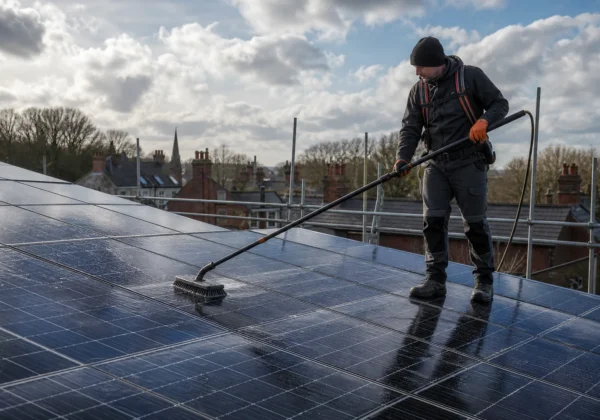
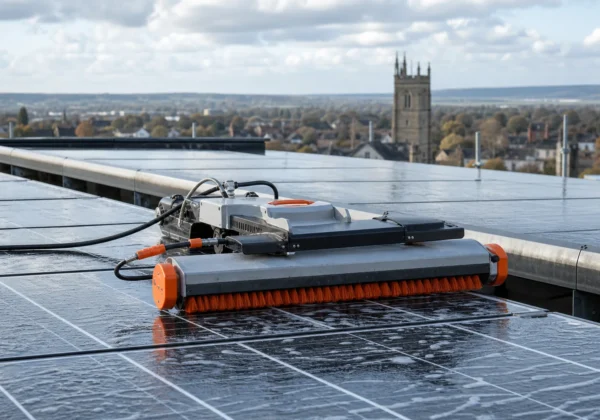
Hey folks, ever wonder if a quick rinse can actually boost your solar panels’ power output? In the next few minutes we’ll break down the real science behind cleaning, the tools you really need, and how to dodge the rookie mistakes that waste water, and money. We’re Visual Perspectives, and we’ve spent years helping UK property managers keep their solar assets running at peak performance. From thermal imaging inspections to hands-on cleaning advice, we know what works and what doesn’t. In this guide, we’ll cover seven essential tips for solar panel cleaning in 2026. You’ll learn why cleaning matters, how often to do it, whether to go DIY or hire a pro, what tools are safe, common mistakes, costs, and even a peek at the future of automated cleaning. Let’s get started.
1. Why Cleaning Solar Panels Boosts Efficiency
Solar panels work by letting sunlight hit the photovoltaic cells. When dirt, dust, or bird droppings cover the glass, less light gets through. That means less electricity. It sounds simple, but the numbers matter. According to a study from the University of California San Diego, panels that hadn’t been cleaned for 145 days lost about 7.4% of their efficiency. That might not sound huge, but over a year it adds up. In the UK, where we get plenty of rain, soiling losses are often lower, but spring pollen and bird droppings can still cut output by 10% or more.
Think about it this way: if your system saves you £500 a year on bills, a 7% loss means you’re leaving £35 on the table. For a commercial array saving £5,000 a year, that’s £350. And that’s just from light soiling. Heavy buildup from construction dust, farmland, or busy roads can push losses much higher. The key takeaway: clean panels = more power = more savings.
Bottom line:Keeping your solar panels clean is one of the simplest ways to maximise your system’s output and protect your investment.
2. How Often Should You Clean Your Panels?
The golden rule: at least once or twice a year. But the real answer depends on where you live and what’s around you. In the UK, many homeowners get away with a single annual clean, especially if they get regular rain. However, certain conditions call for more frequent attention.
- Near farmland or construction:Dust and pollen accumulate fast. Aim for every 6 months.
- Under trees:Leaves, sap, and bird droppings are constant. You might need quarterly cleaning.
- Coastal areas:Salt spray can leave a stubborn film. Twice a year is a good start.
- Flat roofs or low tilt angles:Dirt doesn’t slide off easily. Clean more often.
Our own research into 12 UK solar panel cleaning providers found that only two firms gave a specific recommended frequency, both said every six months. That aligns with industry averages. But don’t just stick to a calendar. Watch your energy bills. If you see a sudden drop in output, especially after a dry spell, it’s time to clean.
Bottom line:Clean at least once a year, and increase frequency if you’re in a dusty, coastal, or tree-heavy environment.
3. DIY vs Professional Cleaning: Which Is Best?
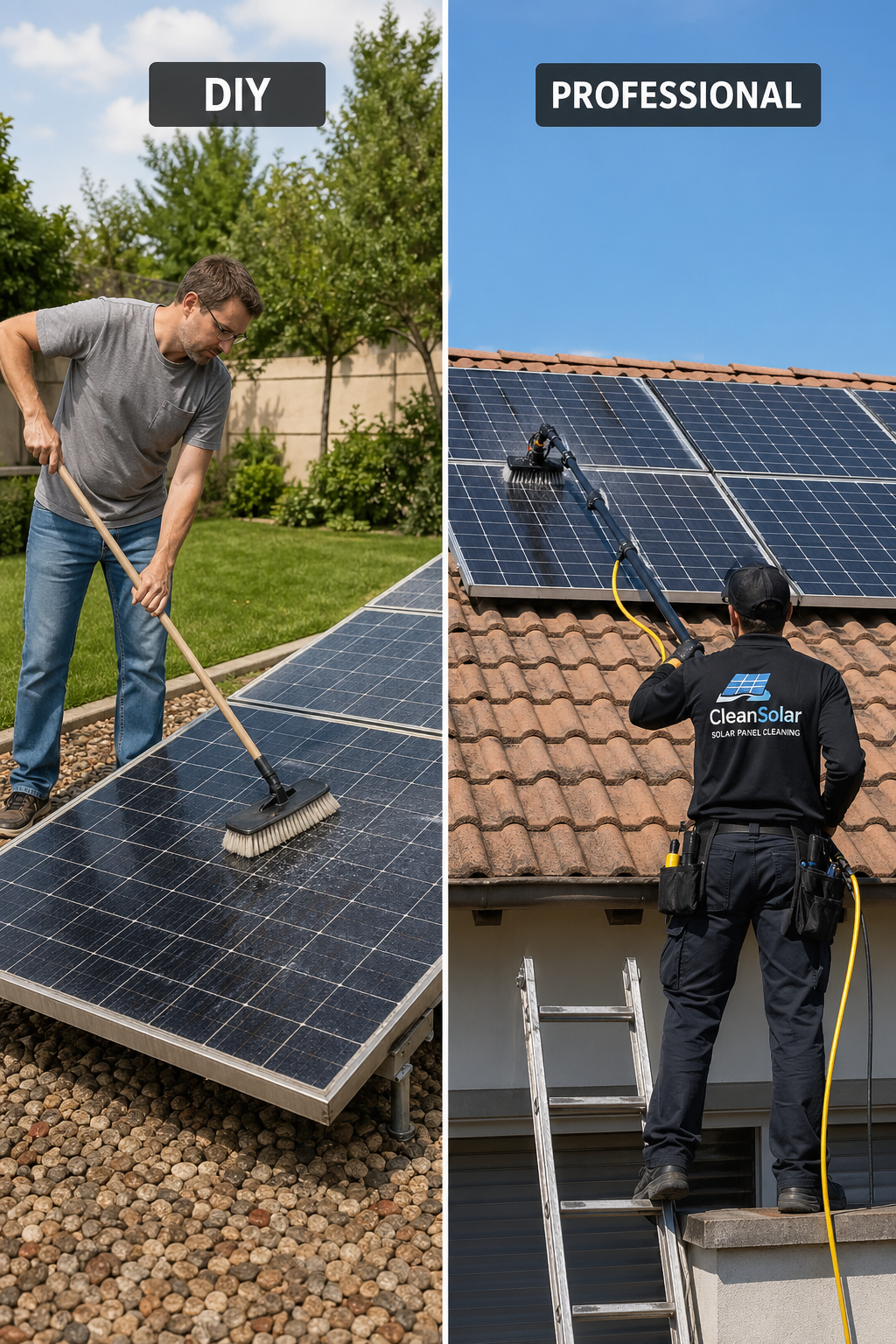
You’ve got two paths: roll up your sleeves or call in the pros. Each has trade-offs. Let’s break them down.
DIY Cleaning
Pros: It’s cheaper, no labour costs. You can do it on your schedule. And for ground-mounted panels with easy access, it’s perfectly doable. The basic tools (soft brush, squeegee, deionised water) cost under £100. Cons: Safety is the big one. Ladder work on a sloped roof is risky. One slip could mean a hospital visit. Also, if you use the wrong technique, like a pressure washer or harsh chemicals, you can scratch the glass or void your warranty. A study from Solar Protect found that improper DIY cleaning can reduce panel efficiency over time by damaging the anti-reflective coating.
Professional Cleaning
Pros: Experts have the right gear, deionised water systems, soft brushes, safety usees. They know how to clean without damaging anything. Many also offer inspection as part of the service, spotting issues like micro-cracks or loose wiring. Cons: It costs more, typically £100-£300 in the UK. But consider this: a professional clean can boost output by 10-20% if your panels are filthy. That extra energy can pay for the cleaning in a year or two.
| Factor | DIY | Professional |
|---|---|---|
| Cost per clean | £10-£50 (tools + water) | £100-£300 |
| Safety risk | High (roof work) | Low (trained staff) |
| Effectiveness | Variable | Consistently high |
| Warranty risk | Possible if wrong method | Minimal if using approved methods |
| Additional inspection | Unlikely | Often included |
For most homeowners with a standard two-storey house, we recommend hiring a professional at least every other year. If your panels are ground-mounted or on a single-storey roof, DIY can work, but only if you follow safe practices. And never walk on the panels themselves.
Bottom line:Choose DIY for flat, safe access and a tight budget; choose a pro for roof-top systems and peace of mind.
4. Essential Tools and Equipment for Safe Cleaning
Cleaning solar panels isn’t the same as washing windows. You need the right gear to avoid damage. Here’s our list of must-haves for safe, effective cleaning.
- Deionised (DI) water system, Tap water leaves mineral deposits that create spots and reduce efficiency. A DI system removes these minerals. You can buy a portable DI tank or a three-stage RO/DI unit. Xero Products offers a range of pure water systems designed for solar panel cleaning.
- Soft bristle brush, Use a brush with soft nylon bristles. Avoid hard brushes or anything abrasive. A rotating brush can speed things up, but a standard brush gives you more control.
- Water-fed pole, Extends your reach so you can clean from the ground or a safe ladder position. Look for a lightweight carbon fibre pole with an angle adapter.
- Squeegee, Use a soft rubber squeegee to remove excess water. But be careful: if it picks up grit, it can scratch the glass. Rinse it frequently.
- Safety use and ladder stabilizer, If you must go on the roof, use a use anchored to a secure point. Never lean over the edge.
Avoid pressure washers at all costs, they can force water into the panel seals and damage the wiring. Also skip harsh detergents; pure water is all you need. If a panel has stubborn bird droppings, you can use a small amount of mild soap (like a drop of biodegradable dish soap) but rinse thoroughly.
Bottom line:Invest in a deionised water system and a soft brush; never use pressure washers or abrasive materials.
5. Common Mistakes to Avoid
We’ve seen it all. From squeegees that scratch glass to garden hoses that leave spots. Here are the top mistakes we urge you to avoid.
- Using a squeegee like a window cleaner.Squeegees can pick up dirt and scratch the glass. They’re also unnecessary if you use pure water, it dries spot-free.
- Cleaning with tap water.Hard water leaves limescale that blocks sunlight. Always use deionised or distilled water.
- Using detergents or chemicals.Many commercial cleaners contain ammonia or abrasives that damage the anti-reflective coating. Stick to pure water or manufacturer-approved products.
- Cleaning in direct sunlight.If the panels are hot, water evaporates quickly, leaving streaks. Also, sudden temperature changes can crack the glass. Clean in the morning or evening.
- Walking on the panels.Solar panels are not designed to bear weight. You can crack the glass or damage the cells. Use a walkway or work from a ladder.
- Not disconnecting the system.While not always necessary, it’s safer to shut off the system before cleaning to avoid electrical risks.
- Ignoring the warranty.Some warranties require professional cleaning or specific methods. Check your terms first. Benz Softwash notes that many manufacturers strongly discourage detergents and recommend deionised water only.
“The best time to start cleaning your solar panels is before efficiency drops. The second best time is now.”
Bottom line:The most common mistakes stem from using the wrong water, wrong tools, or wrong timing, all easily avoidable with a little knowledge.
6. Cost of Solar Panel Cleaning: DIY vs Professional
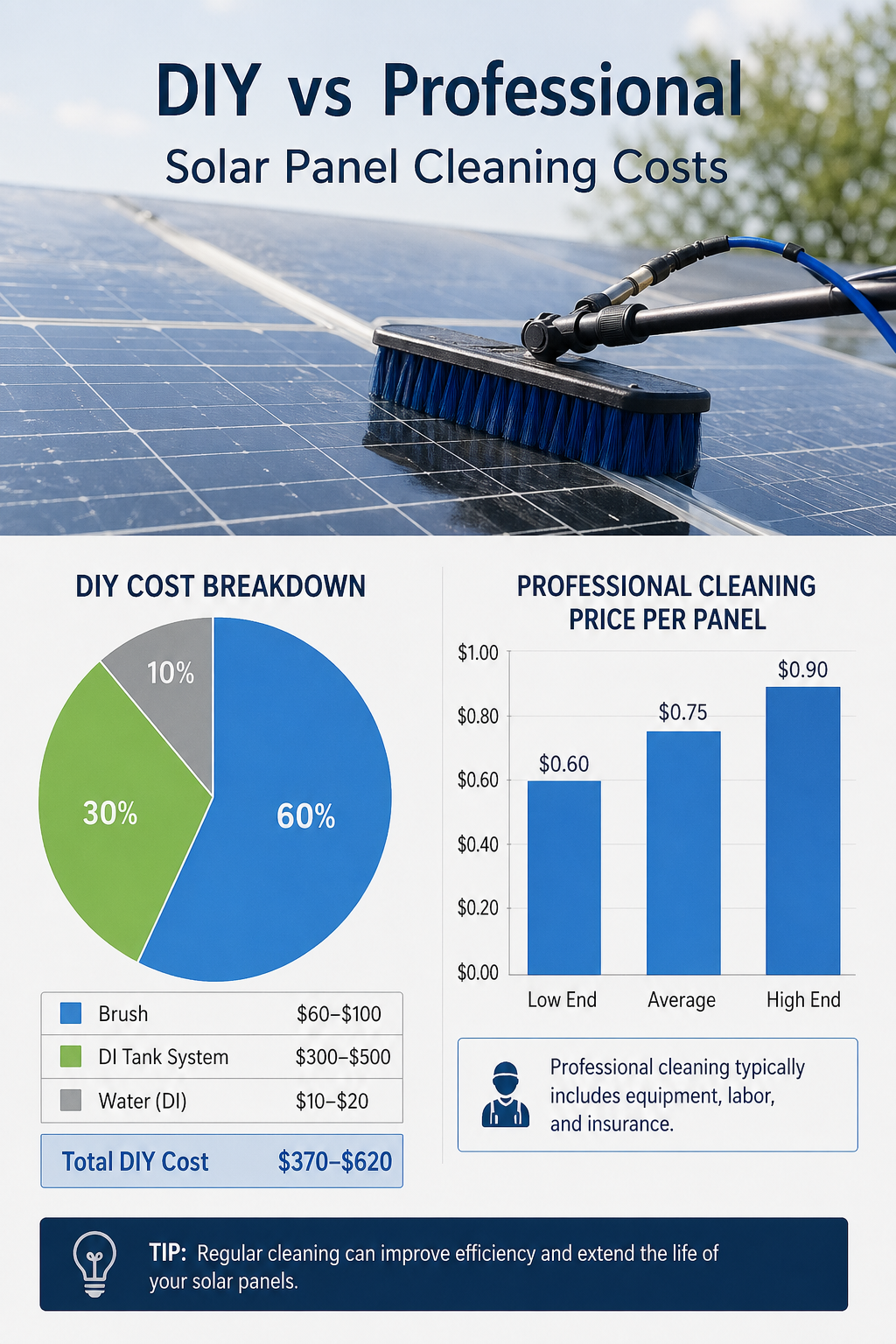
Let’s talk money. Solar panel cleaning costs vary widely, but we’ve gathered real UK data to give you a clear picture.
DIY Costs
Initial outlay: £50-£150 for a basic kit (brush, pole, squeegee). A portable DI tank costs £100-£200. Refilling the resin adds £30-£50 per year, depending on usage. So first year cost is around £150-£400. After that, it’s just consumables. If you clean twice a year, that’s roughly £15-£25 per clean in resin cost, cheaper than hiring a pro.
Professional Costs
Based on UK quotes from sources like MyJobQuote, the average professional clean costs about £150 for a standard home. Per-panel pricing ranges from £4 to £15, with most quotes falling between £8 and £12 per panel. For a 10-panel system, that’s £80-£120. Some companies offer discounts for bi-annual packages.
But remember: a professional clean often includes an inspection. That can catch problems early. For example, if a panel has a micro-crack that’s causing a hotspot, spotting it can save you hundreds in repair or replacement. At Visual Perspectives, we offer solar ROI protection that combines cleaning with thermal imaging to detect hidden defects.
Which option pays off? Run the numbers. If a professional clean costs £150 and boosts your annual output by 10% on a system saving £500/year, that’s an extra £50/year. It’ll take three years to recoup the cost. But if you DIY the first year for £200 in tools and then clean for £20 per year in resin, your break-even is faster. However, safety and warranty risks tip the scale for many.
Bottom line:DIY is cheaper per clean after the initial investment, but professional cleaning adds safety and inspection value that can protect your warranty and system health.
7. Advanced: Automated Robots and Filtration Systems
The future of solar panel cleaning is already here. Autonomous robots and advanced water filtration are transforming how large arrays stay clean. But what does that mean for UK homeowners?
Cleaning Robots
For utility-scale solar farms, robotic cleaners like those used by Oxmaint can clean megawatts of panels without using water. They use soft rotating brushes and microfibre cloths. Some models even have onboard cameras to spot defects. The catch: they’re expensive, costing tens of thousands of pounds, so they only make sense for large commercial installations. For a typical UK home, robots are overkill.
Filtration Systems
On the equipment side, portable DI water systems have improved. You can now get compact three-stage filters that fit in a small van. Some models, like the Xero Pure MAX, produce up to 400 gallons of pure water per resin refill. That’s enough to clean dozens of homes. For professional cleaners, investing in a high-flow RO/DI system can save money on resin and allow window cleaning as a side service.
But here’s an interesting finding from our research: despite the buzz, only about 8% of UK solar panel cleaning companies actually use drone-mounted brushes or robots. The vast majority still rely on water-fed poles and manual labour. So while automation is coming, it’s not yet mainstream for residential work.
Bottom line:Advanced technology is worth watching, but right now, traditional methods with pure water are still the gold standard for residential systems.
FAQ
How often should I clean my solar panels in the UK?
At least once a year, but twice a year (spring and autumn) is recommended if you live near farmland, busy roads, or the coast. Rain helps, but it doesn’t remove stubborn dirt like bird droppings or pollen. Monitor your energy output; if it drops noticeably, clean immediately.
Can I use a pressure washer to clean solar panels?
No. Pressure washers can force water into the panel frames and connectors, causing damage and voiding your warranty. They can also scratch the glass if debris gets caught. Stick to a gentle hose with a soft spray nozzle or a water-fed pole.
What type of water should I use for solar panel cleaning?
Always use deionised or distilled water. Tap water contains minerals that leave spots and can reduce panel efficiency. A portable DI tank is the most practical solution for DIYers. Some professionals use a three-stage RO/DI system for even higher purity.
Will cleaning my solar panels void the warranty?
It can if you use the wrong methods. Most manufacturers require that you avoid abrasive materials, pressure washers, and harsh chemicals. Check your warranty terms. Some specifically require professional cleaning. When in doubt, hire a certified professional who uses deionised water and soft brushes.
Do I need to disconnect my solar panels before cleaning?
It’s a good safety practice, especially if you’re working on the roof. Shut off the system via the main switch. Even after shutdown, the cables may still carry voltage, so avoid touching them. If you’re cleaning from the ground, disconnection isn’t always necessary, but it’s safer to disconnect.
How much does professional solar panel cleaning cost in the UK?
On average, around £150 for a standard residential system. Per-panel prices range from £4 to £15, with most quotes at £8-£12 per panel. For a 10-panel array, expect to pay £80-£120. Some companies offer bi-annual packages at a discount.
Can solar panels get too hot to clean?
Yes. Avoid cleaning in direct sunlight when panels are hot. The temperature difference can cause thermal shock and crack the glass. Also, water evaporates too quickly, leaving spots. Clean early in the morning or late in the evening when panels are cool.
Is it worth cleaning solar panels if I have a ground-mounted system?
Absolutely. Ground-mounted panels are easier to access, so DIY cleaning is simpler and safer. They also tend to accumulate more dust and mud splashes. Regular cleaning can boost output by 10-15% in dry conditions. The cost of a DI tank pays for itself within a year or two.
Conclusion
Solar panels are a smart investment, but they need a little care to keep performing their best. We’ve covered the seven essential tips: why cleaning matters, how often to do it, DIY vs pro, the right tools, common mistakes, costs, and a glimpse into advanced technology.
Remember, you don’t need to be fanatical about cleaning. A simple schedule of once or twice a year with pure water and a soft brush is usually enough. But don’t ignore the signs: if your energy output drops, if you see visible buildup, or if you live in a high-soiling area, it’s time to clean.
At Visual Perspectives, we specialise in solar panel cleaning and thermal inspections across the UK. Our trained technicians use professional-grade equipment to restore your panels’ efficiency safely. We also offer combined cleaning and thermography packages, so you get a performance boost and a health check in one visit. That’s what we call peace of mind.
So go ahead, give your solar panels the attention they deserve. Whether you DIY or call us, your wallet, and the planet, will thank you.