Solar panels can look fine from the ground while their output slips. A steady maintenance plan helps you spot changes, check whether cleaning is needed and arrange the right inspection before a small fault grows.
We analyzed 69 comments and questions from Reddit, YouTube and Quora about solar panel maintenance and found that 51% mentioned cleaning methods.
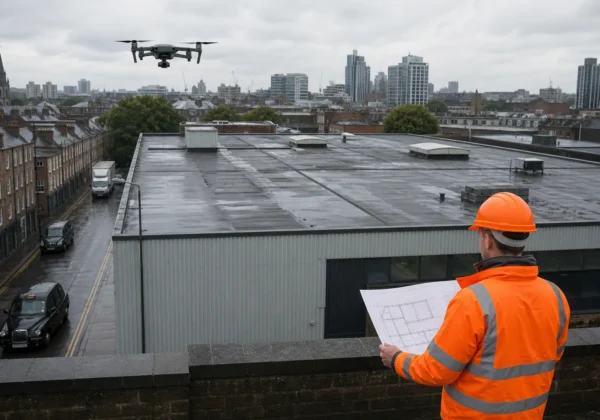
For solar panel maintenance in the UK, start with performance data, then use safe visual checks to guide cleaning and professional surveys. Keep a record of each action so your team can compare results over time.
Step 1: Set a Performance Baseline and Maintenance Schedule
Your baseline gives you a fair way to judge whether the system has changed. Gather the commissioning documents, array layout, inverter details and any past inspection reports. Note the date each record covers and who holds it.
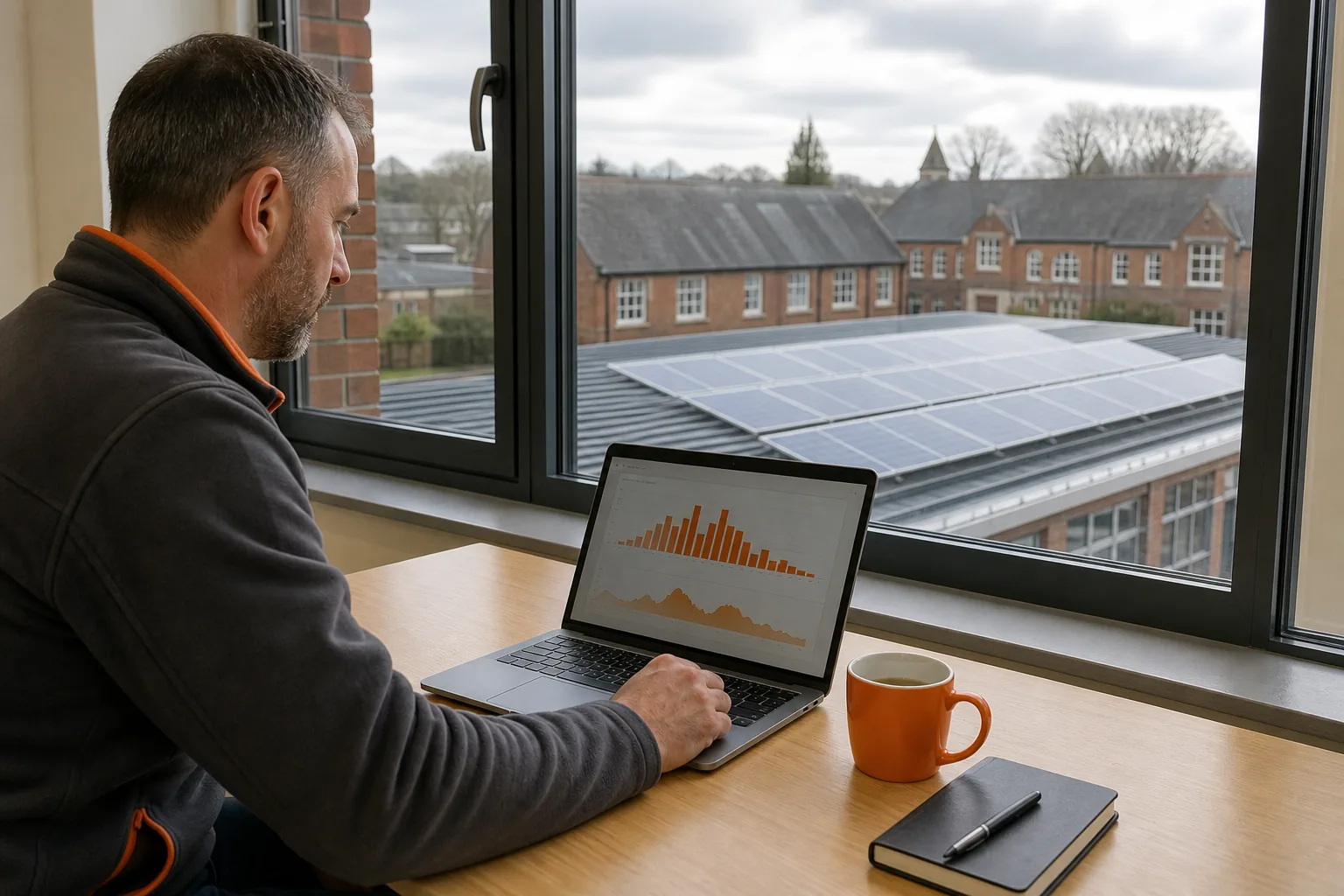
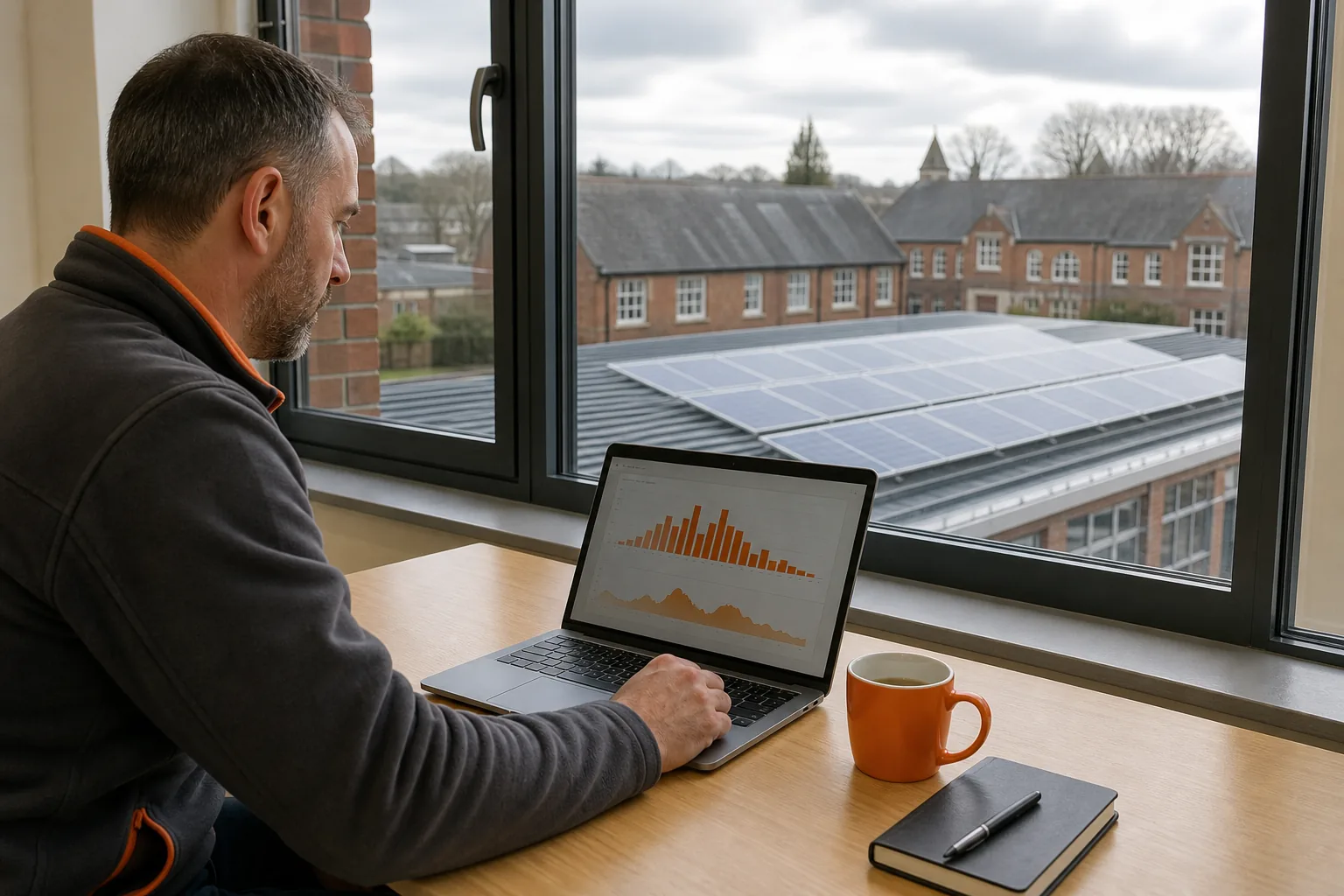
Use the inverter portal or site energy system to review generation trends. Compare similar periods where possible, and record relevant conditions such as prolonged cloud, snow cover or a change in shade. A single low reading is not enough to diagnose a fault. Look for repeated drops, warning messages or one part of the array falling behind its usual pattern.
A useful schedule has different checks for different risks. Set routine monitoring reviews during the year. Plan a visual review at a frequency that suits the roof, system age and site conditions. Add an inspection after severe weather or a known impact, and bring forward a survey if the data shows a persistent change.
Commercial sites may need a more formal plan than a small domestic array. A school estate, for example, can track each building separately, then group work by roof access and maintenance windows. For broader guidance on system checks, see our Solar PV maintenance guide.
Agree who reviews alerts and who can approve follow-up work. Include warranty dates and the manufacturer’s care instructions in the maintenance record. The plan should say what triggers a closer check, not just set dates on a calendar.
Step 2: Carry Out Safe Ground-Level Checks and Decide Whether Cleaning Is Needed
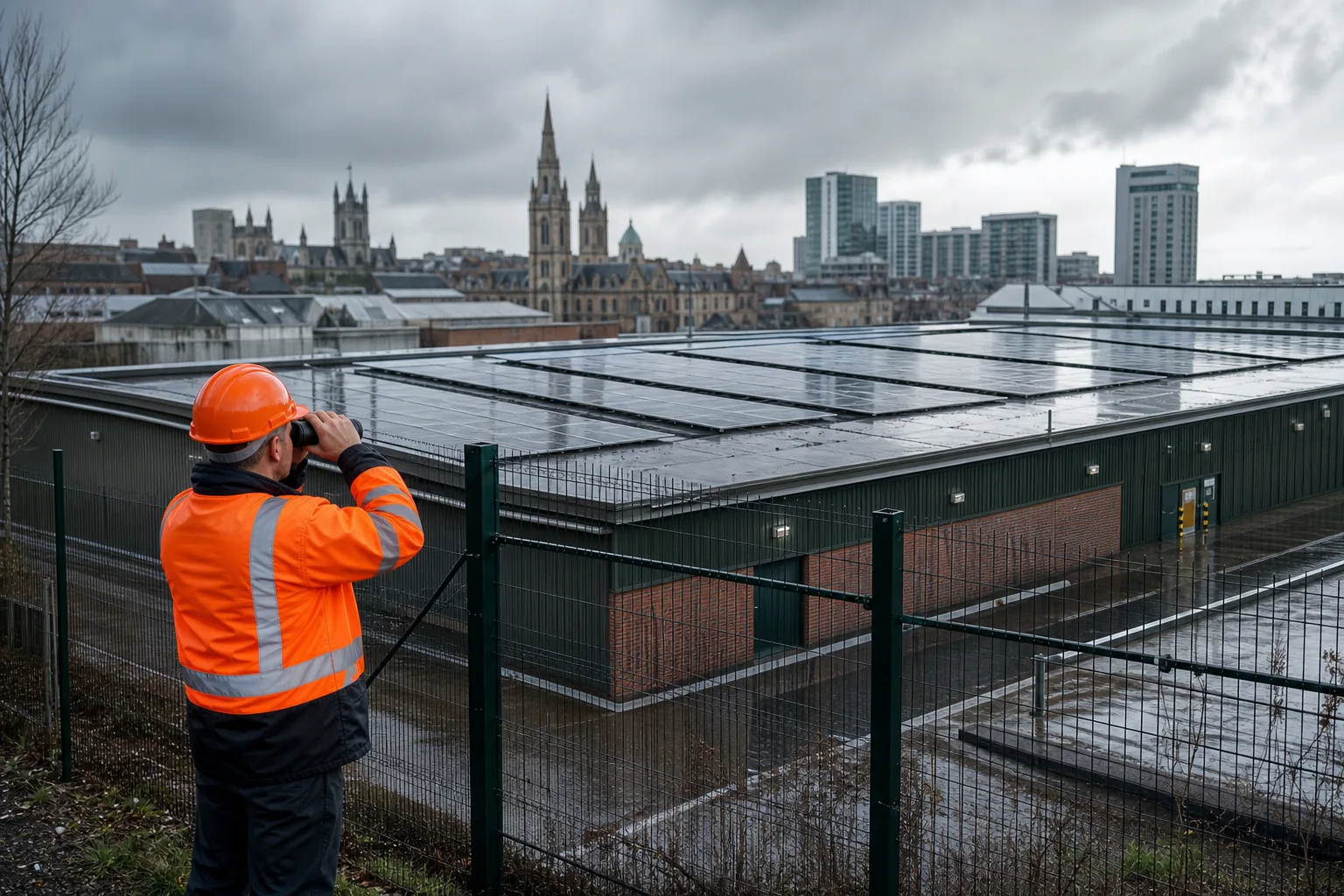
A ground-level check helps you spot visible changes without taking risks on the roof. Look from a safe place on the site, and use binoculars if you need a closer view. Do not climb onto the roof or touch electrical equipment as part of a routine check.
Look for heavy bird fouling, leaf build-up, visible cracks or a new shade source. Check for loose-looking parts, damaged cables or signs of water near roof penetrations. You can also note inverter warnings from the display or monitoring system. If you see damage or a warning, record its location and pass it to a qualified person.
Rain washes away some surface dirt in the UK, but it won’t remove every deposit. Snow can cover modules for a time, while pollen, dust, tree debris and bird fouling may stay in place. Flat or shallow-angle arrays can hold dirt for longer. Check whether a performance change lines up with visible soiling before you book a clean.
Cleaning too often can add cost without a clear gain. If cleaning seems justified, ask the service team to follow the panel maker’s instructions. Abrasive tools, strong chemicals or high-pressure water can damage components or affect warranty cover. Never clean hot panels with cold water, and don’t scrape dry grit across the glass.
Working at height carries a fall risk, even when the roof looks easy to reach. See the relevant legislation for further information. For a wider checklist covering visual checks and system monitoring, use our solar panel health check guide.
Cleaning is a decision based on evidence. If the panels look clear and generation is in line with the baseline, there may be no reason to arrange a clean yet.
Step 3: Arrange Professional Inspection, Cleaning or Minor Repairs
Bring in a qualified professional when the concern needs roof access, electrical testing or a closer look than ground checks can provide. Before agreeing work, define the issue, the parts of the site to inspect and the report you need at the end.
Ask how the survey will be carried out and what it covers. For a solar PV thermographic survey, confirm whether the work follows IEC 62446 requirements and whether the report identifies findings by array location. Thermal imaging maps temperature differences across operating equipment. It can help flag anomalies for further review, but it does not replace electrical testing where that is needed.
Visual Perspectives Limited provides managed drone-based inspections across the UK, including solar PV thermal imaging inspections. Our surveys use high-resolution visual and thermal equipment, with 3D mapping available for detailed roof and asset records. We provide reporting compliant with IEC 62446 standards. A clear scope helps your team know whether the task is a clean, a thermal survey, a roof inspection or a combination.
For drone work, check the operator’s qualifications and site controls, and confirm that the planned flight can be carried out safely. Ask how the flight area will be managed around staff, pupils, patients or the public.
Request a written scope before work begins. It should state which arrays are included, what equipment or tests are planned, and how the team will handle access and safety. Ask how findings will be graded and what evidence will be supplied. A thermal image without a clear location reference can be hard to turn into a work order.
For cleaning, confirm the method suits the module maker’s guidance and the roof surface. For repairs, agree who will carry them out and whether the work affects warranty conditions. Keep inspection separate from repair approval when you need an independent view of the fault.
Visual Perspectives Limited can provide thermal imaging and drone roof inspections for public buildings and commercial estates. The aim is to report findings clearly and help your team decide what needs attention next.
Step 4: Record Findings and Use Them to Plan Estate Maintenance
A report is most useful when it leads to a named action. File it with the array layout and previous records, then add the inspection date, weather conditions, scope and key findings. If a defect is found, note its panel or roof location so a maintenance team can find it again.
Turn recommendations into work orders with an owner and a target date. Separate urgent safety or operating concerns from routine cleaning and later review. When repairs are complete, record what changed and keep any follow-up test or image with the original report.
For estates with several buildings, use the same fields for each site. That makes it easier to see where inspections are overdue, where faults recur and which roofs may need closer review. Keep the source records too; a summary alone may not show the detail needed for a warranty query or insurance discussion.
Maintenance records can also support carbon and energy reporting. Track generation and downtime using the same method each reporting period. If your organisation calculates emissions avoided, note the emissions factor and reporting boundary used. That lets colleagues understand how the figure was reached instead of treating it as a stand-alone claim.
Compare each new report with the baseline. A clean may resolve visible soiling, while a persistent drop may point to shading, a module issue or a system fault. Keep the cause separate from the symptom until a qualified person has checked it.
For more detailed commercial inspection planning, our commercial solar panel inspection guide explains how drone surveys and thermal imaging fit into a structured review. Consistent records turn individual findings into a plan for the whole estate.
Frequently Asked Questions
How often should solar panels be maintained in the UK?
There isn’t one interval that suits every UK solar array. Review system data during the year, then set visual and professional checks around the roof, site exposure, system age and warranty terms. Flat roofs, heavy bird activity or recurring faults may call for closer attention. Add an extra check after damage or severe weather when there’s a reason to suspect an issue.
Do solar panels need cleaning if it rains often?
Rain can wash away some dirt, but it won’t always clear bird fouling, pollen or debris. Check the panels safely from the ground and compare generation with the system’s baseline. If soiling is visible and performance has changed, ask whether a clean is likely to help. Use the module maker’s cleaning instructions and avoid unsafe roof access.
Can I inspect or clean solar panels myself?
You can review monitoring data and look for visible changes from a safe ground-level position. Don’t climb onto a roof, touch cables or open electrical equipment unless you’re trained and authorised. Roof cleaning introduces fall risks, while unsuitable tools can damage panels. Arrange a qualified service when access, testing or repair is needed.
Does solar panel maintenance affect warranties or insurance?
It can matter, so check the terms that apply to your system and site. Follow the manufacturer’s care guidance and keep records of inspections, cleaning and repairs. If you need to make a claim, clear dates and findings help show what was observed and what action followed. Don’t assume one maintenance schedule applies to every warranty or policy.
What should a solar PV thermal imaging report include?
Ask for a report that links each finding to a clear array or panel location. It should state the survey scope and relevant conditions, show the thermal evidence and explain which findings need follow-up. For standards-aligned work, confirm the report addresses the applicable IEC 62446 requirements. Thermal imaging can flag anomalies, but electrical testing may still be needed to confirm a cause.
Conclusion
Set a baseline, check safely from the ground and arrange professional work when the evidence calls for it. Start by reviewing the latest generation record and noting any repeated changes; Visual Perspectives Limited can help with independent drone and thermal inspections across the UK.