If you own or manage a commercial building with solar panels, you already know the benefits: lower energy bills, a smaller carbon footprint, and a solid return on investment. But here’s something most people don’t think about until it’s too late: solar panels degrade over time. Faults happen. Efficiency drops. And without regular inspections, small problems turn into expensive failures.
That’s where asolar panel surveycomes in. A commercial solar panel survey uses drones and thermal imaging to spot defects before they cost you money. It’s fast, safe, and incredibly detailed. In this guide, we’ll walk you through everything you need to know: what a survey involves, why drone-based thermal imaging is the gold standard, how IEC 62446 compliance matters, the step-by-step process, and the top benefits for your property.
Let’s get into it.
What Is a Commercial Solar Panel Survey?
A commercial solar panel survey is a detailed inspection of a solar photovoltaic (PV) installation on a commercial or public building. Its purpose is to check the health of every panel, identify faults, and ensure the system is performing as designed. Unlike a basic visual walk-around, a proper survey uses advanced tools like drones, thermal cameras, and data analysis software to deliver complete results.
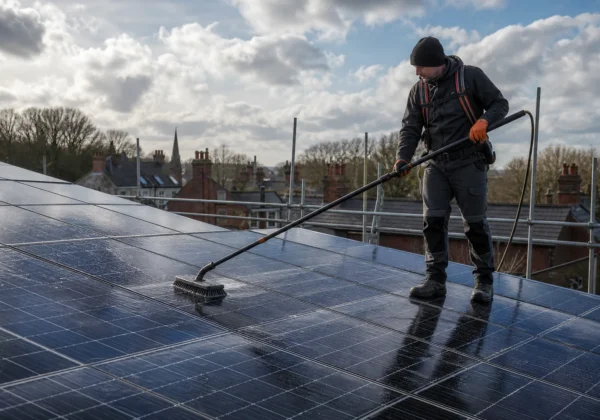
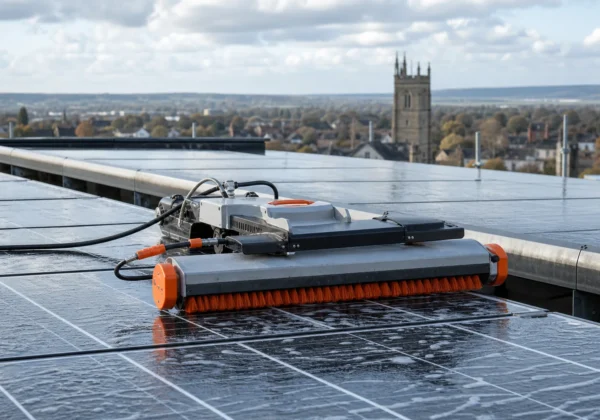
Think of it as a health check for your solar array. Just like you’d get an annual service for your boiler, your solar panels need regular check-ups too. Dirt, weather, age, and electrical issues all take a toll. A survey catches these problems early, so you can fix them before they reduce your energy output or cause a costly breakdown.
At Visual Perspectives, we perform drone-based solar panel surveys across the UK. We use high-resolution thermal cameras to measure temperature patterns across every panel. Hot spots mean trouble: cell cracks, bypass diode failures, or string outages. Our IEC 62446‑compliant reports give you a clear picture of your system’s condition.
What Gets Checked?
A thorough survey covers several key areas:
- Module-level thermography, Each cell is checked for temperature anomalies.
- String performance, We look for underperforming strings.
- Inverter and wiring, Electrical connections are evaluated (though drone-based surveys focus on the array itself).
- Physical damage, Cracks, delamination, or soiling are documented.
- Soiling assessment, Dirt and debris that block sunlight are noted.
The result? A clear, prioritized list of issues, from critical failures to minor maintenance needs. No guesswork. No climbing ladders.
Bottom line:A commercial solar panel survey is a non‑negotiable part of maintaining your solar investment, catching faults early and maximizing your energy yield.
Why Drone-Based Thermal Imaging Is the Gold Standard for Solar PV Inspections
Manual inspections are slow, dangerous, and limited. Workers have to walk on rooftops or use cherry pickers. They can only see what’s visible to the naked eye. But many solar panel faults are invisible until they show up as heat. That’s why drone-based thermal imaging has become the gold standard for commercial solar panel surveys.
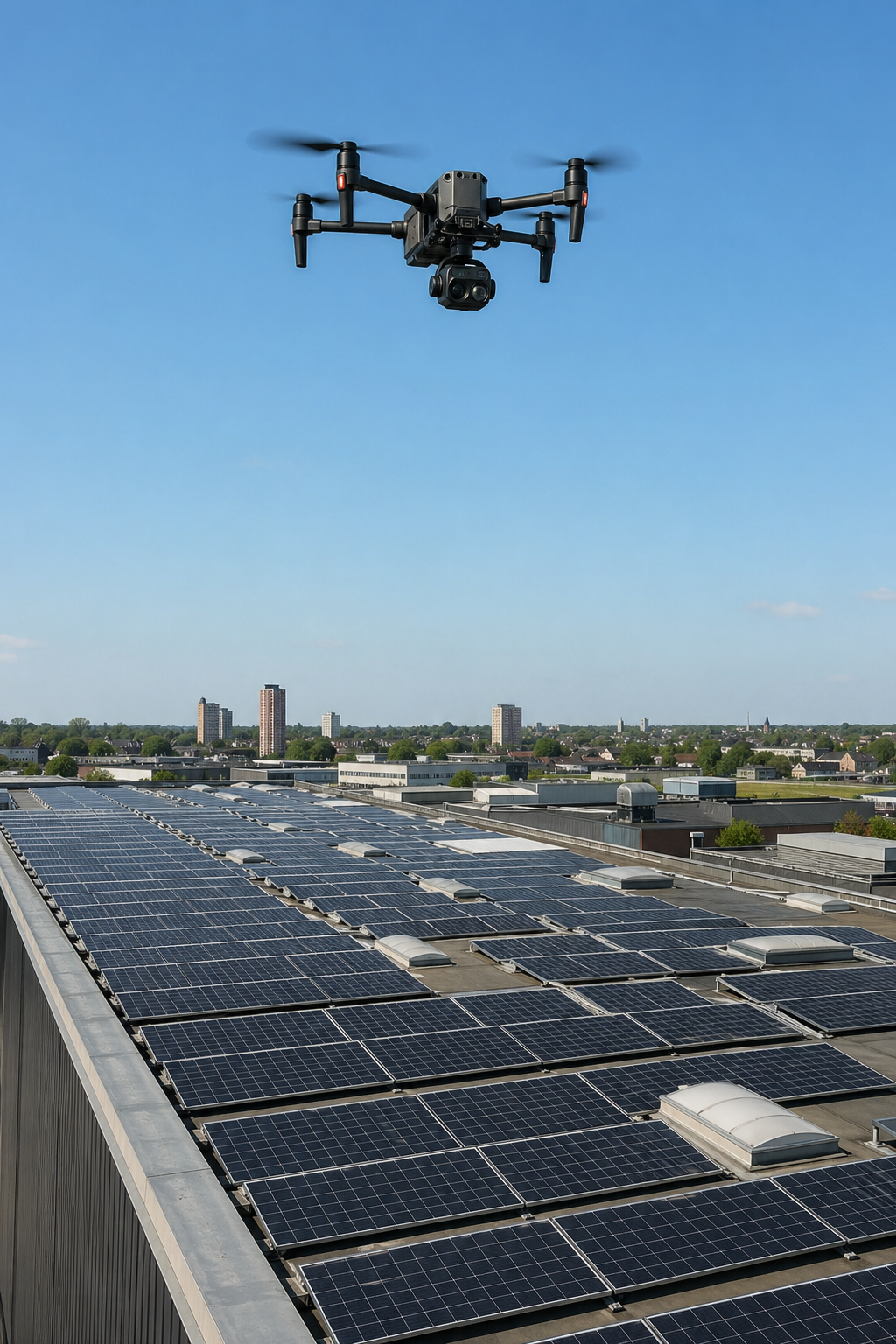
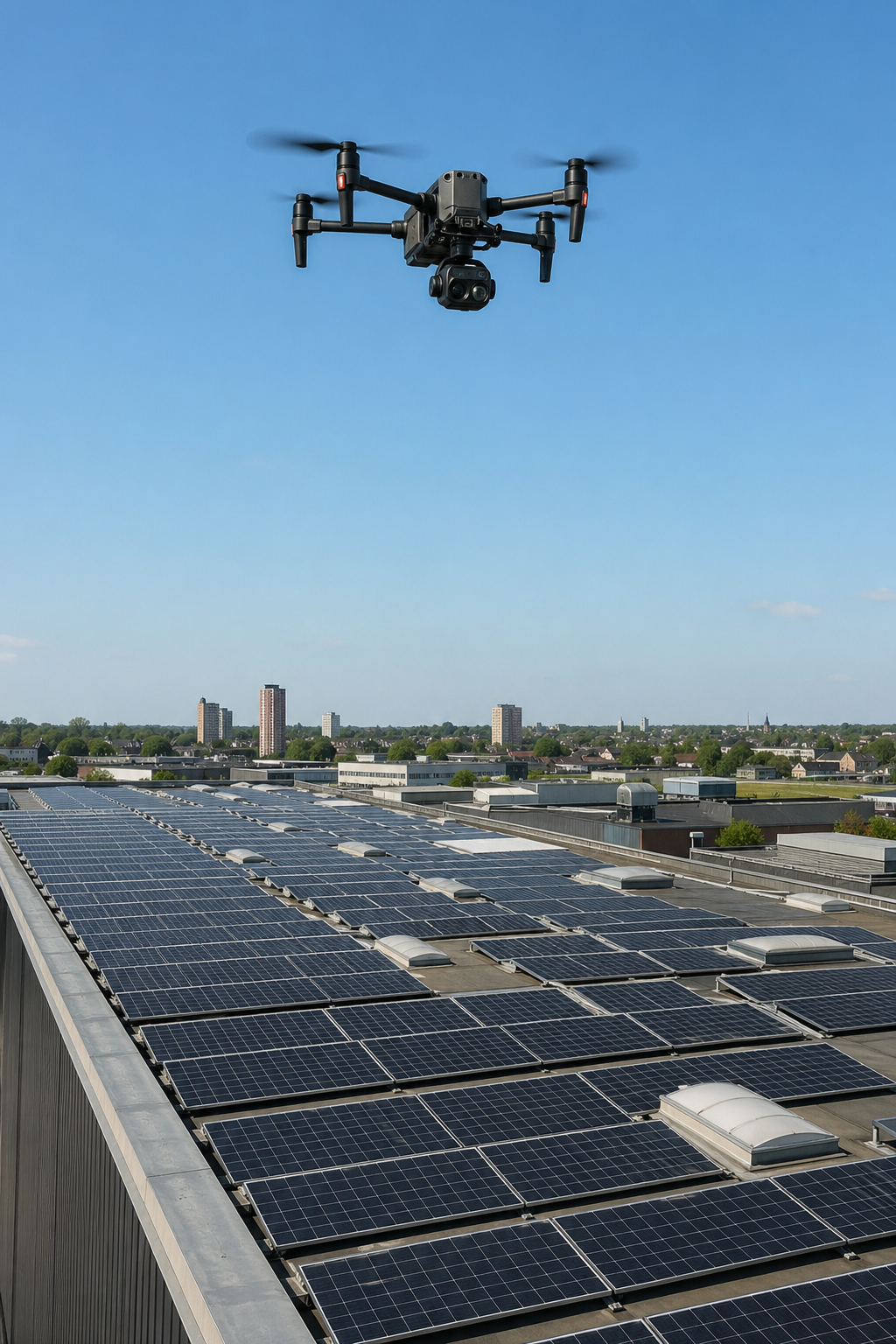
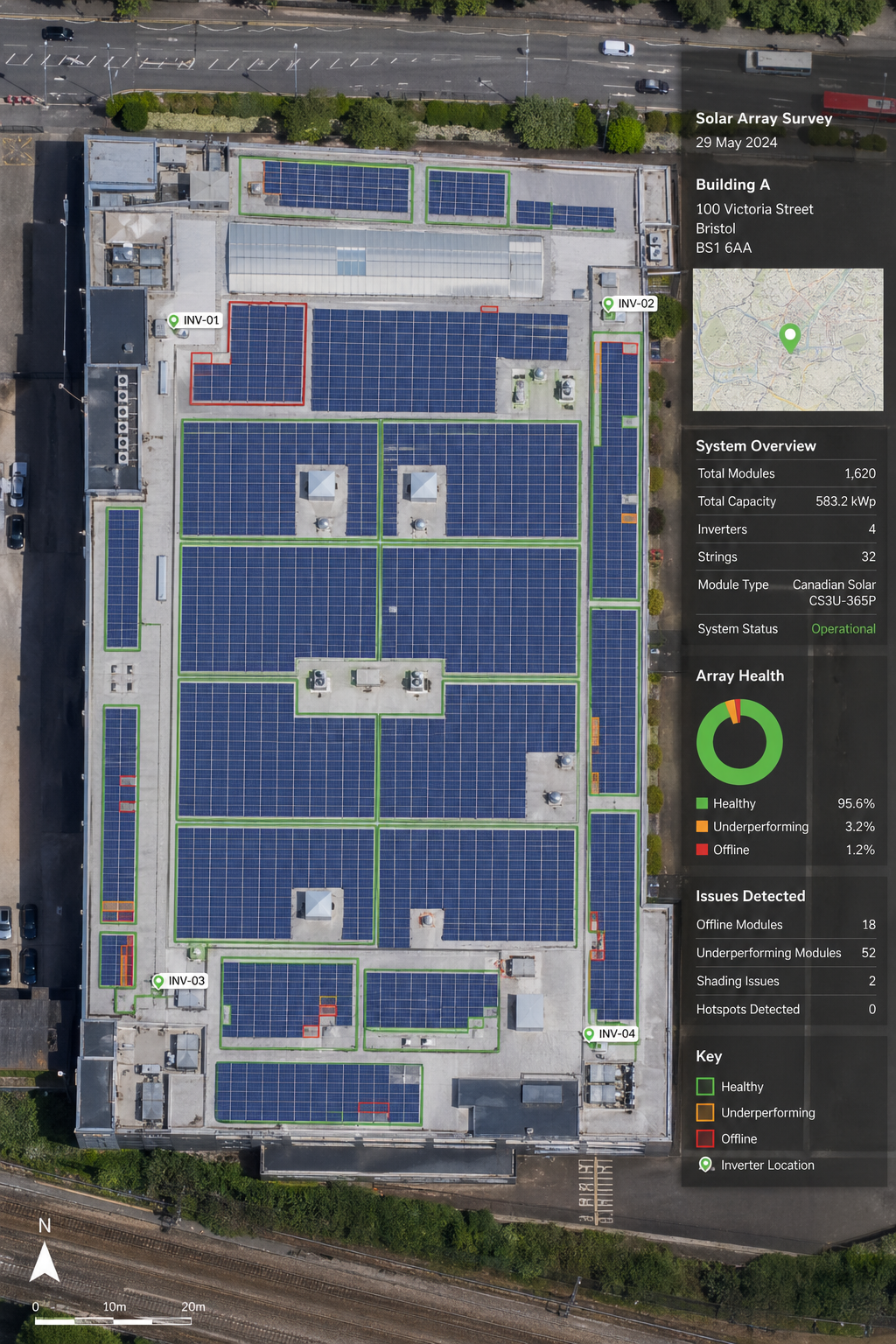
Drones fly over the array, capturing hundreds of high-resolution thermal images in minutes. Those images are stitched together into an orthomosaic map, where every hot spot is precisely located. The data is objective, repeatable, and much more detailed than any ground-based inspection.
Speed and Coverage
Drones are fast. According to a LinkedIn comparison by Clearspot.ai, drone inspections can be up to four times faster than manual methods. A team using two drones can inspect around 617 acres of solar panels in a single day , work that would take three to four months by hand. For commercial rooftops, a full survey can be completed in a few hours instead of days.
Accuracy at the Cell Level
Thermal cameras detect temperature differences as small as 0.05°C. This lets us spot individual faulty cells, not just whole modules. The IEC 62446‑3 standard requires a minimum resolution of 5×5 pixels per cell. Our equipment meets and often exceeds that requirement.
Safety
Manual inspections mean people on roofs. That’s risky. Falls, electrical hazards, and weather exposure are all real dangers. Drones keep inspectors safely on the ground. No ladders, no usees, no scaffolding needed.
Bottom line:Drone-based thermal imaging offers unmatched speed, safety, and precision, making it the best method for commercial solar panel surveys.
IEC 62446 Compliance: Ensuring Your Solar Installation Meets Standards
If you’re serious about the quality of your solar panel survey, you need IEC 62446 compliance. IEC 62446 is an international standard that sets the requirements for testing, documentation, and maintenance of grid-connected PV systems. Part 3 of the standard , IEC 62446‑3:2017 , specifically covers outdoor infrared thermography of photovoltaic modules and plants.
Why does this matter? Because a survey that isn’t IEC 62446 compliant might miss critical faults. The standard defines exactly how thermal images should be captured, under what conditions, and with what resolution. Without it, your inspection data may not hold up for warranty claims, insurance, or technical due diligence.
ing’s explanation of the standard, the key requirements include:
- Irradiance above 600 W/m² and stable during inspection
- Wind speed low enough to ensure drone stability
- No soiling or vegetation blocking the panels
- Minimum geometric resolution of 5×5 pixels per cell
- Proper calibration of thermal sensors
What This Means for Your Survey
Not every drone inspection provider follows these rules. Some fly too high to save time, sacrificing resolution. Others skip environmental checks. At Visual Perspectives, we hold ITC Level 1 and 2 thermography certifications and are CAA compliant. We follow IEC 62446‑3 to the letter. Our reports are trusted by insurers, asset managers, and solar installers across the UK.
Here’s a simple table showing the minimum conditions for an IEC‑compliant survey:
| Parameter | Requirement |
|---|---|
| Irradiance | > 600 W/m² |
| Wind speed | Low enough for stable flight |
| Soiling | Must be removed before inspection |
| Resolution per cell | Min 5×5 pixels |
| Thermal camera calibration | Radiometric, properly calibrated |
Bottom line:Compliance with IEC 62446 ensures your survey data is accurate, defensible, and useful for warranty and performance claims.
The Commercial Solar Panel Survey Process: From Planning to Reporting
So, what actually happens during a commercial solar panel survey? Here’s a step-by-step look at the process we use at Visual Perspectives.
1. Pre-Survey Planning
Before we fly, we review your site layout, roof access, and electrical specifications. We check the weather forecast to ensure the right irradiance and wind conditions for IEC compliance. We also confirm any safety requirements with the building manager.
2. On-Site Data Capture
Our CAA-qualified pilot flies the drone over the array using automated flight paths. The drone carries a high-resolution thermal camera. It captures both thermal and RGB (visible light) images of every panel. The flight takes between 30 minutes and a few hours, depending on the size of the installation.
We follow strict IEC 62446‑3 conditions. The drone flies at the correct altitude to hit the 5×5 pixel per cell resolution. We monitor irradiance and wind in real time.
3. Data Processing
Back in the office, the hundreds of thermal images are stitched into a single orthomosaic. Our software detects hot spots, classifies faults (e.g., hot cells, bypass diode failures, string outages), and cross-references them with the RGB images to rule out false positives due to dirt or reflections.
We use advanced AI tools to speed up this process, but every anomaly is verified by our certified thermographers.
4. Reporting
You receive a detailed report with clear visuals and plain-English explanations. The report includes:
- An overview map with fault locations
- Thermal images of each anomaly with temperature data
- Severity ratings (critical, moderate, minor)
- Recommended actions
- Compliance statement (IEC 62446)
Bottom line:The process from planning to reporting is designed to deliver accurate, actionable data that helps you protect your solar investment.
Top Benefits of Regular Solar PV Surveys for Commercial Property Owners
You might be wondering: is a regular solar panel survey really worth the cost? The answer is yes , and here’s why.
1. Prevent Revenue Loss
Faulty panels produce less electricity. Even a single underperforming string can cost thousands in lost revenue over time. A survey catches these issues early, so you can fix them fast and keep your system running at maximum output.
2. Extend System Lifespan
Solar panels are designed to last 25, 30 years, but that lifespan depends on pros detect early signs of degradation like microcracks or delamination. Repairing them early can add years to your system’s life.
3. Meet Warranty and Insurance Requirements
Many solar panel warranties require regular inspections. Insurance policies may also demand evidence of due diligence. An IEC 62446‑compliant survey provides the documentation you need to stay covered.
“Skipping regular solar panel surveys is like driving a car without ever checking the oil. You might be fine for a while, but eventually, you’ll break down.”
4. Support Sustainability Goals
If your organisation has net zero targets, you need your solar system to perform at its best. A survey identifies efficiency losses, so you can restore generation and cut carbon emissions.
5. Save Money on Repairs
Small problems are cheap to fix. A broken bypass diode might cost £50 to replace, but if it goes unnoticed, it can lead to a failed string or inverter damage costing thousands. Surveys find problems before they escalate.
According to the US Department of Energy’s Solar Futures Study, solar energy could supply up to 40% of the nation’s electricity by 2035 , but only if systems are properly maintained. Regular surveys are a key part of that.
Bottom line:Investing in a solar panel survey every 1, 2 years pays for itself through higher energy production and avoided repairs.
Frequently Asked Questions
How often should commercial solar panels be surveyed?
Most experts recommend a complete thermal survey at least once per year. For large installations or sites in harsh environments (e.g., coastal areas with salt spray), twice a year is better. Also schedule a survey after any major weather event like a hailstorm.
What does a solar panel survey cost for a commercial building?
Costs vary widely based on system size, roof complexity, and access. Typical prices range from a few hundred pounds for a small rooftop to several thousand for a large array. The good news is that the survey almost always pays for itself through improved performance and avoided repair costs.
Can thermal imaging find all solar panel faults?
Thermal imaging is excellent at detecting electrical faults that cause temperature anomalies, like hot spots, bypass diode failures, and string outages. However, it cannot find mechanical cracks that don’t yet generate heat, or issues inside inverters. That’s why we combine thermal with visual inspections and sometimes electrical testing.
Is drone inspection safe for my roof?
Yes. Professional drone operators are trained to fly safely and avoid contact with the roof surface. Drones do not put weight on the roof, so there’s no risk of damage. We also carry £5 million liability insurance for complete peace of mind.
Do I need to be present during the survey?
Not necessarily. We can coordinate with your facilities team for roof access. Often, we can carry out the survey while the building is fully operational. Just ensure we have safe access to the rooftop area and that any security protocols are communicated beforehand.
What is an IEC 62446 compliant report?
It’s a report that follows the international standard IEC 62446‑3:2017 for outdoor thermography of PV systems. The report includes evidence that the survey was conducted under specified environmental conditions, with proper resolution, and that thermal anomalies are correctly identified. This type of report is often required for warranty claims and technical due diligence.
How long does a drone survey take?
For a typical commercial rooftop with 100, 200 panels, the drone flight itself takes about 30, 60 minutes. Data processing and report generation take another 2, 5 business days, depending on the complexity. We always deliver electronic reports quickly so you can act on the findings.
Can surveys identify performance issues before energy output drops?
Yes. Thermal surveys can catch defects that are just beginning to form. A small hot spot might only reduce output by 1, 2% initially, but without intervention, it can grow. Early detection means you can schedule repairs during planned maintenance, avoiding unplanned downtime.
Conclusion
Your commercial solar panels are a long-term asset. They generate clean energy, cut your electricity bills, and help meet sustainability targets. But like any asset, they need regular care. A professionalsolar panel surveyis the best way to keep them running at peak efficiency.
We’ve covered a lot in this guide. You now know what a survey involves, why drone-based thermal imaging is the superior method, how IEC 62446 compliance guarantees quality, and the step-by-step process. You also understand the benefits: higher energy output, fewer repairs, and stronger warranty protection.
At Visual Perspectives, we’ve been providing drone-based solar PV inspections across the UK for over 20 years. Our team holds ITC Level 1 and 2 thermography certifications, and our reports are fully IEC 62446 compliant. With £5 million insurance and a focus on commercial and public buildings, we’re the trusted partner for asset managers, surveyors, and solar installers.
Don’t wait for a failure to force your hand. A solar panel survey done today can save you thousands tomorrow. As a useful resource for building professionals, the Profitable Founder Podcast offers insights on how sustainable investments can drive business growth. And if you’re looking to publish your own industry content, Writizzy provides a platform for newsletters and blogs that can help you share your expertise.