Ever wonder why some building owners are slashing inspection costs while getting crystal‑clear data in minutes? I’ve been in the field, watching drones turn risky climbs into a single click. Today we’ll break down exactly how drone inspection services work, who they’re best for, and how you can use them to protect your commercial property.
This guide covers the core services, key benefits, compliance requirements, the inspection process, and how to choose a provider. Whether you’re a facilities manager, building surveyor, or estate manager, you’ll learn how drone technology can help you spot defects early, save money, and stay compliant.
Core Drone Inspection Services for Commercial Buildings
Drone inspection services cover a wide range of applications. For commercial buildings, the most common ones are roof surveys, façade inspections, and thermal imaging. Let’s look at each one.
Roof Inspections
A drone roof inspection uses high‑resolution cameras to capture every part of your roof. Flat roofs, pitched roofs, and everything in between. We look for ponding water, membrane blisters, flashing issues, and penetration seals around HVAC units. The data is geotagged and timestamped, so you get a permanent record. This helps with warranty claims and capital planning. No more sending someone up a ladder or hiring scaffolding.
Façade and Curtain Wall Surveys
For glass‑and‑steel towers, drone façade inspections are a game‑changer. We can inspect sealant joints, cladding panels, and anchor systems without any physical access. Photogrammetry models let us measure gap widths and track crack growth over time. This level of detail is impossible from ground level.
Thermal Imaging
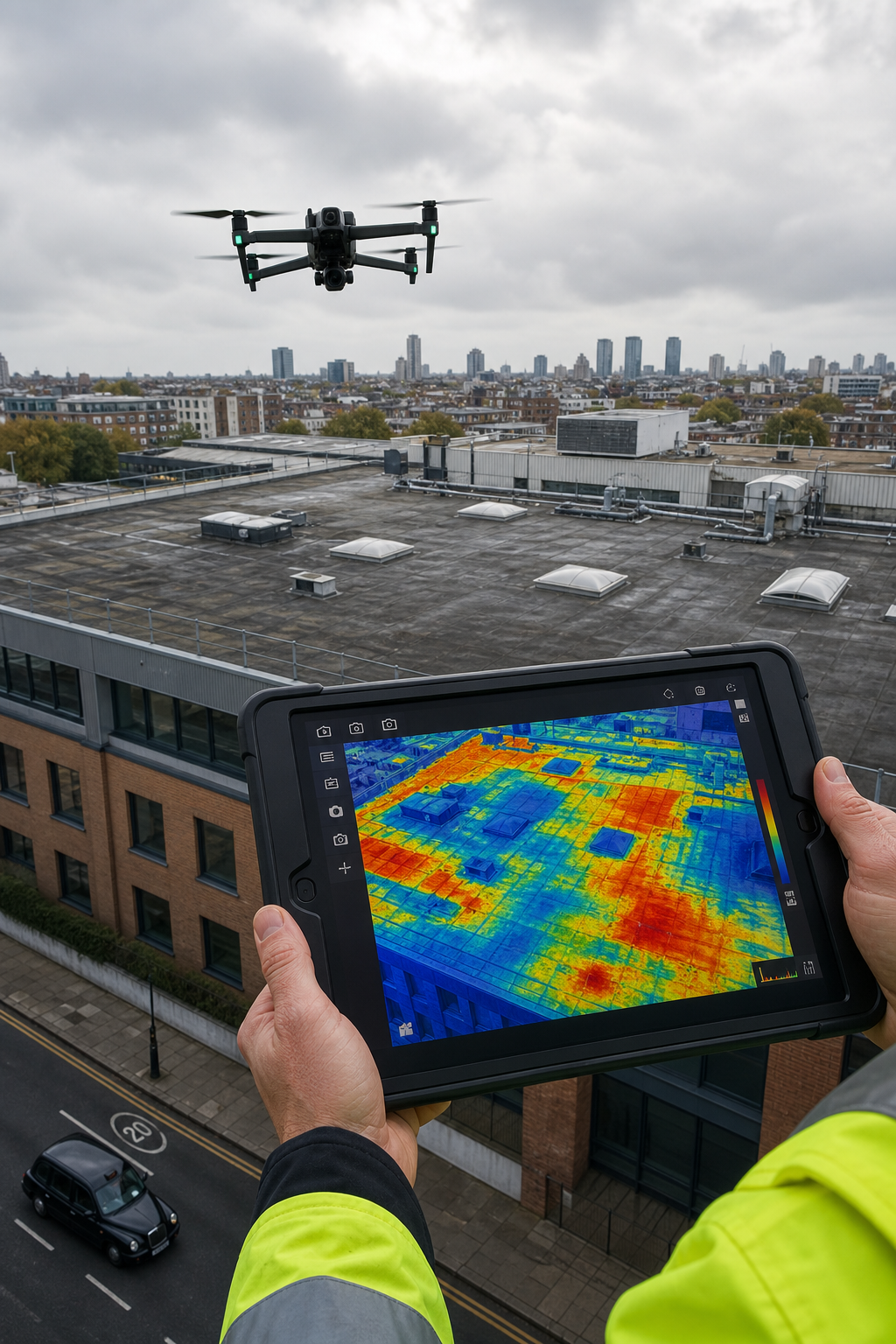
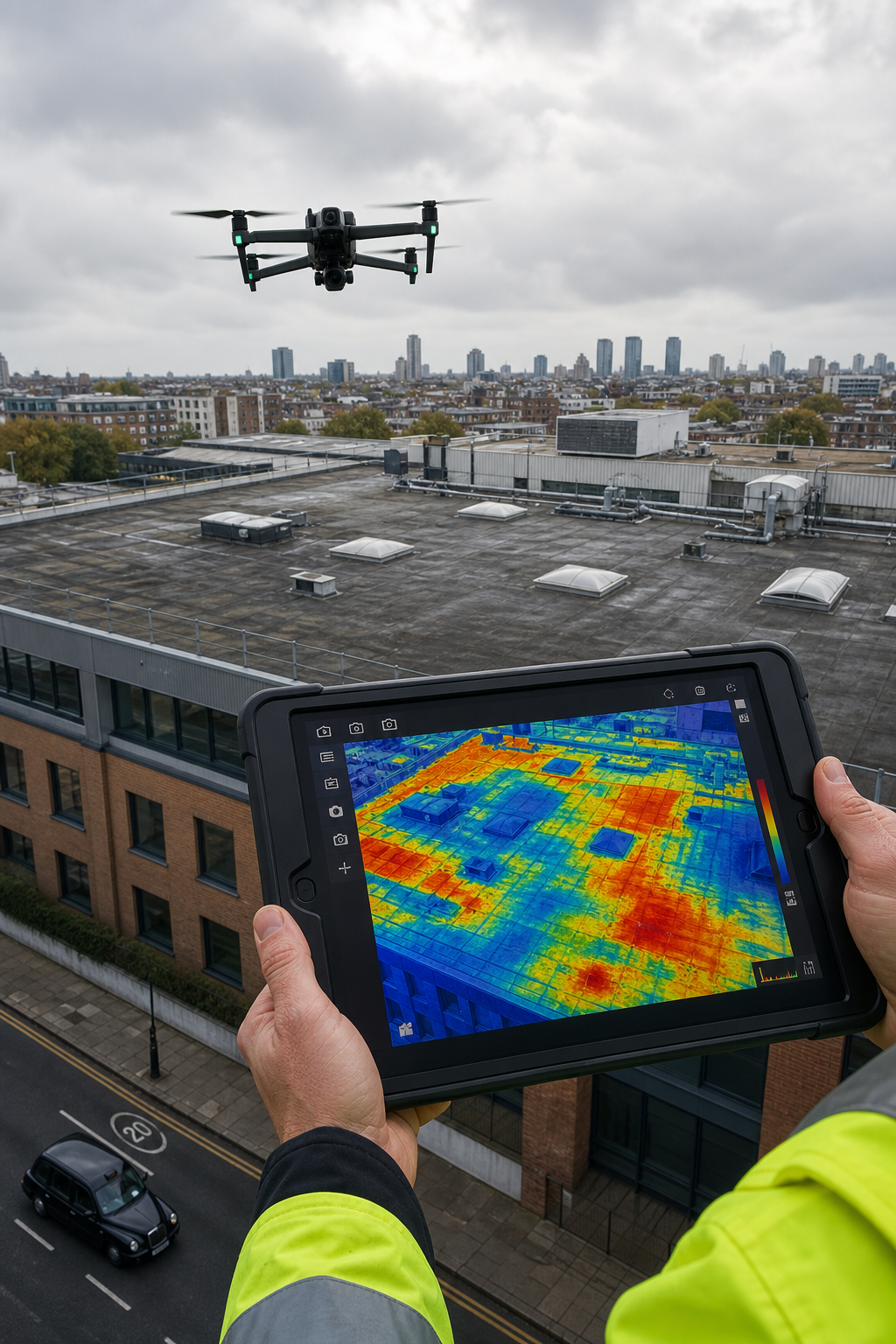
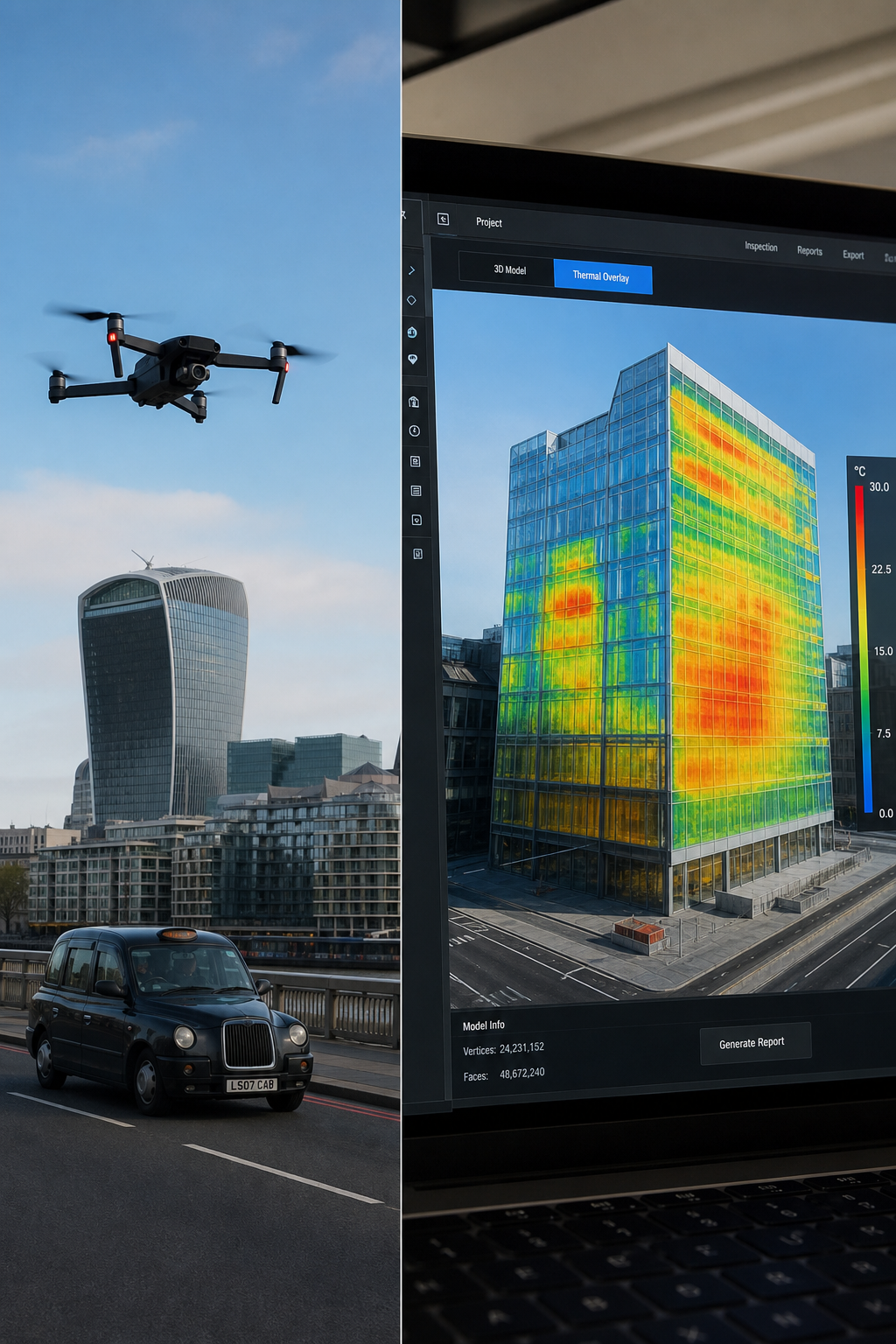
Thermal cameras detect heat patterns invisible to the naked eye. We use them to find moisture intrusion, insulation failures, and electrical hotspots. It’s especially useful for flat roofs where water trapped under the membrane heats up differently. A thermal survey pinpoints problem areas quickly, so you can fix them before they cause major damage.
Bottom line: Core drone inspection services for commercial buildings include roof, façade, and thermal surveys, each tailored to identify specific defects early.
Key Benefits of Drone Inspections for Commercial Properties
Why switch to drones? Safety, speed, cost, and data quality are the main reasons. Let’s dig into each one.
Safety First
Falls are the biggest risk in building maintenance. Sending a person onto a roof or up a façade exposes them to serious hazards. Drones eliminate that. No ladders, no scaffolding, no rope access. The pilot stays on the ground. According to the UK Civil Aviation Authority (CAA), drones must be flown safely, but the risk to personnel is drastically reduced.
Speed and Efficiency
A drone can capture the entire exterior of a commercial building in a single flight , often in under an hour. Traditional methods take days. With faster data collection, you can make decisions sooner. For facility managers running annual inspections across a portfolio, that time saving adds up fast.
Cost Savings
Mobilising scissor lifts or swing‑stage access for a mid‑rise building can cost thousands per day. A drone team completes the same job in a few hours. For a typical commercial property, we see savings of 50, 70% on inspection costs. Insurance companies also value the detailed records, which can speed up claims and reduce premiums.
Richer Data
Our drones carry high‑resolution visual cameras and thermal sensors. We produce orthomosaic maps, 3D models, and point clouds. You can measure anything, annotate defects, and compare conditions year over year. This is data you can act on. It’s not just photos , it’s a spatial record of your building.
Bottom line: Drone inspections improve safety, cut costs by up to 70%, deliver faster results, and provide richer data than traditional methods.
Essential Compliance and Certifications: IEC 62446, CAA, and Thermography
When you hire a drone inspection service, you need to know they follow the rules. Here are the key certifications to look for.
CAA Approval and Pilot Qualifications
In the UK, all commercial drone pilots must hold a valid CAA permission (PfCO or GVC). This ensures they understand airspace, safety, and privacy laws. Always ask for proof. Check the CAA’s list of approved training providers to verify qualifications.
IEC 62446 for Solar PV Inspections
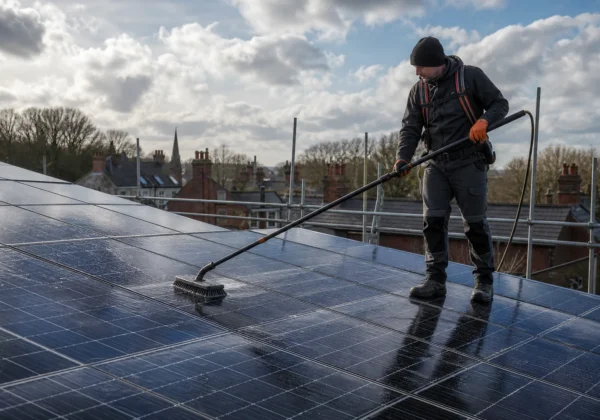
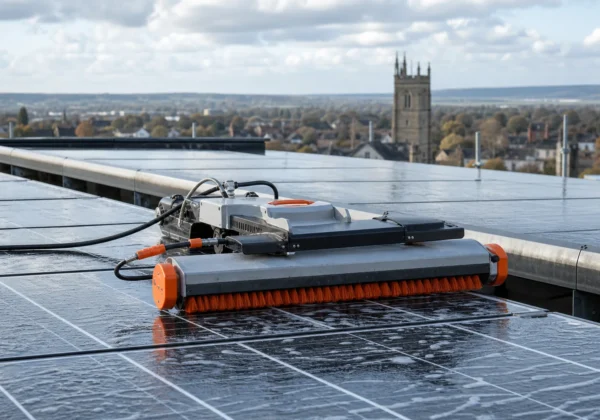
If your building has a solar PV system, the inspection should comply with IEC 62446. This international standard covers testing, documentation, and maintenance of grid‑connected PV systems. It ensures that thermal images are taken at the right time, with the right equipment, and that the report includes clear findings. Only a handful of providers in the UK mention IEC 62446 , Visual Perspectives is one of them. This gives you confidence that the inspection is thorough and defensible.
Thermography Certification
Thermal imaging is only useful if the operator knows what they’re doing. Look for ITC Level 1 or Level 2 certification. These courses teach heat transfer, emissivity, and how to interpret thermal patterns. A certified thermographer can tell the difference between a wet spot and a reflection. Without it, you might get pretty pictures but no real answers.
Bottom line: Ensure your drone inspection service holds CAA permissions, IEC 62446 certification for solar, and thermography qualifications to guarantee compliant, accurate results.
The Drone Inspection Process: From Site Survey to Actionable Report
What happens when you book a drone inspection? Here’s a typical step‑by‑step process.
1. Pre‑Flight Planning
We start by reviewing site plans, identifying access points, and checking for any airspace restrictions. We also note the building’s orientation to plan the best flight path. The goal is to capture every area you need , roof, façades, mechanical units , in one efficient flight.
2. The Flight
On site, the pilot sets up the drone and runs through safety checks. The drone follows a pre‑programmed route, capturing overlapping images and video. For thermal inspections, we fly after sunset to get the best contrast. The whole process takes one to three hours, depending on building size.
3. Data Processing
Raw footage is uploaded to processing software. We create orthomosaic maps (a single, stitched image of the entire roof), 3D models, and thermal overlays. This is where the magic happens , raw data becomes a searchable, measurable asset.
4. Analysis and Reporting
Our team reviews the models and highlights defects: cracks, ponding, missing sealant, heat loss. We produce a clear report with annotated images, measurements, and priority ratings. You get the full picture, not just a list of problems. You can share the report with contractors, insurers, or internal teams.
Bottom line: The drone inspection process includes planning, flight, data processing, and a detailed report , all typically completed within a few days.
How to Choose a Drone Inspection Service Provider
Not all providers are created equal. Here’s what to look for.
Qualifications and Insurance
Start with the basics: CAA permission, public liability insurance (at least £5 million), and relevant certifications. Ask for copies.
Experience with Commercial Buildings
You need someone who understands building defects. Look for a provider that works with surveyors, facilities managers, and insurers. They should know what to look for and how to report it.
Technology and Deliverables
Check what equipment they use. Thermal cameras should be radiometric (640×480 pixels or better). Drone models like the DJI Matrice 350 RTK offer high precision. Ask about deliverables: Do you get orthomosaics? 3D models? A PDF report? Can you access the data online? The more detailed, the better.
Compliance and Standards
If your building has solar panels, IEC 62446 is non‑negotiable. For general inspections, look for a provider that follows recognised standards. Many firms talk about thermal imaging, but few cite official standards. Visual Perspectives stands out by pairing high‑resolution 3D mapping with IEC 62446 compliance , a rare combination that gives you legally defensible data.
Bottom line: When selecting a drone inspection service, prioritise certified pilots, proven commercial experience, top‑tier equipment, and adherence to industry standards.
Frequently Asked Questions
What are drone inspection services used for?
Drone inspection services are used to survey commercial buildings , roofs, façades, and mechanical systems , without the need for scaffolding or rope access. They capture high‑resolution images, thermal data, and 3D models to identify defects, moisture, heat loss, and structural issues. The results help facility managers make informed maintenance decisions and support insurance claims or compliance reports.
How much do drone inspection services cost?
Costs vary by building size, complexity, and deliverables. A typical single‑flight roof survey for a medium commercial building might range from £500 to £2,500. Full building envelope surveys with thermal imaging and 3D modelling can cost more. Many providers offer packaged quotes. Always ask for a line‑item breakdown so you know what you’re paying for.
Are drone inspections safe?
Yes , and safer than traditional methods. Drones eliminate the need for workers to access hazardous rooftops or improved areas. Pilots follow strict CAA safety rules, and modern drones have collision‑avoidance features. The risk to people on the ground is minimal. For building owners, it means fewer accidents and lower liability.
Do drone inspections comply with building regulations?
When done by a qualified provider, yes. The data can support PAS 2035 for retrofit assessments, fire safety compliance, and even insurance requirements. For solar panel inspections, IEC 62446 is the key standard. Always confirm that your provider follows relevant guidelines , they should be happy to share their compliance certifications.
Can drones inspect all types of commercial buildings?
Almost any. Drones work well on low‑rise offices, high‑rise towers, warehouses, factories, schools, hospitals, and heritage buildings. The only limitation is adverse weather , high winds or rain can prevent flying. For confined spaces like plant rooms, specialised indoor drones are available. Most standard surveys cover the entire exterior envelope from grade to roof.
How long does a drone inspection take?
On‑site flight time is typically one to three hours. Data processing and report generation take another one to two days. For urgent issues, many providers offer expedited services with 24‑hour turnaround. Compared to traditional methods that may take a week or more, drone inspections are significantly faster.
What deliverables do I get from a drone inspection?
Expect a detailed report with annotated images, thermal overlays, and measurements. Many providers also include an orthomosaic map (a high‑resolution stitched image of the roof), a 3D model you can explore online, and a spreadsheet of defect locations with priority ratings. Some offer a raw data package for integration into your asset management system.
Do I need a drone inspection every year?
It depends on the building age, roof type, and local climate. For commercial properties, an annual drone roof survey is recommended. If you have a flat roof or solar panels, twice a year (spring and autumn) is ideal. Regular inspections catch minor issues before they become costly repairs. Insurance companies often encourage annual checks to maintain coverage.
Conclusion
Drone inspection services are transforming how we manage commercial buildings. They deliver safer, faster, and more detailed surveys than traditional methods. From roof defects to solar PV compliance, the right drone provider gives you actionable data you can trust.
We’ve covered the core services, the benefits, the certifications to look for, and the process from start to finish. Remember to choose a partner with proven commercial experience, proper qualifications (CAA, IEC 62446, thermography), and a clear reporting process. That’s where Visual Perspectives excels , we bring 20 years of building diagnostics experience, ITC Level 1&2 thermography, full CAA compliance, and £5 million insurance. Our reports are not just pretty pictures; they’re tools for better decision‑making.
Ready to see what drone inspection services can do for your portfolio? Contact Visual Perspectives for a free consultation and discover how quickly, precise, and detailed our surveys are. Rest assured, you’ll be in good hands.