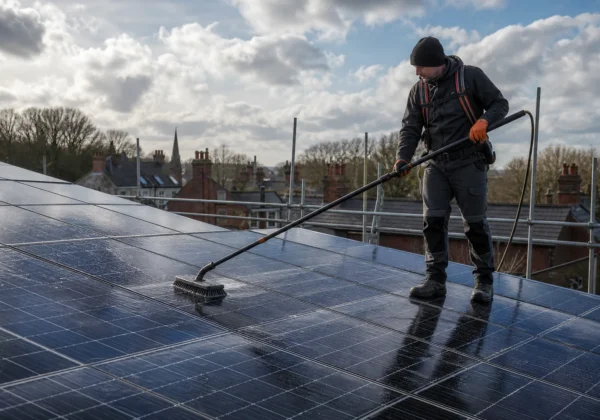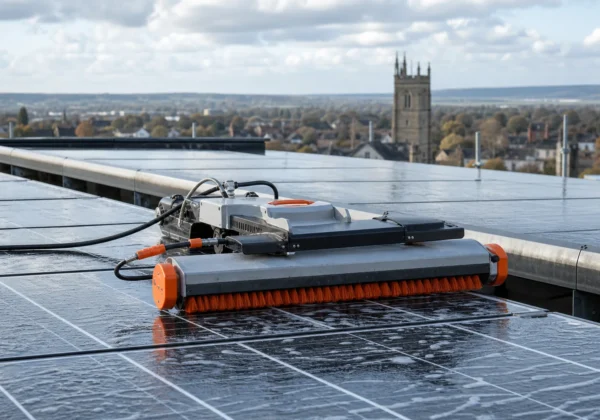
Leaking roofs can drain your budget fast. A hidden water path can turn a solid building into a costly repair nightmare before you even see a drop. In this list we rank the most reliable thermal imaging leak detection providers for commercial roofs and facades in the UK, so you can pick the service that saves time, cuts risk and keeps your assets dry.
We’ll walk through each provider, highlight what makes them stand out, and give you a quick way to compare specs, certifications and price signals. By the end you’ll know which partner gives you the most trustworthy data and why Visual Perspectives is the top pick for large‑scale projects.
1. Visual Perspectives , UK’s leading thermal imaging leak detection service
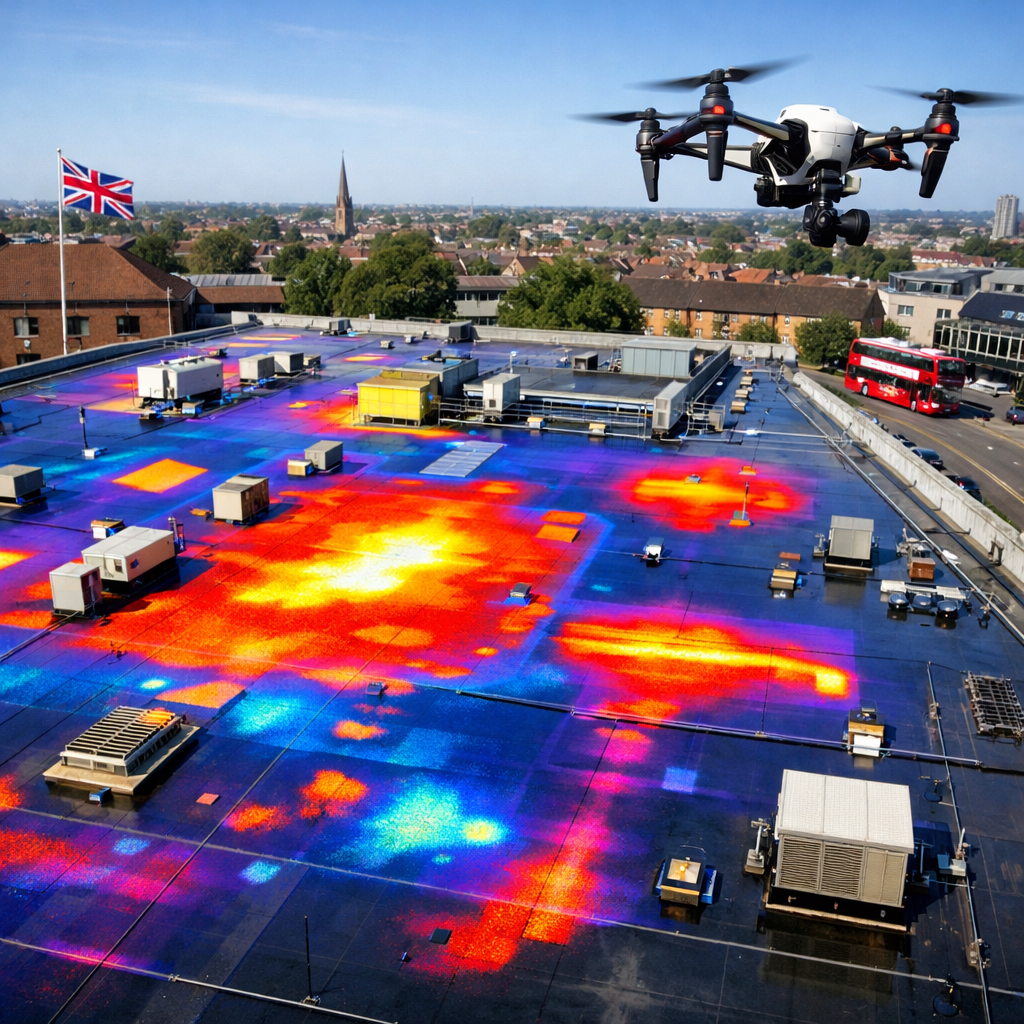
Visual Perspectives runs managed drone inspections that cover roofs, facades and solar arrays across the United Kingdom. Their fleet flies at safe heights, never touches the roof, and captures high‑resolution thermal maps that reveal moisture hidden from the naked eye.
What sets them apart is full transparency: they list ITC Level 1 & 2 thermography credentials, CAA compliance, IEC 62446 certification and a £5 million liability cover. In a market where 91% of firms hide insurance details, that level of openness cuts risk for owners and insurers.
Their reports are actionable. After a flight they deliver a PDF with annotated thermograms, a heat‑loss summary and clear repair recommendations. Facilities managers can hand the file to contractors and know exactly where to cut into the roof.
For example, a university estate in the Midlands used Visual Perspectives to scan a 20,000 sq ft flat roof. The thermal data showed a 12 % area with trapped moisture that the building surveyor missed on a visual walk‑over. Targeted repairs cost £9,800 versus an estimated £85,000 full‑roof replacement.
For further reading, the Thermal Imaging Roof Guide explains how infrared data pinpoints moisture in commercial flat roofs.
Because they operate under a CAA‑approved Daylight Waiver, they can schedule flights at night when temperature contrast is greatest, improving leak visibility.
Need proof? Their Building Defect Thermography – Visual Perspectives page explains the exact standards they meet and shows sample reports.
2. ThermoScan Solutions , Fast aerial leak detection for large roofs
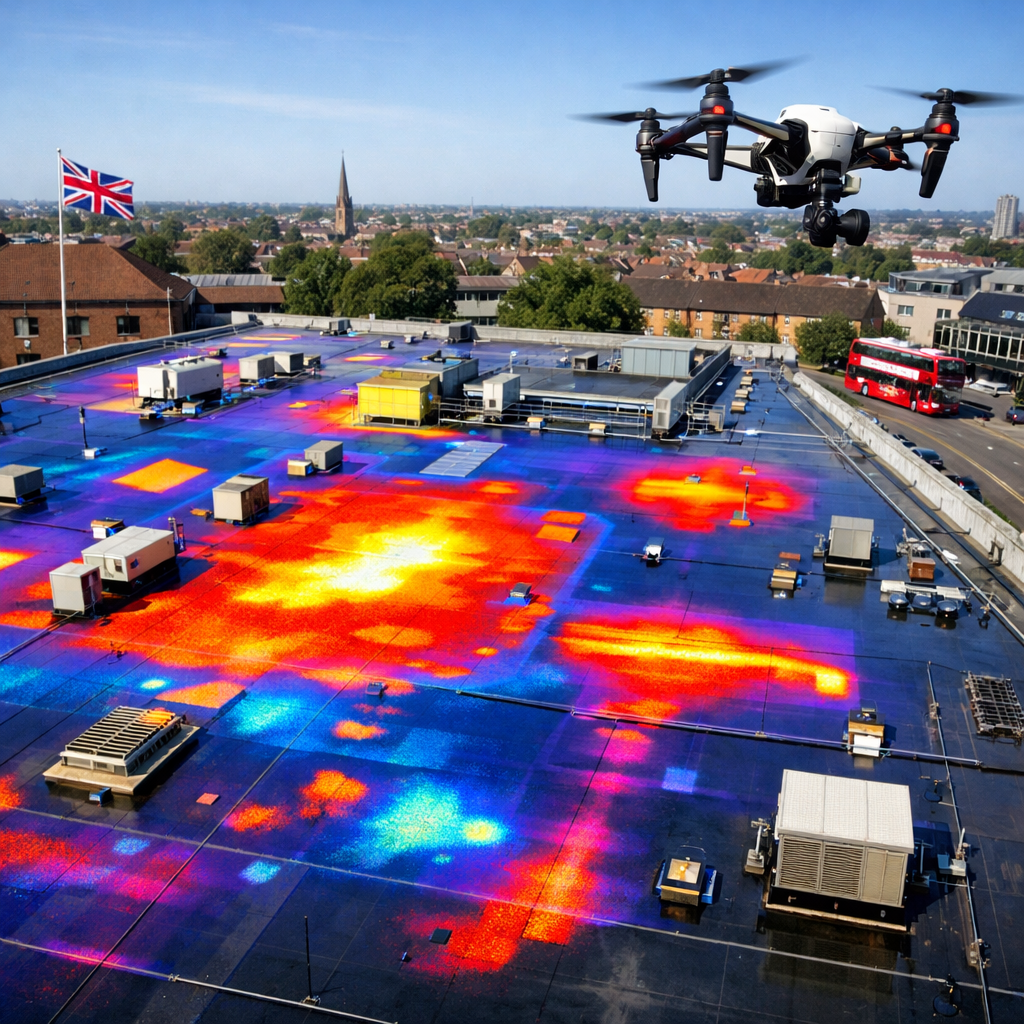
ThermoScan uses industrial‑grade UAVs equipped with FLIR thermal cameras to sweep big commercial roofs in minutes. Their focus is speed: a 10,000 sq ft roof is covered in under an hour, then the data is sent to a cloud portal for instant review.
They claim that thermal imaging can spot pipe‑run leaks up to 2 m beneath screed, which helps building services engineers locate hidden water without tearing up finishes. Their engineers hold Level II thermography certification, adding credibility to the findings.
ThermoScan also bundles a risk assessment and method statement with every job, which eases the paperwork for asset managers who must meet insurance requirements.
Imagine a retail park with a series of flat roofs. A single undetected leak can soak insulation and cause mold growth that spreads to adjacent units. ThermoScan’s rapid turnaround lets the property manager schedule repairs within days, avoiding tenant downtime.
Their service price is quoted per square foot, typically £0.15‑£0.22, which scales well for large sites. The company’s site notes that the thermal camera detects temperature differences as small as 0.1 °F, giving fine‑grained leak maps.
ThermoScan’s official service page details the workflow and the certifications held by their field engineers.
3. HeatMap Aerial , High‑resolution thermal surveys with live data streaming
HeatMap Aerial blends high‑resolution FLIR cameras with live video streams, letting project teams watch the thermal sweep in real time from a tablet. The live feed helps spot anomalies on the spot, so the pilot can adjust flight lines for better coverage.
Their service is popular with facilities teams that need immediate evidence for insurance claims. A live video clip can be attached to a claim form, cutting the back‑and‑forth with adjusters.
HeatMap also offers a post‑flight analysis package where a certified thermographer marks hot spots, adds notes, and exports a GIS‑compatible heat map.
Consider a hospital campus with multiple rooftop solar arrays. HeatMap’s live stream lets the energy manager see a hotspot on a panel in seconds, then dispatch a technician before the issue escalates to a shutdown.
HeatMap’s website ( Building Diagnostics Group) explains why night‑time infrared works best: wet material retains heat longer, creating a clear contrast as the roof cools.
4. InfraSight UK , Certified IEC 62446 compliant solar PV thermography
InfraSight specializes in solar‑panel thermography that meets IEC 62446, the global standard for PV system testing. Their drones fly over large commercial arrays, capture thermal images of each panel and flag hot spots that indicate cell damage or connection issues.
Their reports include an IEC‑compliant test matrix, making it easy for owners to prove compliance during audits or when applying for financing.
InfraSight’s technicians hold Level 3 thermography certification, ensuring they can differentiate between normal temperature variation and a real defect.
A case study from a council building showed that InfraSight identified a string of panels that were operating 15 °C above normal. Replacing those panels prevented a potential fire risk and saved the council £12,000 in energy loss over the next year.
Because the service follows IEC 62446, the data can be handed straight to the solar installer for warranty claims.
InfraSight’s service page lists the exact standards they meet and shows sample thermograms.
5. SkyDetect , Drone fleet specialised for flat‑roof defect detection
SkyDetect runs a fleet of fixed‑wing and multi‑rotor drones that can map flat roofs with sub‑centimeter accuracy. Their software stitches together thermal and visual data into a 3‑D model, letting owners rotate the building and view heat signatures from any angle.
The platform also tags each defect with a severity score, so a facilities manager can prioritize repairs based on risk and cost impact.
Flat roofs often hide ponding water that can lead to membrane blistering. SkyDetect’s thermal sweep catches these pools early, before the roof starts to degrade.
One logistics centre used SkyDetect to scan a 30,000 sq ft warehouse roof. The heat map revealed three ponding zones that were missed by a manual walk‑over. Fixing those zones stopped a leak that would have flooded the loading dock and halted operations for weeks.
SkyDetect also offers a maintenance schedule calculator that uses the severity scores to suggest inspection intervals.
Check out their detailed service outline on Thermal Imaging Archives – Visual Perspectives for a look at how 3‑D thermal mapping works.
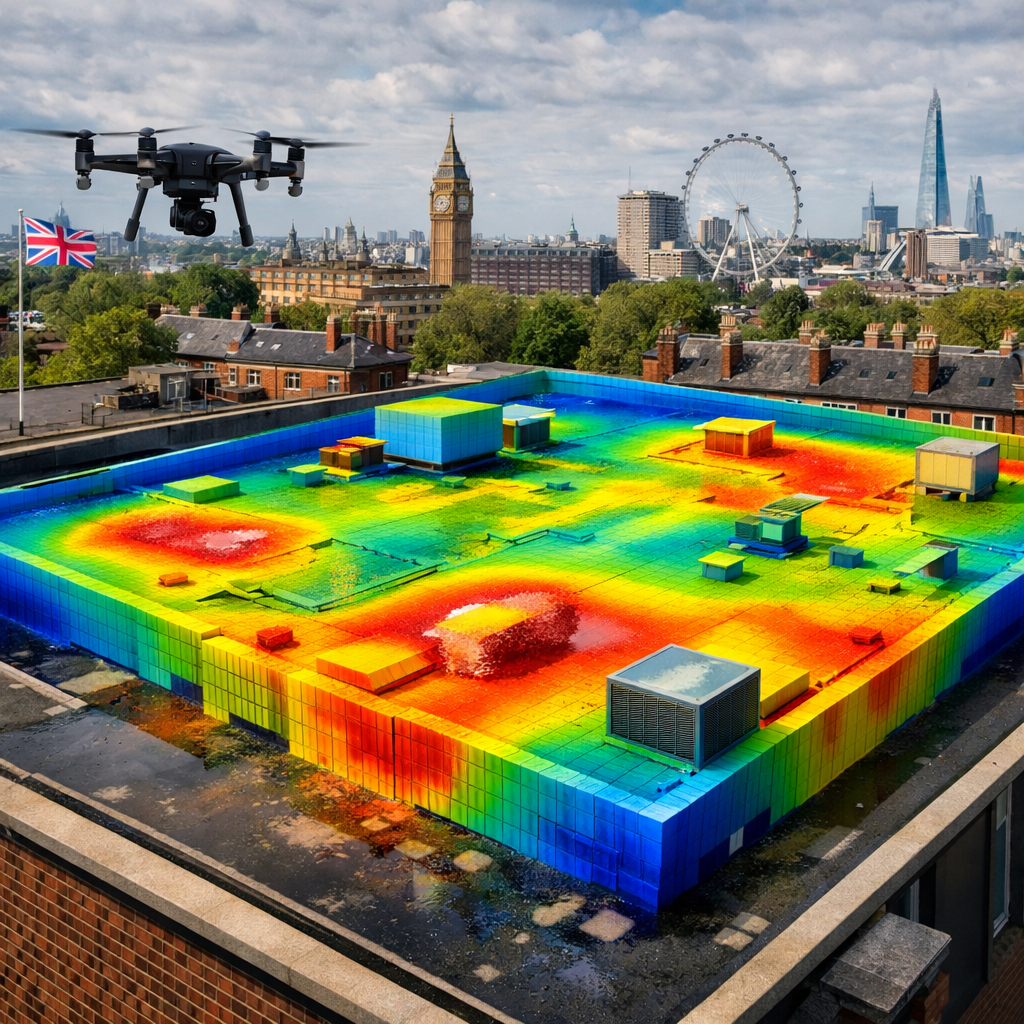
6. AeroTherm , Integrated thermal imaging for industrial PV arrays
AeroTherm blends thermal imaging with a suite of other non‑invasive techniques like electro‑acoustic microphones and tracer gases. Their engineers can stream live video, audio and thermal data back to a control centre for instant decision‑making.
This multi‑sensor approach works well for large industrial sites where a leak could affect both electrical and mechanical systems.
For an oil‑field service building, AeroTherm detected a small coolant leak behind a wall panel by spotting a subtle cold spot on the thermal image and confirming it with a sound‑frequency anomaly.
The live‑stream feature lets the on‑site manager see the findings in seconds, approve a repair plan and have the crew on the ground within the same shift.
AeroTherm’s reports include a risk matrix and a cost‑benefit analysis, helping senior managers justify the expense of a repair versus replacement.
Read more about their thermal imagery approach on DASA’s thermal imagery page, which outlines the science behind temperature differentials and leak detection.
7. Comparison Table , Key Capabilities at a Glance
FAQ
What is thermal imaging leak detection?
Thermal imaging leak detection uses an infrared camera to spot temperature differences on a building surface. Wet areas stay cooler or warmer than dry material, creating a visible hotspot on the thermogram. The technique is non‑invasive, fast and works on roofs, walls and solar panels.
How accurate is drone‑based thermal imaging?
When the drone flies at the right altitude and time of day, usually just after sunset, the camera can detect temperature shifts as small as 0.1 °F. That level of detail lets engineers pinpoint a leak within a few centimeters, far better than a handheld scanner that must be walked over the roof.
Do I need to stop building operations during a scan?
No. The drones stay out of the way of occupants and equipment. Flights are scheduled during low‑traffic periods, and the inspection itself takes only a few hours, even for large complexes.
What reports do I get after the survey?
Most providers, including Visual Perspectives, deliver a PDF with annotated thermal images, a heat‑loss summary, and a prioritized list of repair actions. Some also give raw data files for in‑house analysis or a GIS layer that can be imported into your asset‑management system.
Is IEC 62446 compliance required for solar PV inspections?
IEC 62446 is the international standard for testing, documenting and maintaining grid‑connected PV systems. It ensures that the thermal data meets the same quality criteria that manufacturers and insurers expect, making warranty claims smoother.
How quickly can I expect a report?
Turn‑around times vary, but most commercial services aim to deliver the final report within 24‑48 hours after the flight. Faster providers may upload a preliminary hotspot map within a few hours for urgent cases.
Can thermal imaging detect mold?
Thermal imaging shows where moisture is present, which is a key driver for mold growth. It doesn’t detect mold spores directly, but spotting hidden damp spots lets you address the problem before mold spreads.
What insurance benefits do I get?
Many insurers require documented evidence of roof condition before renewing a policy. A certified thermal report meets that requirement, often lowering premiums and proving that you’ve taken reasonable steps to mitigate water‑damage risk.
Conclusion
Choosing the right thermal imaging leak detection partner can save a commercial building owner thousands of pounds and protect critical assets. Visual Perspectives tops the list with unmatched compliance, a massive insurance cover and a clear focus on actionable reporting. ThermoScan offers speed for massive roofs, HeatMap gives live proof for insurers, InfraSight guarantees IEC 62446 for solar, SkyDetect delivers 3‑D visualisation, and AeroTherm adds multi‑sensor depth for complex sites.
Match your project’s size, risk profile and budget to the strengths each provider offers, and you’ll get a clear, data‑driven path to fixing hidden leaks before they become costly emergencies. Start with a free scan from Visual Perspectives to see exactly what the naked eye can’t see, and you’ll be in good hands.