Dust and debris can mask defects, reducing the accuracy of performance data. For commercial roof managers, a systematic inspection schedule is essential. In this guide we outline ten proven strategies, from routine quarterly drone surveys to data‑driven ROI models. You’ll see the advantages, limitations, and how each aligns with site conditions, climate zones, and budget considerations.
1. Visual Perspectives , Complete Commercial Solar PV Inspection
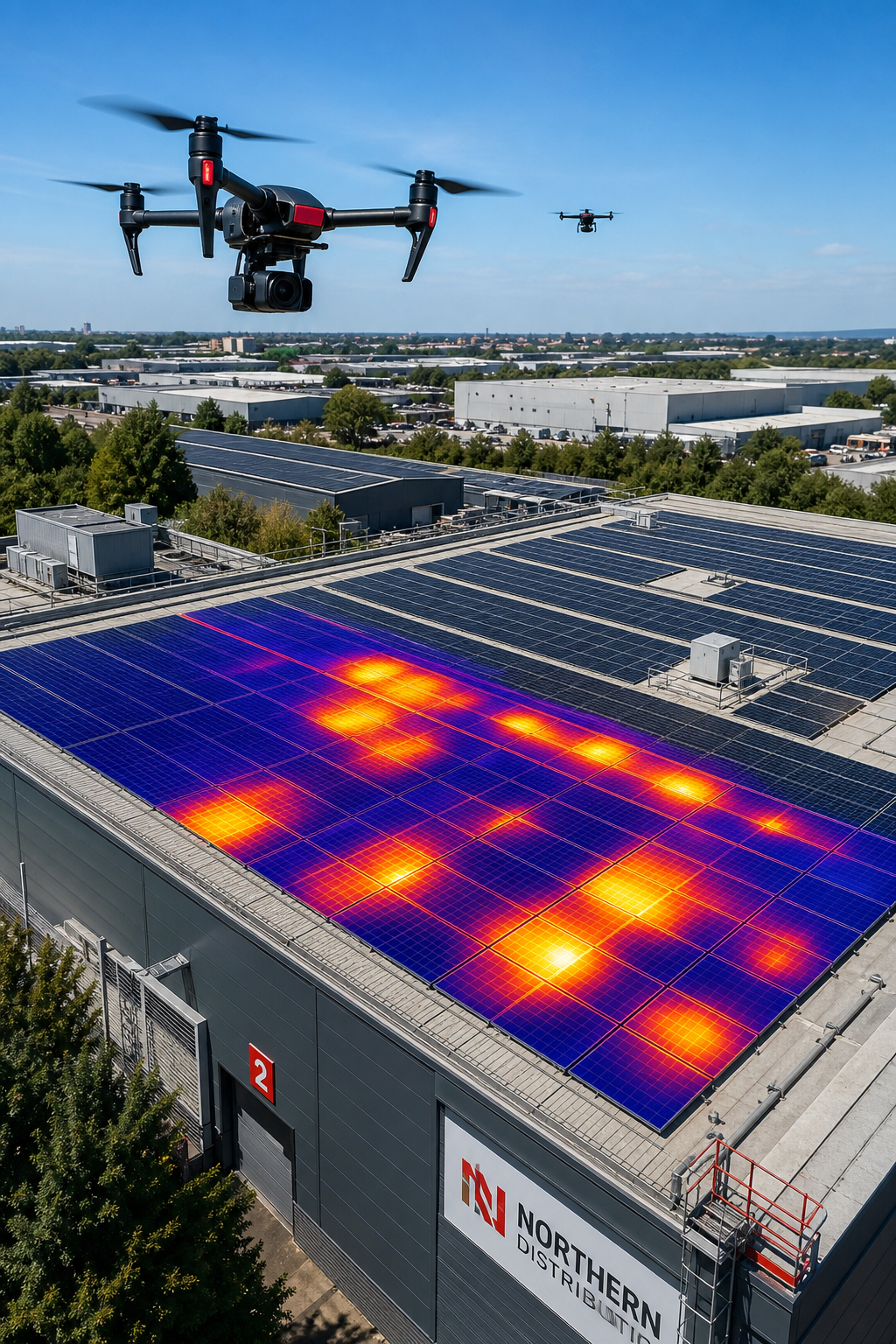
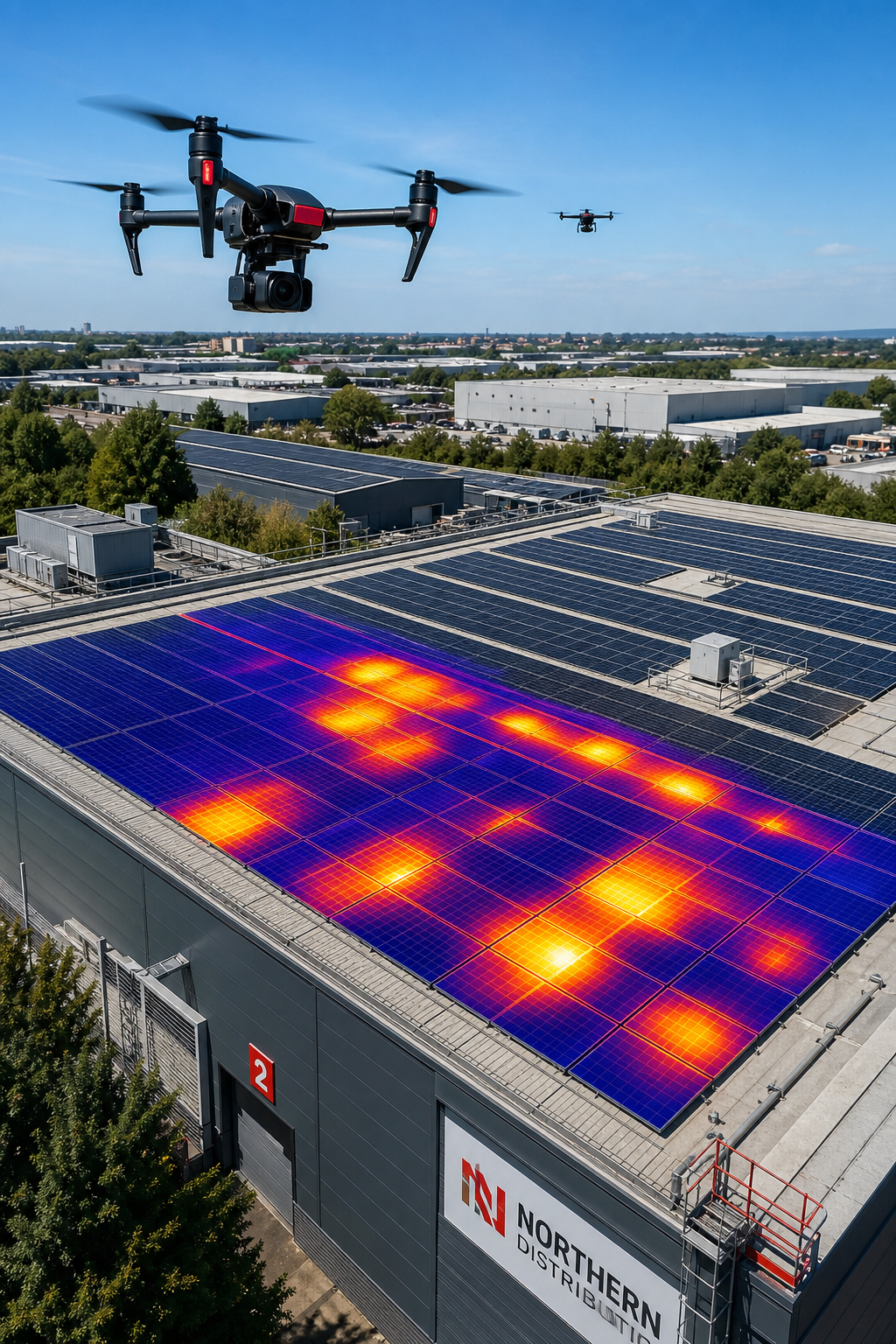
We start with the leading UK provider that blends drone surveys, high‑resolution 3D mapping, and IEC 62446‑compliant thermography. Our drones operate at safe heights, capture infrared heat maps, and tag every anomaly with precise GPS coordinates. The full report is delivered within 24‑48 hours, highlighting exactly where performance is being compromised.
This matters for asset optimisation because the thermal scan reveals hot‑spots caused by shading, cell degradation or connection faults before they cause significant loss. By pinpointing these issues, you can prioritise remedial action, minimise downtime and protect revenue.
Our service also removes the need for scaffolding, cutting disruption to building occupants and reducing health‑safety paperwork. You receive a risk‑free, compliant audit that integrates directly with your asset‑management platform.
Facilities managers value the rapid turnaround. It enables you to schedule targeted interventions within days rather than weeks, keeping commercial operations running smoothly. Drone Thermal Imaging for Commercial Buildings explains how the data feeds into maintenance calendars.
You’ll be in good hands.
2. Quarterly Cleaning , High‑Dust Urban Rooftops
City centres pump out fine particles from traffic, construction, and heating systems. Those particles settle fast on low‑pitch panels. Visual Perspectives recommends a four‑step ground‑level inspection routine every three months for standard UK commercial roofs.
First, turn off the inverter and conduct a visual check from the ground. Look for cracks, loose wiring, or bird droppings. Second, deploy a drone with a high‑resolution camera and thermal sensor to capture imagery of the panels. Third, process the data to identify dust build‑up, shading or hot‑spots. Finally, generate a concise inspection report with corrective recommendations.
Performing the inspection from the ground and using drones eliminates the need for ladders, preserving roof integrity and reducing exposure to electrical hazards while ensuring comprehensive coverage of large commercial arrays.
Quarterly inspections on high‑dust sites can recover 5‑10 % of lost energy, according to Wikipedia’s solar panel page. That adds up to noticeable savings on a large commercial system.
And because the inspection is performed from the ground and via drone, the warranty remains intact; many manufacturers void warranties only when abrasive tools or high‑pressure cleaning damage the glass.
3. Semi‑Annual Cleaning , Mixed‑Use Developments
Mixed‑use buildings often have a blend of flat and pitched roofs. Dust builds up on flat sections, while rain washes the angled panels. A twice‑yearly clean strikes a balance.
Schedule the first clean in early spring, right after the pollen season, and the second in late autumn before the winter chill. This timing aligns with the natural shedding of leaves and the start of the low‑sun winter months, when any loss in efficiency is most noticeable.
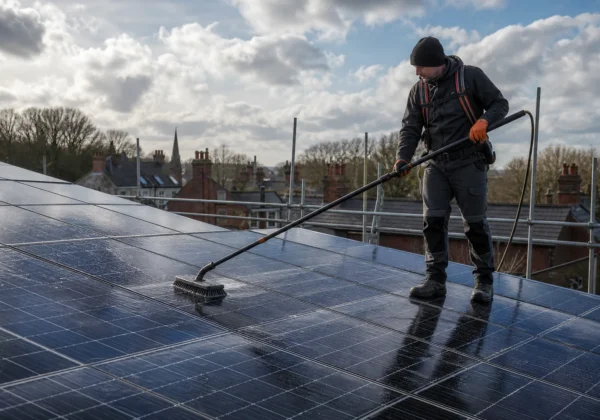
Use a combination of ground‑level poles for the flat sections and a safe rope‑access team for the steeper areas. A rope‑access crew can work quickly with uses, reducing the need for bulky scaffolding.
Our experience shows that a semi‑annual clean on mixed‑use sites restores up to 8 % of peak output during summer peaks.
Make sure the cleaning crew follows the same safety checklist each time , lockout the inverter, wear non‑slip boots, and double‑check that all brackets are secure before stepping on the roof.
That routine keeps performance steady and gives you a clear record for insurance and warranty claims.
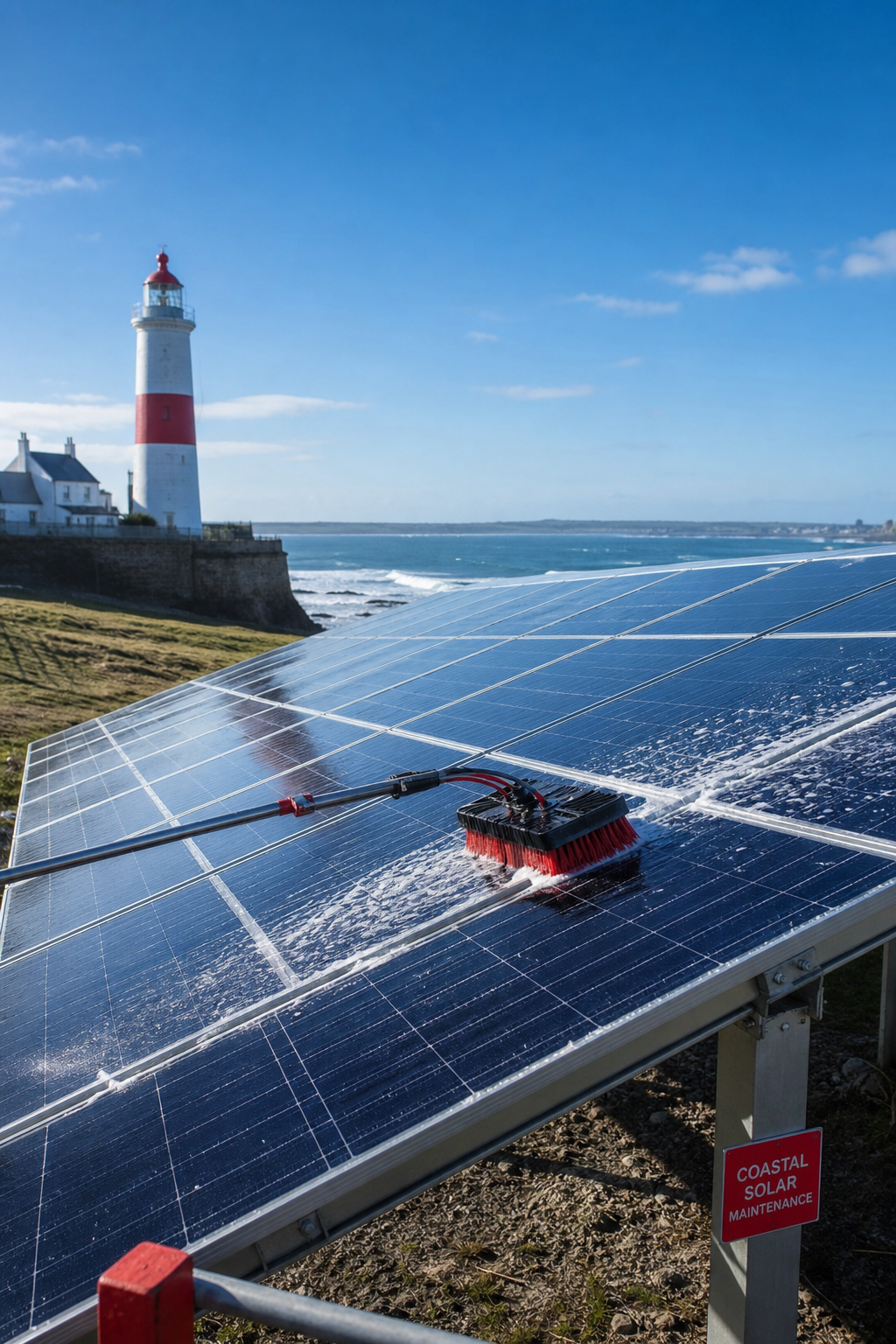
4. Bi‑Annual Cleaning , Coastal Facilities
Salt spray is the silent enemy of solar glass. It leaves a thin, conductive film that can corrode the anti‑reflective coating. Industry data from coastal installations shows a 15‑25 % drop in output when salt isn’t removed.
For UK coastal sites, aim for a six‑month cadence: one clean in late spring after the windy, salty season, and another in early autumn before the winter storms. This schedule tackles the buildup before it can etch the glass.
Use fresh water rinses followed by a mild, non‑ionic surfactant. Avoid high‑pressure streams that could force water into junction boxes. After the rinse, wipe the panels with a soft microfiber cloth to avoid water spots.
Because the sea breeze also brings more bird activity, check for droppings during each visit. Bird guano is highly acidic and can eat away at the protective coating in weeks.
Following this plan keeps the panels humming and protects the warranty against corrosion claims.
5. Annual Cleaning , Low‑Soil‑Retention Rural Sites
Rural roofs often sit on clay or loam that doesn’t cling to dust. Still, wind can lift fine particles that settle on flat or low‑pitch arrays.
One thorough clean each year , usually in early summer , is enough to keep performance high. Schedule it after any major farming activity that might kick up soil, such as ploughing or harvest.
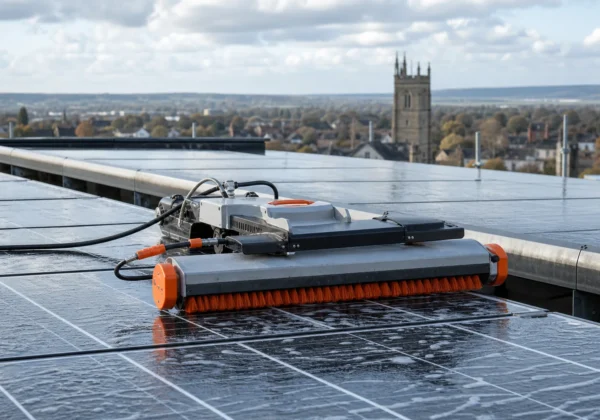
Start with a dry brush sweep to knock loose loose grit. Then follow the standard rinse‑apply‑rinse routine with a soft brush. Because the soil is fine, a low‑foaming cleaner works best to avoid residue.
Farm equipment can also drop oil or fuel on panels. Spot‑treat any oily patches with a dedicated solar‑safe degreaser before the main wash.
Annual cleaning aligns with many insurance policies that require a yearly inspection for claim eligibility.
You’ll see a modest 3‑5 % boost in output, enough to offset the modest labor cost.
6. Seasonal Cleaning , Snow‑Prone Highlands
Snow and ice are a different beast. They block light entirely and, if left too long, can cause thermal stress on the glass.
In highland installations, plan a pre‑winter clean in late autumn to remove any lingering debris that could trap snow. After the first heavy snowfall, use a soft‑bristled snow rake to lift the snow gently. Never use a metal shovel , it can crack the tempered glass.
When temperatures rise above freezing, a low‑temperature water spray can melt thin layers without shocking the panels. Follow with a quick dry‑wipe to prevent water spots.
Monitoring tools that alert you when output drops can signal when snow is still on the array. Many commercial inverters have built‑in performance dashboards you can watch remotely.
Keeping the panels clear during the winter months can preserve up to 20 % of annual generation in snow‑heavy regions.
7. Event‑Triggered Cleaning , After Wildfire Ash Fallout
Wildfire ash is ultra‑fine and highly alkaline. It can coat panels in a thin, abrasive layer that erodes the anti‑reflective coating within weeks.
When a fire occurs within 20 km of your site, schedule an emergency clean within 48 hours. Use a low‑pressure water feed with a biodegradable ash‑removal solution. A soft‑brush attachment helps lift the ash without scratching the glass.
After the wash, inspect each panel for micro‑cracks that ash may have exacerbated. Any cracked cells should be logged for warranty service.
Because ash can hide in panel gaps, a handheld infrared camera can spot lingering hotspots that indicate hidden residue.
Acting fast limits long‑term degradation and keeps your system eligible for performance guarantees.
8. ROI‑Based Cleaning , Data‑Driven Frequency
Numbers don’t lie. If you can measure the output loss from soiling, you can calculate the exact pay‑back period for each cleaning.
Start by installing a monitoring platform that logs daily kWh production. When you notice a 5‑10 % dip that isn’t weather‑related, run a thermography check to confirm the loss is due to dirt.
Use the cost of a cleaning crew (average £0.15 per panel for commercial jobs) and compare it to the extra revenue you’d earn from restoring 7 % efficiency on a 500 kW system. In most UK cases, the break‑even point is under six months.
This data‑driven approach lets you skip unnecessary washes and focus on the panels that truly need it.
Our own Our Services | Thermography and Drone Inspection page walks through how we integrate performance data into a cleaning schedule.
You’ll be in good hands.
9. Regulatory‑Compliant Cleaning , Water‑Restriction Zones
Some UK regions enforce strict water‑use rules, especially during droughts. The government guidance Water Consumption Reduction Guidelines allow limited outdoor washing.
In those zones, use a closed‑loop water‑recycling system. Capture runoff, filter it, and reuse it for the next clean. This method meets the regulator’s limits and still gives a thorough wash.
If a full‑water wash isn’t allowed, a dry‑brush sweep followed by a spot‑clean with a misting nozzle can remove most dust without using large volumes of water.
Document every clean with a water‑use log , insurers often ask for proof that you complied with local ordinances.
Sticking to the rules protects you from fines and keeps the community happy.
10. Integrated Monitoring‑Driven Cleaning , Smart Sensors
New smart sensors can read panel temperature, irradiance, and soiling level in real time. When the sensor detects a temperature rise that isn’t weather‑related, it flags a possible soiling issue.Connect the sensor data to a cloud dashboard that sends you an email or SMS when cleaning is needed. This eliminates guesswork and ensures you only clean when performance is truly affected.
Many commercial inverter manufacturers now offer built‑in soiling indices. Pair those with a drone‑based thermography check for a full picture.
Investing in smart sensors can reduce cleaning costs by up to 30 % because you avoid unnecessary visits.
For a deeper dive on how sensor data feeds maintenance, see our How to Conduct a Commercial Solar Panel Inspection guide.
You’ll be in good hands.
11. Comparison of Commercial Solar Panel Inspection Frequency Options
Pick the option that matches your site’s climate, roof geometry, and budget. You can also combine methods, for example, use a smart sensor to trigger a quarterly inspection on a high‑dust roof.
FAQ
How can I tell if my commercial rooftop PV panels need inspection?
Regular drone-based inspections, supported by thermography, reveal issues not visible from ground. If output drops 5% or more without a weather change, that’s a red flag. A quick visual check from the ground helps, and a thermal scan can reveal hotspots from shading or debris. Visual Perspectives Limited provides managed drone inspections, specialising in roof and façade surveys and thermal imaging for commercial buildings across the UK.
Do I need to shut down the system before inspection?
Not always. Non-contact drone inspections typically don’t require shutting down the system, but if technicians need access to DC gear, follow a safety lock-out protocol. Our team is CAA-compliant and follows best-practice safety procedures. Visual Perspectives Limited conducts commercial rooftop inspections with a focus on risk reduction and minimal downtime.
Is weather a factor for inspections?
Weather can affect drone operations and data quality. Schedule on dry, calm days when possible; in some conditions, thermography can still identify hotspots. Visual Perspectives Limited specialises in commercial rooftop PV inspections using drone imaging and thermography to deliver reliable results.
What inspection methods are safe for solar panels?
Inspection methods should be non-invasive. Use high-resolution drone imagery and thermography; avoid physical contact that might risk damage. IEC 62446-compliant reporting is provided by Visual Perspectives Limited to support warranties and maintenance planning.
How do inspections affect warranty?
Inspections provide documentation that supports warranty claims. Keep a dated log of findings, photos, and methods. Visual Perspectives Limited provides thorough reporting with images and thermal data, aligned with IEC 62446 and manufacturer guidelines.
Can inspections be automated for large commercial PV farms?
Yes. Automated or scheduled drone surveys can cover large commercial PV farms, reducing ladders and on-roof work. Visual Perspectives Limited offers scalable inspection programs with ITC Level 1 and 2 thermography, safety-compliant and UK-wide.
What’s the ROI on a professional inspection?
ROI comes from early fault detection, reduced downtime, and optimized output. For a large array, finding hotspots or faulty wiring early can save significant energy and maintenance costs. With inspection costs in the low hundreds, the payback is fast.
How often should I inspect commercial rooftop PV arrays?
Typical intervals are 6–12 months for busy, high-risk sites; sooner after severe weather; adjust to site conditions. Visual Perspectives Limited can tailor a plan for commercial rooftops across the UK.
Are there any environmental considerations with inspections?
Drone inspections have minimal environmental impact, with no water use or emissions on site. They should comply with local rules and operate with quiet, efficient drones. Optical and thermal data can be captured without disturbing tenants.
What role does thermography play in inspections?
Thermography helps locate hotspots caused by shading, loose connections, or degraded modules. It allows targeted follow-up inspections and reduces labour. Visual Perspectives Limited conducts drone-based thermography with turnaround in under 48 hours.
Ready to take the next step? Visual Perspectives Limited provides comprehensive commercial rooftop PV inspections and drone roof inspections, with thermography and IEC 62446-compliant reporting to support decarbonisation, risk reduction and cost savings. Contact us to plan a regular inspection program for your assets.