Drone roof inspections for commercial buildings have moved well beyond a nice-to-have. Scaffolding costs money, access equipment takes weeks to arrange, and traditional surveys miss defects that only thermal imaging can find. Here are the top seven provider types for commercial drone roof surveys in the UK, who each one suits, and what to expect on cost and deliverables.
1. Visual Perspectives Limited , Specialist Drone & Thermal Roof Surveys (Our Top Pick)
Visual Perspectives Limited provides managed drone-based aerial inspections across the UK, combining high-resolution visual surveys with advanced thermal imaging to find what the naked eye can’t see. With 20 years of experience, ITC Level 1 and 2 thermography qualifications, CAA compliance, and £5,000,000 public liability insurance, we’re built for commercial and public sector work.
We’re best suited to building surveyors, facilities managers, asset managers, NHS Trusts, local authorities, housing associations, and commercial property owners who need accurate defect diagnostics and a report they can act on. Our surveys are quickly completed, precise, and detailed , no scaffolding, no disruption to building occupants.
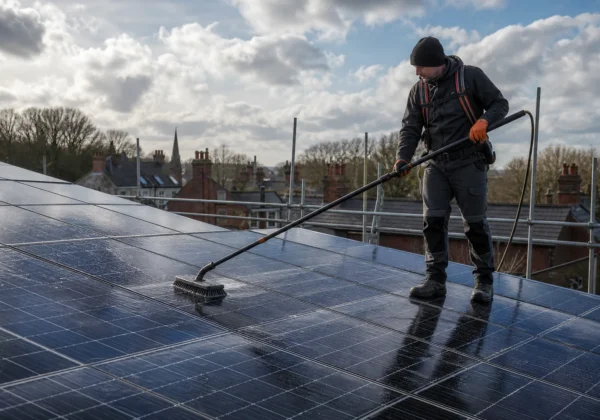
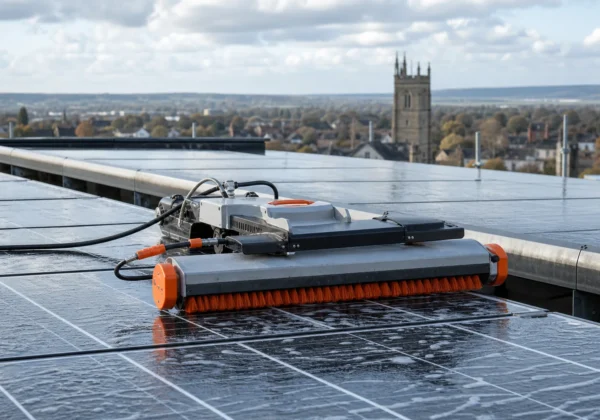
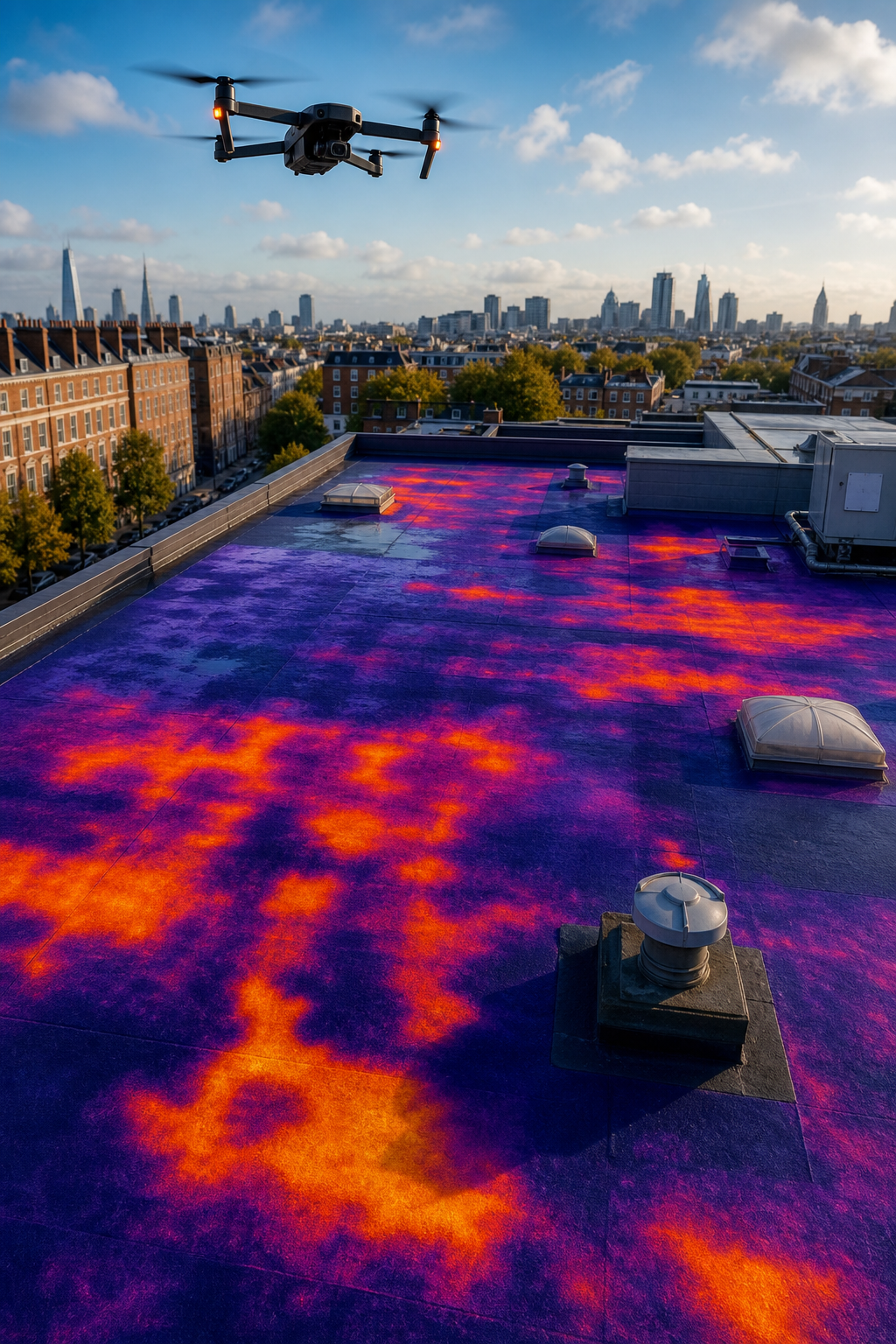
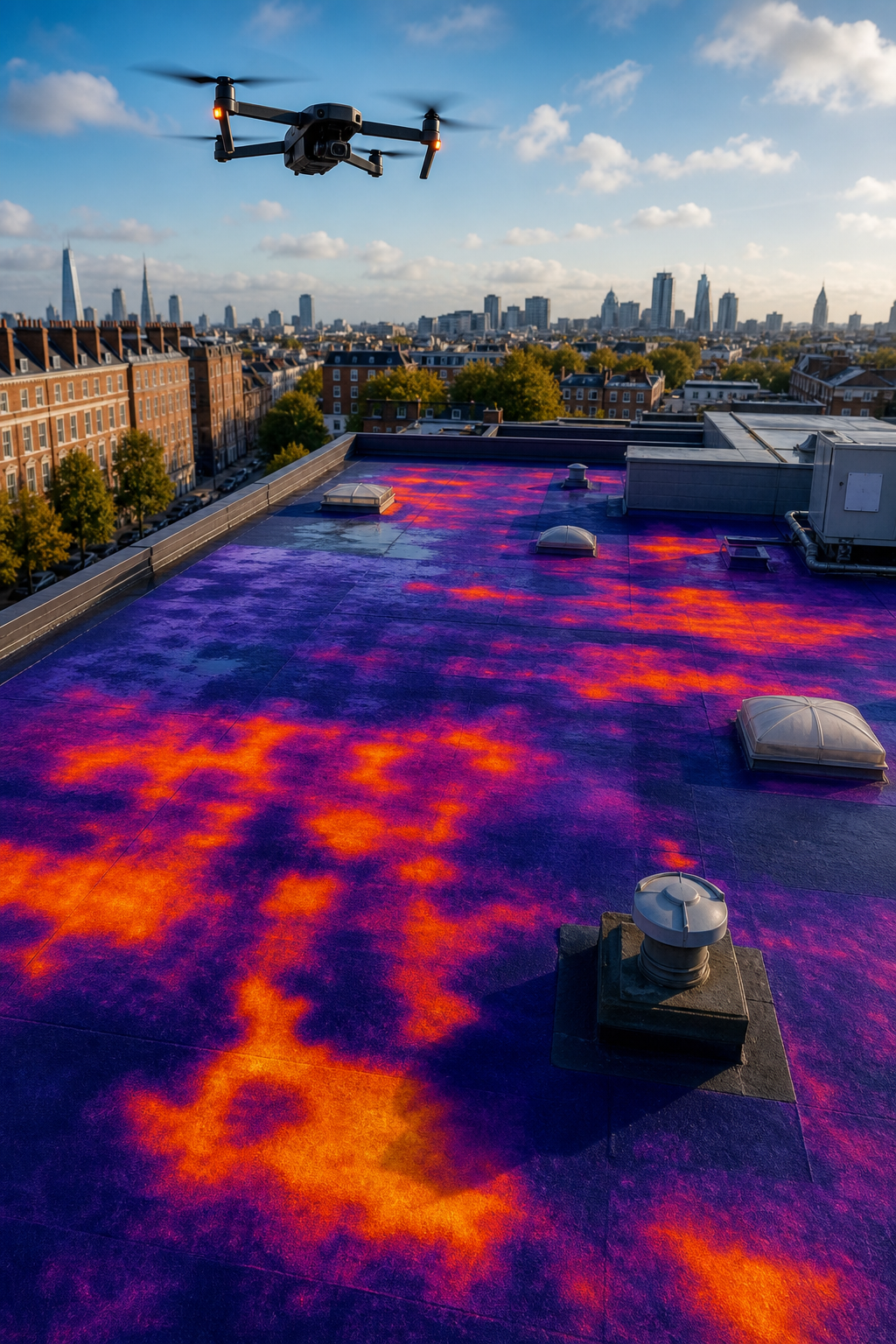
Our roof surveys go beyond photography. We identify flat roof membrane saturation, cold bridging (heat loss through building fabric junctions), moisture ingress, insulation deficiencies, and structural deformation , all without physical access to the roof. High-resolution 3D mapping lets surveyors measure areas, document defect locations, and track condition over time. For buildings with solar PV arrays, we carry out thermographic inspections that are compliant with IEC 62446, the international standard governing testing, documentation, and maintenance of grid-connected PV systems.
The honest caveat: we’re a specialist diagnostic provider rather than a roofing contractor, so repair quotes come separately. But our reporting is designed to feed directly into your facilities management workflow, your insurer’s evidence requirements, or a RICS surveyor’s condition assessment. You’ll be in good hands from first contact to final report. See how drone roof inspection costs compare for commercial UK buildings before requesting a quote.
2. National Drone Survey Companies , Full-Coverage Commercial Roof Inspections
National drone survey companies cover the whole of the UK and handle commercial roofs of most types. They typically offer standard visual inspection with high-resolution stills and video, a written condition report, and an optional thermal add-on for moisture and heat-loss detection.
UK National Roofing is one example in this category. Their drone roof inspection service includes a detailed photographic report backed by in-house roofing specialists rather than drone pilots alone. That combination matters on commercial properties where you need someone who can interpret what they see, not just fly. They advertise entry-level drone surveys from around £179.99, though commercial building pricing is quoted separately and depends on roof area and complexity.
Gridmark Survey operates from the North East but covers the whole of the UK. As a CAA-approved commercial drone service provider, they operate multirotor and fixed-wing UAVs and deliver 3D models, point cloud data, orthomosaic maps, and aerial inspection surveys for buildings. Their output is suited to larger commercial estates where survey-grade mapping data feeds into asset management systems or a BIM model.
Where these national generalist providers fall short: they rarely offer IEC 62446-compliant solar PV thermography, and their reports may not align with RICS condition survey formats. If you’re managing a single-site commercial building and need a quick visual condition check before a lease review or insurance renewal, they’re a usable option. For anything more diagnostic, you’ll want a specialist.
3. Drone Thermal Imaging Specialists , Heat Loss & Flat Roof Defect Detection
Drone thermal imaging specialists focus specifically on thermographic surveys, using calibrated infrared cameras to detect temperature differentials across a roof surface. This is the most effective method for finding flat roof membrane failures, sub-membrane water saturation, and heat loss through poorly insulated zones , defects that look fine on a visual inspection but are already causing structural damage beneath.
Thermal surveys need specific conditions to work properly. The roof surface needs a temperature differential of at least 5°C between inside and outside, which means evening or early morning inspections work best in UK weather. Providers in this category understand those constraints and plan around them. They’re best for facilities managers running large flat-roofed commercial properties , distribution centres, retail units, school blocks , where membrane failures have historically gone undetected until water appears inside.
The limitation of pure thermal imaging specialists is that the deliverable is a thermal report. Without a corresponding visual survey and a 3D point cloud, you may struggle to locate defects accurately enough to brief a roofing contractor. Combining thermal and high-resolution visual data in a single survey, as Visual Perspectives Limited does, is the more efficient approach for most commercial building workflows. You can to drone thermal imaging for commercial buildings.
4. Pre-Solar Installation Drone Roof Survey Providers , Detect Defects Before PV Fitment
Before any solar PV array goes onto a commercial roof, the roof itself needs to be in sound condition. This is a step that gets skipped more often than it should. A pre-solar drone roof survey identifies membrane saturation, structural weak points, and drainage issues that would be hidden under racking once installation begins. Finding them after fitment means removing panels to access the roof. Finding them before is a fraction of the cost.
The critical defect to detect at this stage is under-membrane water saturation. Flat roof membranes on commercial buildings can hold significant moisture within the insulation layer without showing visible damage. Once PV racking is bolted through or ballasted onto that saturated layer, the added weight accelerates deterioration. Thermal imaging surveys detect trapped moisture precisely because wet insulation retains heat differently from dry insulation , a temperature signature that’s clear in an infrared image even when the surface looks intact.
Providers specialising in pre-solar roof surveys often work closely with solar installers and offer a survey workflow that outputs directly into the installer’s project documentation. Some offer combined structural and thermal reports that confirm the roof can carry the additional load of a PV system. This category overlaps with Visual Perspectives Limited‘s work , we regularly carry out pre-installation surveys for solar contractors and commercial building owners preparing for a PV project, giving them the data they need before a single panel is ordered.
If your building is on the shortlist for a commercial solar installation, commission the drone roof survey before the installer’s site visit. It gives you negotiating data, protects you from post-installation disputes, and ensures your roofing warranty isn’t voided by installation on a compromised membrane.
5. Solar PV Thermography & IEC 62446 Inspection Services , Compliance & Fire Risk
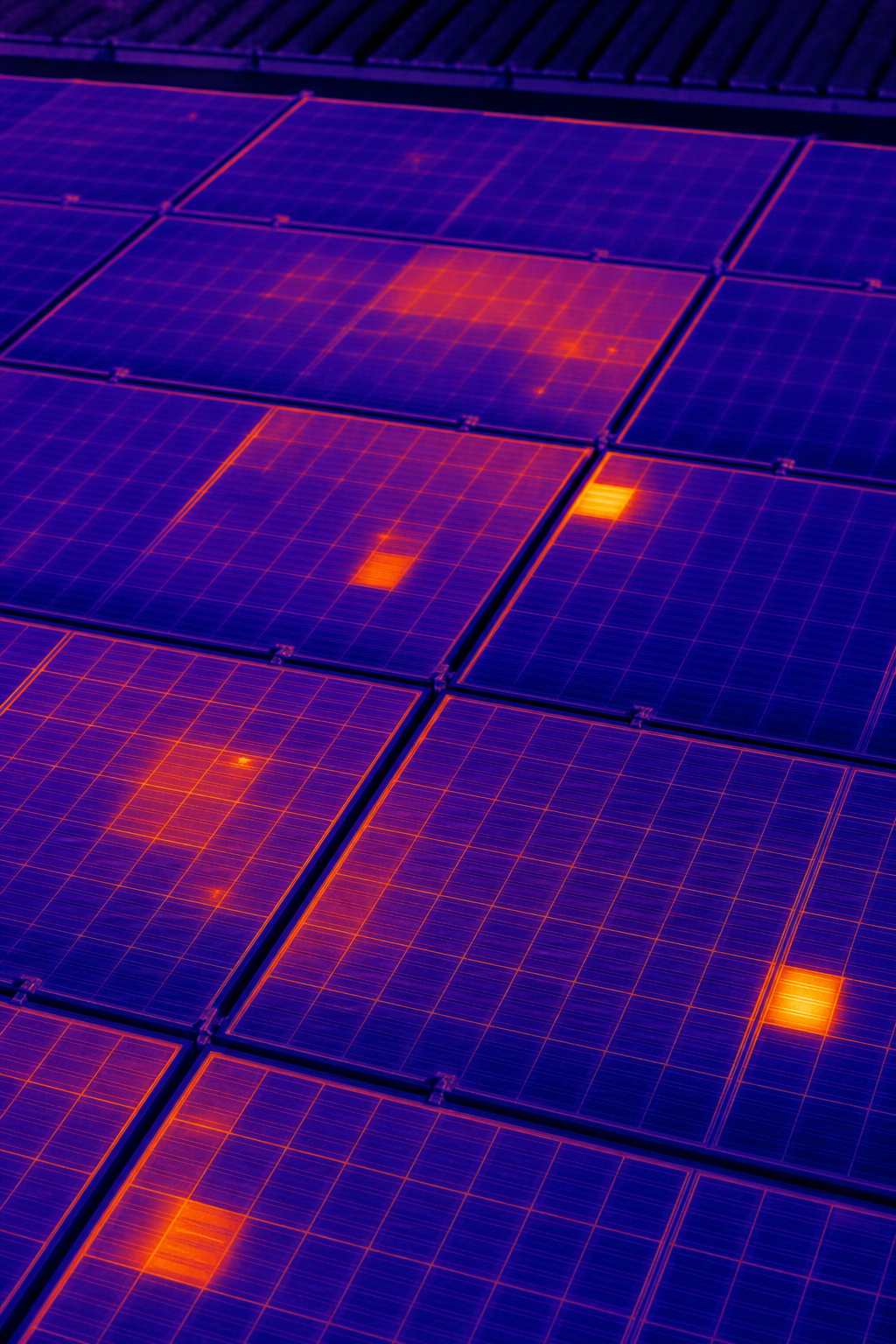
Solar PV fires are a documented risk on commercial roofs. A faulty cell, a degraded bypass diode, or a loose DC connection can generate enough heat to ignite roof materials , and because PV systems generate power even in low light, they can’t simply be switched off when a fire starts. Regular thermographic inspections are the primary method for identifying these failure modes before they become safety incidents.
IEC 62446 is the international standard that governs testing, documentation, and ongoing maintenance of grid-connected PV systems. Part 3 of the standard covers thermographic inspection requirements. Providers in this category carry out drone-based thermographic surveys of PV arrays and produce reports that meet IEC 62446 criteria , identifying hotspots, cell failures, bypass diode faults, and soiling patterns with enough detail to support warranty claims, insurance requirements, and compliance records.
Visual Perspectives Limited carries out IEC 62446-compliant solar PV thermographic inspections on commercial rooftop arrays across the UK. Our ITC-qualified thermographers interpret the data rather than just producing images, so the report distinguishes between a genuine electrical fault and a temporary shading effect. That distinction matters for insurers and for maintenance decision-making.
Providers who offer drone PV thermography without IEC 62446 compliance can still produce useful data, but their reports may not satisfy insurers or fulfil O&M contract obligations. Always confirm compliance before booking, especially for NHS, council, or academy trust buildings where procurement and compliance requirements are stricter.
6. Chartered Surveyor & Facilities Management Drone Inspection Partners , RICS-Aligned Reporting
Some drone survey providers work directly alongside RICS-regulated chartered surveyors, producing condition reports formatted to align with RICS guidance on building surveys and condition assessments. This matters when the drone data needs to feed into a formal dilapidations report, a schedule of condition at lease start, or an asset valuation.
Ayling Associates is one example of a surveying practice that integrates drone roof surveys into their service offer for commercial properties in London and the South East. Their model pairs drone inspection data with surveyor interpretation, producing outputs that work in a professional property context rather than just as a maintenance record. NSS Group, part of the Premier Technical Services Group, offers commercial drone survey services with 24-hour rapid deployment and connects inspection findings directly to their wider facilities maintenance and compliance capabilities.
This category is the right fit when your building sits inside a managed property portfolio, when you’re at a lease event, or when your facilities management contract requires documented condition evidence. The drone data alone isn’t enough , you need surveyor sign-off to make the report usable in a legal or financial context.
The limitation is cost. RICS-aligned reporting adds professional fees on top of the survey cost. For a straightforward maintenance inspection on a single commercial building, that level of formality isn’t always necessary. Reserve it for transactions, disputes, or compliance submissions where the document needs to carry weight. For regular monitoring surveys, a specialist provider like Visual Perspectives Limited can structure reporting to support your facilities team’s workflow without the full chartered surveyor overhead.
7. Public Sector & Estate Drone Roof Survey Providers , NHS, Councils & Universities
Public sector buildings , NHS estates, local authority properties, university campuses, academy trust schools , have procurement requirements that most general drone survey providers can’t easily satisfy. Framework agreements, public liability thresholds, GDPR-compliant data handling, and compliance with public sector contract terms all narrow the field.
Providers in this category have experience working within public sector procurement frameworks and understand the documentation trail that estate managers and compliance officers need. They’re familiar with the constraints of operating around occupied buildings , patient areas, lecture theatres, school playgrounds , where flight windows are tightly managed and disruption has to be zero.
PRC Limited publishes useful guidance on drone roof surveys for building managers, noting that drone inspections remove the need for scaffolding or access platforms that would otherwise require planning, risk assessments, and significant lead time on occupied sites. For NHS Trusts managing ageing building stock across a large estate, or universities maintaining a mix of historic and modern roofs, drone surveys with combined visual and thermal outputs cut inspection time and cost significantly compared to traditional methods.
Visual Perspectives Limited works with NHS Trusts, local authorities, housing associations, and education estate teams. Our CAA compliance, £5,000,000 insurance, and professional reporting meet the standards required for public sector work. If you’re managing a multi-building estate and need a roof condition survey programme that fits within your annual compliance cycle, we can structure the inspection and reporting to match your needs. You’ll be in good hands , rest assured our team understands the pressures of public sector estate management.
What to Look For When Choosing a Drone Roof Inspection Provider
Not every drone operator is a building diagnostics provider. Here’s a usable checklist when evaluating your options for a commercial building survey.
For commercial buildings, the survey data is only as good as the person interpreting it. A provider with 20 years of building inspection experience, qualified thermographers, and reporting built for facilities managers will always outperform a cheaper generalist with better drone hardware. Understanding the full factors that affect drone roof inspection cost helps you evaluate quotes more accurately and avoid paying for capability you don’t need , or missing capability you do.
FAQ: Drone Roof Inspection Costs for UK Commercial Buildings
How much does a drone roof inspection cost for a commercial building in the UK?
Costs vary significantly by roof size, complexity, and what’s included. A basic visual drone survey on a mid-sized commercial building typically starts from a few hundred pounds. Add thermal imaging for defect detection and the price rises. IEC 62446-compliant solar PV thermography is priced separately. Always get a site-specific quote rather than relying on generic figures , roof access, location, and reporting requirements all affect the final cost.
Do I need a drone roof survey before installing solar panels on a commercial building?
Yes. A pre-installation drone survey identifies membrane saturation, structural issues, and drainage problems that would be hidden under racking once installation begins. Finding defects after fitment means removing panels to access the roof, which costs far more than the survey. Thermal imaging is particularly important because it detects water trapped within flat roof insulation that looks fine on the surface but will accelerate under the added load of a PV system.
What is IEC 62446 and why does it matter for commercial solar PV inspections?
IEC 62446 is the international standard covering testing, documentation, and maintenance of grid-connected photovoltaic systems. Part 3 covers thermographic inspection. A report produced to IEC 62446 criteria identifies hotspot faults, cell failures, and bypass diode issues with the detail required by insurers and O&M contract obligations. Without it, your thermal images may not be accepted as valid evidence in a warranty claim or insurance assessment.
Can drone roof inspections replace scaffolding on commercial buildings?
For most condition surveys, yes. Drone inspections remove the need for scaffolding, cherry pickers, and the weeks of planning they require on occupied commercial sites. You get higher-resolution imagery, thermal data, and 3D mapping in a fraction of the time. The exception is where physical access is needed to take material samples or carry out test cuts on a flat roof membrane. The drone survey identifies where those tests are needed, cutting the scope of physical access required.
How do I know if a drone survey provider is CAA compliant in the UK?
Ask the provider for their CAA Operational Authorisation reference number. In the UK, any commercial drone operation requires an Operational Authorisation under the Specific Category from the Civil Aviation Authority. A credible commercial provider will share this documentation without hesitation. Also check their public liability insurance level , for commercial buildings, £5 million is the recommended minimum.
How long does a commercial drone roof inspection take?
A visual drone survey on a standard commercial roof typically takes two to four hours on site, including pre-flight checks and data capture. Thermal imaging surveys may require a specific time window , usually early morning or evening when temperature differential between inside and outside is sufficient. Report turnaround varies by provider, but 48 to 72 hours is typical for a full written condition report with annotated imagery.
Conclusion
For commercial buildings, the right drone roof inspection provider combines CAA compliance, qualified thermography, and reporting that your surveyor, facilities manager, or insurer can actually use. Visual Perspectives Limited brings all three together, with 20 years of experience, ITC Level 1 and 2 qualification, and IEC 62446-compliant solar PV reporting. Get in touch with us directly at visualperspectives.co.uk to discuss your building’s survey requirements and receive a site-specific quote.