Roof inspection costs in the UK can range from a basic visual check to a detailed survey with a written report. The fee depends on the roof, access and level of detail you need, so first be clear about what you want the inspection to answer.
We analyzed 36 comments and questions from Reddit, Quora and YouTube about Roof Inspection costs in the UK and found that 19% mentioned areas and items inspected.
Typical UK roof inspection costs and what drives the price
A simple check from the ground or other safe, accessible areas usually costs less than a close inspection with roof access, photos and a written report. Roof survey fees vary with the scope of work, so treat any broad estimate as a guide, not a fixed tariff. A fast visual check and a detailed condition survey are different jobs.
Most of the fee pays for professional time. One UK cost guide gives an indicative specialist rate of £40 to £80 per hour, while fixed fees are common. The inspection fee generally covers the visit and agreed reporting. Repair materials are separate: an inspection identifies issues, but it doesn’t include replacing tiles, flashing or gutters.
Four things tend to shape the quote:
- Roof area and layout: A larger roof takes longer to cover. Several roof levels, skylights or plant can add more points to check.
- Covering and condition: A steep pitched roof, fragile surface or signs of movement may need a different inspection method.
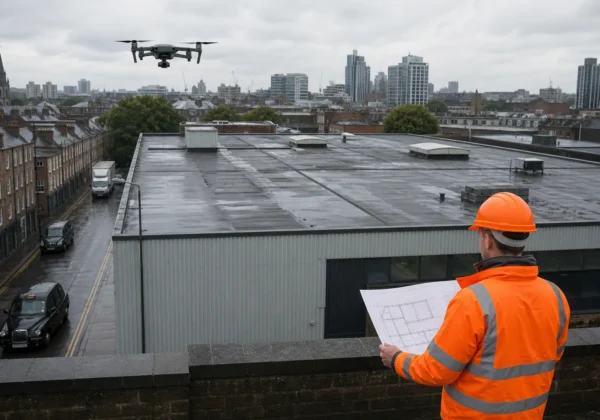
- Access: Safe ground views, existing access systems or a drone may avoid the need for extra equipment. Scaffolding or a mobile platform can add cost.
- Report detail: A brief verbal summary takes less time to prepare than a photo record with locations, defect notes and recommendations.
There isn’t a reliable single price for each UK nation in the available cost data. Travel, local demand and the building itself can affect a quote, so ask for a price based on your address and roof details. For commercial buildings, our guide to drone roof survey costs explains why the inspection scope can change the fee.
Inspection types: visual checks, detailed surveys and specialist diagnostics
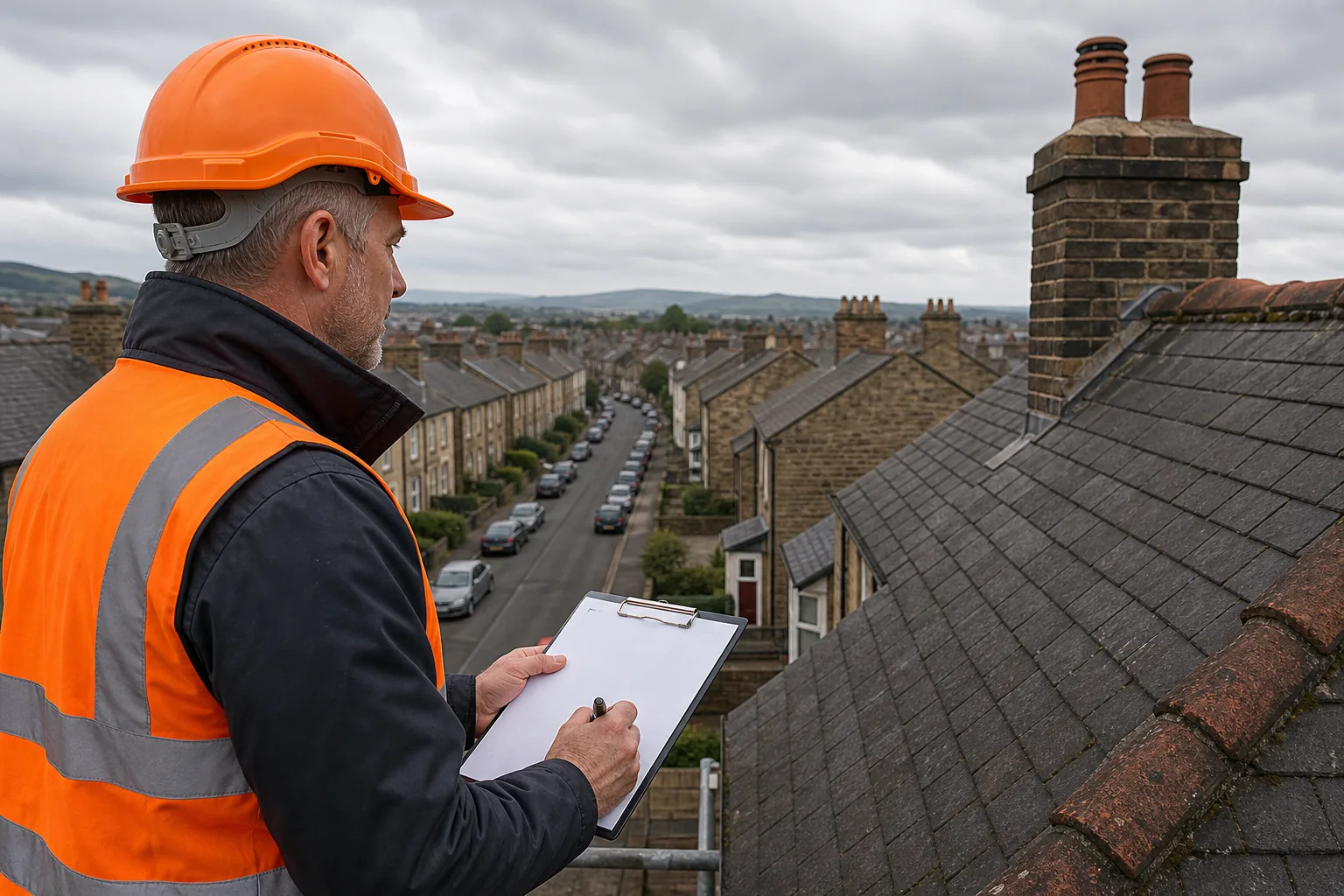
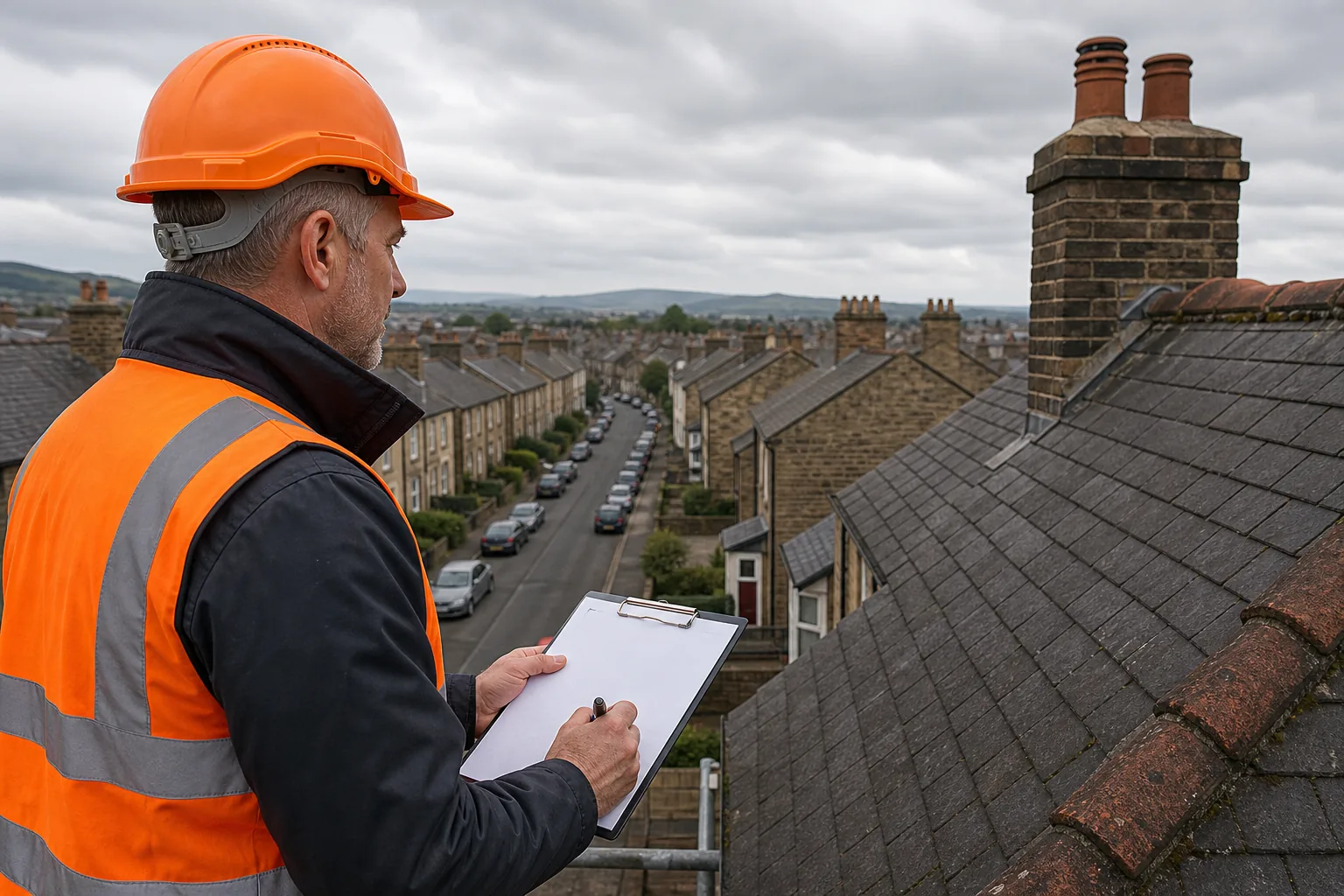
“Roof inspection” can mean several levels of work. A visual check is useful for routine maintenance or an obvious concern. A detailed survey is better when you need a record of condition, likely causes or repair priorities. Specialist diagnostics are for questions that ordinary photos can’t answer, such as suspected moisture within a flat roof.
| Inspection type | What it can help you assess | Best fit | Ask before booking |
|---|---|---|---|
| Visual check | Visible defects such as slipped tiles, damaged flashing or blocked drainage | Routine checks or an obvious fault | Will the inspector provide photos or a verbal summary? |
| Detailed condition survey | Roof areas and components, with findings recorded in a report | Planned repairs, purchase decisions or asset records | Does the scope include recommendations and defect locations? |
| Drone inspection | High-resolution images of areas that are hard or unsafe to reach | Large roofs, tall buildings or restricted access | Are images supplied, and is there a written assessment? |
| Specialist diagnostics | Thermal patterns or other signs that may point to hidden moisture or heat loss | Flat roof concerns or a defined building-performance question | What can the chosen method show, and what needs follow-up? |
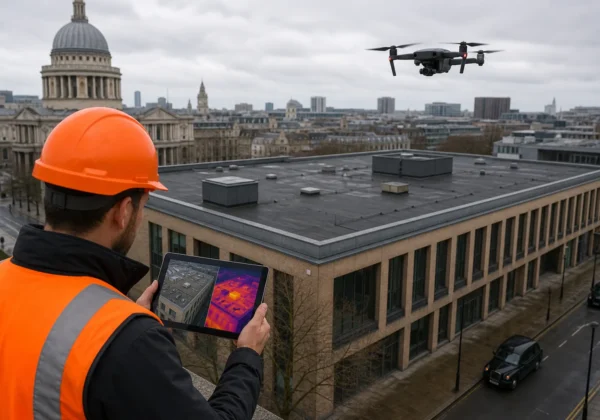
A drone survey can document roof areas without a person walking across them, but imagery alone isn’t a diagnosis. Thermal imaging records temperature differences. Those patterns may flag areas for closer review, but they need to be read in context and don’t prove a leak by themselves. Weather and safe flight conditions can also affect when a drone inspection takes place.
For commercial roofs, decide whether you need images for a quick overview or evidence that supports a maintenance plan. Visual Perspectives Limited carries out managed drone-based roof and façade inspections across the UK, using high-resolution visual and thermal equipment. We can also produce 3D mapping for projects that need a mapped view of the building. Our commercial drone roof inspection guide covers where aerial imagery can fit alongside a wider inspection.
Standards matter when they match the task. IEC 62446 relates to grid-connected solar PV systems, so it isn’t a general requirement for every roof condition check. If the roof inspection is part of a retrofit project, make sure the survey scope aligns with the wider project brief rather than assuming a single inspection covers every compliance need.
Additional charges, access, insurance and regulatory requirements
Extra costs tend to come from access or work beyond the inspection itself. Scaffolding and a mobile improving work platform may be needed where the roof can’t be viewed safely from the ground or by drone. Extensive clearing of debris can also be a separate task. Ask the inspector to show which items are included in the fee and which would need a separate quote.
Urgent attendance after storm damage may cost more if you need a same-day visit. A drone survey may also need to be rescheduled in high wind or heavy rain. That can affect timing, so agree what happens if conditions make the planned inspection unsafe or unsuitable.
If you need an inspection for an insurance claim, check your policy and ask the insurer what evidence it expects. A report with dated photographs and clear notes may help document the condition, but it doesn’t guarantee that a claim will be accepted. Keep the brief focused on the question the insurer has asked you to answer.
Roof repair work can trigger building regulation requirements. The rules depend on the work and the building, so distinguish the inspection from any later repair or replacement. For example, a roof replacement may need approval where the work meets the relevant criteria. Check the current guidance on building regulations approval before agreeing a scope of work.
For a drone inspection, check that the operator follows applicable rules for the planned flight. Requirements depend on the operation, location and aircraft. Ask the operator to discuss flight constraints and the proposed method before the visit.
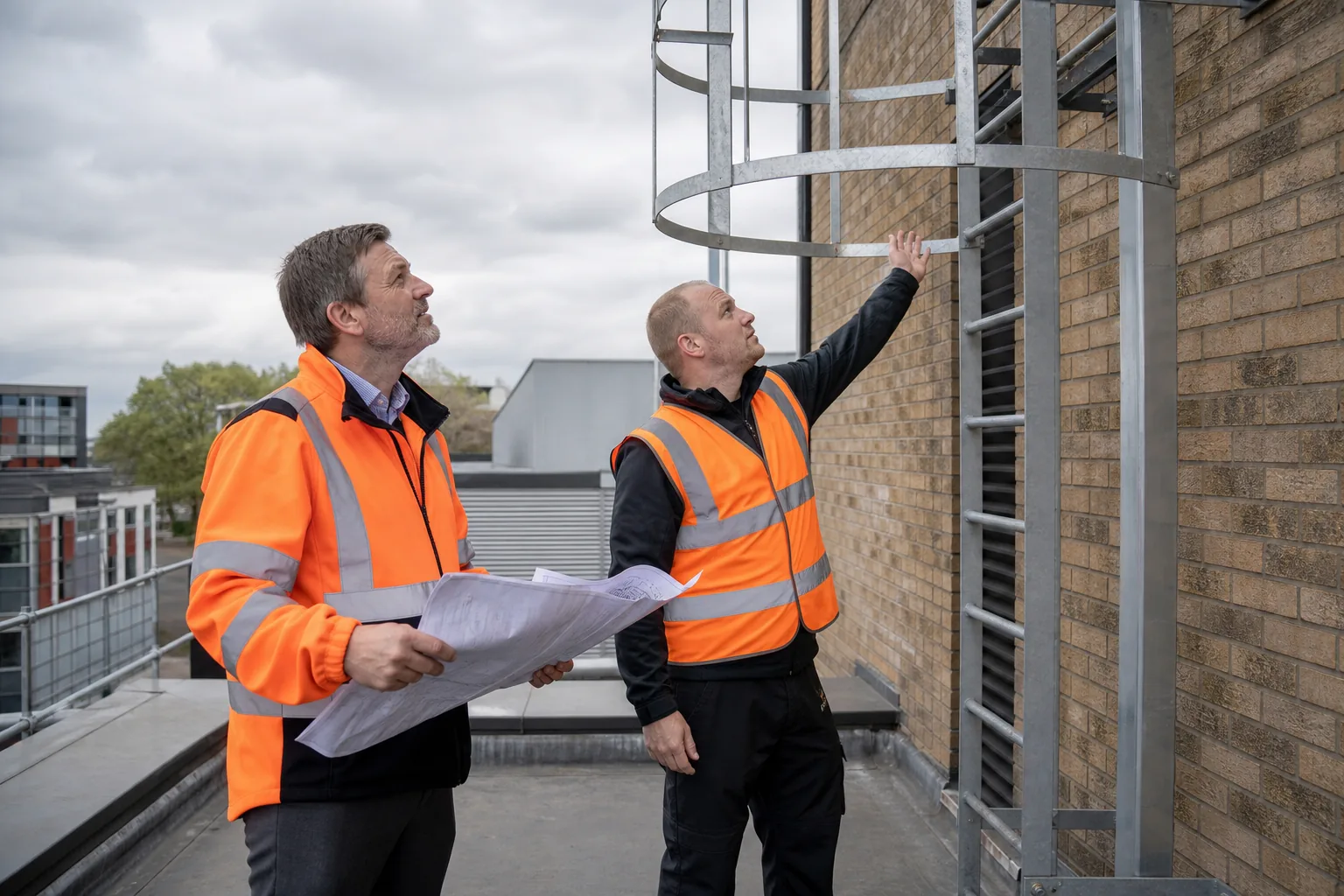
How to assess quotes, inspector competence and the final report
Compare quotes by scope, not by the headline fee alone. Give each inspector the same basic details: building type, approximate roof area, height, covering, access limits and the reason for the check. If you know where water is getting in, point out the area and say when the problem occurs. That helps the inspector price the right job.
Then check what you’ll receive. A useful report should make it clear what areas were inspected and which weren’t. It should tie photographs to locations, describe visible defects and set out any recommended next step. If you need repair costs, ask whether estimates are included or whether the report only identifies work that may be needed.
Ask who will carry out the inspection and what experience or relevant qualifications they have for your roof type. For a drone job, ask about the operator’s CAA status and insurance. For structural concerns, make sure the person has the right expertise to assess the structure, rather than only recording surface images.
Visual Perspectives Limited provides managed drone-based aerial inspections, including roof and façade surveys, detailed reporting and high-resolution 3D mapping. Our building diagnostics work can also include thermal imaging to help investigate heat loss and building defects. If you’re comparing a drone inspection with a broader close-up survey, our flat roof inspection guide sets out the kinds of issues a roof assessment may need to address.
Before you accept a quote, make sure it states the inspection method, access plan, deliverables, exclusions and any likely extra charges. A clear scope makes it easier to compare two fees fairly and use the final report in your maintenance records.
DIY checks, timing and planning follow-up maintenance
You can spot some warning signs from the ground without climbing onto the roof. Look for slipped or missing tiles, sagging roof lines, damaged guttering and debris collecting at downpipes. Indoors, note damp patches, fresh staining or daylight in the loft. Take photos from a safe place and record when you first noticed each change.
Don’t walk on the roof or lean out of a window to get a better view. Roof work at height carries a serious fall risk. A ground-level check is an early warning, not a substitute for an inspection when you suspect damage. General roofing guidance can help you understand common work and what to discuss with a professional.
Book an inspection after a storm if you see damage or water entry. It’s also sensible to have the roof checked when you’re planning major building work, buying a property with a specific roof concern or setting maintenance priorities across an estate. The right interval depends on the roof’s age, condition and exposure; don’t treat one annual schedule as right for every building.
Once you have a report, turn findings into actions. Separate urgent defects from items that can be monitored. Record who owns each task and when it should be reviewed. For a school or public estate, this makes it easier to carry inspection evidence into planned maintenance and budget decisions. Follow-up repair costs sit outside the inspection fee, so price the work separately before setting a project budget.
Frequently asked questions
How much does a roof inspection cost in the UK?
Roof inspection costs vary according to the scope, and rates are available on request. A basic visual check tends to cost less than a detailed survey with close access, photos and a written report. Roof size, height, access and the level of reporting all affect the final quote, so ask for a price based on the exact scope.
What does a roof inspection report include?
A report may include the areas inspected, photographs, visible defects and recommendations for repair or further investigation. The detail depends on the agreed scope. Before booking, ask whether it will identify where each issue was seen and whether it will distinguish urgent work from items that can be monitored.
How long does a roof inspection take?
A straightforward visual inspection may take around 30 to 60 minutes, while a more detailed assessment can take longer. A roof survey visit is often around one to three hours, depending on building size and complexity. Report writing happens after the visit, and poor weather may delay a drone inspection.
Does a roof inspection include repairs?
No, an inspection fee usually pays for assessment and reporting, not repair work or replacement materials. The report may recommend work, but that should be quoted separately. Ask whether any minor debris clearing is included, since extensive removal can be treated as a separate job.
Can I inspect my roof myself?
You can look for visible signs from the ground or from a safe indoor position, such as missing tiles, damp marks or blocked gutters. Don’t climb onto the roof. A professional inspection is the safer choice when you need close assessment, suspect hidden damage or need a report for an insurer or building project.
Conclusion
Choose the inspection level that answers your actual question, then compare quotes against the same scope and report requirements. For a complex or hard-to-reach roof, Visual Perspectives Limited can discuss a managed drone inspection and the evidence your team needs. Share the building type, roof area and reason for the check to request a tailored scope.