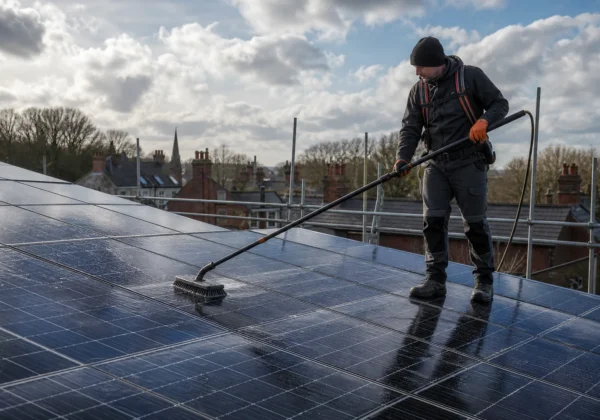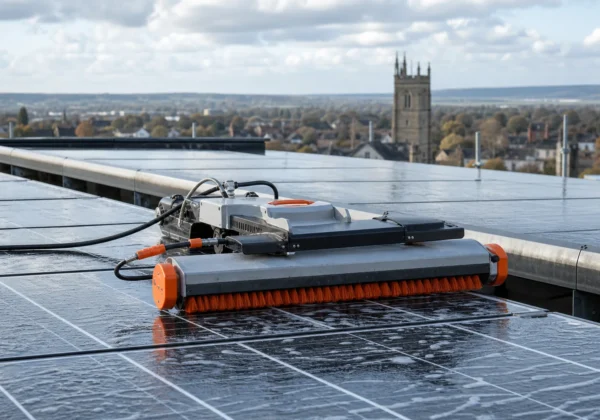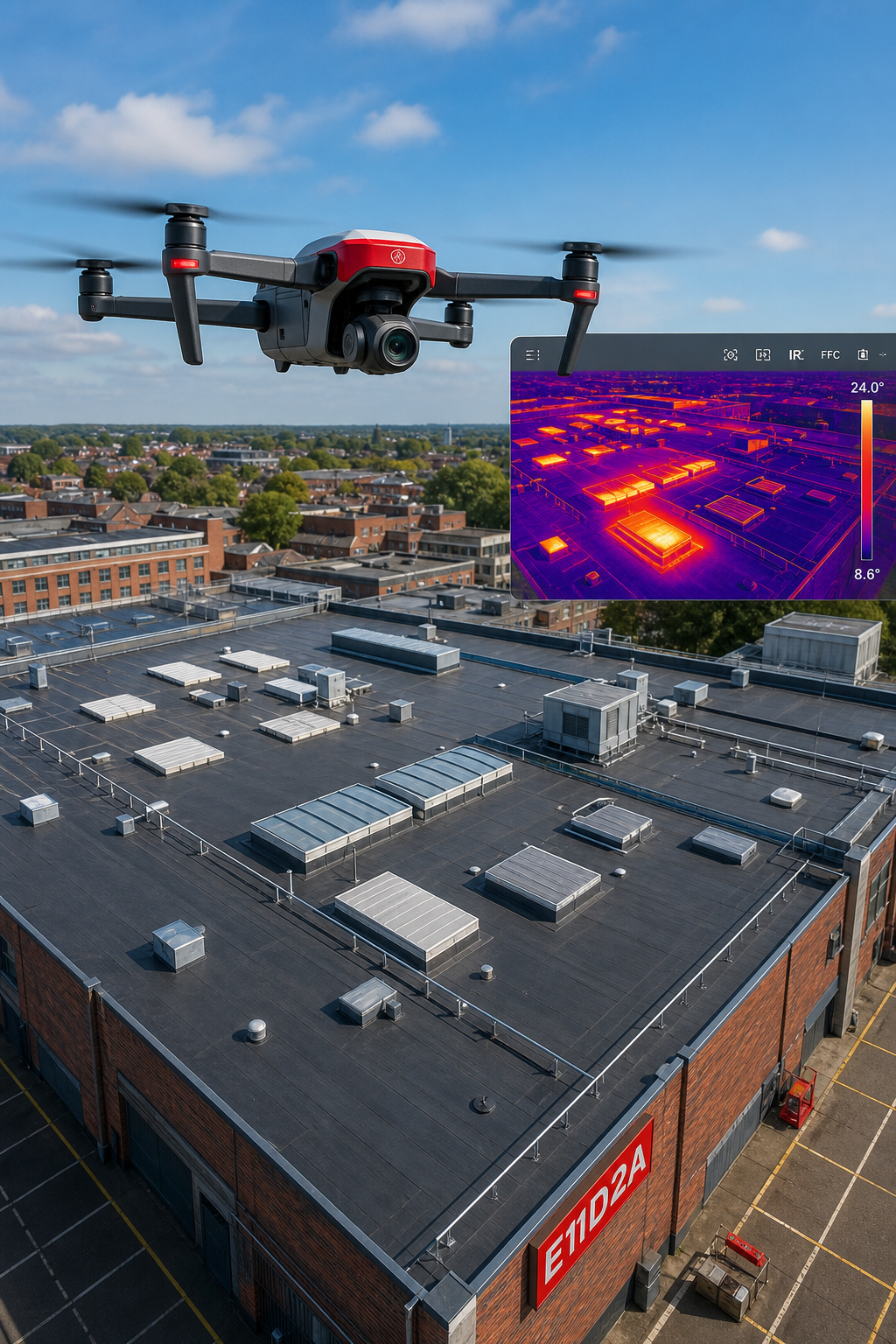
Commercial roofs are huge, hard to reach, and costly to fix when things go wrong. An aerial roof survey lets you spot trouble fast, without ladders or scaffolding. In this list you’ll see the top providers that give you quick, precise, and detailed data for UK commercial buildings.
Table of Contents
- 1. Visual Perspectives Limited, Our Top Pick for Commercial Drone Roof Surveys
- 2. Specialist Solar PV Thermography Inspections (IEC 62446 Compliant)
- 3. Full‑Service Drone Roof Inspection Companies with Thermal Imaging
- 4. Flat Roof Defect Detection Specialists for Commercial Properties
- 5. Building Façade Survey Providers with Drone Alternatives
- 6. Comparison Table: Key Features of Top Providers
- Frequently Asked Questions
- Conclusion
1. Visual Perspectives , Our Top Pick for Commercial Drone Roof Surveys
Visual Perspectives Limited runs managed drone inspections across the United Kingdom. Their pilots are CAA‑approved and carry £5 million public liability insurance. Each flight follows a strict safety plan, so you never need to send staff onto the roof.
The company captures 4K video, high‑resolution photos, and thermal readings in one go. The raw data lands on a secure cloud portal where you can view it any time. A specialist roofing expert then reviews the footage and produces a PDF report that highlights every defect, from cracked tiles to loose flashings.
Because Visual Perspectives has 20 years of experience, you get a level of insight you won’t find with newer firms. Their team holds ITC Level 1 & 2 thermography certifications, meaning the thermal images are calibrated for accurate heat‑loss detection. The reports also meet IEC 62446 standards, which is essential for solar‑PV owners who need a compliant record for warranty and insurance purposes.
Imagine a large retail park where the roof is a mix of metal and flat sections. A Visual Perspectives survey will map the surface area, calculate pitch, and flag any water‑ponding zones in a single visit. The client can then plan repairs before a storm hits, saving thousands in emergency work.
Key benefits include:
- Zero working‑at‑height risk for your staff.
- Fast turnaround , most reports are delivered within 48 hours.
- Actionable recommendations that tie directly to cost estimates.
We’ve linked a deeper look at their service here: Drone Building Inspection – Visual Perspectives. You’ll see how the workflow fits into an asset‑management plan.
Key Takeaway: Visual Perspectives blends two decades of roof‑inspection know‑how with certified thermography, giving you a compliant, fast, and safe survey.
 2. Specialist Solar PV Thermography Inspections (IEC 62446 Compliant)
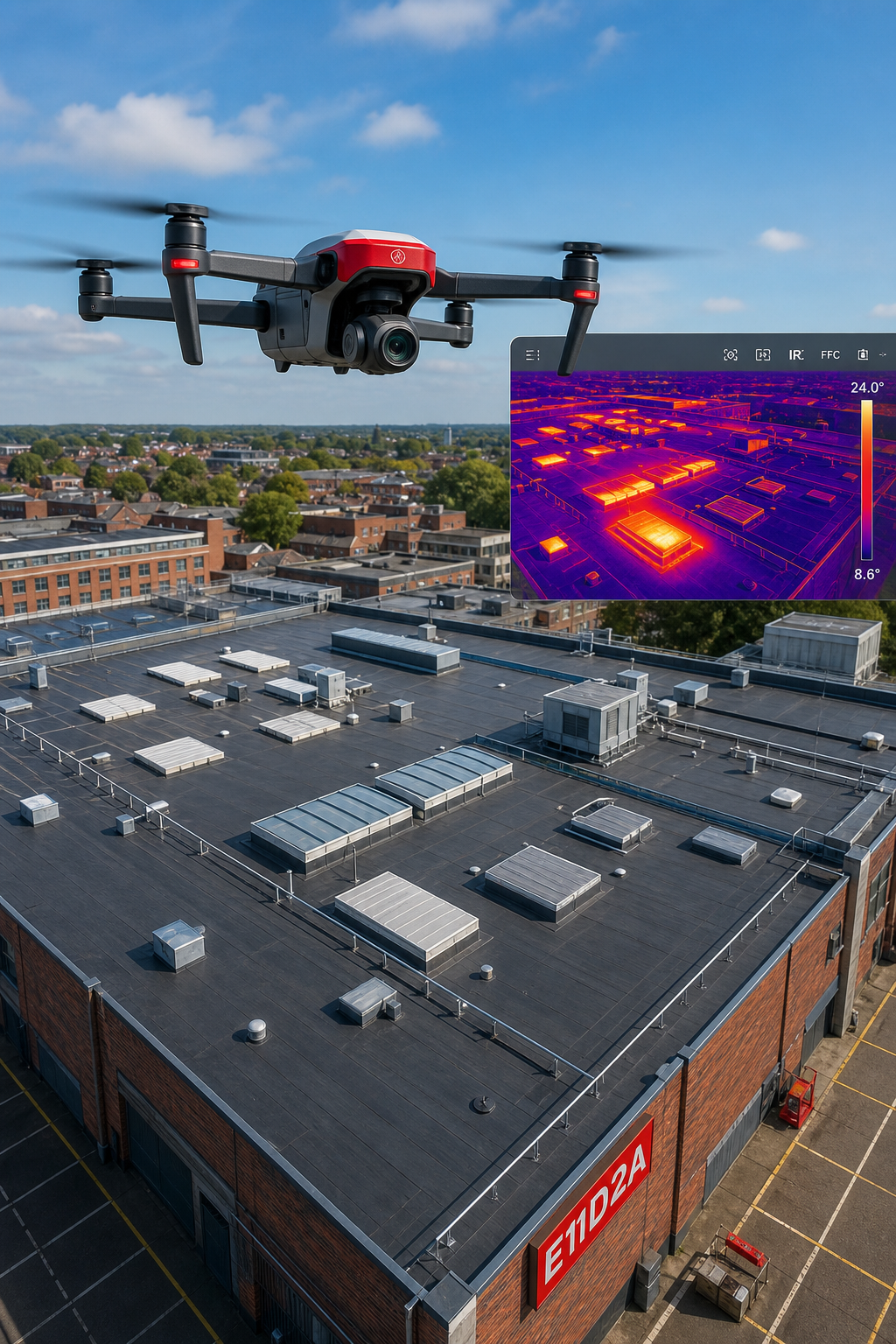
Solar‑panel owners need more than a visual check. Infrared thermography spots faulty cells, loose connections, and degraded modules that the naked eye can’t see. The IEC 62446‑3:2017 standard lays out the exact steps for a compliant inspection.
Experienced providers following the standard end‑to‑end hold the required IEC certifications and use high‑end infrared cameras calibrated to the solar‑irradiance levels required by the standard. They fly the drones at the optimal time of day , usually mid‑morning when the panels are warm but the sky is clear , to get the best contrast.
During the flight they capture thermal images of every panel. The software then flags pixels that are hotter than the surrounding cells, a sign of a possible fault. A written report lists each anomaly, the likely cause, and a recommended remedial action. This helps you keep the array running at peak efficiency and stay within warranty conditions.
Why does compliance matter? Insurance providers often require IEC‑compliant reports before they will cover a claim. Likewise, many manufacturers will only honor a warranty if you can prove the fault was identified by a certified thermographer.
70%of providers publish certifications
When you compare providers, look for:
- ITC Level 1 or 2 thermographer credentials.
- Evidence of IEC 62446‑3:2017 compliance in their methodology.
- Clear data delivery , raw thermal files plus a written summary.
Here’s a quick checklist you can use before you sign a contract: verify the inspector’s certification number, ask for a sample report, and confirm that the flight plan respects the weather windows outlined in the IEC guide.
Pro Tip: Schedule the thermography after a clear sunny day; the thermal contrast will be strongest and the fault detection more reliable.
3. Full‑Service Drone Roof Inspection Companies with Thermal Imaging
Some firms bundle visual surveys, 3D mapping, and thermal imaging into a single package. This gives you a full view of roof health , visual defects plus hidden heat loss in one go.
Industry experts highlight the value of such all‑in‑one services. They note that a single drone can capture high‑resolution RGB photos, 4K video, and infrared data without the need for separate site visits. The data is then processed into a 3‑D model that shows exact roof geometry, pitch, and surface area , useful for budgeting new work.
When you pair that model with thermal overlays, you can see where insulation is missing, where moisture is trapped, and where solar‑panel mounting may cause hot spots. The combined report helps facilities managers prioritize repairs, plan energy‑saving upgrades, and support ESG reporting.
For a real‑world example, a logistics centre in the Midlands used a full‑service provider to map its roof before installing a new solar array. The 3‑D model revealed several low‑lying sections that would have collected water. The client adjusted the layout, saved £30 k in future leak repairs, and kept the PV warranty intact.
Key points to evaluate:
- Do they provide a single, unified report or separate PDFs for each data type?
- Is the thermal camera calibrated for roof‑temperature ranges (‑10 °C to 50 °C)?
- Can you access the raw data via a client portal for future comparison?
Our own experience shows that a unified workflow cuts project time by half. The faster you get the data, the sooner you can act.
For dees, check out the Thermal Imaging Roof Guide – Visual Perspectives. It explains how the thermal data is turned into actionable insights.
4. Flat Roof Defect Detection Specialists for Commercial Properties
Flat roofs hide a lot of trouble. Moisture can sit under the membrane for months, leading to rot, mold, and structural loss. A specialist that focuses on flat‑roof thermography can spot the problem before it spreads.
A specialist provider offers a service that combines high‑resolution RGB capture with post‑sunset thermal imaging. The process works like this: first they fly the drone in full daylight to get a visual map. Then, two hours after sunset, the same drone records a thermal sweep. Moisture‑laden areas stay warm longer, showing up as bright spots on the thermal image.
Because the inspector is BINDT Level 2 qualified, the thermal data is tuned to highlight even thin layers of water. The final report includes annotated images, exact location coordinates, and a risk rating for each anomaly.
Consider a university campus that had recurring leaks in a large flat‑roofed lecture hall. After their survey, the team identified three hidden wet zones that were feeding into the HVAC room. Repairs were targeted, and the university avoided a £120 k roof replacement.
When you compare flat‑roof specialists, ask for:
- Evidence of BINDT or equivalent thermography qualifications.
- A clear workflow that shows both day‑time RGB and night‑time thermal stages.
- Delivery of a client portal where you can view the data over time.
Pro Tip: Request a before‑and‑after thermal image set; it helps you see the impact of any remedial work you perform.
“The drone inspection provided clear visual evidence that allowed us to confidently plan maintenance works.” , a satisfied client
5. Building Façade Survey Providers with Drone Alternatives
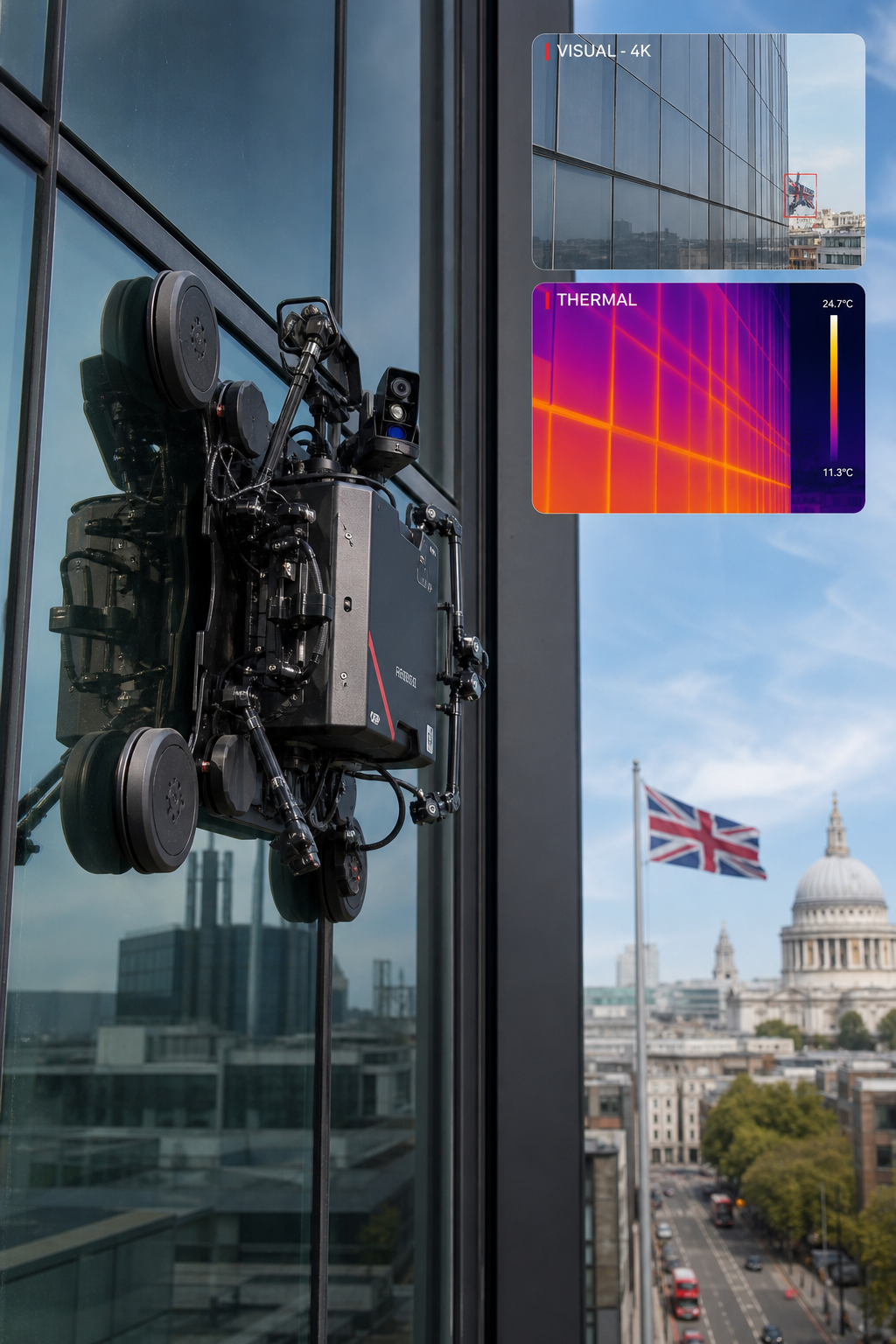
Façade inspections are often done with rope‑access crews, which is risky and expensive. Some firms now use advanced drones that can access building sides using suction cups or magnetic pads, reaching heights that would otherwise need a scaffold.
These drone services capture high‑resolution imagery of the entire elevation, including windows, cladding joints, and roof‑wall interfaces. The data is stitched into a 360° model that lets you zoom in on any crack or delamination without ever touching the surface.
One provider uses a dual‑sensor setup: a standard optical camera for visual detail and a thermal camera for spotting hidden moisture behind cladding. The thermal view can reveal water ingress that may cause future rot, a key concern for heritage buildings and council estates.
In a recent public‑sector project, a council used a drone service to inspect a listed municipal building. The drone reached the ornate cornice that was impossible to scaffold. The inspection uncovered three failing mortar joints, which were repaired before the next winter, saving the council a potential £45 k emergency repair bill.
Things to verify before you hire:
- Does the drone have a certified mechanism approved by the CAA?
- Is the thermal sensor calibrated for building‑envelope temperatures?
- Will you receive a 3‑D model plus a heat‑map overlay?
Our own partners at Visual Perspectives have worked with drone teams to add thermography to façade surveys. Learn more about their integrated approach here: Building Defect Thermography – Visual Perspectives.
Key Takeaway: Drone services give you safe, detailed façade data and can spot hidden moisture that rope crews might miss.
 6. Comparison Table: Key Features of Top Providers
Use this table as a quick decision aid. If you need full IEC 62446 compliance for a solar array, Visual Perspectives or IEC 62446 compliant partners are the clear choices. For flat‑roof moisture mapping, dedicated flat‑roof specialists stand out. For heritage façade work, a drone façade specialist is the way to go.
Frequently Asked Questions
What is the typical turnaround time for an aerial roof survey in the UK?
Most providers deliver a full report within 48 hours of the flight, assuming weather conditions cooperate. The fastest services can get you data in as little as 24 hours if the site is small and the client has pre‑approved the flight plan. Larger campuses may take up to 72 hours because the data set is bigger and needs more detailed analysis.
Do I need to obtain any permits before a drone inspection?
Yes. Any commercial drone flight in the UK must comply with the Air Navigation Order 2016 and be covered by a Permission for Commercial Operations (PfCO) from the CAA. Reputable firms handle the paperwork for you, but you should confirm that the pilot’s licence is current and that the flight path respects nearby air‑space restrictions.
How does thermal imaging detect hidden roof defects?
Thermal cameras measure surface temperature differences. Moisture, insulation gaps, or faulty solar cells emit heat differently from healthy material. By overlaying the thermal map onto a visual image, you can spot hot spots that indicate water ingress, missing insulation, or electrical faults without drilling or removing any material.
Is an aerial survey enough for insurance claims?
Most insurers accept a detailed, IEC‑compliant report as proof of condition, especially when the report includes calibrated thermal data and annotated imagery. However, some policies still require a physical inspection for severe damage. It’s worth checking the insurer’s specific requirements before you book the survey.
Can the same drone data be used for multiple purposes?
Absolutely. The raw RGB and thermal files can feed a 3‑D model for BIM integration, support a heat‑loss analysis for ESG reporting, and serve as evidence for warranty claims on solar PV. Keeping the data in a secure portal lets you compare future surveys and track degradation over time.
What factors affect the cost of a commercial aerial roof survey?
Cost depends on roof size, height, complexity, and the level of reporting you need. A basic visual survey for a medium‑size warehouse may start around £700, while a full‑service package that includes thermography, IEC 62446 compliance, and a 3‑D model can run £1 500 to £2 500. Weather delays, special air‑space permissions, and rapid‑turnaround requests can also add to the price.
How often should I schedule an aerial roof survey?
For most commercial assets, an annual survey is a good rule of thumb. Buildings with solar panels or flat roofs in high‑rainfall areas may benefit from semi‑annual checks, especially after severe weather events. Regular data points help you spot trends and plan maintenance before small issues become big expenses.
Are the survey results easy to understand for non‑technical stakeholders?
Yes. Leading providers package the data into clear PDF reports with annotated photos, heat‑maps, and concise recommendations. Many also include an executive summary that translates technical findings into cost‑impact language, making it simple for facilities managers, finance teams, and board members to act.
Conclusion
Choosing the right aerial roof survey partner can save you time, money, and risk. Visual Perspectives leads the pack with two decades of experience, certified thermography, and IEC 62446‑ready reporting , a combination that few rivals match. Specialist solar‑PV thermography providers give you the compliance you need for warranty and insurance. Full‑service firms bundle visual, 3‑D, and thermal data for a full view. Flat‑roof experts focus on moisture detection, while drone teams bring façade inspections to heights previously only reachable by scaffolding.
Take the checklist in the FAQ, match it to your project needs, and pick the provider that ticks the most boxes for safety, speed, and compliance. When you invest in a high‑quality aerial survey now, you’ll avoid costly emergency repairs later and keep your building running smoothly for years to come. Ready to get started? Reach out to Visual Perspectives , we’ll help you plan the survey, interpret the results, and turn data into action.