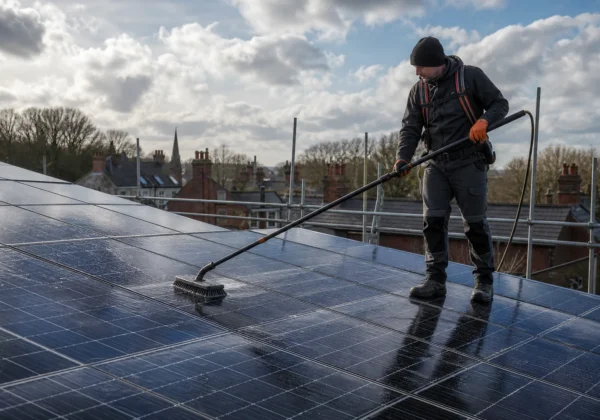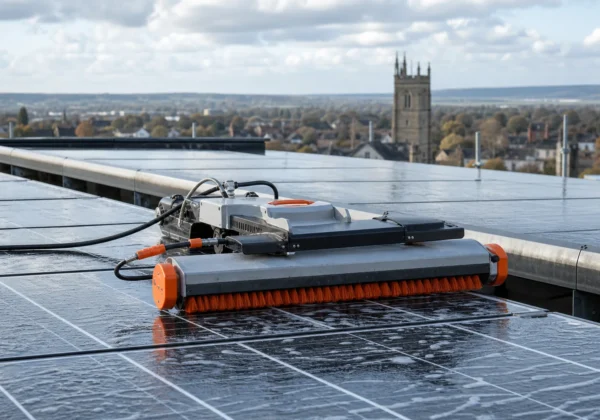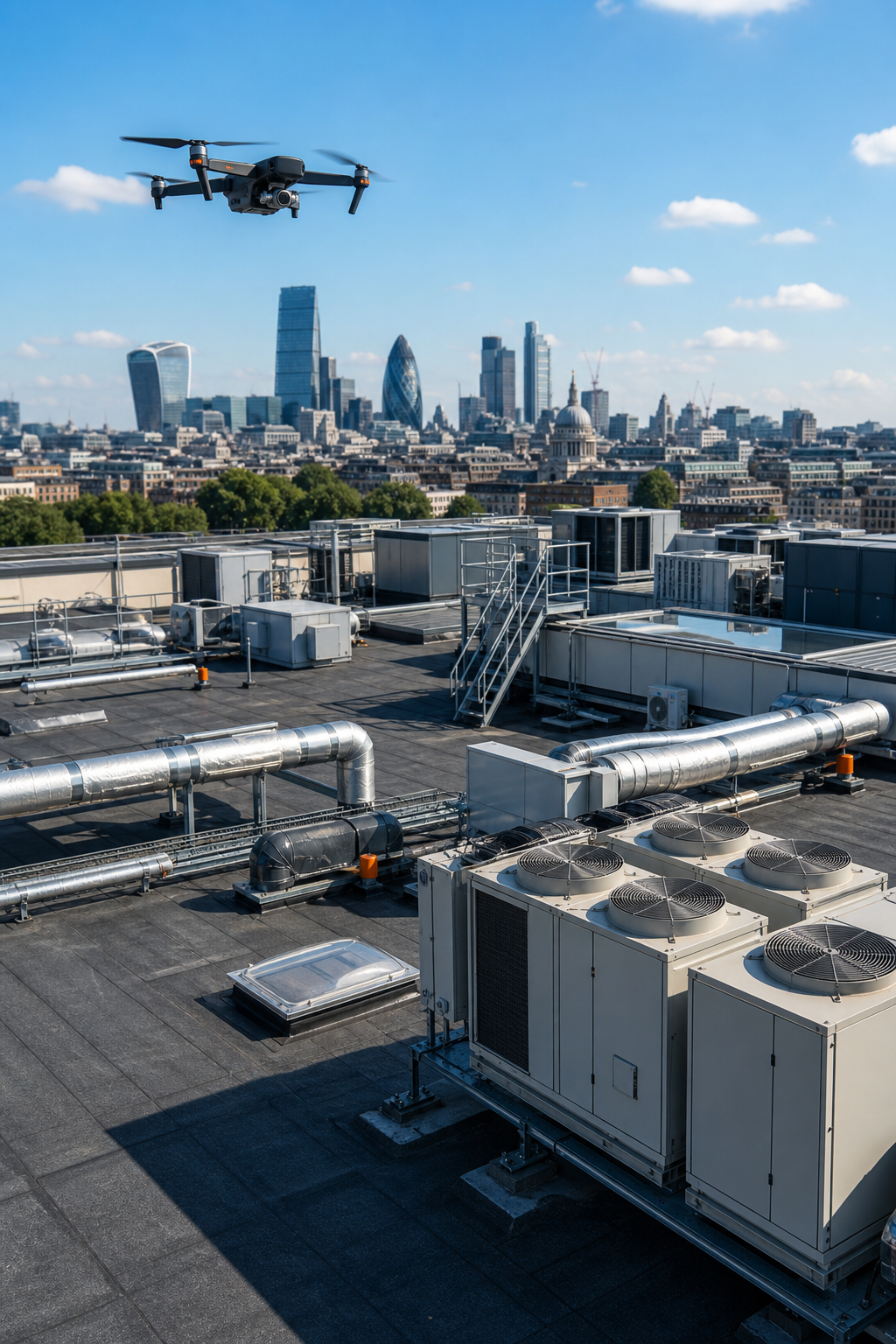
Ever wonder why insurers are suddenly sending drones over your roof after a storm? In the next few minutes we’ll break down exactly how a drone inspection works, why it’s a major change for claims, and what you need to know before you lift off. We’ll also show you the top 11 drone roof inspection services that insurance companies trust. From CAA-approved operators to IEC 62446-compliant solar thermography, these providers save time, money, and risk. Whether you’re an adjuster, building owner, or facilities manager, this list will help you choose the right partner for your next claim.
1. Visual Perspectives , Best IEC 62446 Compliant Inspections
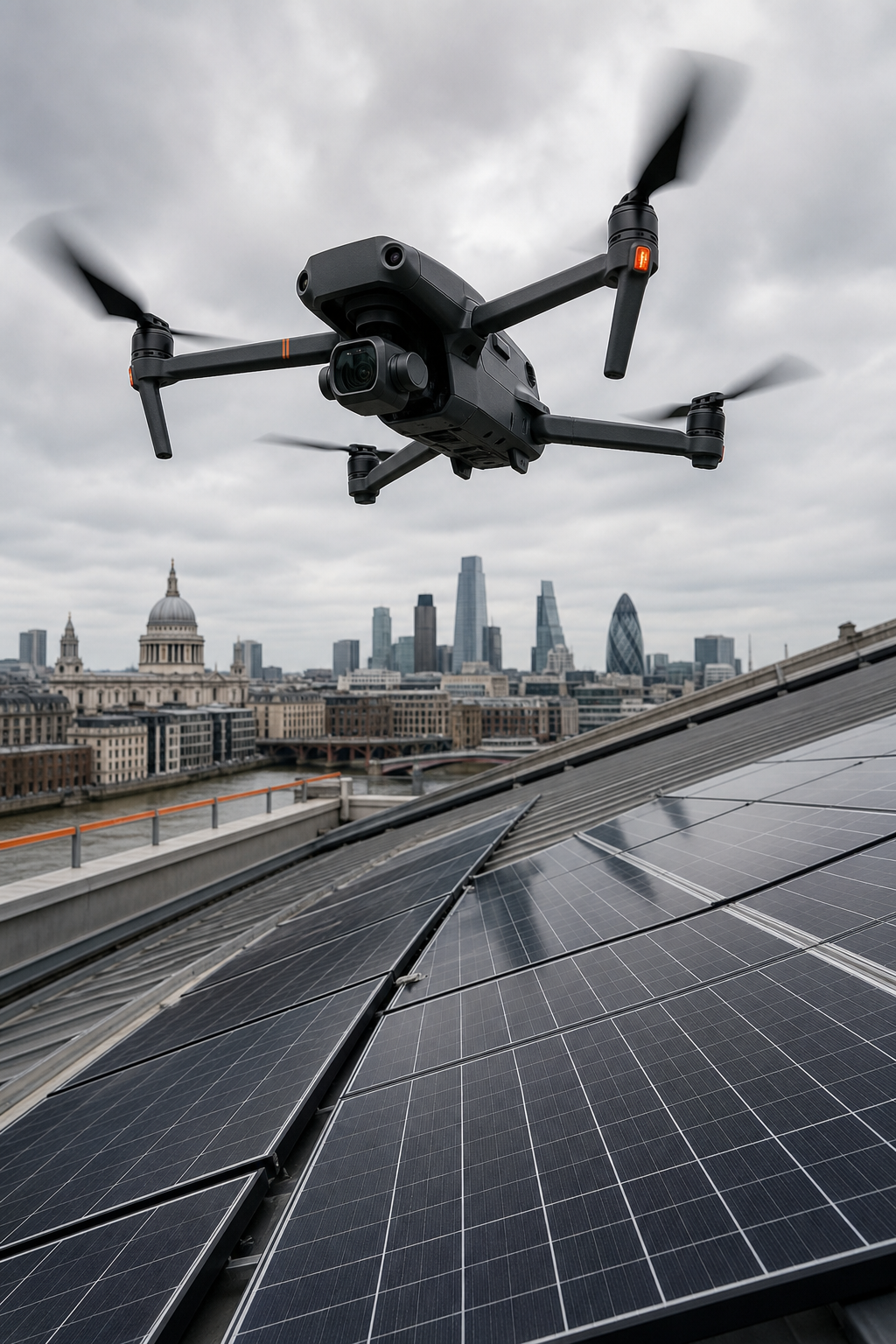
When insurers demand proof that a commercial solar roof is safe, only one UK drone firm checks every box , Visual Perspectives delivers CAA-approved pilots, IEC 62446‑certified PV thermography, and £5 million professional liability cover. That combination makes them the most insurer‑ready partner for commercial rooftop inspections. They don’t just fly over a roof; they capture high‑resolution 3D maps and advanced thermal data that reveals defects invisible to the naked eye. With 20 years of experience and ITC Level 1 and 2 thermography certifications, their reports stand up in court and satisfy underwriters. Their drone roof inspection guide explains how they detect heat loss, membrane saturation, and structural issues before they become claims. For commercial buildings, they are the gold standard.
Visual Perspectives focuses on commercial and public buildings , not domestic. Their service is built around durability: high‑resolution RGB and thermal cameras, automated flight paths, and AI‑assisted analysis. Each inspection produces an orthomosaic map, a 3D model, and a certified report that aligns with IEC 62446‑3:2017. Insurers appreciate the clear chain of custody and the actionable defect diagnostics. The £5 million liability cover means large‑scale projects are fully protected. If you need a single source for roof condition, solar PV performance, and insurance‑grade documentation, Visual Perspectives is the pick.
2. Specialist Solar PV Thermography Providers
Solar arrays on commercial roofs are a growing insurance concern. If a panel fails or a wiring fault sparks a fire, the claim can be enormous. Specialist providers focus on drone‑based thermography for PV systems, often with IEC 62446 certification. These inspections catch hot spots, bypass diode failures, string imbalances, and potential‑induced degradation (PID). For example, a combined thermographic and electrical string test on a 13‑year‑old healthcare centre revealed a safety‑classified wiring issue and an encapsulant ageing trend , findings that a visual walk‑around would miss. Read our commercial solar panel inspection guide to see how these specialists deliver depth.
When choosing a thermography specialist, look for Level 3 thermographers and experience with commercial PV. The best ones integrate thermography with electrical testing in one visit, producing a single certified report. This saves time and gives insurers a complete picture. While many providers claim drone inspection, only a handful offer true IEC 62446‑compliant thermography. Visual Perspectives is one of them, but there are other niche firms like Drone Media Imaging (who performed that healthcare inspection). However, they lack the full compliance suite that top‑tier insurers require.
3. General Commercial Roof Inspection Drones
Not every commercial roof needs a full thermographic survey. Sometimes a visual check for missing tiles, blocked gutters, or cracked flashing is enough. General commercial roof inspection drones use high‑resolution cameras (48 MP or more) and 4K video to document every square metre. Providers like The Full View offer this service across the UK, with quick turnaround and easy‑to‑read reports. They take about 20 minutes for a simple pitched roof and deliver a report within a day or two. Costs range from £200 for a small flat roof to £800+ for a complex multi‑pitch mansion. But for insurance claims, insurers want more than pretty pictures , they want measurable data and professional certifications. That’s where specialist operators like Visual Perspectives stand out, though general drones are fine for initial triage.
General services are ideal for routine maintenance or pre‑purchase surveys. They also work well for landlords managing multiple properties. However, for insurance‑related claims, the report must meet standards of evidence. A general drone operator without thermography or CAA compliance may not be accepted by the carrier. So ask upfront about certifications and insurance limits. According to The Full View’s drone roof inspection page, their reports include 2D orthomosaics and 3D models , solid for visual assessments.
4. Flat Roof Defect Detection Specialists
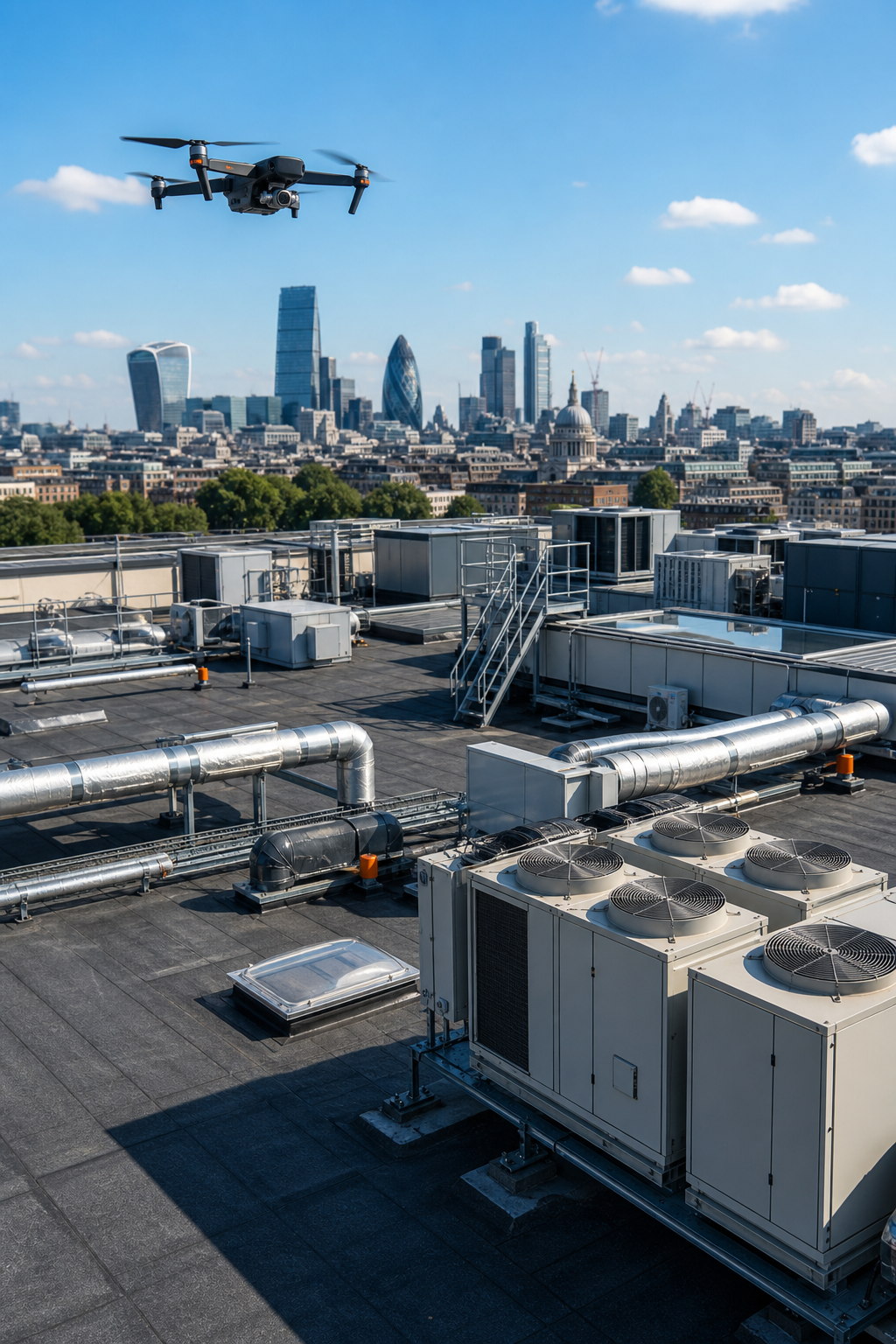
Flat roofs are prone to ponding, membrane blisters, and hidden moisture. Traditional walk‑through inspections often miss these because water can travel laterally. Drone specialists use thermal imaging to spot moisture beneath the surface. For instance, a FLIR‑equipped drone can detect temperature differences between dry insulation and wet areas, identifying leaks that are invisible to the naked eye. These surveys are most effective after sunset, when the roof cools unevenly. Flat roof defect detection specialists like those using Workswell WIRIS systems combine visual and thermal cameras to pinpoint exact locations. This is important for insurance claims because hidden moisture can lead to structural rot and mould, increasing claim severity.
When an insurance adjuster suspects a flat roof leak, a drone can survey the entire area in minutes without scaffolding. The thermal data provides evidence of long‑standing moisture, supporting the claim or denying it. Providers with specific flat‑roof expertise can also assess built‑up roofing (BUR) and single‑ply membranes. They identify issues like ridging, fishmouths, and flashing separation. Visual Perspectives includes flat roof defect detection in their commercial roof surveys, using advanced thermal sensors. For a deeper explanation, see their commercial roof inspection guide.
5. Insurance‑Specific Drone Inspection Firms
Some drone operators specialise entirely in insurance claims. They understand the paperwork, the deadlines, and the evidence standards. Firms like EagleView (in the US) offer managed and self‑service drone inspections, claiming up to 1.5 times more claims per day and a 20% reduction in loss adjustment expenses. In the UK, there are dedicated adjuster‑focused networks. Insurance‑specific firms provide turnkey services: they fly the roof, process the data, and deliver a report that fits the carrier’s system (e.g., Xactimate). They also handle compliance with Part 107 (FAA) or CAA rules. For commercial claims, the best firms offer liability cover of £5 M or more, like Visual Perspectives does. A provider that lacks this coverage may be rejected by the insurer.
Insurance‑specific firms also train their pilots on claim protocols. They know how to document wind damage vs. hail damage, how to measure roof pitch, and how to estimate replacement costs. They often bundle thermal imaging and 3D modelling to support complex claims. If you are an adjuster or risk manager, choosing a specialist can reduce turnaround time from weeks to days. However, not all insurance‑drone firms have solar PV certification , so check if you need IEC 62446 for a PV array claim. The EagleView guide on drone roof inspections for insurance outlines the benefits in detail.
6. Drone‑Based Building Defect Diagnostics
Beyond roofs, drones can diagnose façade cracks, cladding defects, and structural issues. For insurance claims covering building envelope failures, a drone survey provides a permanent visual record. Case studies from firms like Joulea show how autonomous drones can map entire building envelopes on high‑rise towers, identifying issues faster than manual methods. For insurance purposes, these diagnostics are used to prove that damage existed before a policy period or to support claims for storm‑driven impact. The 3D models generated allow remote measurements, supporting accurate cost estimates. When a commercial building suffers from water ingress due to cladding failure, a drone inspection can document every exposure point without erecting scaffolding.
Building defect diagnostics often involve multiple sensors: RGB, thermal, and sometimes multispectral. This layered data helps surveyors and engineers pinpoint the root cause. For insurance, it reduces disputes because both parties can see the same evidence. Visual Perspectives offers complete drone‑based building diagnostics as part of their commercial surveys, with actionable reporting that includes annotated images and severity ratings. If you’re managing a portfolio, regular defect scans can catch problems early and avoid large claims.
7. Aerial Thermal Imaging for Insurance Claims
Thermal imaging is the secret weapon for insurance claims involving hidden water damage, heat loss, or electrical faults. Aerial thermal imaging from a drone can cover a large commercial roof in one flight, identifying thermal anomalies that point to moisture or insulation gaps. Adjusters use these images to justify repair costs or to validate that a claim meets policy conditions. on moisture detection, thermal cameras on drones can pinpoint water intrusion that would otherwise go unnoticed until structural damage appears. For insurance, early detection means smaller claims and better outcomes. Firms like SkyVisor offer specialised solar thermography with AI analysis, but for general building claims, any ITC‑certified thermographer can deliver reliable data.
The key is compliance with IEC 62446‑3 for solar panels or general thermal accuracy. Insurers will accept thermal evidence only if it’s captured under controlled conditions , stable irradiance, low wind, and correct emissivity settings. A qualified provider like Visual Perspectives (ITC Level 1 and 2) ensures these standards are met. Their reports include radiometric imagery that can be re‑analysed by third‑party engineers. This level of detail strengthens claims and reduces denial risk.
8. Multi‑Spectral Drone Inspection Services
Multi‑spectral sensors capture data across visible and near‑infrared bands, going beyond standard RGB or thermal. They are used for vegetation stress analysis, but also for building diagnostics , detecting moisture patterns in green roofs or identifying areas of algal growth. For insurance claims on buildings with living roofs or complex cladding, multi‑spectral imaging can differentiate between normal ageing and defect. These services are rare but growing. Providers like SkyVisor offer multispectral payloads for solar panel inspections, while others integrate them for façades. The benefit for insurers is a richer data set that supports more accurate risk assessment. For example, a multispectral scan of a flat roof can reveal spots where the membrane has degraded due to UV exposure, even before a leak occurs.
When selecting a multi‑spectral provider, ensure they can process the data into actionable reports. Many drone operators collect data but lack the software to analyse it properly. Visual Perspectives uses advanced analysis tools to extract meaningful conclusions from multi‑spectral imagery. Their experience with commercial buildings ensures that the data translates into claim‑ready documentation. If your insurance claim involves a unique building material, ask for multispectral capabilities.
9. LiDAR and 3D Mapping for Roof Surveys
LiDAR (Light Detection and Ranging) provides millimetre‑accurate 3D point clouds of roof surfaces. For insurance claims, LiDAR is used to quantify storm damage , measuring hail dent density, roof slope, and total surface area for replacement estimates. Combined with photogrammetry, it creates digital twins that can be inspected remotely. Services like SkyeBrowse use videogrammetry to produce 3D models from a single orbit, achieving accuracy of 0.1 inches at premium tiers. This is ideal for disputed claims where precise measurements are needed. Adjusters can share a link to the 3D model, allowing all parties to take their own measurements without returning to site. on roof assessment, the technology reduces adjuster fall risk and accelerates claim cycles.
For commercial buildings, LiDAR surveys also help with pre‑construction baselines and depreciation estimates. Some providers combine LiDAR with thermal imaging for a complete picture. Visual Perspectives offers 3D mapping as part of their drone surveys, using high‑resolution cameras and structured flight paths. Their reports include 3D models that can be opened in any browser, making collaboration easy. If your insurance claim involves a large roof area or complex geometry, LiDAR can be a decisive tool.
10. Pre‑Solar Installation Roof Survey Specialists
Before installing solar panels on a commercial roof, a thorough survey is essential. Insurers increasingly require a baseline inspection to document pre‑existing conditions and to avoid coverage disputes later. Pre‑solar surveys check for membrane saturation, structural weaknesses, and shading issues. They also verify that the roof can support the added load. Specialists use drone thermal imaging to detect hidden moisture that could trap heat under panels and shorten lifespan. on faster fault detection, drone inspections can be 40% chea methods while covering every module. A pre‑installation survey creates a timestamped digital record that protects both the building owner and the insurer.
These surveys are especially important for flat roofs, where ponding and insulation gaps are common. By identifying defects before installation, you avoid voiding warranties and prevent future claims related to panel failure or roof leaks. Visual Perspectives specialises in pre‑installation surveys, combining thermal imaging with IEC 62446 compliance to ensure the PV system meets insurance requirements. Their reports give solar installers the confidence to proceed, and insurers the documentation they need. If you plan to add solar to a commercial roof, don’t skip this step , a small investment now can save thousands in claims later.
11. Nationwide Drone Inspection Networks
For insurers managing claims across multiple regions, a nationwide network of certified drone pilots is invaluable. Networks like Spexi and Allbase offer coverage across the UK, with CAA‑approved operators and standardised reporting. Spexi, for example, uses sub‑250g drones for faster regulatory compliance and claims up to 200x faster data delivery. These networks scale from single‑site inspections to catastrophe response, activating local pilots to triage damage after storms. For insurance companies, having a single point of contact for nationwide aerial imagery simplifies claims processing and ensures consistency.
Allbase Technical Services, with over 30 years of surveying experience, offers drone roof inspections backed by qualified thermographers. Their nationwide reach is supported by a team of experts who can handle commercial and residential assets. However, when the claim involves solar PV or complex thermal diagnostics, a specialist like Visual Perspectives may still be required even if the network provides the initial flyover. Networks are ideal for rapid visual triage; for high‑value or technical claims, bring in the specialists. The flexibility of a network combined with the depth of a specialist gives insurers the best of both worlds.
Comparison of Top Drone Inspection Services for Insurance
How to Choose the Right Drone Roof Inspection Service
Before booking, ask these questions: Is the provider CAA/FAA certified? Is their liability insurance adequate for large claims? Do they have IEC 62446 certification for solar panels? What deliverables do they provide , photos only or a full 3D model with annotations? How fast can they dispatch a pilot for a catastrophe? And finally, check if they have experience with insurance claims documentation. Visual Perspectives meets all these criteria and is our top recommendation for commercial roof inspections in the UK.
Frequently Asked Questions
What is a drone roof inspection for insurance?
A drone roof inspection for insurance uses an unmanned aerial vehicle (UAV) to capture high-resolution images and thermal data of a commercial or residential roof. The footage is used to assess damage, support claims, and provide objective evidence. Insurers trust these inspections because they are safer, faster, and more accurate than manual inspections.
How much does a drone roof inspection cost for insurance?
Prices range from £195 for a simple residential roof to £500+ for a complex commercial building. The cost depends on roof size, complexity, and whether thermal imaging or 3D modelling is needed. Some insurers include the inspection fee in the claim; others require the policyholder to pay upfront and get reimbursed. Always ask your provider for a fixed quote before the flight.
Do insurance companies accept drone inspection reports?
Yes, most major insurers accept drone inspections as valid evidence, provided the operator has proper certifications (CAA or FAA Part 107) and adequate liability insurance. Reports from providers with IEC 62446 compliance are especially valued for solar panel claims. The key is that the report must be detailed, timestamped, and include GPS‑tagged images.
Can a drone inspection find hidden roof leaks?
Yes, drones equipped with thermal cameras can detect moisture trapped beneath roofing membranes by revealing temperature differences. This is especially effective on flat roofs and after sunset. Thermal imaging identifies water ingress that is invisible to the naked eye, helping adjusters pinpoint the exact leak source without destructive testing.
How long does a drone roof inspection take?
For a typical commercial building, the flight itself takes 15, 30 minutes. Data processing and report generation can take from a few hours to two days, depending on the complexity and deliverables. Some providers offer same‑day reports for urgent claims. Visual Perspectives typically delivers reports within 48 hours, with priority service available for catastrophe events.
What are the benefits of drone roof inspection for insurance?
Key benefits include: reduced adjuster fall risk, faster turnaround (up to 1.5× more claims per day), lower costs (estimated 20% reduction in loss adjustment expenses), and better documentation with 3D models and thermal images. Drones also access steep or hazardous roofs without scaffolding, making inspections safer for everyone.
Is thermal imaging included in standard drone roof inspections?
Not always. Many basic drone inspections only capture visual photos and video. Thermal imaging is an add‑on service that costs extra. For insurance claims involving water damage or solar panels, thermal imaging is highly recommended. Visual Perspectives includes advanced thermal sensors in all their commercial surveys, giving insurers full diagnostic data.
How do I find a certified drone inspector for my insurance claim?
Start by asking your insurance carrier if they have a preferred vendor list. Alternatively, search for providers with CAA approval, IEC 62446 compliance (if solar), and at least £2 M public liability insurance. Visual Perspectives meets all these criteria and is trusted by risk managers across the UK. You can also check online reviews and request sample reports before committing.
Conclusion
Drone roof inspections are transforming insurance claims. They deliver faster, safer, and more accurate damage assessments than traditional methods. Whether you need a quick visual check for a routine claim or a full thermal diagnostic for a complex commercial roof, the 11 providers in this guide offer proven solutions. For insurance‑grade documentation, look for certifications like CAA approval, IEC 62446 compliance, and substantial liability cover. Visual Perspectives stands out as the most complete choice, combining all three with over two decades of experience. Their actionable reports give adjusters, building owners, and solar installers the evidence they need to resolve claims quickly and fairly. If you manage commercial property or handle insurance claims, consider integrating drone inspections into your workflow. They not only save money but also reduce risk and improve outcomes. For more resources, explore our drone inspection services guide for commercial buildings.
Additionally, property owners and investors assessing risk may also consider securing appropriate financing or insurance cost comparisons. For mortgage and refinancing options after a storm, UpLending offers independent mortgage brokerage services that can help handle post-claim financial needs. Furthermore, ensuring fire safety with proper smoke alarms is critical; Faze Electrical’s smoke alarm installation cost guide provides a useful comparison for budget‑conscious property managers.