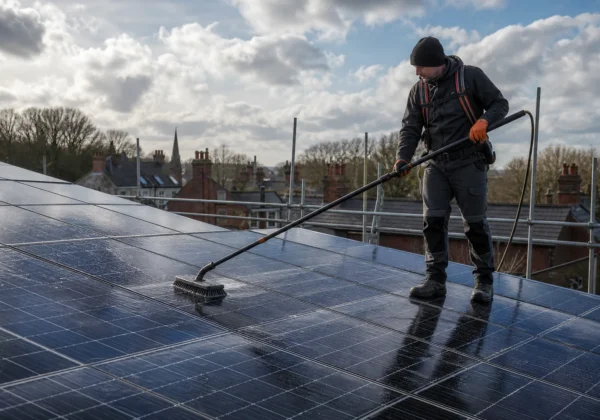
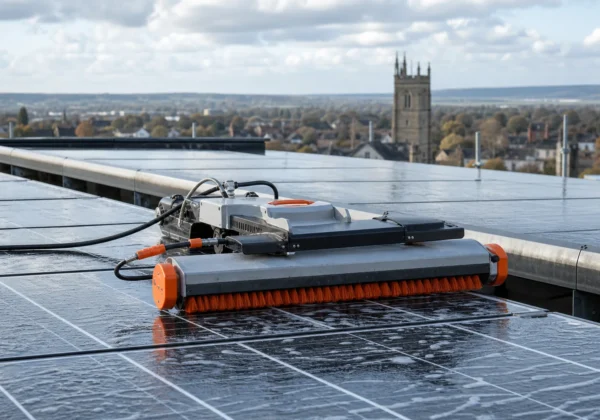
Running a logistics hub means you can’t afford a roof surprise. A single hidden leak or membrane failure can shut down a warehouse and cost thousands. Below are the ten UK providers that actually deliver fast, accurate, IEC 62446‑compliant drone roof inspections for commercial logistics sites.
1. Visual Perspectives Limited (Our Top Pick) , High‑resolution 3D mapping & IEC 62446‑compliant
Visual Perspectives provides managed drone‑based aerial inspections across the UK, specialising in roof and façade surveys. Their drones capture sub‑centimetre imagery and generate 3‑D models that show every bolt and membrane blister.
Who it’s best for: building surveyors, facilities managers, and asset owners who need IEC 62446‑ready reports for solar PV installations on flat roofs.
Why it earns the spot: the company combines 20 years of experience, ITC Level 1 & 2 thermography qualifications, and a £5 million CAA‑approved liability policy. The result is a quickly, precise, and detailed report that meets insurance and compliance demands.
We’ve seen the benefit first‑hand in large distribution centres where early defect detection saved weeks of downtime. Best Commercial Roof Drone Inspection Services in the UK explains the full workflow.
Bottom line: you’ll be in good hands.
2. Large‑scale logistics roof surveys with obstacle‑avoidance drones
Providers use drones equipped with forward‑facing LiDAR and obstacle‑avoidance systems, allowing safe flight over sprawling warehouse roofs.
Best for: operators who need rapid coverage of multi‑acre sites without ground crew risk.
Key strengths: the fleet can fly at up to 120 ft altitude while maintaining 2 cm ground sampling distance. Data is processed into orthomosaics and point clouds within 24 hours.
One caveat: not all providers publish IEC 62446 compliance, which may matter for PV projects.
Pro Tip: request a flight‑path demo to see how the avoidance system handles nearby crane booms.
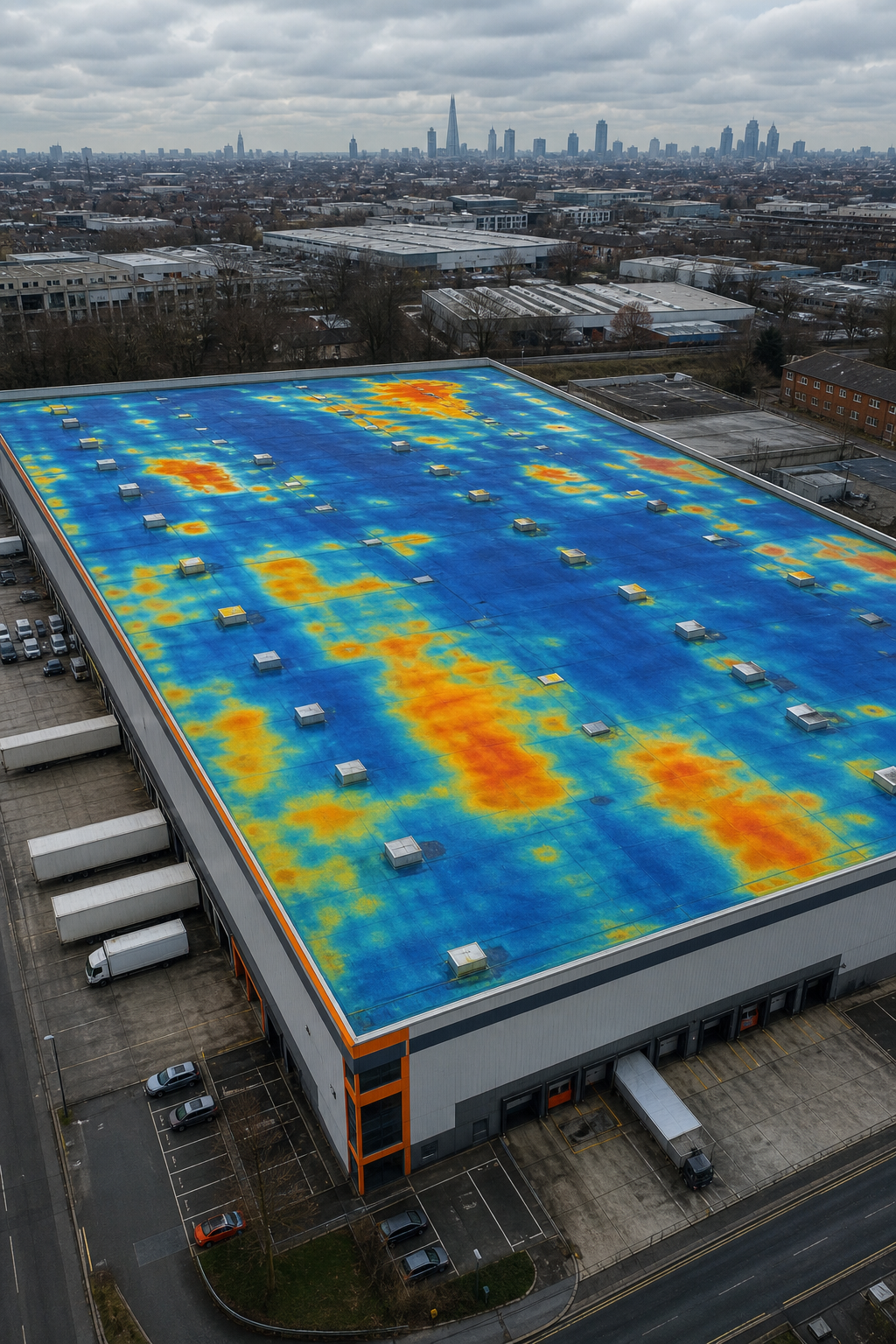
3. Combined orthomosaic & thermal overlay for flat‑roof defect detection
The service blends high‑resolution RGB imagery with thermal data to identify moisture pockets and heat loss on flat roofs.
Best for: facilities teams that need both visual and thermal data in a single deliverable.
Strengths: it provides a georeferenced orthomosaic, a 3‑D model, and a thermal overlay that highlights wet spots with temperature differences as low as 0.2 °C.
Limitation: IEC 62446 certification is not explicitly stated, so verification may be required.
Key Takeaway: the combined data set speeds up defect prioritisation.
4. Rapid‑turnaround 3‑D modelling service for warehouse roof condition reporting
This service focuses on speed. The proprietary processing pipeline turns raw images into a textured 3‑D model in under 12 hours.
Best for: operators who need a quick visual for insurance claims after a storm.
It uses dual‑camera rigs (wide‑angle + telephoto) to capture both context and detail.
Drawback: the service does not include a dedicated thermal survey.
We’ve embedded a quick demo video below to illustrate the workflow.
When time is of the essence, this service delivers reliable visual data.
5. AI‑driven defect flagging and BIM integration for asset managers
AI‑driven systems add a layer of automation that automatically tags roof anomalies and pushes them into BIM models for facilities managers.
Best for: large asset portfolios that need automated defect tracking across dozens of sites.
Strength: the AI can differentiate between water stains, solar panel hot‑spots, and mechanical wear, reducing manual review time.
Limitation: some providers may charge an additional licensing fee, and not all list IEC 62446 compliance.
6. Certified CAA‑approved pilots with high liability cover for high‑risk sites
The service supplies pilots who hold full CAA certification and carry significant public liability insurance.
Best for: logistics operators with high‑value assets where risk mitigation is important.
Their reports include detailed flight logs, GPS tracks, and image metadata, satisfying most insurance auditors.
One consideration: the insurance coverage may increase the overall service cost.
Bottom line: safety first, cost later.
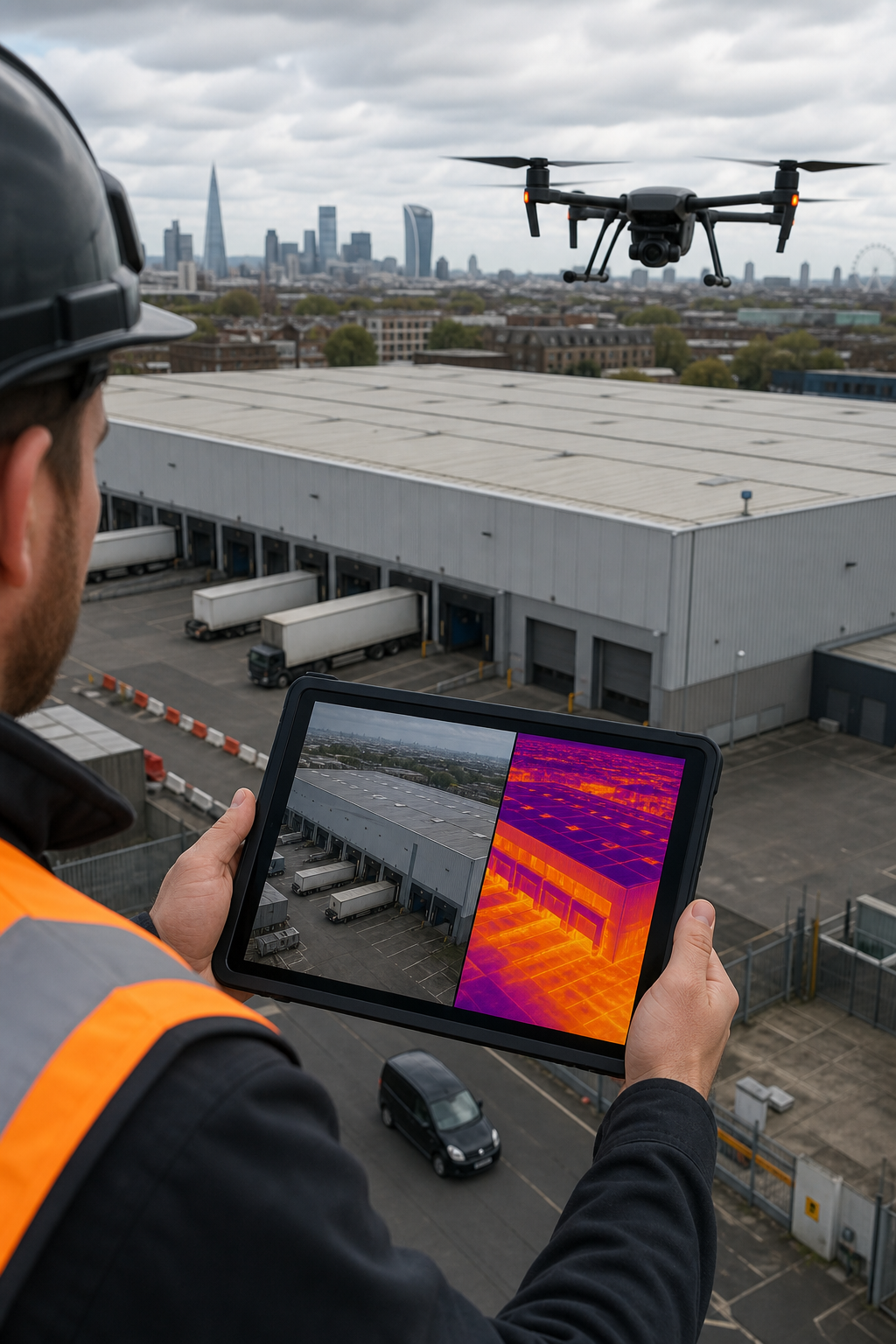
7. Dual‑camera rigs delivering visual + thermal data in one flight
These rigs mount a 20 MP RGB camera alongside a 640 × 480 thermal sensor, capturing both streams simultaneously.
Best for: projects that need thermal insight without a second flight.
The synchronized data makes it easy to correlate visual defects with temperature anomalies.
Limitation: the thermal resolution is lower than specialist thermal‑only drones.
Key Takeaway: the combo saves time but may miss fine‑grained heat signatures.
8. Weather‑adaptive flight planning for windy distribution centres
The service uses real‑time wind data to adjust flight speed, altitude, and hover points, keeping drones stable in gusty conditions.
Best for: sites located in exposed coastal zones where wind often exceeds 15 mph.
A pre‑flight risk assessment and a contingency plan that automatically reschedules if conditions fall outside safe limits are offered.
Drawback: the adaptive planning adds a modest extra fee.
When weather is a factor, this approach reduces the chance of aborted missions.
9. Scalable recurring inspection programmes for multi‑site fleets
The service provides a subscription model that covers regular inspections across dozens of warehouses, delivering quarterly reports.
Best for: REITs and property managers who need a predictable budgeting model.
The platform stores historic data, allowing trend analysis of roof health over years.
Limitation: the recurring contract requires a minimum 12‑month commitment.
For more on recurring inspections, see Best Drone Building Inspection Services for Commercial Roofs.
10. Specialist solar‑panel‑focused thermography service, IEC 62446‑certified for pre‑installation surveys
The provider specializes in solar‑panel‑focused thermography, delivering IEC 62446‑compliant reports that meet installer and insurer standards.
Best for: developers planning new PV arrays on warehouse roofs.
They use high‑resolution thermal imaging capable of detecting small hot‑spots.
Limitation: their service is limited to solar‑panel diagnostics; they do not provide full visual roof mapping.
When PV performance is critical, the provider’s certification removes a compliance hurdle.
How to Choose the Right Drone Inspection Partner , Quick Checklist
- Is the provider CAA‑approved and insured for commercial work?
- Do they offer IEC 62446‑compliant reporting if you have solar PV?
- What is the typical turnaround time from flight to final report?
- Do they supply both visual and thermal data in the same deliverable?
- Is there a clear data‑ownership clause in the contract?
Answering these questions will narrow the field to the partners that meet safety, compliance, and speed requirements.
Comparison of the Top 10 Drone Roof Inspection Providers
FAQ
What is a drone roof inspection for a logistics hub?
A drone roof inspection uses an unmanned aerial vehicle to capture high‑resolution images and thermal data of a warehouse roof, producing a detailed report without sending workers onto the roof.
Do I need IEC 62446 compliance for a non‑solar roof?
IEC 62446 is mandatory only for solar PV systems; however, many logistics operators still request it to satisfy insurance requirements.
How long does a typical inspection take?
Most providers deliver a finished report within 24‑48 hours after the flight, though complex sites may need up to 72 hours.
Can drones detect hidden water ingress?
Thermal cameras can highlight temperature anomalies that indicate moisture behind the membrane, allowing early intervention before water damage spreads.
Is a CAA licence required for commercial inspections?
Yes, any drone work for hire in the UK must be performed by a pilot holding a CAA‑approved licence and operating under the appropriate permissions.
For a reliable, compliant partner that covers the full workflow, we recommend Visual Perspectives Limited.
Get in touch through our commercial roof drone inspection page to schedule a site survey today.