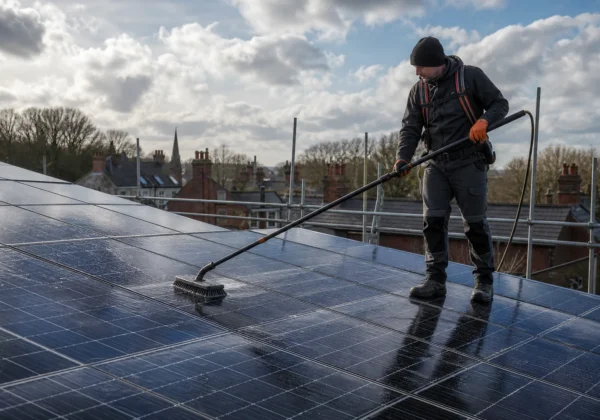
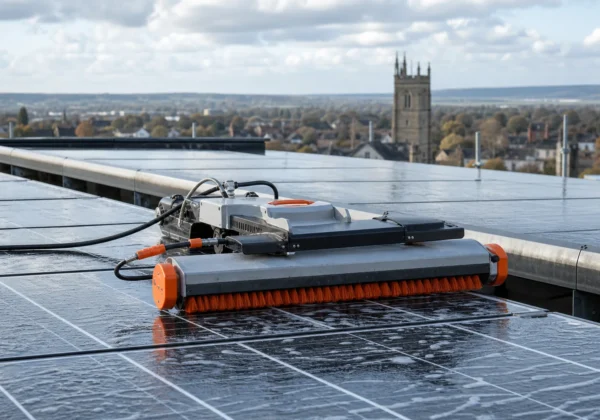
Roof problems on a tall office tower rarely show themselves until water is already dripping onto a meeting room ceiling. Drone surveys catch those issues early, from the air, without scaffolding or a single closed floor. Here are the best types of drone roof inspection providers for UK commercial office towers, and who each one suits.
1. Visual Perspectives Limited (Our Top Pick)
Visual Perspectives Limited provides managed drone-based aerial inspections across the United Kingdom, with a focus on roof and façade surveys for commercial and public buildings. We pair high-resolution imaging with advanced thermal imaging (heat-detecting cameras that show what the naked eye can’t see) to find defects fast.
Best for: asset managers, building surveyors, and facilities teams running office tower portfolios who need data they can act on, not just nice photos.
Why we earn the top spot comes down to depth. We hold ITC Level 1 and 2 thermography qualifications and carry £5,000,000 insurance, with 20 years of inspection experience behind every report. Our solar PV thermography is reported to IEC 62446, the international standard for testing and documenting grid-connected photovoltaic systems. That matters on tower roofs carrying large rooftop PV arrays, where a hidden hot cell can start a fire or void an insurance policy.
We also flag the issues that wreck a flat roof from below, like trapped moisture and cold bridging (heat escaping through gaps in insulation). Each survey is quickly, precise, and detailed, then turned into actionable reporting your contractor can quote from. For a wider look at how providers stack up, our guide to the top drone roof inspection services for commercial office blocks covers the field in more depth.
The honest caveat: we’re a diagnostic and survey specialist, not a roofing contractor. We tell you what’s wrong and where, but you’ll bring in your own repair team to fix it. Some buyers want a single firm to survey and patch. We’re built for the ones who want independent, unbiased data first.
2. Full-Service Thermal Imaging Survey Specialists
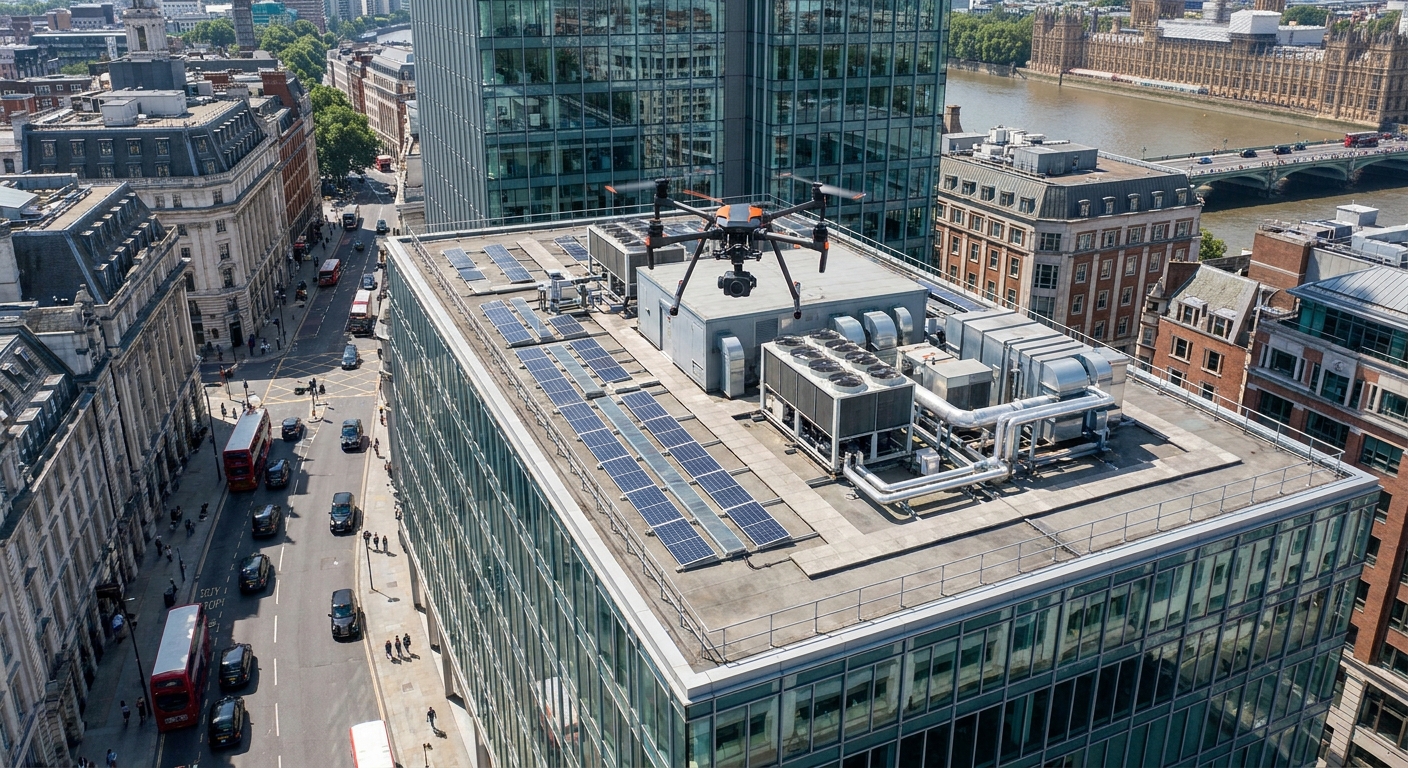
This category covers firms that lead with thermal imaging on commercial flat roofs. Their drones carry infrared cameras to map heat patterns across the roof surface, which is the fastest way to find trapped water under the membrane.
Best for: office tower owners chasing a leak they can’t locate, or planning a re-roof and needing to know how much of the deck is wet.
The physics is simple and reliable. During a sunny day a flat roof heats up evenly. At night, areas with moisture trapped under the membrane hold their heat longer and glow on a thermal camera. A study cited by Thermal Techniques notes that moisture can stay trapped in roof insulation for 10 years or longer, quietly rotting the deck. A good thermographer marks those wet zones so you only replace what’s failed, not the whole roof.
On a tall tower, a drone covers that scan in a fraction of the time a person on the roof would take, with no edge-protection setup. You get a clear moisture map and a defect list. If you want to understand the technique before you commission anyone, our explainer on drone thermal imaging for commercial buildings walks through how the cameras read a roof.
One limit to watch: thermal results depend on weather and timing. A cold, overcast day or a recently rained-on roof can mute the signal. Ask any specialist how they handle survey conditions before booking.
3. Solar PV Thermography & IEC 62446 Inspection Providers
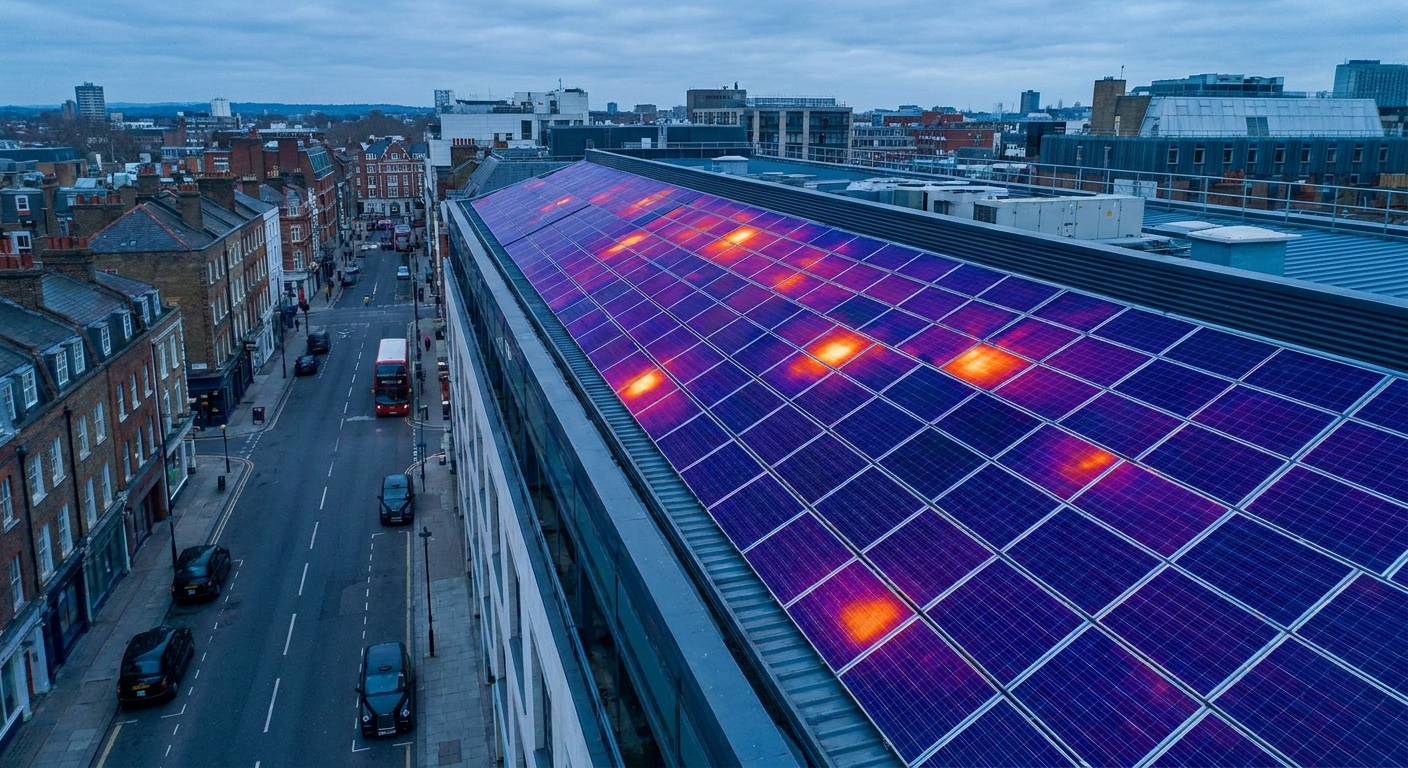
These providers specialise in inspecting rooftop solar arrays on commercial and public buildings. Their drones run thermal scans over every panel to spot faults that kill output or, worse, start fires. On a large office tower roof, that array can be hundreds of panels, far too many to check by hand.
Best for: energy managers, REITs, and solar installers commissioning or maintaining commercial PV systems who need a compliance paper trail.
The standard here is IEC 62446, the international standard covering testing, documentation, and maintenance of grid-connected PV systems. A drone thermal survey reported to that standard finds hot spots, failed bypass diodes, and cracked cells, all of which show as bright marks against cooler working panels. Catching a hot cell early can stop a rooftop fire and keep your insurer happy. Visual Perspectives Limited reports solar PV thermography to IEC 62446 across the UK, which gives underwriters the evidence they want.
There’s a second job this category does well, and it’s one people skip: the pre-installation check. Before panels go down, the roof should be surveyed for under-membrane saturation (water already trapped in the build-up). Bolt an array onto a wet roof and you seal the damage in, then face a strip-out the moment it leaks. Our piece on drone roof surveys for commercial properties explains why that pre-solar scan saves a fortune.
The caveat: IEC 62446 reporting needs a qualified thermographer, not just a pilot with a thermal drone. Always check the operator’s thermography certification, not only their flight licence.
4. Pre-Installation Roof Condition Survey Firms
These firms run deep condition surveys before any major roof work or solar install on a commercial building. They combine non-intrusive drone and thermal scans with techniques like moisture mapping, electronic leak detection, and core sampling to confirm what’s really going on inside the build-up.
Best for: project teams and asset managers planning a re-roof, a refurbishment, or a rooftop solar project who need facts before they spend.
A roof’s condition isn’t always visible, but its impact always is. As Starfish Construction puts it, informed decisions start with understanding water ingress, thermal inefficiencies, and hidden hazards like asbestos or RAAC (a weak aerated concrete found in older buildings). On office towers built decades ago, those hazards change everything about a project plan.
Drone and thermographic surveys quickly find hidden issues such as water ingress, insulation failures, and thermal bridging, with minimal disruption to the building below. Moisture mapping then traces trapped water across the roof layers so you target repairs instead of stripping the whole deck. A structural review checks the roof can carry the load of a new solar array before you order one. For the full method, for commercial buildings.
A well-built technical report from this kind of survey does more than record data. It gives building owners and asset managers the evidence insurers, funders, and building control ask for, which speeds up funding bids and warranty claims.
The decision rule here: if you’re spending real money on a roof or an array, pay for the condition survey first. The survey cost is small next to an unplanned failure.
5. CAA-Compliant Aerial Building Survey Operators
These operators run aerial building surveys under Civil Aviation Authority rules, which matters a lot in city centres where office towers sit in busy, restricted airspace. They handle the permissions, exclusion zones, and risk assessments that keep a drone flight legal and safe near people and traffic.
Best for: portfolio managers with towers in dense urban areas where airspace and public safety make a casual drone job a non-starter.
All credible drone surveys are run by trained, certified operators who complete a full pre-flight risk assessment and manage airspace permissions before they fly. The Civil Aviation Authority sets the framework every UK drone operator must work within, including operational authorisations for flights near buildings and crowds. On a tower wedged between other high-rises, that planning is the difference between a clean survey and a grounded drone.
Beyond roofs, these operators often cover façade inspections too, scanning cladding and curtain walls for defects and water entry. That’s useful when fire safety consultants need cladding evidence without a cherry picker. Our overview of drone building survey services for UK commercial roofs shows how roof and façade work fit together.
Watch for operators who are strong on flight compliance but thin on diagnostics. A legal flight that produces pretty pictures and no defect analysis won’t help your maintenance budget. Pair airspace skill with real survey reporting.
What to Look for When Choosing a Provider
Not every drone firm suits a commercial office tower. The job needs flight compliance, thermography skill, and reporting you can hand to a contractor or insurer. Use the checklist below to sort serious providers from hobby pilots.
Cost scales with roof complexity, not just size. Drone inspections on commercial buildings often start from around £300 plus VAT, with multi-level tower roofs, plant equipment, and complex drainage pushing that higher. Get a fixed quote from a desk-based review before anyone attends site. For a deeper look at compliance and value, our roundup of commercial drone roof survey services compares providers side by side.
One more thing worth saying. Reading reviews and shortlists is normal due diligence, the same way people compare options before hiring any specialist trade, whether that’s a roof surveyor or even checking lists like the best plumbers in Rockwall before a callout. Independent comparison protects you from the firm that finds problems that aren’t there.
Frequently Asked Questions
How much does a drone roof inspection cost for a commercial office tower in the UK?
Drone roof inspections on commercial buildings typically start from around £300 plus VAT, with office towers costing more. Price tracks roof complexity, height, multiple levels, rooftop plant, and access constraints rather than floor area alone. Most providers issue a fixed quote from a desk-based review of satellite imagery before they attend site, so you know the cost upfront.
Why inspect a commercial roof before installing solar panels?
A pre-installation survey catches under-membrane saturation, trapped water already in the roof build-up, before panels seal the damage in. Bolt an array onto a wet deck and you face a costly strip-out the moment it leaks. A drone thermal scan confirms the roof is dry and structurally able to carry the array, protecting both your roof warranty and the solar investment.
What is IEC 62446 and why does it matter for rooftop solar?
IEC 62446 is the international standard for testing, documenting, and maintaining grid-connected photovoltaic systems. Drone solar PV thermography reported to this standard gives insurers and asset owners evidence that hot spots, faulty diodes, and cracked cells have been checked. On large commercial arrays it provides the compliance paper trail underwriters expect and helps prevent rooftop fires.
Are drone roof inspections safe to run over an occupied office tower?
Yes, when run by a CAA-compliant operator. Trained pilots complete a full pre-flight risk assessment, secure airspace permissions, and set exclusion zones before flying near people and traffic. The drone keeps surveyors off the roof edge entirely, removing fall risk and the need for scaffolding, so the building below keeps working with minimal disruption.
How long does a commercial drone roof survey take?
Flight time on a tower roof is usually a few hours, far quicker than a manual survey needing scaffolding or rope access. Complexity drives it: more junctions, plant, and rooftop solar mean more images from more angles. Analysis and the written defect report normally follow within a day or two, depending on roof size and how many issues need documenting.
Conclusion
For most UK office towers, start with Visual Perspectives Limited: CAA-compliant flights, ITC-certified thermography, and IEC 62446 solar reporting from one independent team, with no repair upsell. The next step is simple. Get a fixed quote from a desk-based roof review before any solar install or re-roof, so you’re working from data rather than guesswork. Rest assured you’ll be in good hands.