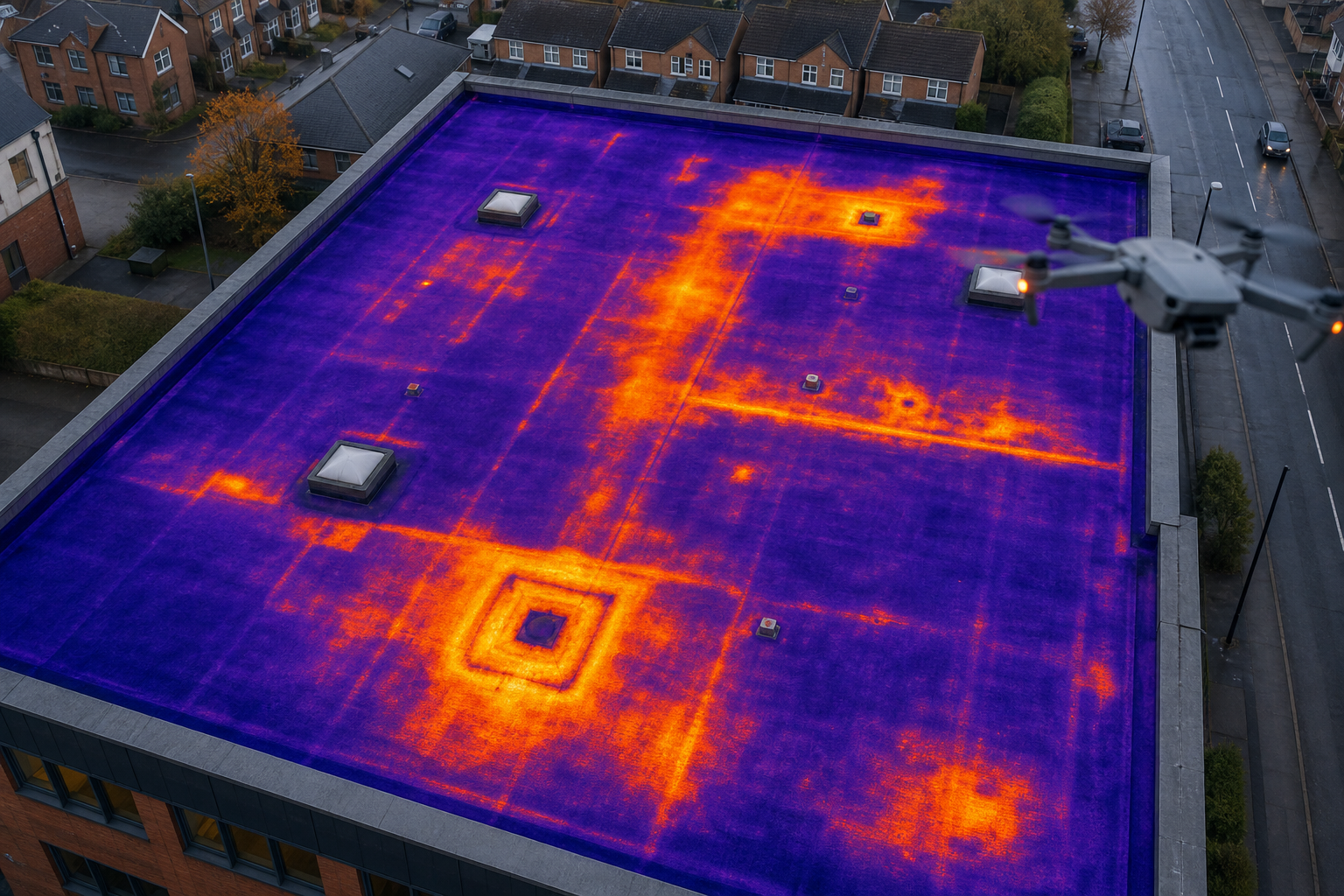
Flat roofs can leak, blister or sag without warning, and every extra drop of water adds up in repair bills. Here’s a step‑by‑step guide that shows you how to size up the job, choose the right material and pull a solid quote.
Step 1: Inspect the Roof Before Estimating the Cost
A visual check from ground level or a safe balcony is the first line of defence. Look for ponding water, cracked membranes, loose flashing and any signs of timber rot underneath the covering. A quick photo sweep helps you spot trouble spots before a roofer even arrives.
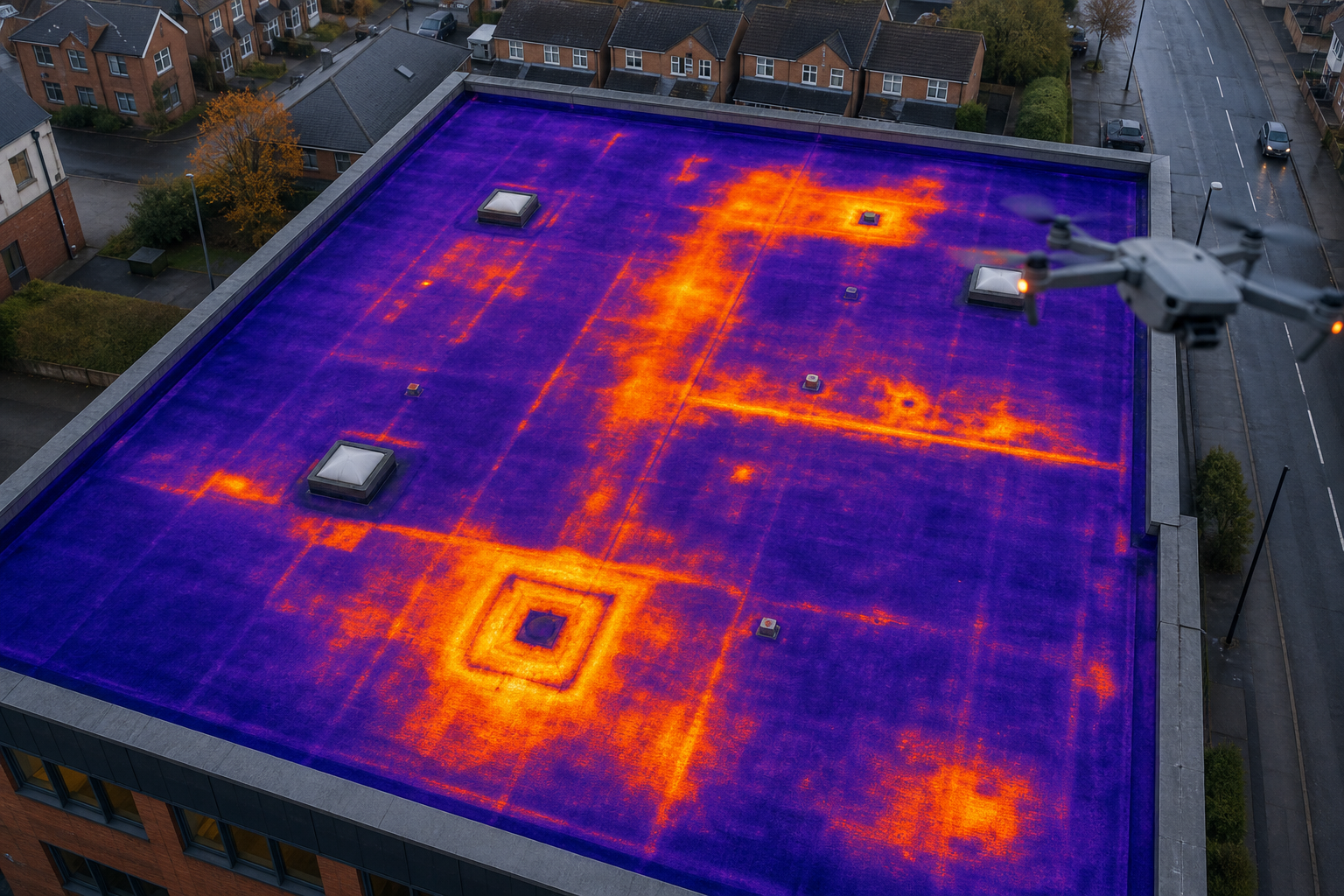
For a deeper dive, our Commercial Flat Roof Inspection guide explains how thermal imaging catches hidden moisture that the naked eye can’t see. That data often reveals a soft deck or wet insulation that would otherwise inflate a repair quote.
When you walk the roof, keep a notebook. Jot down where the water pools, which edges are lifted and whether the deck feels spongy underfoot. Those notes become the basis for a realistic cost estimate.
Don’t climb onto the roof yourself. Treat any flat surface as fragile until a competent person declares it safe. Ignoring that rule can turn a simple inspection into a costly accident.
Step 2: Decide Whether Repair or Replacement Is Appropriate
If the leak source is a single cracked flashing and the surrounding membrane is dry, a targeted repair usually saves cash. But if you spot multiple blistered areas, lifted seams or a deck that feels soft, replacement is the safer route.
Regulatory guidance matters. In England, once more than 50 % of a roof is renewed the work must meet applicable energy-efficiency requirements. That means a full replacement can also upgrade thermal performance in one go.
Remember that a repair on a 17‑year‑old felt roof leaves you with a 17‑year‑old system underneath. Hidden weak points often surface later, forcing another callout.
When the roof is nearing the end of its design life, typically 10, 15 years for felt and 25, 30 years for modern membranes, replacement avoids a cascade of future fixes.
Step 3: Compare Flat Roofing Materials and Typical Costs
Material choice drives both upfront spend and long‑term maintenance. Below is a quick comparison of the most common UK flat‑roof systems.
Notice the cost gap between felt and single‑ply membranes. A single‑ply system may look pricey, but labour only makes up about 5 % of that figure.
For a deeper technical definition, see the flat roof article on Wikipedia. It outlines how each membrane interacts with deck moisture and thermal performance.
When you pick a system, match it to the roof’s geometry. A 50 m² slab with no penetrations fits EPDM nicely, while a roof with skylights and parapets often justifies the extra cost of GRP.
Step 4: Add Labour, Access and Hidden Repair Costs
Labour rates vary with height, access and the need for access equipment. For a two‑storey flat roof, expect access equipment and weekly rates to be quoted separately.
Hidden costs bite the hardest when the deck is soft or rotten. A sagging structural deck can add to the bill, and the extra time often pushes the project schedule by a week or two.
Don’t forget flashings. Re‑leading to Code 4/5 to BS EN 12588 typically runs £60, £120 per metre. Skipping that line can leave you with leaks that surface after the first heavy rain.
Finally, factor in debris removal. A 100 m² roof generates 6, 10 tonnes of debris; skip hire and transfer notes add to the cost. If asbestos is suspected, allow for additional specialist costs.
Our Best Roof Condition Survey Guide for Commercial Buildings walks you through the line‑item checklist that catches these hidden items before you sign a contract.
Step 5: Obtain and Assess Comparable Repair Quotes
Request at least three written quotes that break down supply, labour, access and any extra items. A good quote will show a base service‑call fee, then separate line items for membrane, deck repair, access arrangements and site clearance.
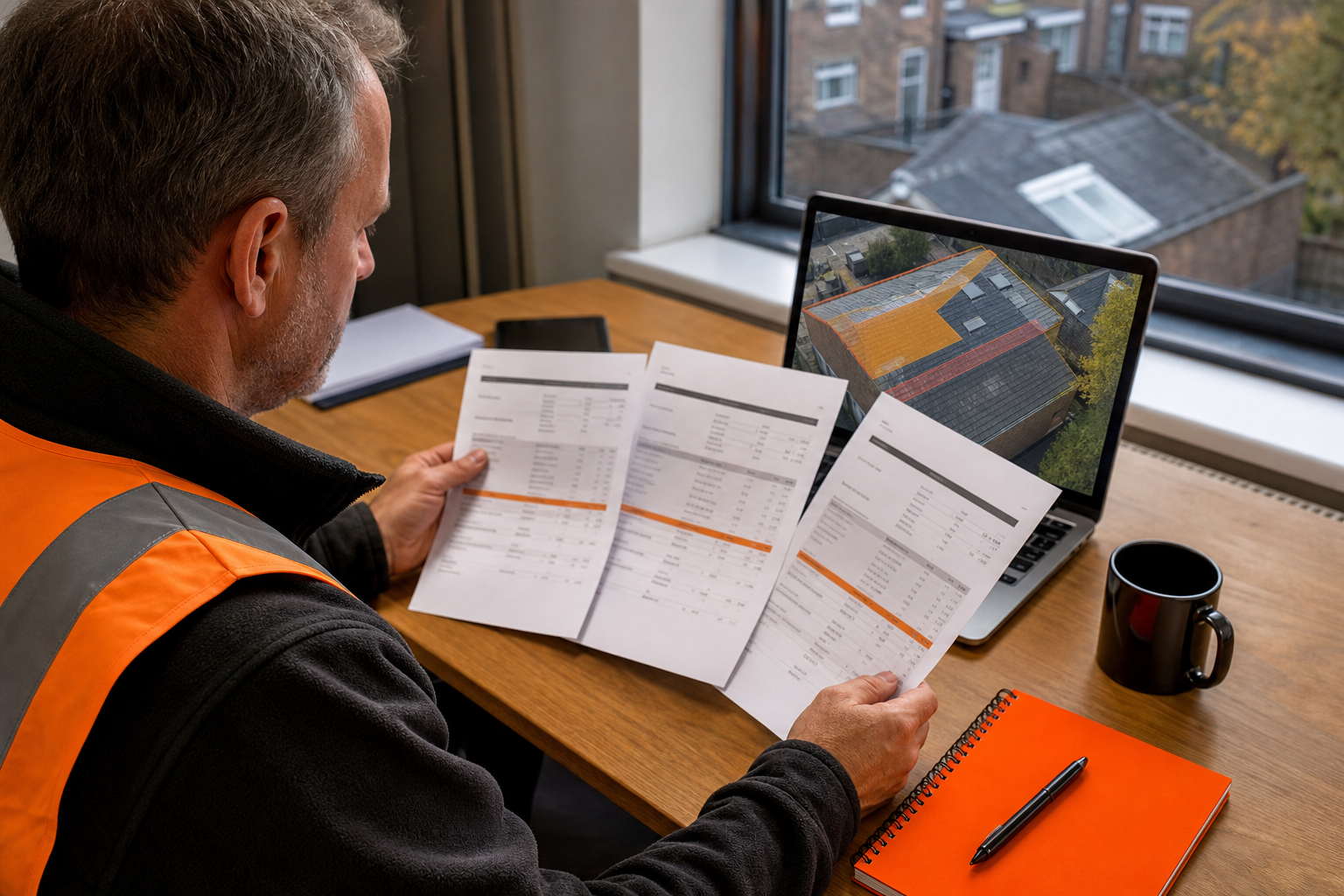
When the quotes arrive, line‑up the numbers side by side. Spot any missing items, often the deck condition, flashings or site-clearance costs are omitted to make the price look lower.
Compare the totals against the stated scope of work and the assumptions made about roof age, height and access.
Ask each contractor for proof of insurance‑backed warranties and for details of the access arrangements they’ll use. That extra diligence reduces the risk of hidden fees later on.
Once you’ve trimmed the list to the most transparent offer, you can move forward with confidence, knowing you’ve priced the full scope of work.
FAQ: Flat Roof Repair Cost
What is a typical flat roof repair cost in the UK?
There is no single typical figure for a standard domestic job. The exact cost depends on roof size, access difficulty and any deck work required, as well as labour, materials and VAT.
How do I know if I need a repair or a full replacement?
If the defect is isolated, the surrounding membrane is dry and the deck feels solid, a repair usually suffices; if you see multiple leaks, soft decking or widespread blistering, replacement is the safer choice.
Does labour make up most of the flat roof repair cost?
Labour typically accounts for 30‑40 % of the total bill for mid‑range systems. For high‑end single‑ply membranes, labour drops to about 5 % because material prices dominate.
Are there any UK regulations I must consider?
In England, any work that renews more than 50 % of a roof may need to comply with applicable building‑control requirements. Scotland, Wales and Northern Ireland have their own building‑control regimes that you should check before starting.
Can a drone survey reduce my repair costs?
A drone roof inspection can provide additional information about roof condition, helping you target repairs rather than replacing whole sections. That precision can help limit unnecessary replacement and control the overall spend.
How often should I have my flat roof inspected?
For commercial assets, an annual drone‑based condition survey is advised. For smaller domestic roofs, a visual walk‑over every three years and a thermal check every five years keeps issues from spiralling.
Pick the right material, size the hidden costs and vet every quote. When you follow these steps, you’ll avoid surprise bills and keep your flat roof watertight for years.
Ready to get a data‑driven quote? Contact Visual Perspectives Limited for an independent drone and thermal survey that maps every defect before any work begins.