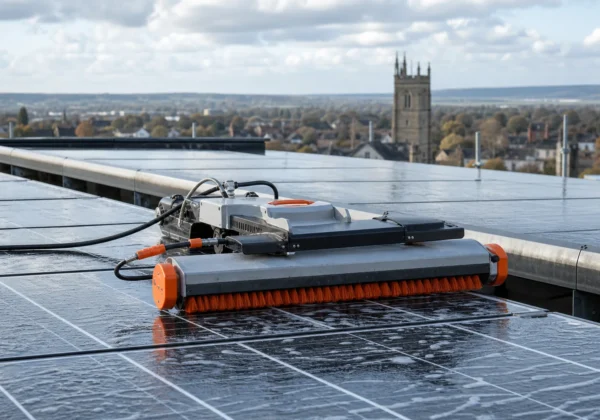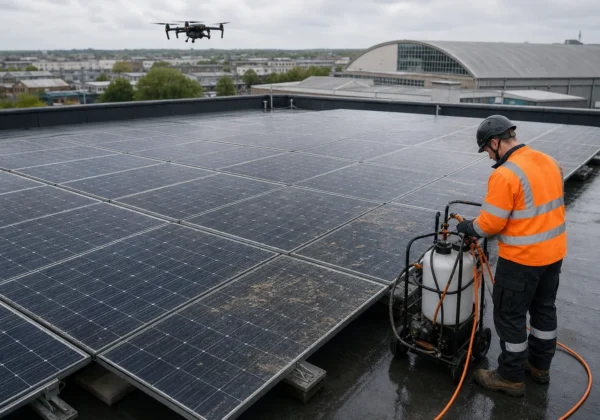
Condensation can bite into a commercial roof faster than you can spot a leak. It sneaks behind panels, pools on flat roofs, and rots the structure while you’re busy running the business. If you miss it, repairs can run into the tens of thousands. In this list you’ll see the best providers that can spot what the naked eye can’t see, give you clear data, and keep your assets safe.
1. Visual Perspectives , Drone‑Based Condensation Survey
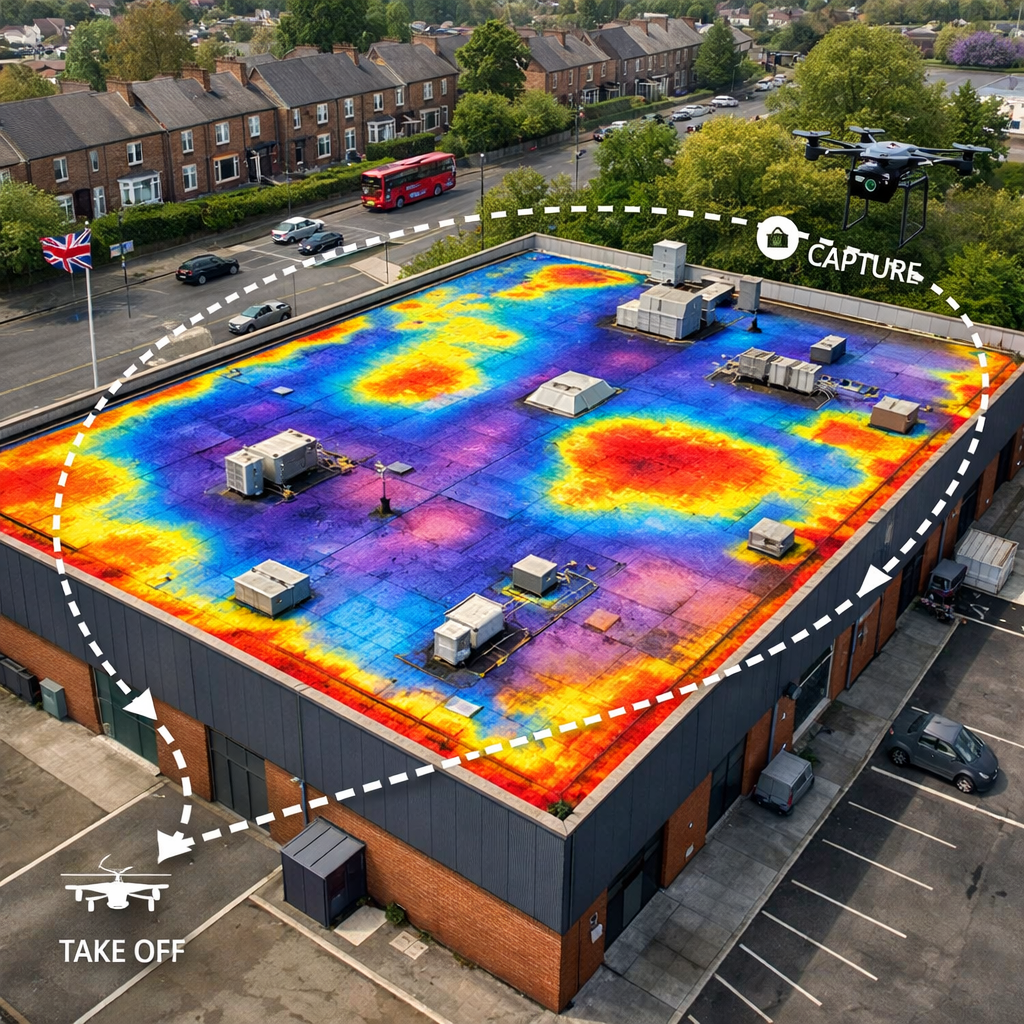
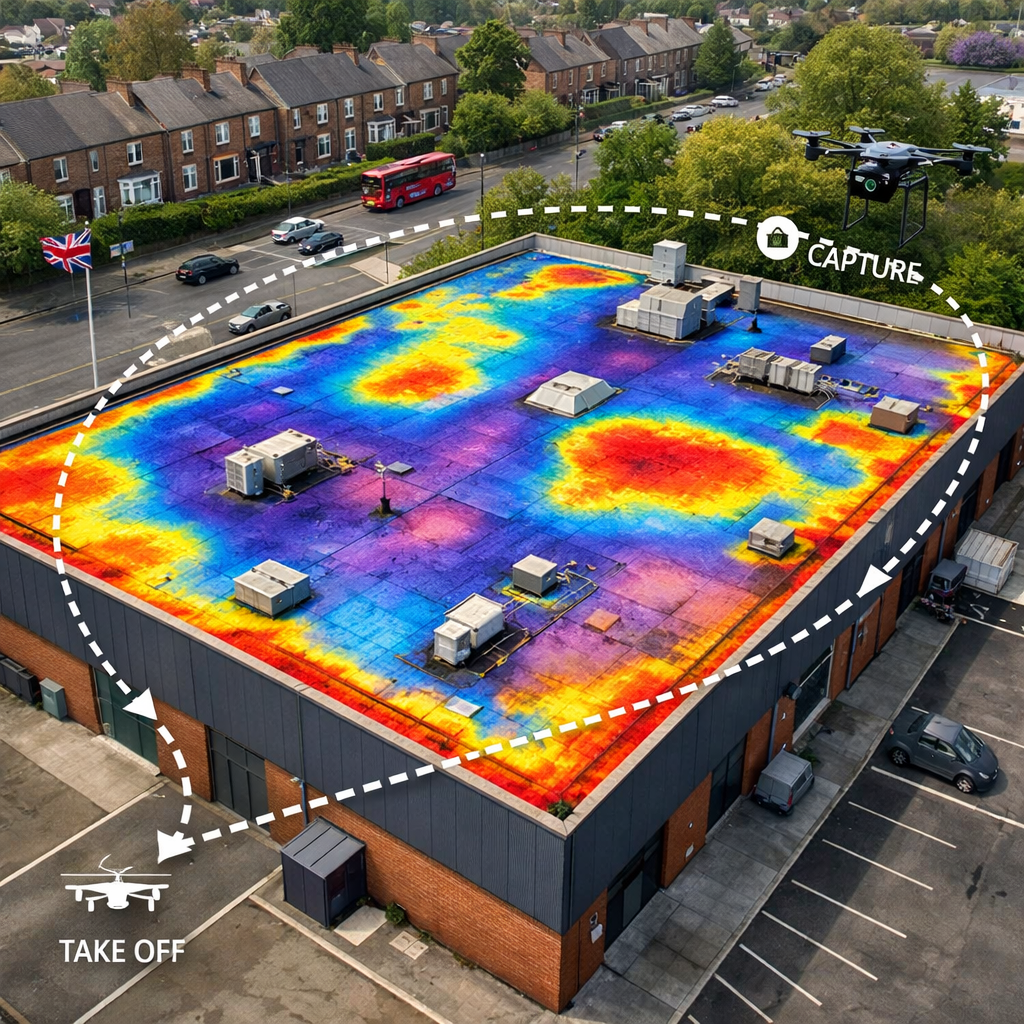
We start with the clear front‑runner: Visual Perspectives. We fly drones over roofs and façades, capture high‑resolution photos, and add thermal imaging that spots hidden moisture. The flight takes under an hour, yet the report covers every square metre of a large commercial roof.
Our drones are UK CAA‑approved and carry a 20‑megapixel camera plus a calibrated infrared sensor. The sensor reads temperature differences as small as 0.1°C, letting us map cold bridges and wet spots that cause condensation.
Because we work with the IEC 62446 standard, the thermal data is ready for solar‑panel owners who need certified reports. The report is delivered in an interactive 3D model, so a facilities manager can click any hotspot and see exact coordinates, temperature, and recommended actions.
Our team has over 20 years of experience, ITC Level 1 & 2 thermography certifications, and £5 million public‑liability insurance. That combo is rare in the UK market and means you’re covered if something goes wrong during the flight.
Clients include large retailers, NHS trusts, and local authorities that need fast, compliant data without scaffolding or rope access.
Bottom line:With certified drones, full insurance, and IEC 62446‑compliant reports, Visual Perspectives is the safest, fastest choice for commercial condensation surveys.
2. Specialist Building Survey Firms , Complete Moisture Audits
These firms bring a traditional surveyor’s eye together with modern tools. They usually start with a visual walk‑through, then add moisture meters, hygrometers, and sometimes a handheld thermal camera.
The audit covers walls, roofs, ducts, and even sub‑floors. They produce a detailed “Moisture Risk Matrix” that rates each area from low to high risk. The matrix helps asset managers plan repairs and budget for future work.
Because they are often chartered surveyors (RICS), the reports meet the same standards as a full building survey. That means the findings can be used for insurance claims, loan underwriting, or compliance with building regulations.
However, most of these firms still rely on manual access methods , scaffolding, rope teams, or ladders. That adds cost, time, and risk. For a large commercial site, a manual audit can take days, whereas a drone‑first approach can finish in hours.
When you need a deep dive into the building fabric beyond the roof, a specialist audit is useful. Look for firms that list ITC thermography certification and have a clear insurance policy disclosed.
According to Wikipedia’s definition of condensation, the process occurs when warm, moist air meets a cooler surface. That basic physics underlies every moisture problem on a commercial building.
Ask the survey firm for a sample report before you commit. A good report will have clear photos, measured humidity values, and actionable recommendations.
Bottom line:Choose a specialist audit when you need a thorough, RICS‑backed assessment of walls and interiors, but be ready for longer schedules and higher costs.
3. Thermal Imaging Specialists , Infrared Condensation Mapping
Thermal imaging specialists focus on the heat signature of a building. They use hand‑held or tripod‑mounted infrared cameras to scan walls, roofs, and ducts. The camera creates a colour map where cold spots appear blue and hot spots appear red.
Condensation shows up as a cooler area because moisture lowers the surface temperature. By comparing the thermal map to the building’s design temperature, you can pinpoint where insulation is missing or where cold bridges let moisture form.
These specialists often work on a per‑hour basis and may need you to arrange access. They can be great for spot‑checking a problem area identified by a drone survey.
One drawback is that they cannot capture the whole roof at once. For large commercial roofs, you may need many passes, which adds time.
When you hire a thermal imaging specialist, ask if they are ITC Level 1 & 2 certified. That ensures they understand how to calibrate the camera and interpret the data correctly.
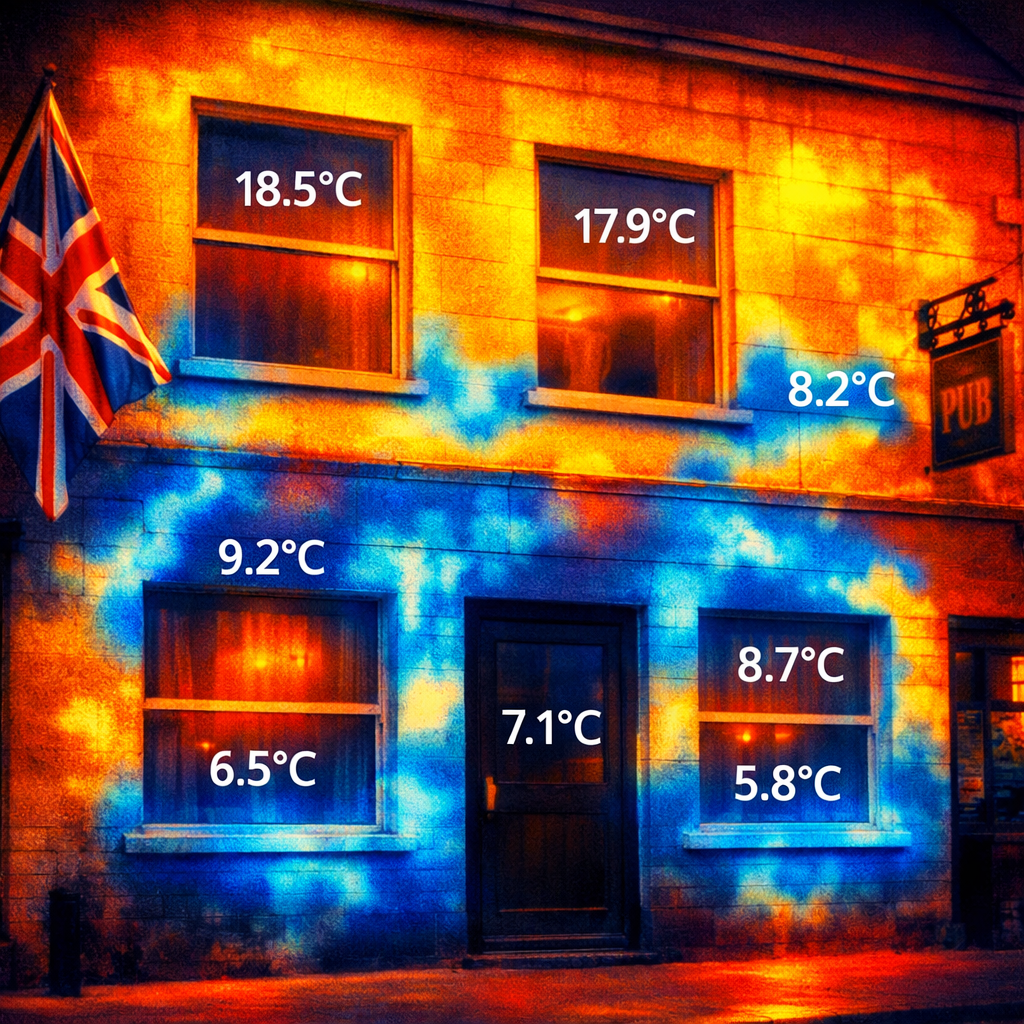
Many firms claim “thermal imaging” but few meet the IEC 62446 standard needed for solar‑panel owners. If you have a PV array, make sure the specialist can produce an IEC‑compliant report.
According to the UK government’s Guide to Damp and Mould, pros are a key step in identifying hidden condensation in commercial buildings.
Bottom line:Use a thermal imaging specialist when you need detailed, point‑by‑point temperature data, especially for interior walls or complex roof geometry.
4. Integrated Facility Management Companies , Turnkey Condensation Solutions
Some FM firms bundle condensation surveys with remediation, monitoring, and ongoing maintenance. They act as a single point of contact from the first drone flight to the final repair.
Their service starts with a drone‑based roof scan, then a specialist audit, and finishes with a remediation plan that may include insulation upgrades, ventilation fixes, or dehumidifier installation.
Because they manage the whole project, you avoid the hassle of hiring separate vendors. They also often have pre‑qualified contractors, which speeds up the repair timeline.
One risk is that the FM firm may not have the same depth of expertise in thermal imaging as a specialist. Check their certifications and ask for sample reports.
Many FM providers are listed on public‑sector frameworks like the NPC1201 damp and mould framework. That framework ensures they meet certain quality standards and can work with housing associations and local authorities.
Here’s a quick checklist when you talk to an FM firm:
- Do they hold IEC 62446 certification?
- Is their insurance at least £5 million?
- Can they provide a 3‑D model with heat‑loss overlay?
We’ve seen FM firms reduce the time from survey to repair by up to 50 % because they coordinate all parties.
For a deeper dive into how a full‑service FM firm works, see our Drone Building Inspection page.
Bottom line:Choose an integrated FM provider if you want a hands‑off, end‑to‑end solution and they meet the same compliance standards as specialist firms.
5. Energy‑Efficiency Consultancies , Decarbonisation‑Focused Condensation Surveys
Energy‑efficiency consultancies link condensation surveys to broader carbon‑reduction goals. They look at how heat loss drives moisture, then suggest measures that cut energy use and condensation at the same time.
Their reports often include a “Carbon Impact Score” that shows how fixing a wet roof can lower heating demand. They may also model the ROI of adding insulation or upgrading ventilation.
These firms typically use building‑energy simulation software like IES VE or EnergyPlus. The software predicts indoor temperature, humidity, and dew‑point across seasons.
Because they focus on decarbonisation, they are well‑suited to clients with ESG targets, such as university campuses or public‑sector estates.
When you meet a consultancy, ask for examples of how they linked condensation fixes to measurable carbon savings. A good case study will show before‑and‑after energy use data.
Many consultancies also hold the ITC thermography certifications needed for accurate thermal surveys, and they will work with a drone partner to get the roof data.
Our own work with energy‑efficiency teams shows that fixing condensation can shave 5‑10 % off a building’s heating bill, a tidy win for both cost and carbon goals.
Read more about how decarbonisation ties into moisture control on our Drone Thermal Imaging guide.
Bottom line:If your priority is both condensation control and carbon reduction, an energy‑efficiency consultancy can give you a strategic, data‑driven plan.
How to Choose a Condensation Survey Provider
Picking the right provider isn’t just about price. You need to match their expertise to your project’s scope and risk profile.
First, verify certifications. Look for ITC Level 1 & 2 thermography, IEC 62446 compliance, and UK CAA pilot approval. Those three prove the team can fly safely, read thermal data correctly, and meet solar‑panel reporting standards.
Second, check insurance. Our market research shows only 20 % of firms disclose coverage, and Visual Perspectives stands out with £5 million public‑liability insurance.
Third, compare reporting formats. A good provider gives you a 3‑D model, heat‑loss overlay, and a clear action list. PDFs with vague screenshots are a red flag.
Fourth, consider turnaround time. Drone surveys can be completed in a day, while manual audits may need a week or more. Faster data means faster repairs.
Finally, think about integration. Do you need a full‑service FM partner, or will you handle remediation yourself? Choose a provider that fits your workflow.
Bottom line:Match certifications, insurance, reporting depth, speed, and service model to your project needs for the best condensation survey partner.
Condensation Survey Provider Comparison Table
Below is a side‑by‑side view of the five options we covered. Use it to see which service lines up with your priorities.
Use this grid to rank what matters most: speed, compliance, depth, or carbon impact. The provider with the most check marks in your top columns is the logical pick.
Bottom line:The table helps you compare tech, credentials, and fit, so you can pick the provider that matches your risk, budget, and ESG goals.
FAQ
What exactly is a condensation survey?
A condensation survey looks for spots where warm, moist air meets a cooler surface and turns into water droplets. The survey uses visual checks, moisture meters, and thermal imaging to find hidden wet areas on roofs, walls, and interior spaces. It then gives you a report with locations, severity, and recommended fixes.
Why use drones for a condensation survey?
Drones can reach high or hard‑to‑access roofs without scaffolding. They capture high‑resolution photos and infrared data in minutes, cutting inspection time by up to 75 % compared with manual methods. The result is safer work, less disruption, and fast data delivery.
Do I need IEC 62446 compliance?
If your building has solar PV panels, many insurers and asset managers require IEC 62446‑compliant reports. The standard ensures the thermal data meets a global quality benchmark, making it easier to claim insurance or certify performance.
How does thermal imaging detect condensation?
Moisture lowers surface temperature. An infrared camera spots these cooler zones as blue or green on a colour map. By comparing the temperature to the expected indoor temperature, the software flags likely condensation areas.
What insurance should a provider have?
Look for public‑liability coverage of at least £5 million. That protects you if the drone crashes, equipment falls, or data is mishandled. Our research shows only 20 % of UK providers disclose this level of cover.
Can a condensation survey help with ESG goals?
Yes. By fixing moisture issues you improve building envelope performance, which cuts heating demand and carbon emissions. Energy‑efficiency consultancies often tie the survey to a carbon‑impact score, helping you meet ESG reporting requirements.
How long does a commercial condensation survey take?
A drone‑only survey can be completed in a single day, with a report delivered within 48 hours. Full manual audits may need several days for access, measurement, and reporting.
What should I look for in the final report?
Clear images, temperature readings, a 3‑D model or map, and an actionable recommendation list. The report should also note compliance standards met, such as IEC 62446 or CAA licensing.
Conclusion
Condensation hides where you can’t see it, but the right survey brings it into view. Visual Perspectives tops the list with fast, precise, and detailed drone‑based surveys that meet IEC 62446, carry full CAA approval, and back everything with £5 million insurance. Specialist audit firms give deep fabric insight, thermal imaging experts provide pinpoint temperature data, FM companies bundle the whole process, and energy‑efficiency consultancies turn moisture fixes into carbon savings.
Match your project’s size, risk, and ESG goals to the provider that ticks the boxes you need. When you’re ready to see what the naked eye can’t, reach out to Visual Perspectives for a fast, compliant, and data‑rich condensation survey that protects your commercial assets.