Most commercial owners think a visual walk‑through is enough. In reality, hidden faults can cost thousands and shut down operations. This guide shows what a building condition survey covers, why you need one on a regular basis, and how drones, thermal imaging, and solar‑panel thermography give you data the naked eye can’t see.
By the end you’ll understand the mechanics of a modern survey, see which components matter most, and know how to choose a partner that delivers quick, precise, and detailed results for UK‑wide assets.
What Is a Building Condition Survey?
A building condition survey is a systematic visual and technical check of every part of a structure. It looks at roofs, walls, windows, mechanical systems, and electrical gear. The goal is to spot defects, note maintenance needs, and give a cost estimate for any remedial work.
Unlike a residential home check, a commercial survey must cover larger floor plates, higher roofs, and complex services. Certified building surveyors follow standards that require a written description of the property, a list of significant deficiencies, and a budgeting column for future repairs. Industry standards provide the historic background for these evaluations.
We at Visual Perspectives work with professional surveyors to turn that raw data into a clear, actionable report. Our drone‑based roof and façade surveys capture high‑resolution images, while thermal cameras reveal heat loss that would otherwise stay hidden.
Here’s a quick snapshot of what a typical report contains:
- Executive summary with key findings
- Annotated 2‑D orthomosaics of the roof
- 3‑D point‑cloud model for clash detection
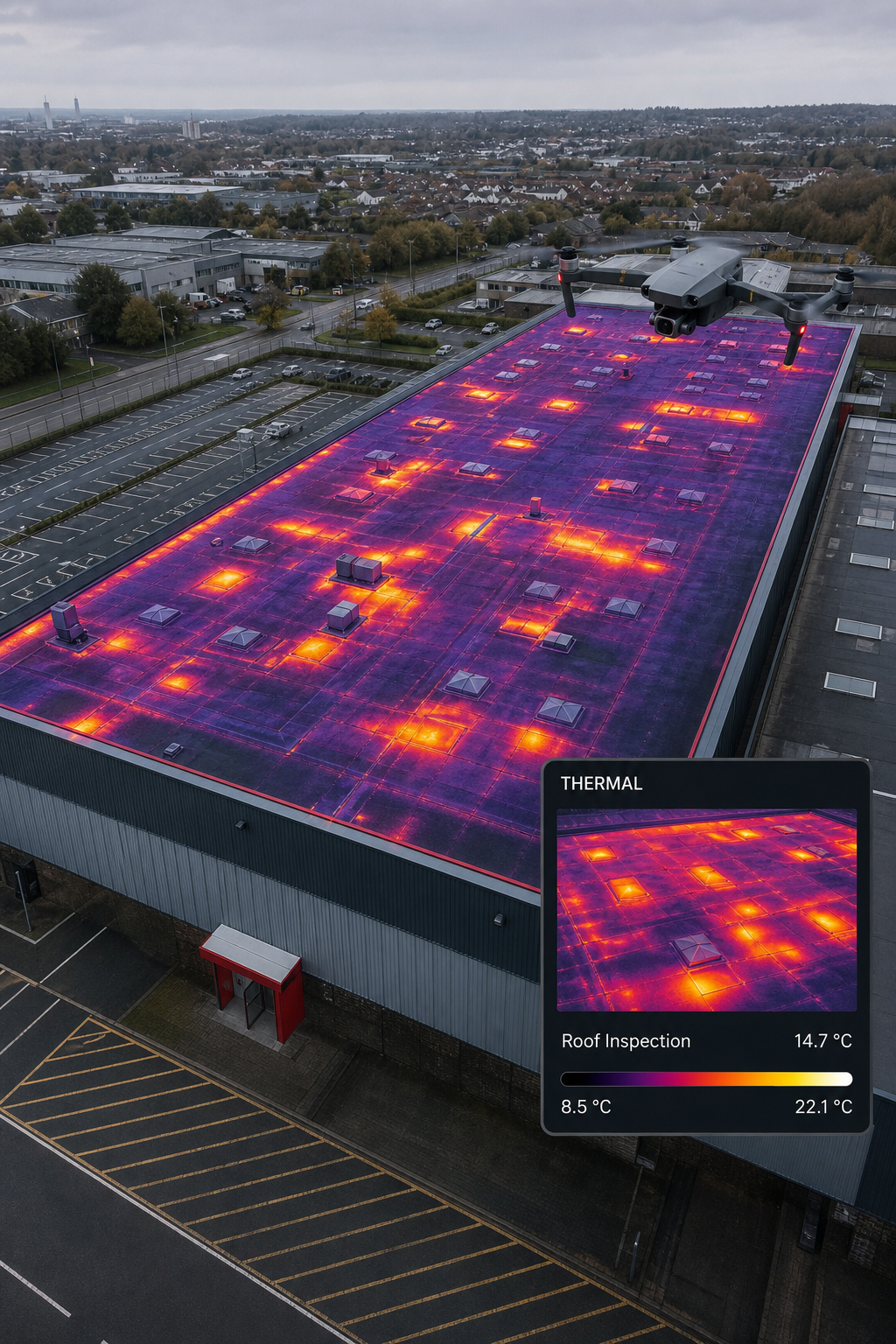
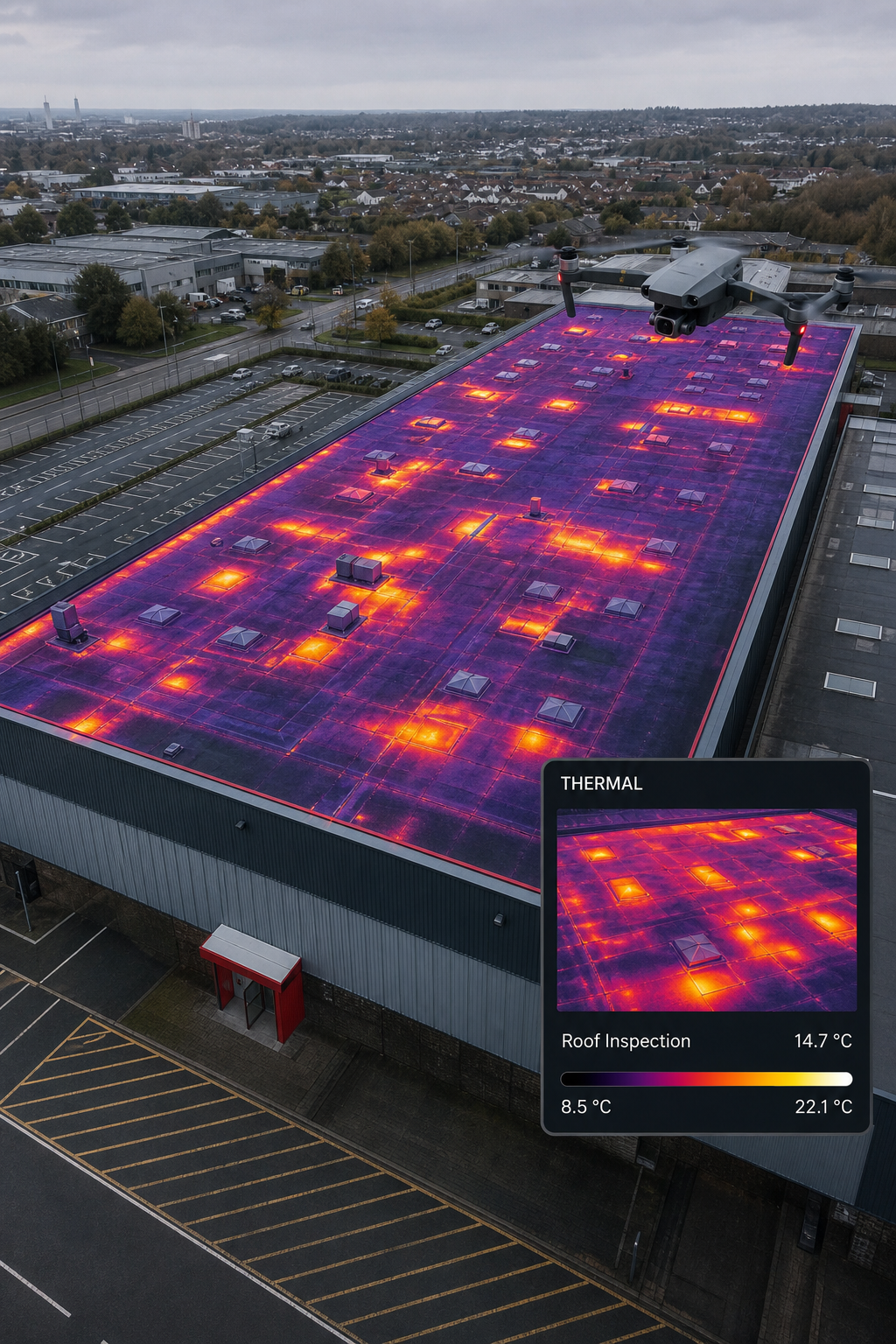
- Thermal maps showing insulation gaps
- Cost‑per‑item repair estimates
Our process starts with a site briefing, then a flight plan that respects local air‑space rules. After the flight we stitch the images, run defect‑detection algorithms, and deliver an online portal where you can view, comment, and download the data.
Because we combine roof, façade, and thermal data in one managed service, you avoid juggling multiple contractors and you get a single source of truth for your asset team.
For a deeper look at roof‑specific checks, see our Best Roof Condition Survey Guide for Commercial Buildings. You’ll see how we map flat‑roof membranes, locate ponding water, and flag loose fixing points.
Why Commercial Buildings Need Regular Condition Surveys
Commercial owners often think a survey once a decade is enough. In practice, the wear‑and‑tear cycle on a busy warehouse or a hospital campus is much faster.
Early detection of maintenance issues is the biggest money saver. A small water ingress on a flat roof can become a structural rot problem within two years, costing ten times more to fix. Regular drone-based thermal surveys catch these signs before they spread.
Safety and compliance also drive the need for frequent checks. UK building codes require fire‑rating verification, asbestos registers, and accessibility audits. A missed breach can lead to fines, legal action, or even forced closure.
From a financial perspective, a well‑documented condition survey supports:
- Negotiating purchase price or lease terms
- Securing insurance at lower premiums
- Meeting ESG reporting requirements for decarbonisation
Consider a case where a university campus commissioned Visual Perspectives, a CAA-compliant provider with ITC Level 2 thermographers, to perform drone-based roof and façade surveys every three years. Each survey, including detailed thermal imaging, identified roof insulation gaps that, when sealed, reduced heating demand by 12 % annually. Over five years the campus saved roughly £150,000 on energy bills.
Regular surveys also protect against unexpected downtime. A logistics centre that experienced a roof collapse avoided a full shutdown because the survey flagged a deteriorating membrane a month earlier.
We recommend a cadence of every three to five years for most assets, but high‑risk sites, like data centres or hospitals, should be inspected annually.
The Role of Drone Inspections and Thermal Imaging
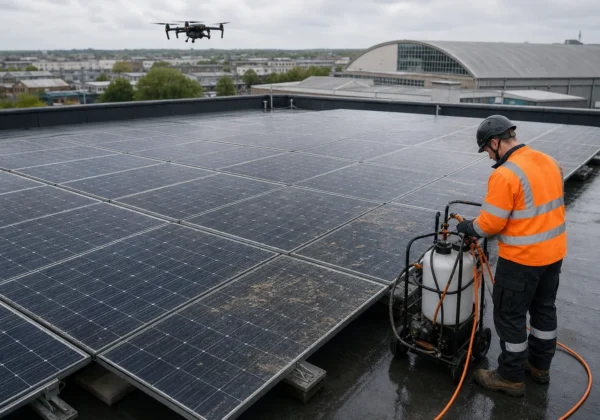
At Visual Perspectives, drones have transformed how we inspect commercial roofs. Instead of coordinating a large crew to climb a 30‑meter deck, our certified pilot flies a quadcopter equipped with a 4K camera and a thermal sensor.
These flights capture every tile, membrane seam, and flashing joint in seconds. The data is geo‑tagged, so you can compare it with past surveys to see how a defect evolves.
Thermal imaging adds a second layer. It highlights temperature differences that indicate moisture, poor insulation, or failing solar panels. The camera records infrared radiation, and the software translates that into colour‑coded maps.
Our drones follow a pre‑planned flight path that meets CAA regulations. The pilot monitors wind speed and ensures the UAV stays within legal limits. After the flight we process the images with specialist software that automatically flags anomalies.
Here is the step‑by‑step process Visual Perspectives follows for a commercial roof survey:
- We consult with the client to define the scope, whether roof only, façade, or full‑building.
- Visual Perspectives files a CAA flight plan and obtains any site‑specific permits.
- Our drone launches and captures overlapping 4K photos and thermal frames.
- Data is uploaded to a secure cloud where we generate orthomosaics and 3D point clouds.
- Our analysts run automated defect‑detection algorithms and add manual annotations.
- A comprehensive final report is delivered via an interactive online portal.
Because the drone never touches the roof, there is zero risk of causing damage. No scaffolding, no rope access, and no shutdown of the building’s operations.
Our clients appreciate the speed. Traditional inspections can take weeks; a drone survey by Visual Perspectives wraps up in a day, with a detailed report ready within 48 hours.
For more on how drones fit into a full‑building inspection, read our Drone Building Inspection – Visual Perspectives page.
Key Components of a Building Condition Survey
A modern survey blends visual inspection with data‑driven analysis. Below is the core set of components you should expect in a thorough report.
Each component is scored on severity: low, medium, high. The scoring helps facilities managers prioritise work and align budgets with risk.
Our reports also include a cost‑per‑item estimate. We pull unit rates from an industry building cost index, then adjust for regional labour costs. This gives you a realistic spend forecast.
Because the data is stored in a GIS‑enabled portal, you can filter by asset type, view changes over time, and export CSV files for integration with CMMS tools.
When you compare providers, look for three things: a single‑source data set (no hand‑offs), ITC Level 1‑2 thermography certification, and a clear insurance policy. Visual Perspectives checks all three boxes.
For a detailed look at our thermography service, visit Building Defect Thermography – Visual Perspectives. The page outlines how we meet ITC standards and what “quickly, precise, and detailed” means in practice.
Solar PV Thermography and IEC 62446 Compliance
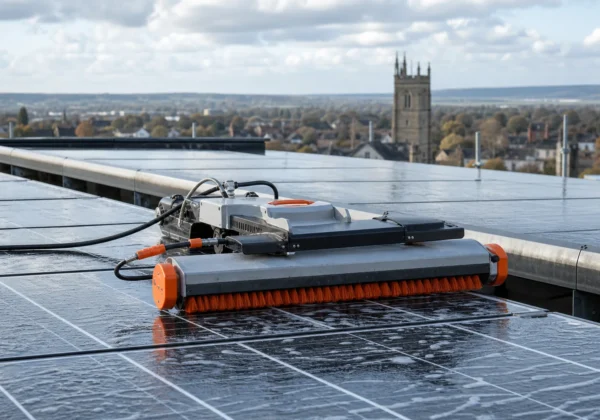
Solar panels on commercial roofs add value, but they also add complexity. Faulty modules can reduce output by up to 20 % and hide hot‑spots that may cause fire.
IEC 62446‑3:2017 is the global standard for PV array testing. It defines how aerial thermography should be performed, what resolution is needed, and which environmental conditions are acceptable.
The standard requires a minimum of 5 × 5 pixels per cell. That translates to a flight altitude of about 10‑12 m for a 640 × 512 sensor, assuming a 90° lens. Flying higher saves time but compromises the ability to see subtle temperature gradients that indicate issues like potential‑induced degradation (PID).
Our drones are calibrated to meet the IEC resolution rule. We also follow the environmental checklist: clear sky, irradiance above 700 W/m², wind under 10 km/h, and a clean module surface. By adhering to these limits we avoid false positives caused by soiling or wind‑induced image blur.
During a survey we capture both RGB and infrared frames. The RGB images help locate individual modules, while the thermal frames reveal temperature anomalies. The software then flags any module that exceeds the 5 °C deviation threshold set by IEC.
Once the flight is complete we generate a compliance matrix that shows:
- Geometric resolution achieved per panel
- Environmental conditions at the time of capture
- List of modules that failed the temperature check
Because the IEC standard only covers aerial thermography, we often pair the drone data with ground‑based IR measurements for a full diagnostic. This hybrid approach satisfies warranty claim requirements for many manufacturers.
In the UK, the Government’s Approved Documents for Building Regulations reference IEC standards when specifying solar‑panel inspections for new builds. Aligning your survey with IEC 62446 therefore keeps you on the right side of building code compliance.
Our team holds Level 1 & 2 certified thermography credentials, which means we can interpret the thermal data correctly and produce a report that passes IEC audit.
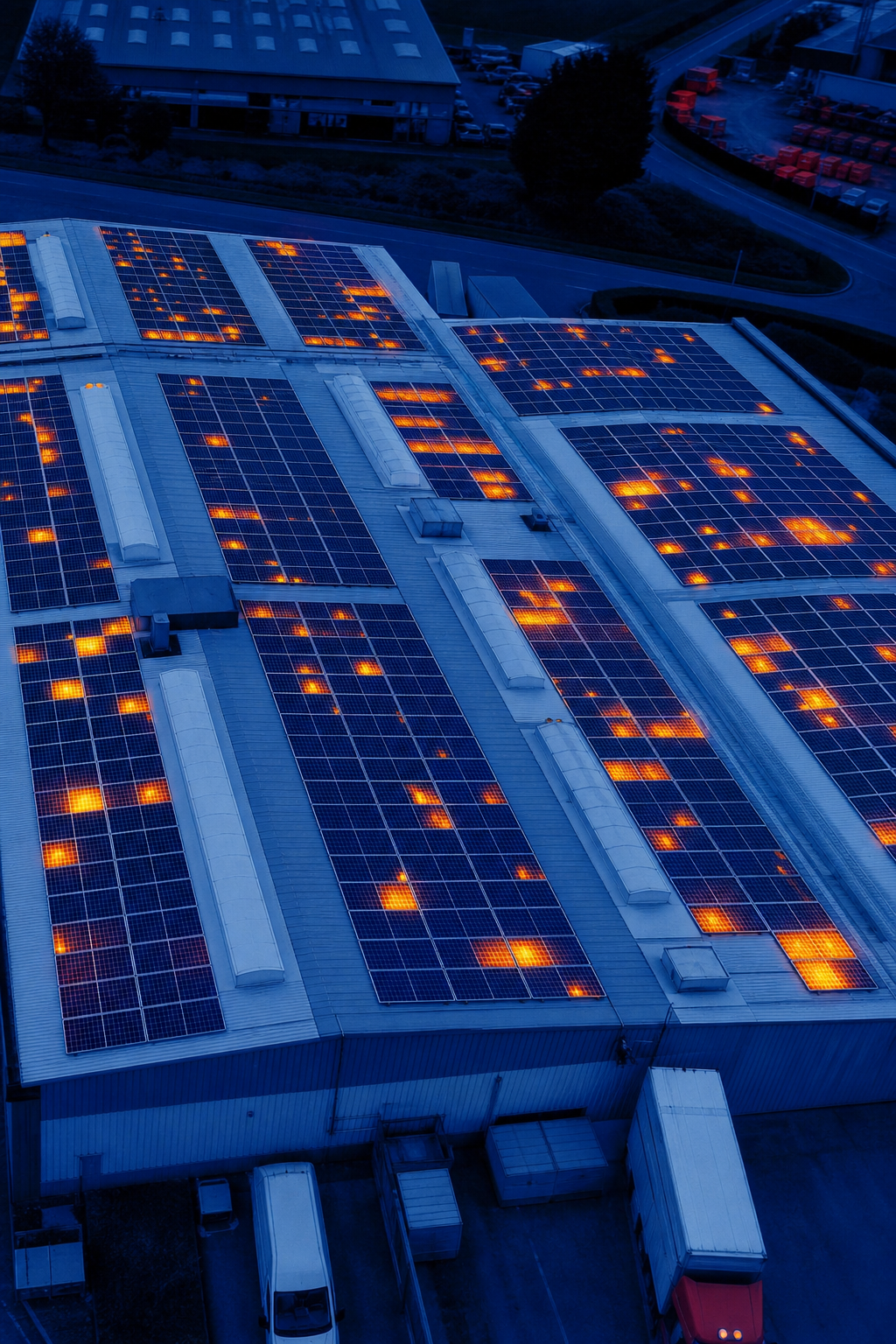
By choosing a provider that follows IEC 62446 you protect your investment, meet insurance requirements, and gain a clear picture of how your solar farm is performing.
FAQ
What does a building condition survey include for a large commercial roof?
A full roof survey covers membrane condition, drainage performance, flashing integrity, ponding water, and any attached equipment such as solar panels or HVAC units. We also add a thermal map that highlights heat loss or moisture pockets. The final report provides annotated photos, a 3‑D model, and a cost estimate for each defect, so you can plan repairs without guessing.
How often should a commercial property be surveyed?
Most owners schedule a complete survey every three to five years. High‑risk sites, hospitals, data centres, or buildings with extensive glazing, should be inspected annually. A regular cadence helps catch small problems before they become expensive emergencies and keeps you compliant with fire‑safety and accessibility codes.
Can drone inspections replace traditional roof walks?
For most commercial roofs, drones provide faster, safer, and more detailed data than a manual walk. They capture hard‑to‑reach areas without scaffolding, reduce labor costs, and create a permanent digital record. However, very steep or heavily obstructed roofs may still need a limited manual check for safety‑critical items.
What qualifications should a thermographer have?
Look for Level 1 or 2 thermography certification, which guarantees the practitioner understands infrared physics, emissivity, and how to calibrate equipment. Visual Perspectives holds both levels, ensuring we can detect subtle temperature differences that indicate hidden moisture or failing insulation.
Why is IEC 62446 important for solar PV inspections?
IEC 62446 sets the technical baseline for aerial thermography of photovoltaic arrays. It defines resolution, environmental conditions, and reporting formats. Compliance means your inspection will be accepted by manufacturers for warranty claims and by insurers for risk assessments.
How does a building condition survey help with ESG reporting?
The survey provides specific data on energy loss, heat‑loss hotspots, and the condition of renewable‑energy assets. This data feeds directly into carbon‑footprint calculations and decarbonisation roadmaps, making it easier to meet ESG targets and demonstrate responsible asset management.
What is the difference between a condition survey and a structural survey?
A condition survey looks at the overall health of a building, including façade, roof, MEP systems, and compliance issues. A structural survey focuses solely on load‑bearing elements like foundations, beams, and columns. For most commercial owners, a condition survey offers the broader insight needed for budgeting and compliance.
Do I need special permissions for drone flights over my property?
In the UK, commercial drone operations require a CAA‑approved permission and a documented flight plan. We handle all paperwork, obtain any site‑specific consents, and ensure the flight stays within legal altitude and distance limits. The process is smooth for the client.
Conclusion
Running a building condition survey on a commercial property is no longer a once‑in‑a‑while chore. With drones, thermal imaging, and IEC‑compliant PV thermography, you get a data‑rich picture that uncovers what the naked eye can’t see. Early defect detection saves money, keeps operations running, and supports ESG goals.
Partnering with a provider that bundles roof, façade, 3‑D mapping, and high‑grade thermography into a single, insured service removes the hassle of managing multiple contractors. Visual Perspectives offers that all‑in‑one solution across the United Kingdom, backed by ITC Level 1‑2 credentials and a clear £5 million public‑liability cover.
If you’d like to explore how a modern survey can fit into your asset‑management workflow, . It walks you through the technology, the reporting format, and the next steps to get started.