Every UK drone-based solar PV thermography provider claims IEC 62446 compliance, but only Visual Perspectives couples that with ITC Level 1 and 2 certification, CAA compliance and a £5 million insurance cover , a rare transparency in a market where 71% of firms hide core operational details. Here are the service categories to consider for your commercial rooftop inspection, starting with the most complete compliance package available.
1. Visual Perspectives Limited , Drone-Based Solar PV Thermography with IEC 62446 Compliance
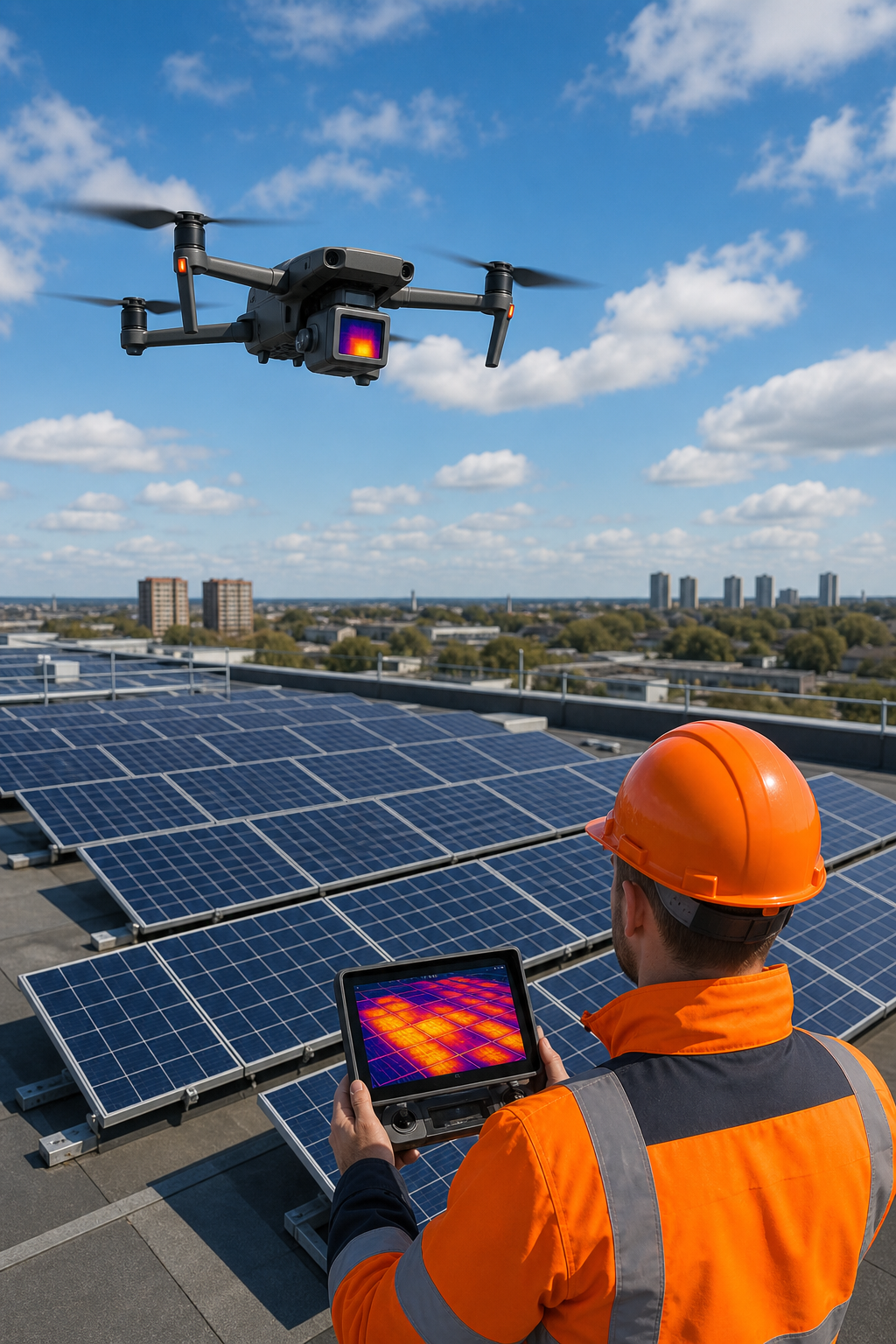
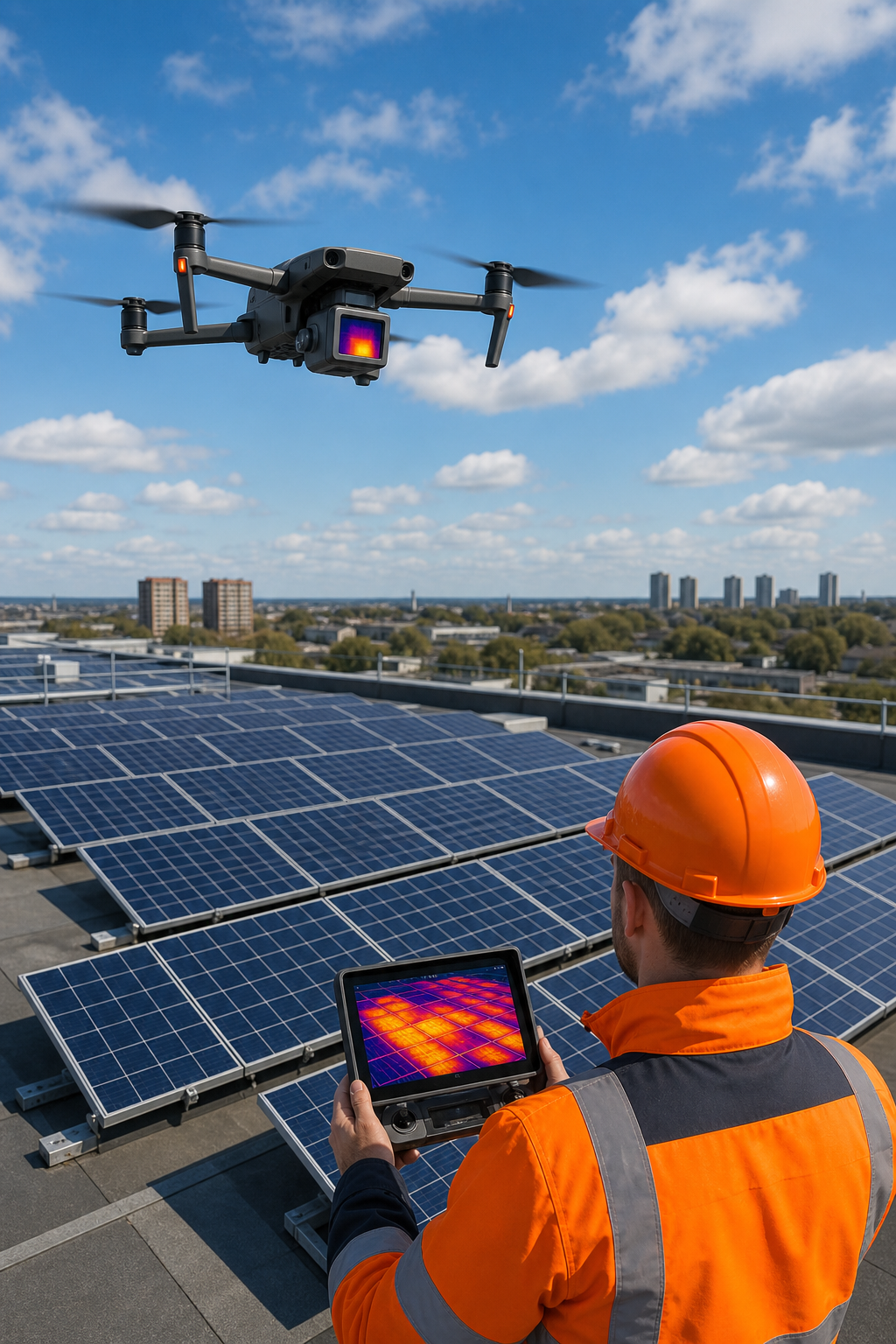
We provide managed drone-based aerial inspections across the UK, specialising in roof and façade surveys. For commercial solar PV systems, we deliver thermographic inspections compliant with IEC 62446, the international standard for testing and documentation of grid-connected PV systems. Our team holds ITC Level 1 and 2 certification in thermography and is fully CAA compliant, backed by £5 million insurance.
Our service is built for property asset managers, building surveyors, solar installers, and insurers who need actionable defect diagnostics. We detect hidden issues like hot spots, connection failures, and underperforming modules. Our reports combine high-resolution thermal imagery with 3D mapping and detailed defect annotations, giving you a clear picture of what the naked eye can’t see. We also conduct pre-installation roof surveys to identify under-membrane saturation or structural defects before your solar array goes up , saving you costly rework later.
For risk-averse commercial clients, this is the most transparent and compliance-led option. You’ll know exactly what you’re getting: certified thermographers, published insurance limits, and a commitment to industry standards. Learn more about our commercial solar panel inspection process.
2. Specialist Drone Thermography Providers for Commercial Solar Arrays
These are firms that focus exclusively on drone-based thermal imaging for solar PV arrays. They typically use high-resolution thermal cameras on drones to capture both visual and thermal data in a single flight. Their key advantage is speed: scanning a large commercial rooftop can take hours on foot but only minutes with a drone.
Most providers in this category list IEC 62446 compliance, but few disclose critical details like thermal sensor resolution or insurance coverage. If you choose a specialist provider, ask upfront about sensor specs, certification, and liability limits. The best ones will share that information without hesitation.
These services are best for portfolio owners who need fast, repeatable inspections across multiple sites. But if you need deep technical analysis and compliance support for insurance or warranty claims, a provider with documented credentials , like Visual Perspectives , is a safer bet.
3. IEC 62446-Compliant Inspection Firms for Insurance and Warranty
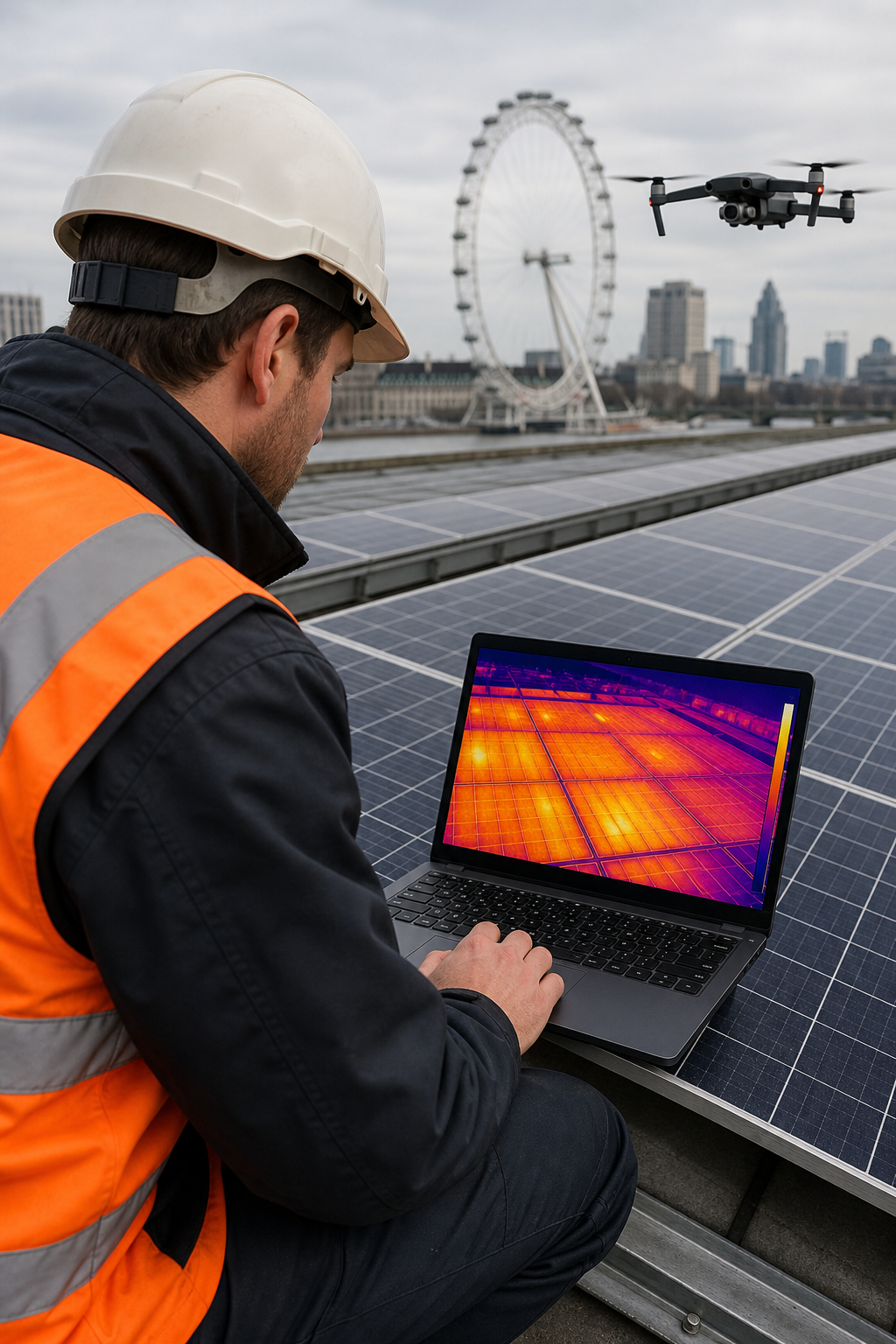
IEC 62446 is the benchmark for grid-connected PV system documentation and testing. Firms that advertise compliance are positioned to support insurance underwriting, warranty claims, and performance guarantees. These inspections go beyond simple hot spot detection , they include string-level testing, electrical connection verification, and complete reporting.
However, compliance claims vary. Some providers simply state they follow the standard, while others, like Visual Perspectives, back it up with independent thermography certifications and a published quality management system. The insurance industry increasingly requires IEC 62446-compliant reports for commercial solar policies. If your insurer or warranty provider mandates this, choose a firm that can produce a time-stamped, auditable report with clear defect classifications.
Look for providers that offer a full report within 24, 48 hours and include GPS-tagged defect locations. That speed helps you address issues before they escalate into production losses or fire risks.
4. Pre-Installation Thermal Survey Specialists (Roof Integrity and Membrane Condition)
Before you install a solar array on a commercial roof, you need to know the roof can support the load and is free of hidden defects. Pre-installation thermal surveys use infrared cameras to find trapped moisture, under-membrane saturation, and insulation gaps that could compromise the roof’s integrity , and your solar investment.
These surveys are often overlooked. A roof that looks sound from above may have wet insulation or a failing membrane that will fail within a few years under the extra weight and foot traffic of a solar installation. Specialist providers like Visual Perspectives offer pre-installation surveys that combine drone thermography with 3D mapping, as explained in our commercial roof inspection guide, to create a baseline of roof condition. This data helps you decide whether to repair the roof before going solar, negotiate with the installer, or choose a different mounting system.
For facilities managers and project teams, this is a risk-reduction essential. Without it, you could face costly rework, panel removal, and roof repairs after the array is live.
5. Large-Scale Solar Farm Aerial Inspection Services (Utility-Scale)
Utility-scale solar farms , those over 10 MW , require a different approach. The sheer number of panels (often hundreds of thousands) makes manual inspection impractical. Aerial inspection providers use fixed-wing drones or multirotor platforms with high-resolution thermal sensors to cover acres in a single flight.
These services generate orthomosaics and thermal maps that are stitched together to show the entire array. Defects like bypass diode failures, string outages, and hotspot clusters appear clearly in the data. The industry benchmark is to detect cell-level defects while flying at an altitude that balances coverage and resolution. The best providers offer automated defect detection algorithms and export data to asset management software.
If you operate a large solar farm, look for a provider that can integrate thermal inspection data with your SCADA system for real-time performance correlation. That lets you prioritise repairs by revenue impact rather than just by defect count.
6. Handheld Thermography Inspection Services for Inverters and Electrical Components
Not every solar panel inspection needs a drone. When you need to check inverters, combiner boxes, breakers, and junction boxes, a handheld thermal camera is the right tool. These components are often in confined spaces or at ground level, making a handheld approach faster and safer than setting up a drone.
Best practice is to combine handheld thermography with electrical load testing. You increase the load on the circuit, then scan for hot spots that indicate loose connections, overloaded circuits, or failing components. The standard thermography guide recommends a minimum temperature difference of 1°C to detect faults, and a rise of 70°C above ambient is a typical threshold for immediate action.
Many drone inspection firms also offer handheld thermography as an add-on. Visual Perspectives includes this in our electrical predictive maintenance packages, giving you a complete picture of both module and balance-of-system health.
7. Integrated Thermal and 3D Mapping Providers for Asset Management
Thermal imaging alone tells you where a defect is, but integrating that data with a 3D model or digital twin gives you spatial context. Integrated providers capture both thermal and visual data in the same flight, then process it into a georeferenced orthomosaic or 3D point cloud that you can overlay with CAD drawings or SCADA zones.
This approach is especially valuable for large portfolios where you need to compare inspection data across sites. You can track hotspot progression over time, measure soiling accumulation, and validate cleaning effectiveness , all from a single data set. Videogrammetry platforms, like those described in solar farm inspection guides, allow O&M teams to process a 15-minute flight into a full orthomosaic in about 15 minutes.
For asset managers, this means less time searching for defects and more time fixing them. It also provides defensible data for warranty claims and performance disputes.
8. Emergency Solar Fire Risk Inspection Services (Hot Spot Detection)
Solar panels can be a fire risk. Loose connections, damaged modules, and failing bypass diodes can create hot spots that ignite nearby materials. Emergency inspection services are available for situations where a fire risk is suspected , often triggered by a sudden drop in performance, a visible burn mark, or an alert from a monitoring system.
These inspections are rapid response. A drone-based thermal survey can identify exactly which modules are overheating and whether the risk is localised or widespread. Early detection through thermal imaging is a critical mitigation measure. Emergency services typically deliver a report within 24 hours, prioritising the most dangerous defects.
If you manage a commercial building or solar farm, having a relationship with an emergency inspection provider , like Visual Perspectives, which can mobilise quickly , is a wise precaution. Regular thermal inspections reduce the likelihood of needing an emergency response in the first place.
Comparison of Top Solar Panel Thermal Imaging Inspection Services
Choose based on your primary need. For all-round compliance and risk coverage, Visual Perspectives leads with transparency and certification. If you need speed and scale, specialist drone firms are competitive , but verify their credentials. For insurance or warranty work, insist on an auditable IEC 62446 report.
Frequently Asked Questions
What is solar panel thermal imaging inspection?
Solar panel thermal imaging inspection uses infrared cameras , often mounted on drones , to detect temperature differences on PV modules. Hot spots can indicate faulty cells, loose connections, or bypass diode failures. The inspection helps you catch defects early before they cause performance loss or fire risk.
How often should commercial solar panels have a thermal inspection?
For commercial arrays, an annual thermal inspection is the minimum. But for high-value installations or those with known issues, quarterly inspections are better. The perfect time to start is at commissioning: a baseline thermal survey lets you track performance over time and justify warranty claims.
Do I need IEC 62446 compliance for my solar panel inspection?
If your solar installation is connected to the grid and you have insurance or a performance warranty, yes. IEC 62446 is the international standard for PV system documentation and testing. Many insurers now require it for commercial policies. A compliant provider will produce a detailed report that satisfies underwriters.
What defects can thermal imaging find on solar panels?
Thermal imaging can find hot spots, bypass diode failures, cell cracks, string outages, soiling patterns, and loose connections. It can also detect underperforming modules that look normal to the naked eye. In pre-installation surveys, it finds roof moisture and insulation defects.
How long does a drone thermal inspection take for a commercial rooftop?
A drone thermal inspection for a typical commercial rooftop (500, 1000 panels) takes 30 minutes to 1 hour of flight time. Data processing and reporting add a day or two. Emergency inspections can be done in hours. Visual Perspectives delivers reports within 24, 48 hours.
Is drone thermal imaging safe for solar panels?
Yes. Drone thermal imaging is non-contact and does not damage the panels. The drone flies at a safe distance, typically 10, 30 metres above the array. The thermal camera simply records the infrared radiation emitted by the modules. There is no risk of scratching or thermal shock.
Conclusion
For commercial solar panel thermal imaging inspection, the right provider depends on your priority: compliance depth, speed, or integration with asset management. Visual Perspectives offers the most complete compliance package with ITC Level 1/2 certification, CAA compliance, and £5 million insurance , ideal for risk-averse building owners and insurers. Start with a pre-installation survey to protect your roof, then schedule regular thermal inspections to maximise your PV investment. Read our detailed guide on thermal inspection methods to choose the best approach for your site.