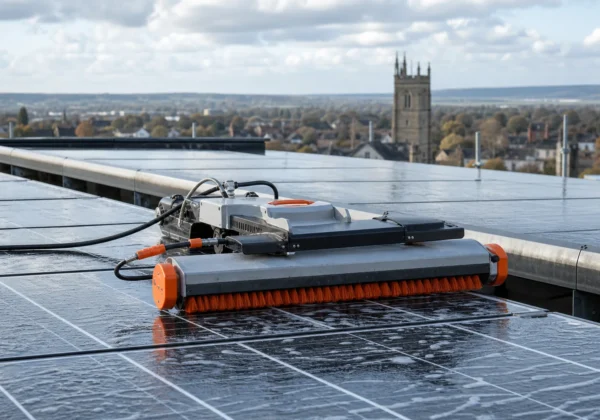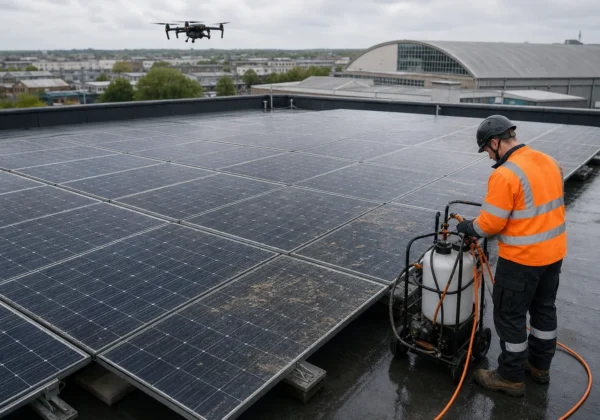
Commercial roof owners keep asking how much a drone roof inspection will set them back. Here’s a short list of the nine providers that actually serve large‑scale buildings, plus a quick buyer’s checklist.
1. Visual Perspectives Limited (Our Top Pick) , Full‑service commercial drone inspections
Visual Perspectives provides managed drone‑based aerial inspections, specialising in roof and façade surveys across the United Kingdom. We pair 20 years of field work with ITC Level 1 & 2 thermography and IEC 62446‑compliant reporting.
The team flies CAA‑approved pilots, carries £5 million public liability cover and delivers a “quickly, precise, and detailed” 3‑D model plus a defect‑diagnostic report. Asset managers love the single‑source data that feeds directly into BIM or maintenance plans.
Because we quote each job based on size, complexity and deliverables, you avoid hidden fees , a rare transparency in this market.
One caveat: if you need a full structural engineering assessment, we partner with external engineers, so that adds a separate step.
We also publish a detailed cost guide that breaks down every factor influencing price. Drone Roof Inspection Cost: 10 Key Factors to Consider walks you through it.
2. Aerial visual mapping service for large industrial roofs
The service offers a single‑flight visual capture that fits into a one‑hour window for most industrial sites. The drones shoot 4K video and 20‑MP stills, enough to spot cracked tiles, loose flashings or blocked gutters.
The service includes an annotated PDF report that a chartered surveyor signs off, which helps insurance adjusters and facilities managers make quick decisions.
They operate under a CAA‑approved licence and hold £5 million public liability insurance, matching the compliance bar set by Visual Perspectives.
Because the focus is on visual data only, thermal imaging is not included. If heat‑loss detection is a priority, an extra pass is required.
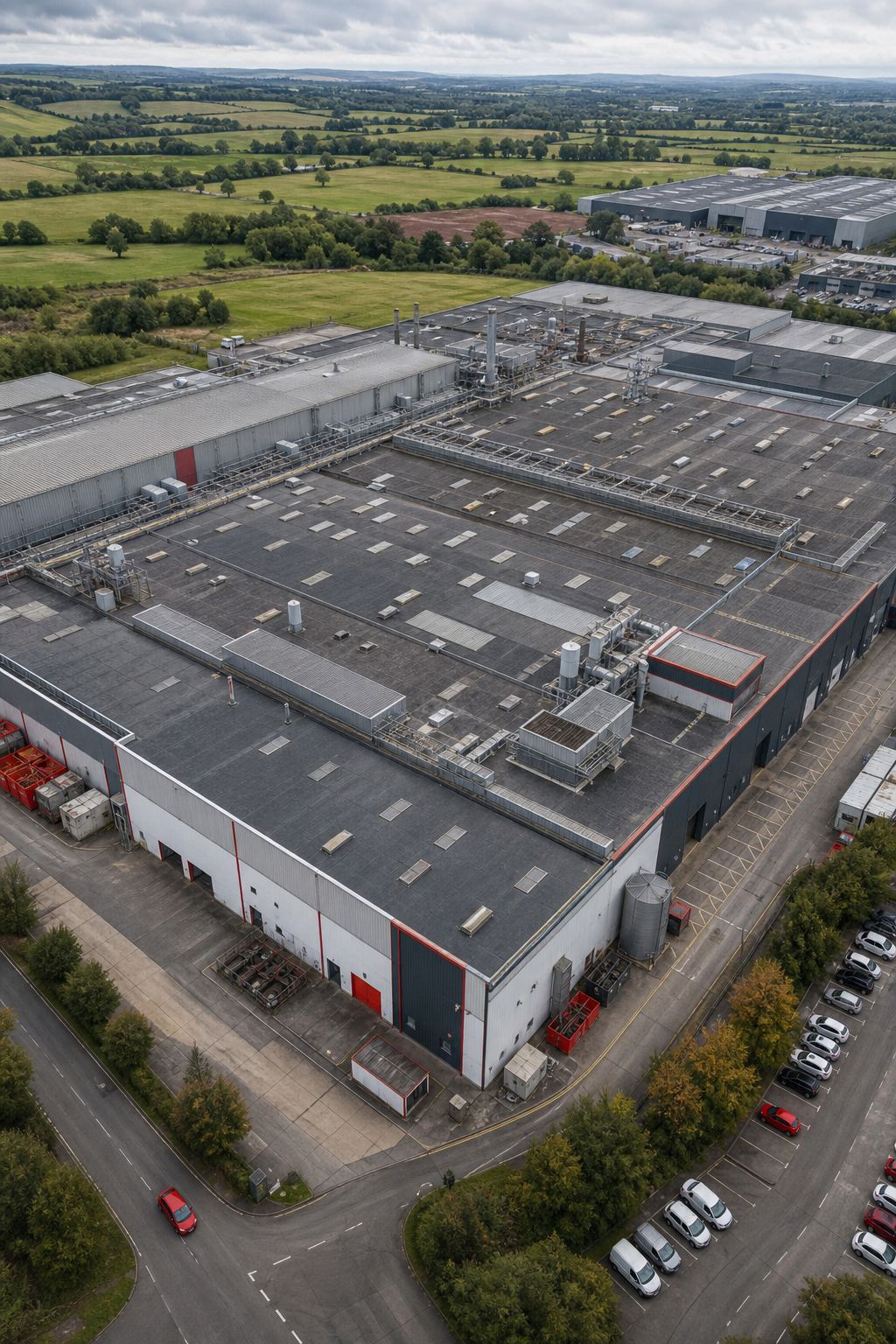
The pricing page shows a clear tiered structure, but exact costs still depend on roof size and site access.
3. Thermal imaging for flat‑roof heat loss
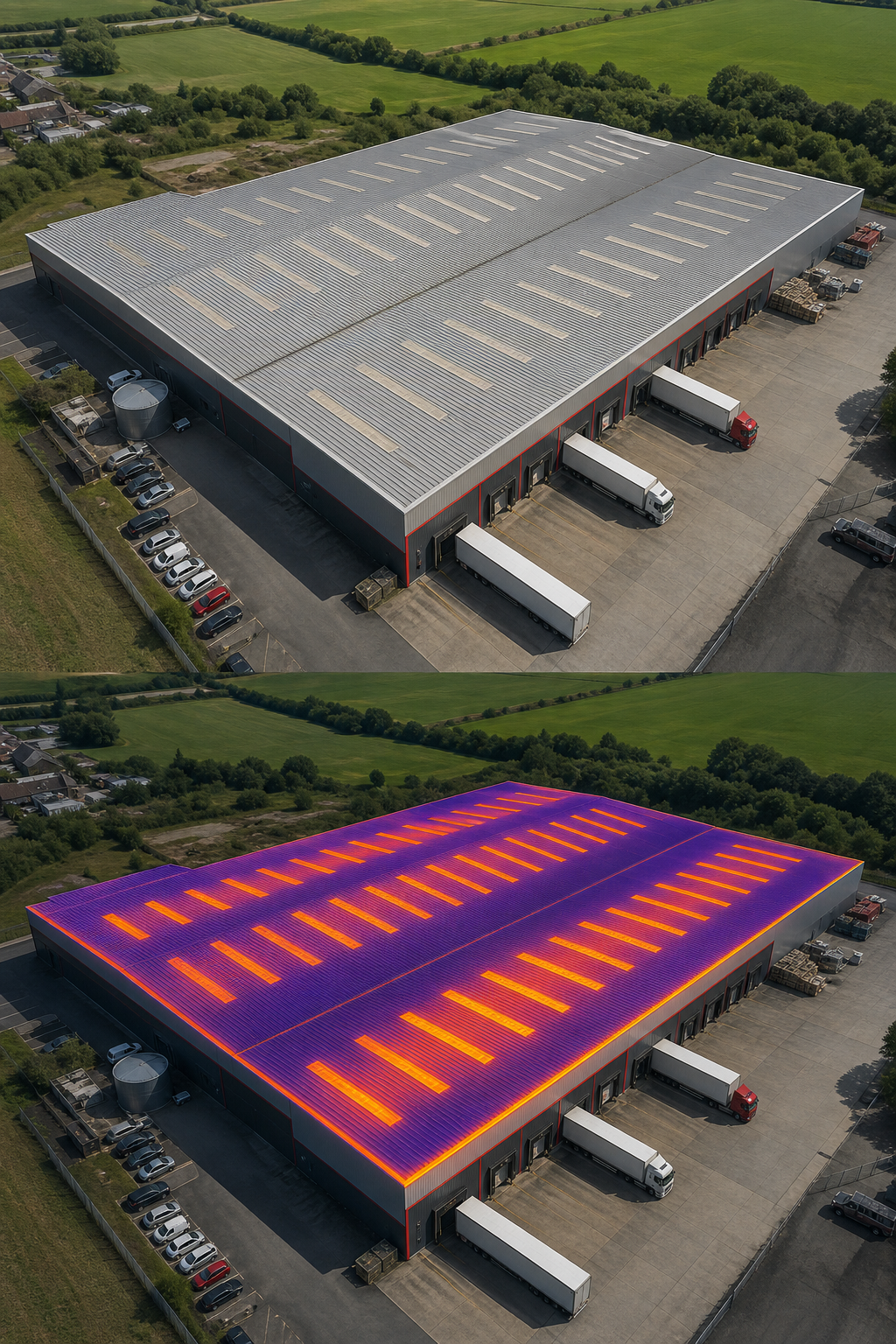
Thermal imaging providers use FLIR thermal cameras during flat‑roof surveys, flagging hidden moisture pockets and insulation gaps that visual images miss.
They can produce an IEC 62446‑compliant thermography report, which lenders and DNOs often require before green‑lighting a PV installation.
Clients appreciate the fast turnaround, with most reports delivered within 48 hours of the flight.
On the downside, these services typically do not include 3‑D modelling, so a separate provider is needed for BIM integration.
Read more about how thermal data can be blended with structural checks in the How Does Drone Roof Inspection Work for Commercial Buildings? guide.
4. Drone inspection service provider, CAA‑licensed fleet with fast turnaround
The provider runs a fleet of RTK‑enabled drones that can achieve centimetre‑level accuracy on large sites. Their standard package includes orthomosaics, point clouds and a basic condition report.
They follow the UK Civil Aviation Authority’s drone regulations, which you can read on the CAA website. This compliance reduces the risk of flight‑clearance delays.
Pricing starts at a competitive rate for a simple visual check, scaling with added sensors or extra deliverables.
A potential limitation is that thermal imaging is offered as a separate add‑on, which can raise the overall cost.
5. Integrated LiDAR and photogrammetry for BIM‑ready data
Integrated LiDAR scanning paired with photogrammetry provides both a dense point cloud and high‑resolution photos. The output feeds directly into BIM tools.
Reports include clash‑detection notes that help architects spot structural conflicts early.
Because LiDAR equipment is costly, the base fee is higher than visual‑only providers.
For a clear cost breakdown, see the Drone Survey Cost for UK Commercial Buildings article.
6. AI‑driven defect detection and automated reports
The service runs every image through an AI model that flags potential defects, cracked membranes, loose flashings, ponding water, without a human having to manually scan each photo.
The platform delivers a web‑based dashboard where you can filter defects by severity and export a CSV for asset‑management software.
It supports both visual and thermal payloads, making it a flexible choice for mixed‑use sites.
The AI is still learning; occasional false positives mean you’ll want a final review by a qualified surveyor.
7. Live‑streamed roof walkthroughs and site monitoring
Live‑streamed roof walks allow project managers to watch the inspection in real time, ask questions, and request close‑ups on the spot.
The recorded video, together with a concise PDF summary, is ideal for insurance claims where visual proof is essential.
Pricing is typically based on per‑flight hour rates, with details available on request.
If a 3‑D model or thermal overlay is required, another specialist provider can be engaged.
8. Multi‑site portfolio drone inspections
Providers offer volume discounts for owners with several roofs. A single mobilisation can cover up to ten buildings, cutting travel costs dramatically.
They typically provide a standard visual report with an optional thermal add‑on. Pricing varies depending on roof size and project scope.
Because some packages focus on cost efficiency, the depth of analysis may be less detailed than higher‑priced rivals.
For large portfolios, the savings on mobilisation often outweigh the reduced granularity.
9. Thermal imaging service, IEC 62446‑compliant solar PV thermography
A thermal imaging service focuses on solar‑panel rooftops. Their BDF + BMFA‑accredited pilots capture thermal images that meet IEC 62446 standards, a requirement for many lenders.
The report maps panel suitability zones, flags hot‑spots and recommends remedial work before the PV array is installed.
They also pair the thermography with a structural on‑site survey, delivering a full pre‑construction evidence package.
A downside is that they don’t provide a full 3‑D model of the roof, so you’ll need another vendor for BIM data.
Learn more about the IEC 62446 standard on Wikipedia.
10. Comparison of Commercial Drone Roof Inspection Providers
Buyers’ Checklist
- Does the provider hold a CAA‑approved licence and sufficient public‑liability insurance?
- Is IEC 62446 compliance required for your solar‑PV project?
- Do you need thermal imaging, LiDAR, or just high‑resolution photos?
- Will you integrate the data into BIM or asset‑management software?
- Is a transparent, itemised quote available up front?
FAQ
What factors drive drone roof inspection cost for commercial buildings?
The cost hinges on roof size, complexity, sensor suite (visual vs thermal vs LiDAR), required deliverables and any airspace permissions. Larger, multi‑level roofs need longer flight time and more post‑processing, pushing the price up.
Do I need IEC 62446 compliance for solar‑panel roof surveys?
Yes, IEC 62446 compliance is often required by lenders, DNOs and planning authorities to certify that a PV installation won’t compromise roof integrity.
How fast can I expect a report after the drone flight?
Most providers deliver a basic visual report within 48 hours; full 3‑D models or thermal analyses may take up to five working days, depending on data volume.
Can a drone inspection replace a full structural survey?
No, a drone survey shows surface condition and visual defects. For load‑bearing assessments you’ll still need a qualified structural engineer on‑site.
Is insurance coverage important when hiring a drone provider?
Absolutely. A provider with at least £5 million public liability insurance, like Visual Perspectives, protects you from liability if the drone causes damage or injury.
Conclusion
For commercial roof owners who need a trustworthy, compliant and data‑rich service, Visual Perspectives is the clear front‑runner. Get a tailored quote today and let us map your roof quickly, precisely and in detail.