Roof problems can cost a business thousands, and spotting them early is the only way to avoid surprise expenses. In this guide we break down how drone roof inspection works, why you need a pre‑solar survey, what thermal imaging adds for PV arrays, and how compliance saves you money.
The Drone Roof Inspection Process
First, we plan the flight. That means mapping the building footprint, setting altitude limits, and checking weather. We use a UK‑approved UAV that meets CAA Part 107 rules and carries a high‑resolution RGB camera. The pilot programs a grid‑pattern flight path so the drone captures overlapping images from every angle.
During the flight the drone sends live video back to the ground station. The operator can pause over trouble spots , ridge caps, flashing, or hard‑to‑reach parapets , and capture extra stills. All data stays on the controller until the flight lands, keeping the site secure.
After landing, the raw images go into photogrammetry software. The software stitches the photos into an orthomosaic, a flat map that shows every tile, membrane seam and flash point. From that we generate a 3‑D model that lets you measure pitch, drainage slope and deck area with millimetre accuracy.
We then hand the data to a roof specialist. They tag defects, compare them to the manufacturer’s warranty standards, and write an actionable report. The report includes annotated images, a 3‑D walk‑through and a risk rating that lets facilities managers prioritise repairs.
Our team at Visual Perspectives follows the same workflow for every client, whether it’s a flat‑roof warehouse or a steep‑pitch office block. We stay on‑site for less than an hour, but the data we deliver can power decisions for years.
And the safety angle matters. According to the U.S. Occupational Safety and Health Administration, roofing is one of the top five most hazardous construction trades. Using a drone removes the fall risk entirely.
Here’s a quick checklist you can run before you hire a drone pilot:
- Confirm the pilot holds a valid CAA Part 107 licence.
- Ask for proof of £5 million commercial liability insurance.
- Verify the drone can carry a thermal sensor if you need heat‑loss data.
- Make sure the provider follows IEC 62446 reporting standards for PV work.
That video walks you through a live flight on a typical UK retail park roof. You’ll see how the drone avoids obstacles, keeps a steady altitude, and streams the feed back to the ground crew.
We also link to a full step‑by‑step guide you can reference later: Drone Roof Inspection Guide for Commercial Buildings. You’ll find the same safety checklist, plus a deeper dive on data processing.
Why Pre‑Solar Roof Inspections Are Critical
Before you install a PV array, you need to know the roof’s health. A hidden membrane leak can turn a solar investment into a costly repair ticket. That’s why a pre‑solar roof inspection is the first line of defence.
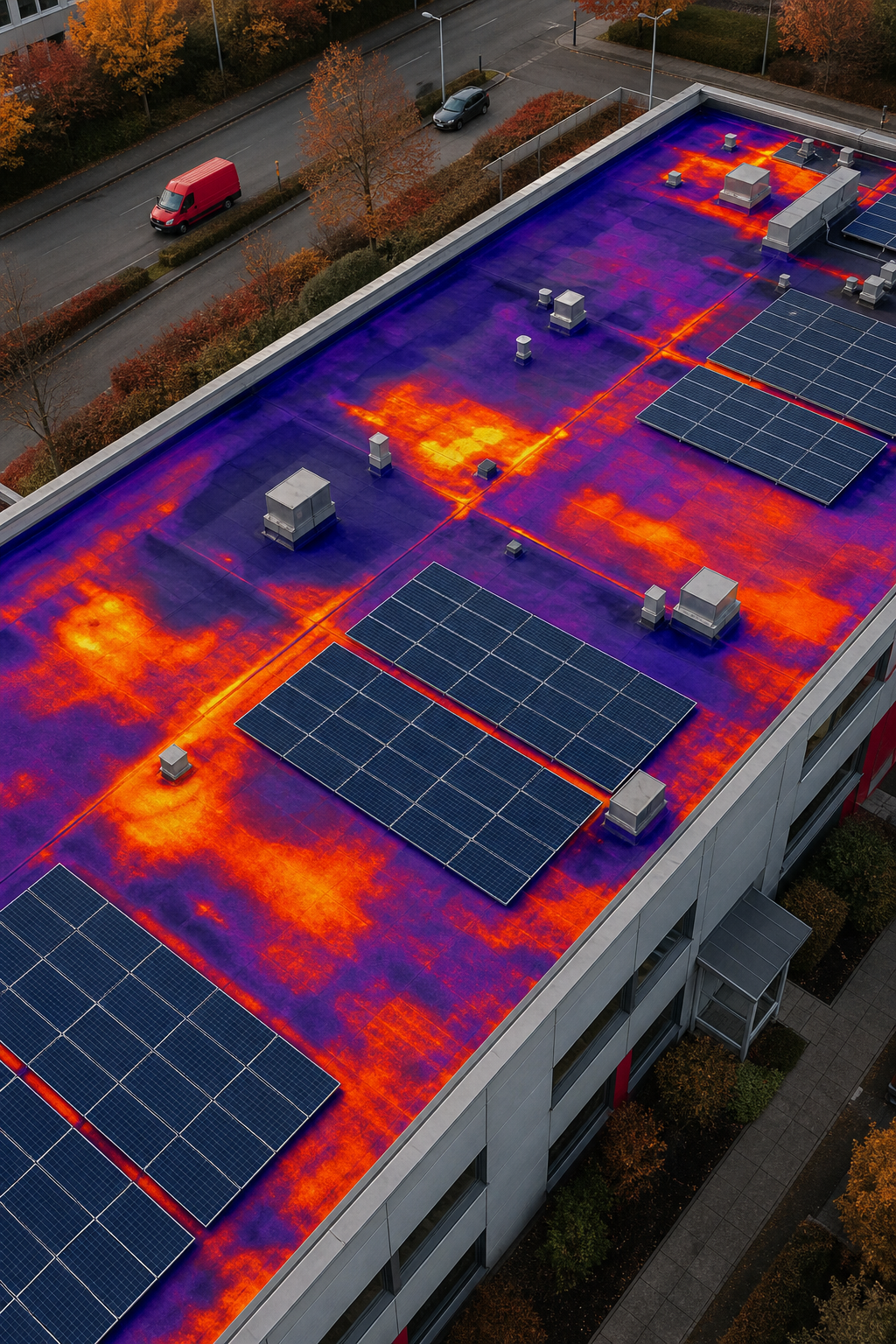
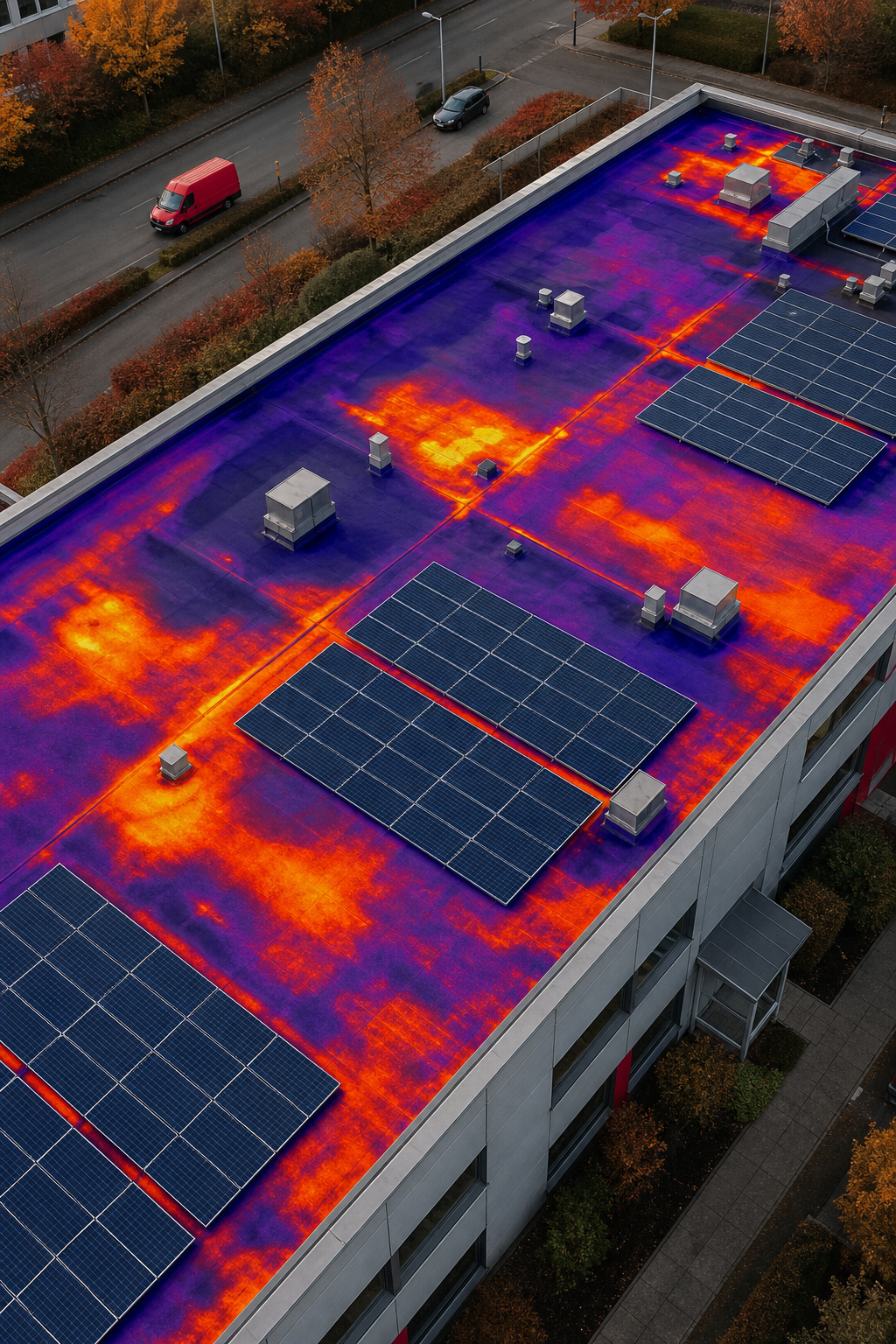
During the inspection we look for water ingress, delamination, and saturated insulation. Thermal imaging spots moisture that the naked eye can’t see, showing cold bridges and wet spots as bright hotspots on the infrared map.
We also verify that the deck can support the added load of panels, mounting rails and ballast. The 3‑D model lets engineers run structural calculations without a physical visit.
One real‑world example: a regional hospital in the North West scheduled a 2 MW rooftop farm. Our pre‑solar survey found a saturated flat‑roof membrane that would have leaked under the panel frames. The hospital repaired the deck first, saving an estimated £120 000 in future water damage and keeping the PV warranty intact.
Compliance also plays a role. IEC 62446 defines how PV inspections should be documented, from visual checks to thermal imagery. Following that standard ensures insurers accept your claim and that the installation meets UK building regulations.
For more on why this matters, read our in‑depth article: Commercial Roof Inspection Explained: What You Need to Know. It walks you through the risk matrix and shows how a simple survey can protect a multi‑year solar contract.
And the numbers back it up. The UK’s National Roofing Contractors Association notes that post‑storm claims drop by up to 40 % when drones are used for early damage detection.
Drone Thermography for Solar PV Systems
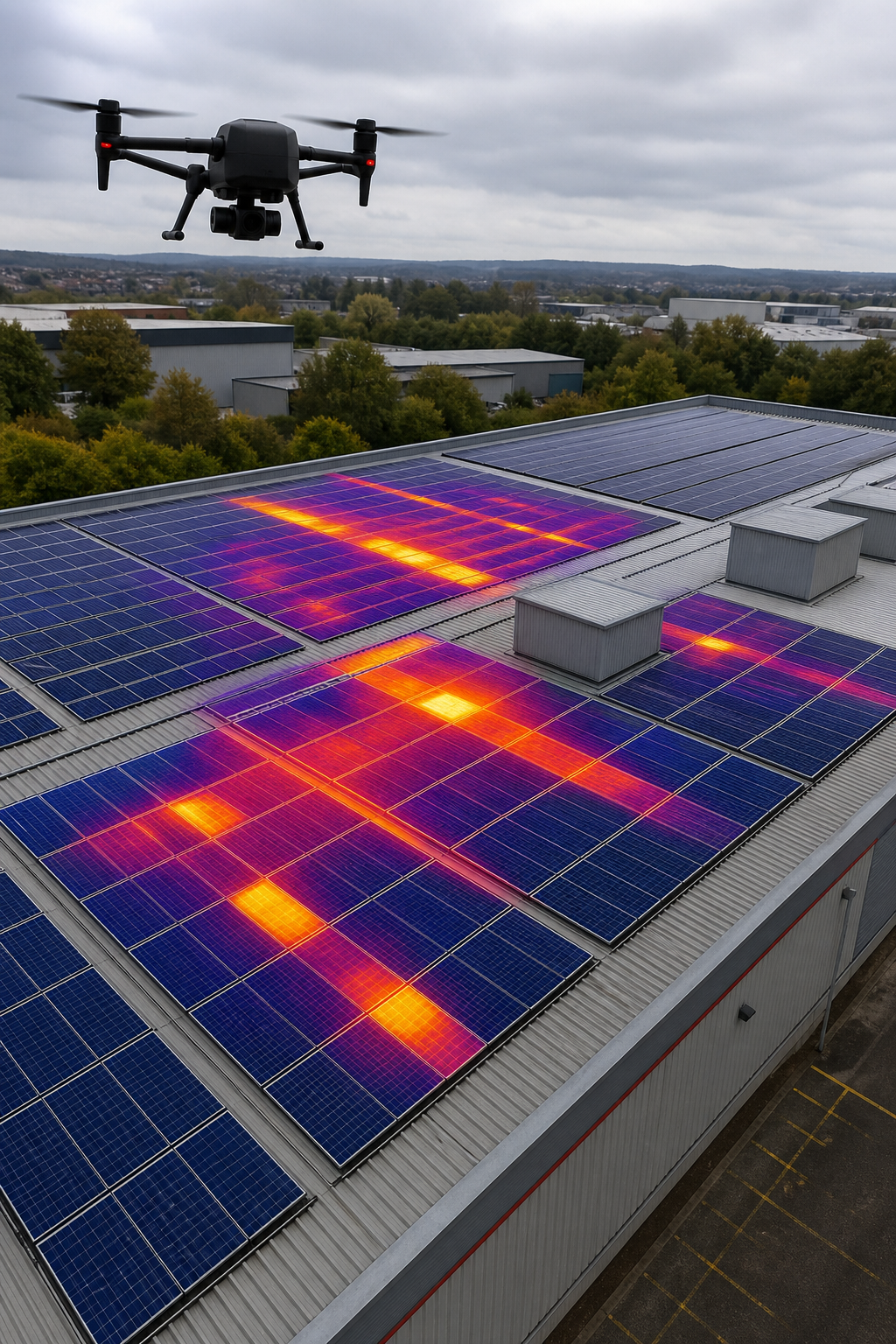
Thermography adds a layer of insight that RGB imagery alone can’t provide. By mounting an infrared camera on the drone, we capture temperature gradients across each PV module.
Hot spots reveal faulty cells, poor connections or shading issues. When a module runs hotter than its neighbours, it loses efficiency and can even become a fire hazard.
We process the thermal data with AI‑powered software that flags anomalies automatically. The tool we rely on , the same platform highlighted in Sitemark’s 2026 solar‑inspection review , classifies defects into over‑voltage, diode failure, and sub‑module faults.
After the flight, the software stitches the thermal frames into a single heat map that aligns perfectly with the orthomosaic. You can click any cell to see its temperature history, compare it to the IEC 62446 threshold, and generate a compliance report in minutes.
Here’s a step‑by‑step outline you can use for your own PV fleet:
- Set the drone’s flight altitude to 30 m for optimal pixel size.
- Calibrate the thermal sensor on a known temperature reference panel.
- Fly a parallel grid over the array, ensuring 80 % overlap.
- Run the AI analysis to tag hot spots above 45 °C.
- Export an IEC‑compliant PDF with module‑by‑module findings.
Imagine a 5 MW rooftop farm in Manchester. After our thermography sweep we found 12 modules operating 8 °C hotter than the array average. Replacing those modules restored 0.9 % of the plant’s output , roughly £9 000 in annual revenue.
Thermal imaging also helps with insurance. Many insurers require an IEC 62446‑style thermal report before they will underwrite a solar‑fire risk policy. Our reports meet that exact spec, so you won’t get stuck in claim limbo.
For a deeper look at the tech, check out Drone Thermography Explained for Commercial Roofs. It explains sensor specs, data pipelines and how we keep the data secure.
According to Wikipedia’s entry on thermography, infrared cameras can detect temperature differences as small as 0.1 °C, making them ideal for pinpointing micro‑cracks in PV cells.
Commercial Benefits and Compliance
Using drones for roof and PV inspections brings three big wins: cost savings, risk reduction and compliance confidence.
Cost‑wise, a traditional ladder survey for a 10 000 m² roof can cost £2 500 in labour, scaffolding and safety equipment. A drone survey of the same size starts around £700, according to UK market data. The lower price comes from reduced man‑hours and the fact that we don’t need to rent scaffolding.
Risk reduction is another driver. By staying on the ground, our pilots avoid the fall hazards that claim 60 % of roof‑related injuries each year. OSHA’s roof safety guidance confirms that eliminating climb‑time cuts both direct injury risk and the insurance premiums tied to it.
Compliance is where the rubber meets the road for solar projects. IEC 62446 defines the testing, documentation and maintenance steps for grid‑connected PV systems. Our reports follow that standard to the letter , visual inspection, infrared scan, electrical tests and a final compliance checklist.
Because the report is IEC‑compliant, utilities accept it for grid connection, insurers accept it for fire‑risk coverage, and building owners can file it with local authorities for planning approval.
Here’s a quick pros‑cons matrix you can use when deciding whether to go drone‑first:
We’ve run these numbers for dozens of UK estates, from NHS Trusts to university campuses. The ROI often shows up within six months, thanks to lower maintenance spend and fewer insurance claim re‑work.
Bottom line: the data you get from a drone is not just pretty pictures , it’s a decision‑making engine that cuts cost, keeps people safe and keeps you on the right side of standards.
Frequently Asked Questions
What equipment do you use for a commercial roof drone inspection?
We fly a CAA‑approved UAV equipped with a 20‑MP RGB sensor and, when required, a FLIR thermal camera. The drone carries a GNSS receiver for precise positioning, and we use photogrammetry software that complies with ISO 19125‑2 standards. All data is stored on encrypted drives and handed over in a password‑protected PDF.
How long does a drone inspection take on a typical office building?
For a medium‑size office roof (about 5 000 m²) the flight itself takes 10‑15 minutes. Planning, safety brief and data download add another 20‑30 minutes. Most clients get a full report within 48 hours of the flight.
Do you provide IEC 62446‑compliant reports for solar PV?
Yes. Our thermography workflow follows IEC 62446 step 1 (visual inspection), step 2 (thermal imaging), step 3 (electrical testing) and step 4 (reporting). The final document includes a heat‑map overlay, defect classification and a maintenance recommendation plan that meets utility‑grid requirements.
Can drones inspect flat roofs with heavy equipment on them?
Flat roofs pose no problem for a drone. We fly at a safe altitude, capture high‑resolution imagery, and use the 3‑D model to calculate load‑bearing capacity. If heavy HVAC units are present, we add a separate pass at a lower angle to capture the equipment details.
How do you ensure data security and privacy?
All flight data is encrypted in‑flight and stored on a secure server with ISO 27001‑aligned controls. We sign NDAs with every client and never share raw imagery with third parties without explicit permission.
What are the insurance implications of using drone inspections?
Many insurers require an IEC 62446‑style thermal report before they will underwrite a solar‑fire policy. Our reports satisfy that requirement, which can reduce premium costs by up to 15 % for large commercial portfolios.
Is a drone survey enough for building code compliance?
For roof condition and PV installation, a drone survey that follows IEC 62446 and UK building‑control guidelines is sufficient for most compliance checkpoints. However, structural engineers may still need to review the 3‑D model for load‑bearing calculations.
How often should a commercial roof be inspected with a drone?
We recommend an annual visual‑plus‑thermal inspection for most commercial roofs. For PV‑covered roofs, add a supplemental thermal scan after any major weather event or every six months to catch hot‑spot degradation early.
Conclusion
Drone roof inspection turns a risky, costly ladder climb into a fast, safe, data‑rich survey. It lets you see what the naked eye can’t see , hidden moisture, structural weaknesses and module‑level PV faults. By following IEC 62446, you get a report that insurers, utilities and building regulators all accept.
We at Visual Perspectives have spent two decades perfecting the workflow, from flight planning to actionable reporting. Our UK‑wide coverage, CAA‑compliant pilots and £5 million insurance mean you’ll be in good hands from start to finish.
If you manage a commercial portfolio, a hospital campus, a university or a public‑sector building, a drone inspection can shave weeks off your project schedule and save thousands in avoidable repairs. Get in touch with us to schedule your next roof survey and keep your assets performing at their best.