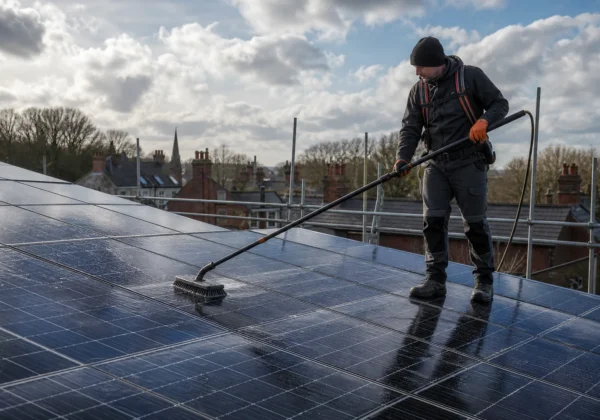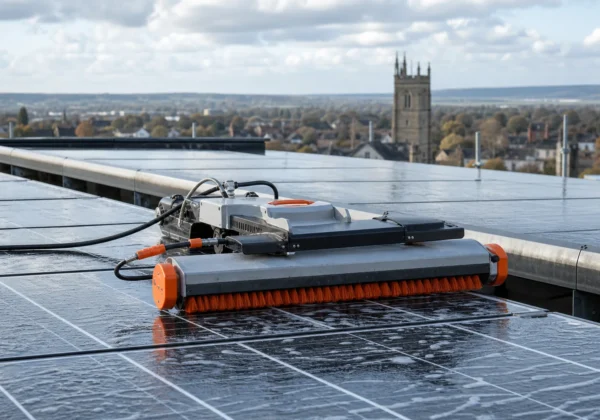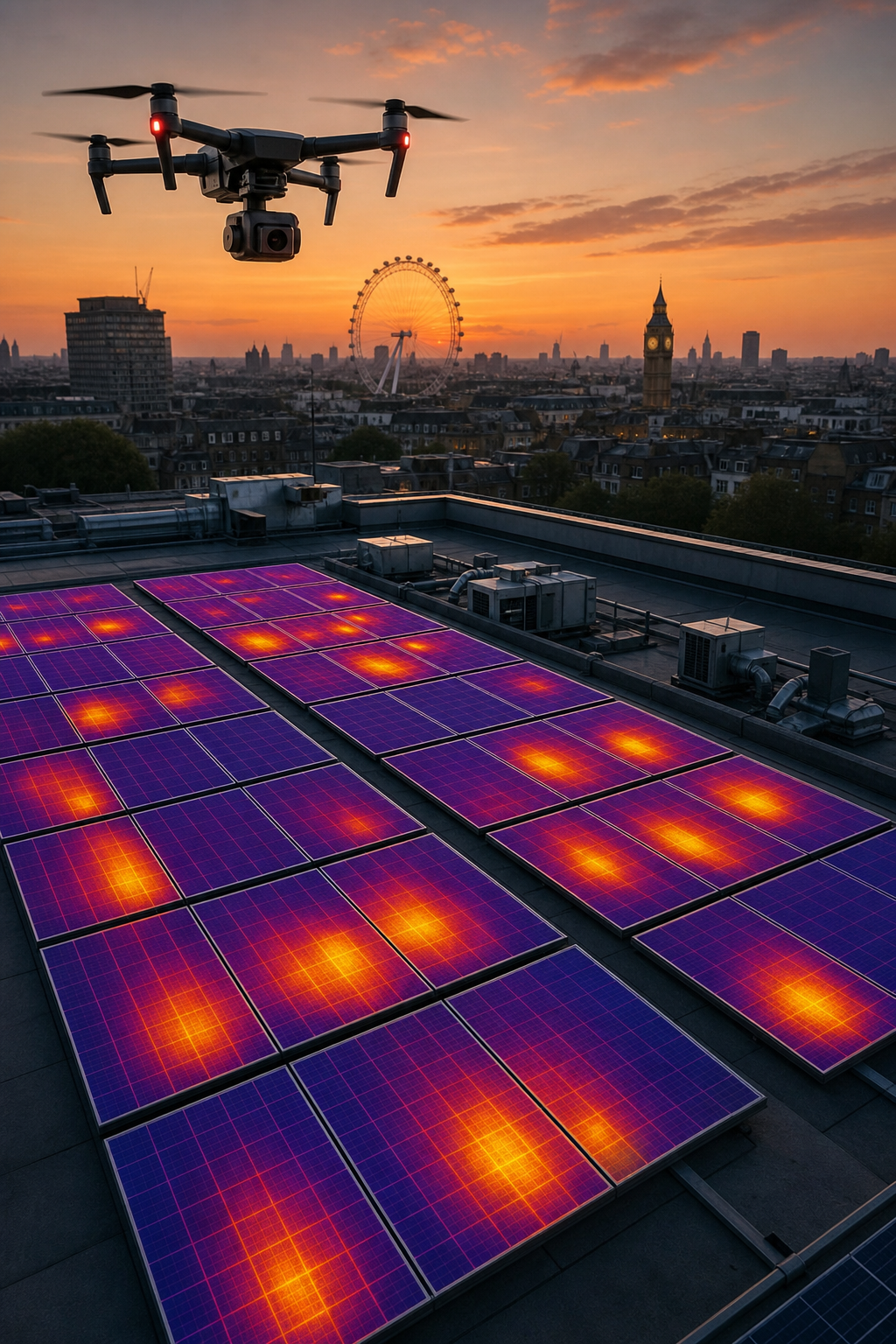
Hello there, solar owners! If you love the idea of clean, free electricity but dread adding another chore to your to-do list, you’re in the right place. Visual Perspectives can help you streamline the process with their expert drone services. In the next few minutes we’ll break down exactly what you really need to keep your panels humming, no endless cleaning schedules, just the smart steps that actually boost performance.
Even though most UK commercial solar operators rely on a once-a-year visual walk-around, the only maintenance activity that directly ties to an IEC compliance standard is a drone-based thermographic inspection , a service that Visual Perspectives delivers with high-resolution 3D mapping and thermal imaging. This article walks you through seven key inspections that will protect your investment, keep your system efficient, and help you stay compliant with UK regulations.
Table of Contents
- 1. Annual Thermal Imaging Surveys (IEC 62446 Compliant)
- 2. Drone-Based Visual Inspections for Hard-to-Access Areas
- 3. Performance Data Monitoring and Analysis
- 4. Electrical Component Checks (Inverters, Wiring, Connectors)
- 5. Structural Integrity Assessments of Rooftop Mounts
- 6. Soiling Inspection and Environmental Impact Analysis
- 7. Compliance Audits and Documentation (EICR & Insurance)
- Frequently Asked Questions
- Conclusion
1. Annual Thermal Imaging Surveys (IEC 62446 Compliant)
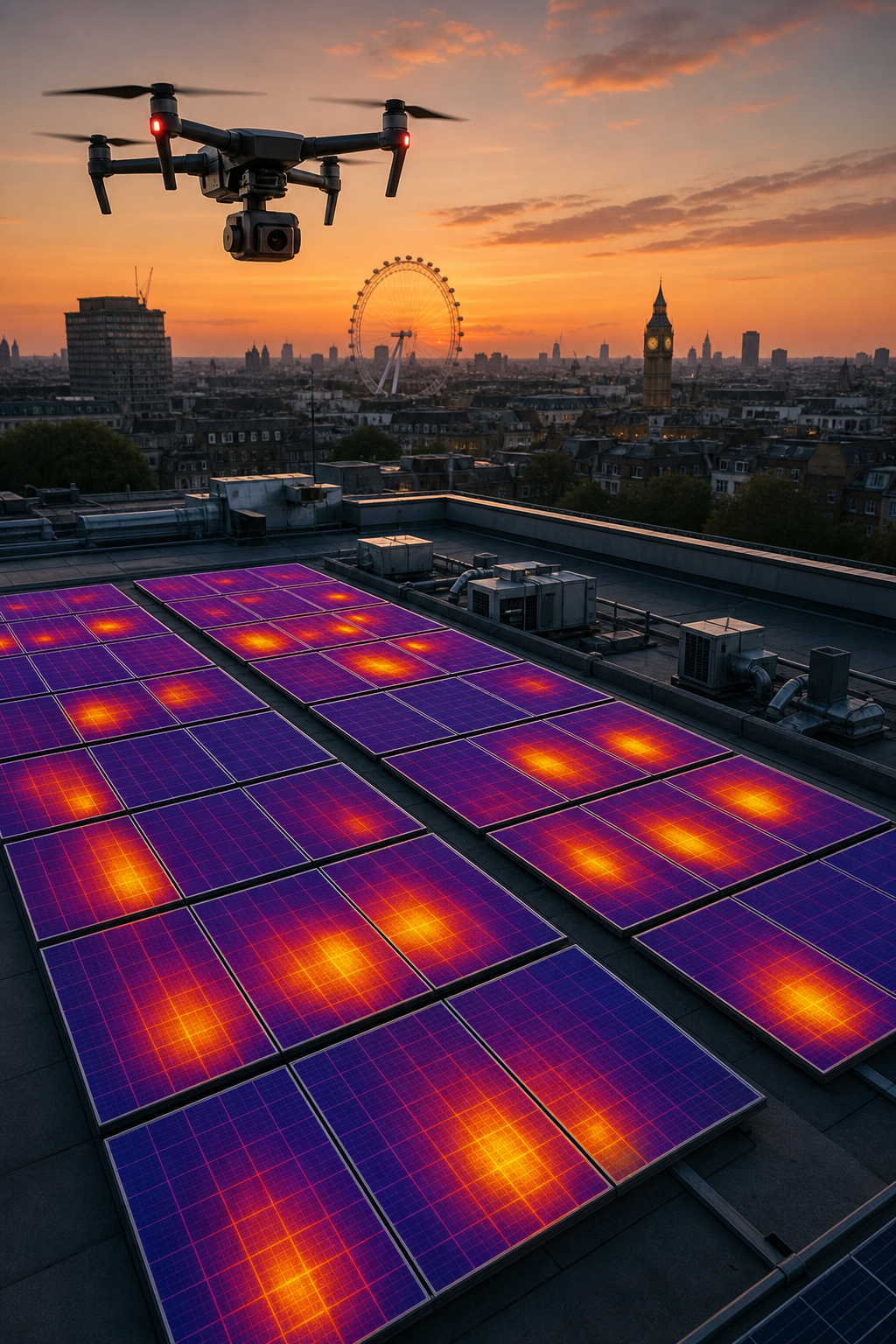
Thermal imaging inspection for solar panels uses infrared cameras to detect temperature variations across solar installations, revealing hidden problems that visual inspections miss. This non‑destructive testing method identifies hot spots, cell damage, connection issues, and other defects that can reduce performance or cause system failures.
Visual Perspectives provides the drone‑based thermal imaging service that makes this inspection fast and accurate. On what thermal imaging inspection involves, the process begins with setting up calibrated thermal cameras at optimal distances and angles to capture clear images of the solar array. Inspectors typically conduct thermal imaging during peak sunlight hours when panels are under load, making temperature differences more pronounced. The cameras can detect temperature variations as small as 0.1°C, providing detailed thermal maps of the entire installation.
What does thermal imaging catch? Hot spots , when individual cells or groups of cells operate at higher temperatures. Connection problems , loose or corroded connections that create electrical resistance and heat. Bypass diode failures , which can cause entire strings of panels to underperform. Cracked cells , which appear as hot lines or spots. Inverter problems , overheating or failing components.
For commercial solar installations, thermal imaging inspections should be done annually during the first three years of operation, then every two years thereafter. New builds should get one within the first six months while things are still under warranty. Many insurers now demand annual thermal surveys as part of their coverage terms, particularly for large commercial and utility‑scale projects.
Why is this important? Because most performance‑robbing problems generate heat signatures that are invisible to the naked eye. A quick walk‑around won’t find them. Thermal imaging will. And when you pair it with a drone, you can cover even the biggest roof in a fraction of the time it would take from the ground.
Key Takeaway: Annual drone‑based thermal imaging is the only maintenance task directly tied to an IEC compliance standard (IEC 62446) , skipping it means you’re flying blind.
Bottom line: Schedule an IEC 62446‑compliant thermal inspection every year to catch hidden defects early and satisfy insurance requirements.
 Regenerate Regenerate
2. Drone-Based Visual Inspections for Hard-to-Access Areas
Climbing onto a commercial roof isn’t always safe or practical. That’s where drones come in. A drone‑based visual inspection lets you examine every panel, every mount, and every cable from a safe distance. And you get high‑resolution images that you can zoom into later.
Visual Perspectives has refined its visual drone workflow to capture ultra‑sharp imagery that highlights cracks, loose hardware, and shading issues. As outlined in a technical paper on aerial solar thermography and condition monitoring, flying over solar panel arrays allows the thermographer to gather data about a large site in a time‑efficient manner. The ability to get a literal “bird’s eye” thermographic view of the array permits pinpoint accuracy down to the cell and significantly decreases the time spent finding and identifying problems.
What can a visual drone inspection spot? Cracked glass or broken panels, loose mounting hardware, debris like leaves or bird nests, shading from growing trees or new structures, and signs of animal activity. These are things a thermal camera might not catch , or that need a close‑up view to assess.
For commercial roofs, a visual drone inspection is quick and cheap. You can do it as often as every quarter if you like, but at least once a year alongside your thermal survey. The drone can also capture 3D mapping data that helps you plan maintenance or future expansions.
Pro Tip: Combine your visual drone inspection with a thermal flight. That way you get both the obvious problems and the hidden ones in one visit. It saves time and money.
Bottom line: Drone‑based visual inspections offer a safe, fast way to spot surface‑level damage and keep your array in good physical shape.
3. Performance Data Monitoring and Analysis
Your solar system is already tracking its energy output. But are you looking at the numbers? Performance monitoring is the simplest and cheapest way to know if something’s wrong. A sudden dip in production could mean a faulty inverter, a failed string, or heavy soiling.
Monitoring tools like smartphone apps (Fuse Energy app is one example) help detect performance dips that trigger cleaning or inspection. Yet they are not tied to any compliance standard, which suggests an opportunity to integrate monitoring data with formal inspection schedules. According to research from Revel Energy’s guide on commercial solar monitoring, you should track daily production and compare it with historical data or expected generation based on weather. Most good monitoring platforms will alert you if output drops below a set threshold.
Visual Perspectives offers a data‑integration service that links your performance metrics directly to their inspection reports, giving you a single dashboard for both visual/thermal findings and production trends.
What to look for: Unexpected drops in power, especially on sunny days. Differences between strings , if one string is producing much less than another, you have a problem. Inverter faults , many inverters log error codes. Soiling patterns , if output gradually declines over weeks, it might be dirt or bird droppings.
You don’t need to be a data scientist. Just set up a simple spreadsheet or use the monitoring app that came with your system. Check it once a week. If you see something odd, call in an expert. Combining live data with periodic inspections gives you the best of both worlds: early warning plus deep diagnostics.
19%of maintenance tasks in industry checklists specify a recommended frequency , the rest rely on judgement.
Bottom line: Regular performance monitoring is your first line of defence , it alerts you to problems before they escalate.
4. Electrical Component Checks (Inverters, Wiring, Connectors)
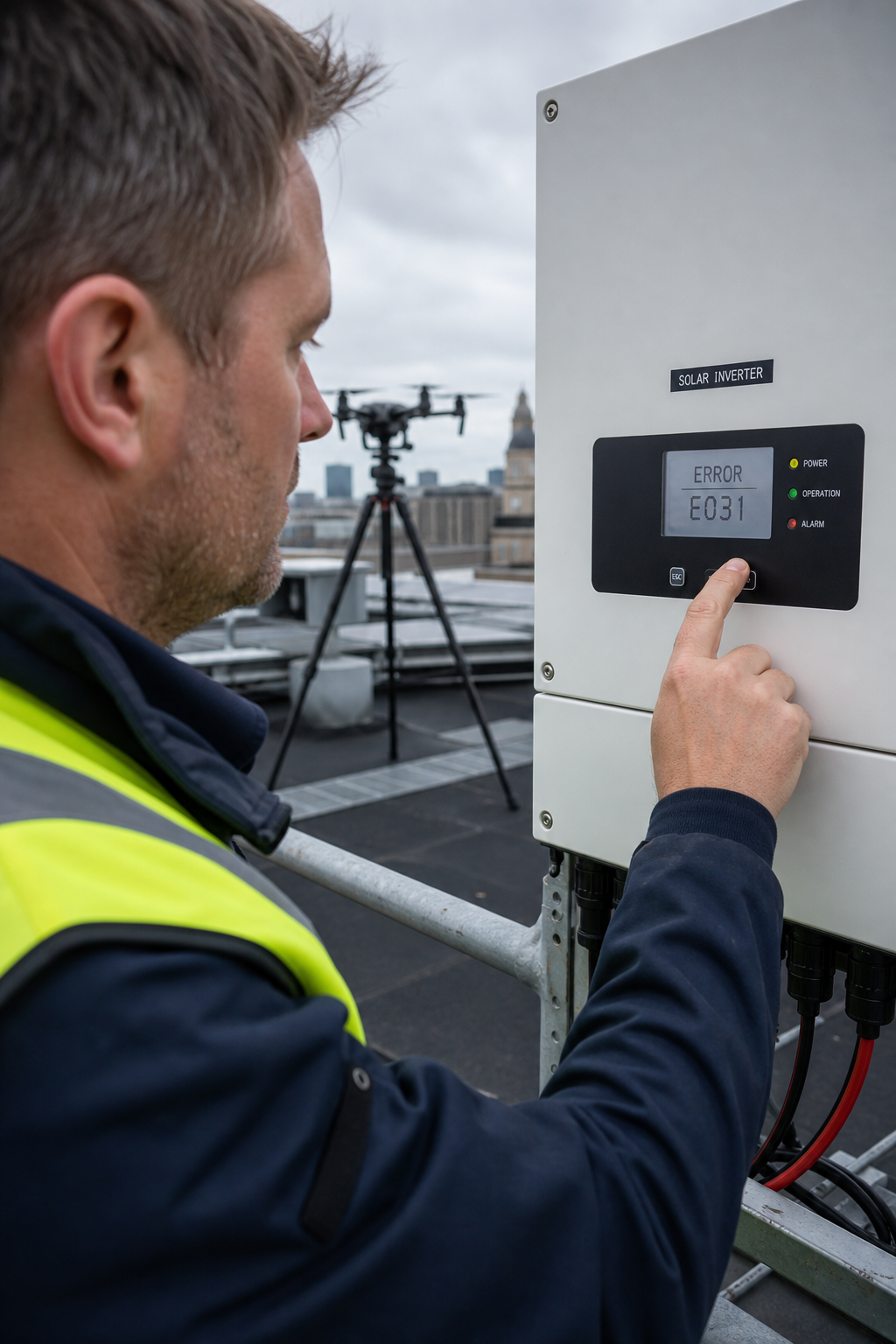
Inverters are the heart of your solar system. They convert DC power from the panels into AC power for your building. And they don’t last forever , typical lifespan is 15 to 20 years. But they can fail earlier due to heat, dust, or manufacturing defects. Similarly, wiring and connectors can degrade over time, especially if they weren’t installed well.
A study from Evo Energy’s seasonal maintenance checklist highlights that many commercial systems suffer from poor installation quality , loose MC4 connectors, unterminated strings, and improper earthing are common. These can cause arcs, fires, or performance loss. According to Solarian’s overview of thermal imaging in solar panels, junction boxes and collection boxes often have thermal problems due to improper wiring.
Visual Perspectives also provides targeted thermal scans of inverters, junction boxes and wiring trays, allowing you to spot hot spots that indicate loose or corroded connections before they become safety hazards.
What to check: Inverter display for error codes or warning lights. Cooling fans , make sure they’re spinning and not clogged with dust. DC isolators , test them annually. All visible wiring for signs of wear, corrosion, or rodent damage. Connectors (MC4) , ensure they are fully seated and not arcing.
Many insurance policies now require an Electrical Installation Condition Report (EICR) for solar systems. This is a thorough check of all wiring and components by a qualified electrician. It’s a good idea to do this every 5 years, or more often if your system is old or has had problems.
Pro Tip: Use thermal imaging on electrical panels and junction boxes during your annual survey. It can spot loose connections before they cause a fire.
“The inverter is the most likely component to fail in a solar system , plan for replacement around year 20.”
Bottom line: Don’t ignore the electrical side , inverter checks and proper wiring inspections are critical for safety and reliability.
 Regenerate Regenerate
5. Structural Integrity Assessments of Rooftop Mounts
Your solar panels are only as good as the racking they sit on. Over time, wind, weather, and thermal expansion can loosen bolts, corrode brackets, or stress the roof membrane. A structural assessment checks that everything is still solid.
Visual Perspectives’ 3D mapping from drone flights gives you precise measurements of mount positions, bolt spacing and any deformation of the roof surface, making structural checks faster and more accurate. According to a commercial racking and mount inspection checklist from Popprobe, key items include: checking all bolts and clamps for tightness, inspecting for corrosion (especially in coastal areas), verifying that the roof penetrations are still sealed, and ensuring that the ballast blocks (if used) haven’t shifted. This source also notes that many installers fail to provide proper structural calculations, leading to long‑term issues.
Additional guidance from Evo Energy’s article on common solar panel problems points out that flat roof systems often suffer from wind uplift if the mounting isn’t heavy enough or properly attached. Over time, panels can lift and crack. Regular checks , at least annually , can catch these issues early.
Bottom line: A stable mount is essential for safety and performance , inspect racking annually to catch corrosion, loose parts, or wind damage.
6. Soiling Inspection and Environmental Impact Analysis
Dirt happens. Bird droppings, pollen, dust, and industrial fallout can all reduce your panel output. But how much? That depends on your location. A soiling inspection measures the loss and tells you if cleaning is worth it.
Visual Perspectives’ drone inspections can quickly spot soiling patterns from a bird’s‑eye view, allowing you to quantify the impact without climbing on the roof. Research from SolarCo’s yield loss calculator shows that average soiling losses in the UK are relatively low , around 2-5% annually , but can spike near farms, busy roads, or construction sites. The only way to know your actual loss is to compare the output of a clean panel with a dirty one. This is easy if you have a reference cell or a monitoring system that tracks per‑panel data.
What to do: If you suspect soiling, inspect the panels visually from a drone. Look for bird droppings, leaf litter, heavy dust, or industrial grime. If you see a consistent coating, measure the output drop. If it’s more than 5%, consider cleaning. For most UK commercial roofs, cleaning every 12-18 months is sufficient. But if you’re near a busy road or an agricultural area, you might need it more often.
Environmental impact matters too. Avoid using detergents or harsh chemicals , use pure water only. Professional cleaners use a deionised water system that leaves no residue. And make sure the cleaning doesn’t damage the panel’s anti‑reflective coating.
Key Takeaway: Soiling losses in the UK average 2-5% , only clean if your monitoring shows a significant drop or visual inspection reveals heavy soiling.
Bottom line: Soiling inspections help you decide when to clean , don’t clean on a schedule, clean when you need to.
7. Compliance Audits and Documentation (EICR & Insurance)
The final piece of the puzzle is staying compliant. Insurance companies, lenders, and sometimes local authorities require proof that your solar array is well‑maintained. This means keeping records of all inspections, cleaning, and repairs.
An Electrical Installation Condition Report (EICR) for solar is a thorough check of all wiring, earthing, and protection devices. According to MJP Electrical’s guide on solar installation condition reports, this should be done every 5 years for commercial installations, or more frequently if there have been issues. The report will flag any dangerous or unsatisfactory conditions , and insurers may require it for renewal.
Insurance policies for commercial solar often have specific requirements: annual thermal imaging (IEC 62446), quarterly visual inspections, and immediate reporting of any damage. Failure to comply can invalidate your cover. A guide from Afore Energy on commercial solar insurance emphasises that proper documentation is your best defence in a claim.
What to keep: Inspection reports (thermal, visual, electrical), cleaning logs, repair records, warranty documents, and insurance certificates. Store them digitally and back them up. If you use a service like Visual Perspectives, you get a detailed report with thermal images and recommendations , perfect for your compliance file.
Pro Tip: Review your insurance policy annually to make sure your maintenance schedule matches their requirements. Ask your broker if they need an EICR or a specific certification.
Bottom line: Staying on top of compliance and documentation protects your investment and ensures your insurance remains valid.
Frequently Asked Questions
How often should commercial solar panels be inspected?
At minimum, you should do a visual inspection annually and a thermal imaging inspection annually (IEC 62446). Performance monitoring should be ongoing. Electrical component checks (EICR) are recommended every 5 years. If your site is in a harsh environment , coastal, dusty, or near industrial activity , increase frequency to every 6 months for visual and thermal. Visual Perspectives can tailor an inspection schedule that meets your specific risk profile.
What is the difference between a visual inspection and a thermal inspection?
Visual inspection uses the naked eye or a camera to spot obvious damage like cracked glass, loose mounts, or debris. Thermal inspection uses an infrared camera to detect heat patterns that reveal hidden problems such as hot spots, faulty connections, or cell damage. Thermal can find issues before they become visible, making it essential for preventive maintenance. Visual Perspectives combines both in a single drone flight for maximum efficiency.
Do I need to clean my commercial solar panels?
Only if soiling is causing a significant loss in output , typically more than 5%. In the UK, average soiling loss is low, but it varies by location. Use a drone to inspect for heavy dirt or bird droppings. If you decide to clean, hire a professional who uses pure water only , avoid detergents and high‑pressure washing that can damage the panels. Visual Perspectives can provide the initial drone‑based soiling assessment.
How long do solar inverters last?
Most string inverters last 15 to 20 years. Microinverters and power optimisers can last 20‑25 years. Inverters often fail due to heat, dust, or poor installation. Plan for replacement around year 20 and budget accordingly. Regular thermal inspection can detect inverter overheating early, extending its life. Visual Perspectives’ thermal scans include inverter hot‑spot detection.
What is an EICR and do I need one for my solar system?
An Electrical Installation Condition Report (EICR) is a formal inspection of all electrical wiring and components. For commercial solar, it’s recommended every 5 years. Many insurers now require an EICR to maintain coverage. It checks for safety issues like loose connections, inadequate earthing, or damaged cables. A qualified electrician should perform it, and you can attach the Visual Perspectives inspection report for a comprehensive compliance package.
How does drone thermal imaging help with solar maintenance?
Drone‑mounted thermal cameras can scan an entire commercial roof in minutes, capturing detailed temperature data for every panel. This is far safer and faster than ground‑based or manual inspections. The drone provides high‑resolution images and 3D mapping, making it easy to pinpoint defects. Visual Perspectives uses this approach for IEC 62446‑compliant surveys, delivering actionable reports.
What are the most common defects found in commercial solar installations?
The most common issues are: hot spots from cell damage or shading; loose or corroded electrical connections; inverter failures; bypass diode failures; cracked panels from thermal stress or impact; and soiling from bird droppings or dust. Many of these are invisible to the naked eye but show up clearly in thermal imaging. Visual Perspectives’ combined visual‑thermal surveys capture all of these defects in one pass.
Does my insurance policy require specific solar maintenance?
Yes, many commercial insurance policies now stipulate annual thermal imaging (IEC 62446) and periodic electrical inspections. Check your policy wording carefully. If you fail to maintain the system as required, your insurer could deny a claim. Visual Perspectives can provide the compliance reports needed to satisfy most insurers.
Conclusion
Keeping your commercial solar array in top shape doesn’t have to be complicated. The seven inspections we’ve covered , from thermal imaging and drone visual checks to performance monitoring and compliance audits , give you a complete maintenance plan. The key is to be proactive. Don’t wait for a failure or a dip in production. Regular inspections catch small problems before they become expensive ones.
Remember these priorities: Annual thermal imaging is your most valuable tool , it’s the only one tied to an international standard (IEC 62446) and it catches hidden defects that nothing else can. Pair it with drone‑based visual inspections for a full picture. Monitor performance data weekly. Get an EICR every five years. And keep all your reports organised for insurance and compliance.
If you manage a commercial building with solar panels, consider working with a specialist like Visual Perspectives. We provide commercial solar panel surveys using drone thermal imaging, delivering results quickly, precisely, and in full compliance with UK standards. Our reports give you clear, actionable information , so you can protect your investment and maximise your energy savings.
For more insights on related topics, check out our blog for the latest on solar panel cleaning and maintenance. And if you’re assembling a maintenance team, you might find this customer communication management guide helpful for coordinating inspections and sharing reports.