Solar arrays are a big investment, and hidden faults can bite you back later. EL testing for solar panels shines a light on problems the eye can’t see. Below we walk through what it is, what it finds, when to order it, how it works alongside thermography, and how to act on the results.
What Is EL Testing for Solar Panels?
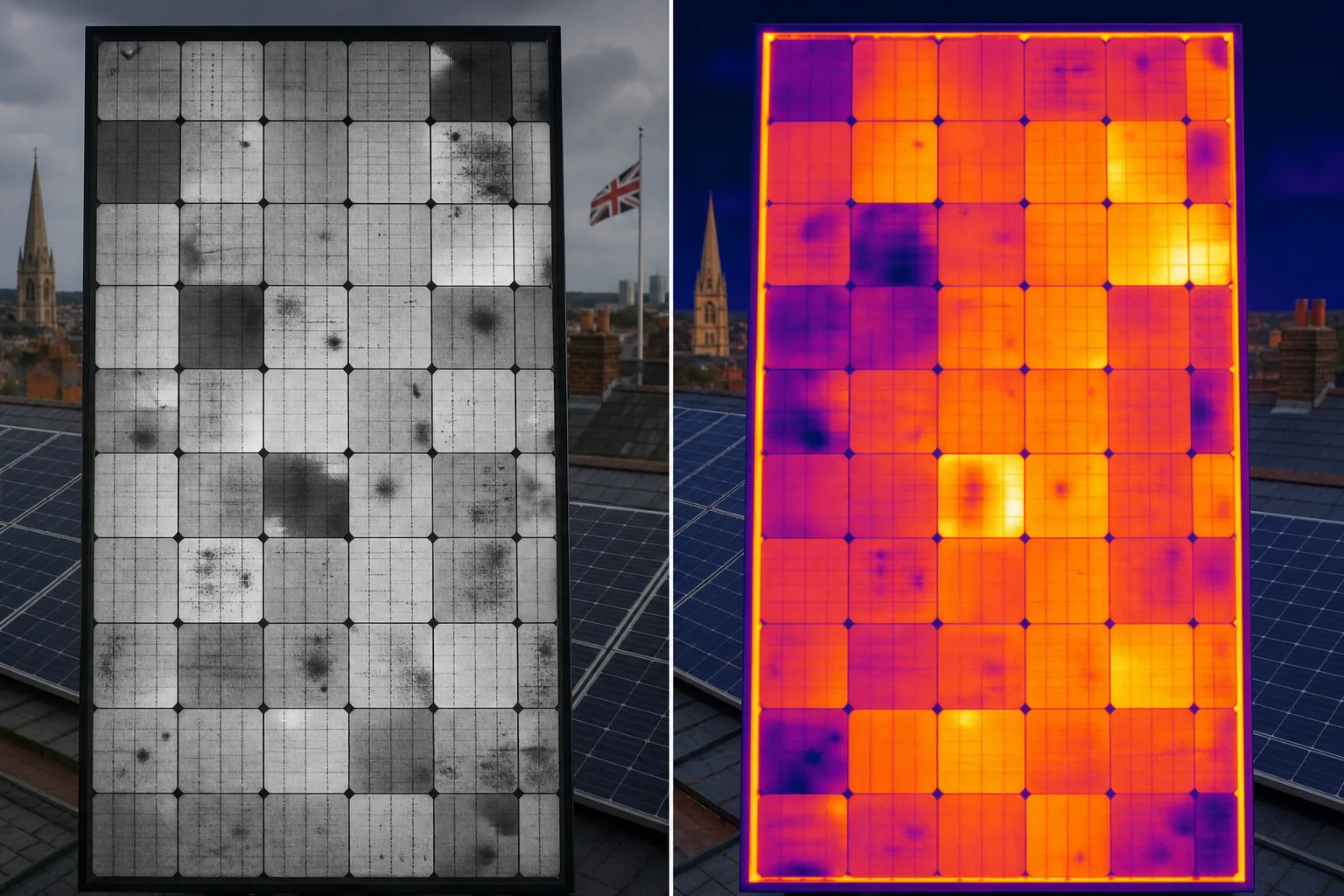
Electroluminescence (EL) testing involves applying a low‑current DC voltage to a PV module and capturing the faint infrared glow that the cells emit. The glow maps the electrical continuity of each cell, exposing cracks, broken interconnections and other defects that are invisible in normal lighting. The method is standardised by IEC 62446, the international protocol for PV module inspection.
Because the test records a visual fingerprint of each cell, it can be compared to the factory‑issued EL image for the same serial number. Any new dark spots indicate damage that occurred after manufacture, whether during transport, installation, or operation. Solar Panel Thermal Imaging Inspections, Visual Perspectives often pair EL imaging with drone‑borne thermography to give a full picture of panel health.
What Defects Can Electroluminescence Reveal?
EL imaging is most valued for spotting internal faults that never heat up enough to show on a thermal camera. The most common findings are:
- Micro‑cracks in the silicon wafer that interrupt current flow.
- Broken or delaminated solder bonds between cells and the bus bar.
- Cell‑level hot‑spots that appear dark in the EL picture.
- Shunt paths caused by moisture ingress or manufacturing debris.
These defects can reduce a module’s power output by 5‑15 % and may lead to premature failure. A recent field study showed that modules with micro‑cracks identified by EL lost on average 8 % more performance over five years than untouched modules.
While thermography catches temperature‑driven hot spots, EL can detect cracks that haven’t yet caused heating. That makes the two techniques complementary rather than redundant.
When Is EL Testing Worth Commissioning?
Not every PV project needs a full EL survey, but there are clear trigger points where the benefit outweighs the cost.
First, any new installation that will be financed through a loan or lease should undergo EL testing before hand‑over. Lenders often require an IEC‑compliant report to protect their asset.
Second, if a system has shown unexpected performance drops, for example, a 10 % drop in yield without any visible damage, an EL scan can pinpoint hidden cell failures.
Third, for large‑scale utility farms, periodic EL inspections (every 3‑5 years) feed into a predictive maintenance programme. The data can be trended against the original factory baseline, helping operators schedule panel replacements before a cascade of failures.
Finally, insurers increasingly ask for EL evidence when assessing risk on new PV assets. Providing a recent EL report can lower premium costs because the risk of hidden defects is documented.
How EL Testing Fits with Solar Thermography and Other Inspections
Thermography, visual inspection, electrical testing and EL each look at a different symptom of panel health. The table below shows where each method shines and where it falls short.
| Method | Detects | Typical Use‑Case | Limitation |
|---|---|---|---|
| EL Imaging | Micro‑cracks, solder failures, delamination | Pre‑commissioning, warranty claims, trend analysis | Requires DC power; cannot be done on live‑operating arrays without shutdown |
| Thermography | Hot‑spots, shading, connection resistance | Routine performance checks, fault localisation | Misses defects that don’t generate heat |
| Visual Inspection | Broken glass, loose mounting, obvious corrosion | Quick site walk‑throughs, safety checks | Subjective; cannot see internal cell damage |
| Electrical Tests (IV curve, insulation) | Overall module performance, leakage currents | Commissioning, periodic performance verification | Provides no visual map of defect location |
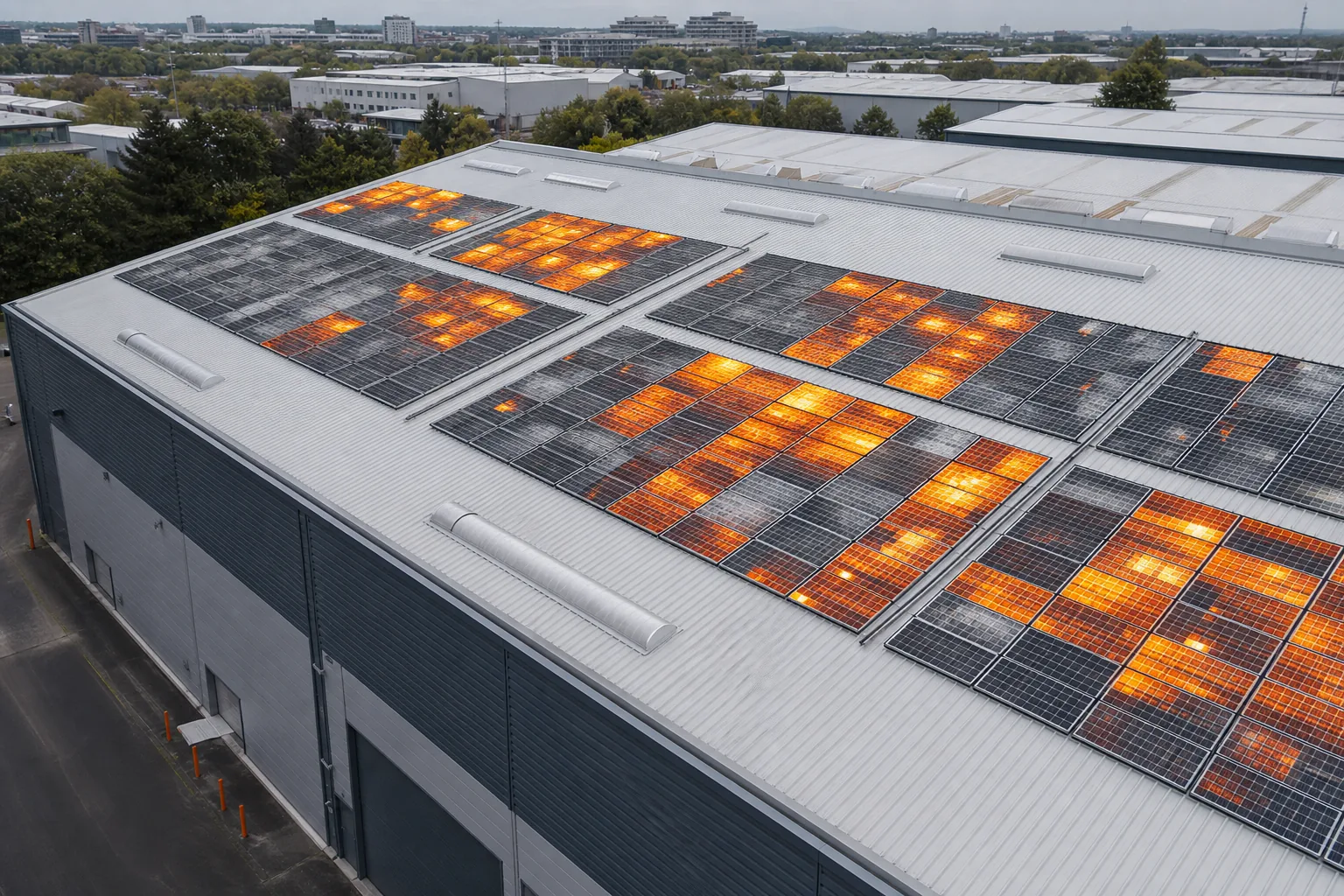
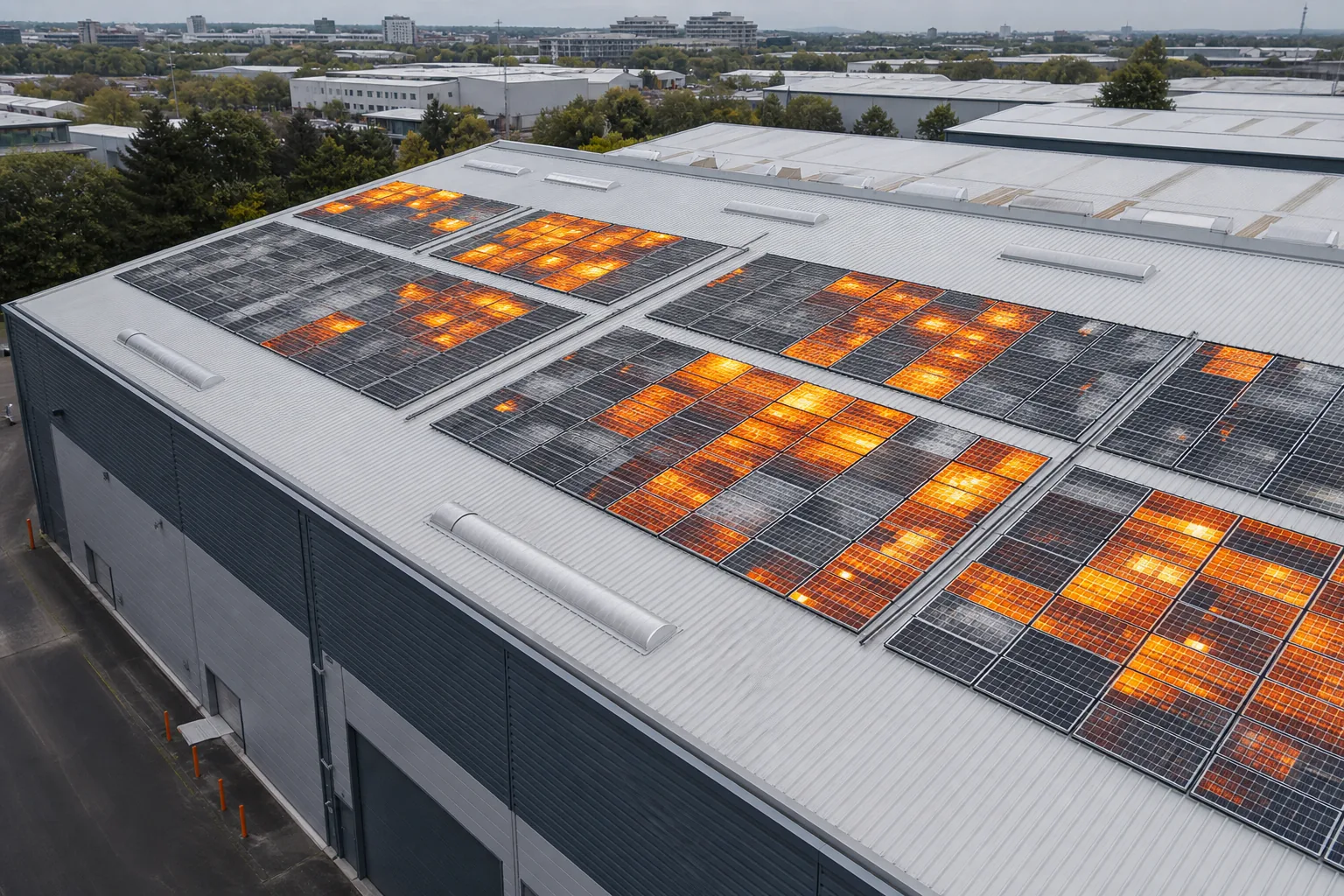
In practice, a complete inspection plan bundles EL and thermography. The EL scan tells you where the hidden cracks are; the thermal image shows whether those cracks have already turned into heat‑driven hot spots.
Our own drone‑based surveys integrate both techniques, delivering a single Plant Health Report that meets IEC 62446 standards while also satisfying insurance and financing requirements.
Planning an Independent EL Inspection and Acting on the Report
When you decide to commission an EL test, start by defining the scope. Do you need a full‑field scan of every module, or a representative sample? Full scans give a complete defect map but cost more; a statistically sound sample (5‑10 % of modules) can flag systemic issues at lower expense.
Choose an independent provider that can access the module serial numbers and retrieve the factory EL baseline. This ensures the report can attribute defects to manufacturing, transport, or installation phases. How to Conduct a Commercial Solar Panel Inspection explains why independence matters for unbiased evidence.
Once the field EL images are captured, the inspector will produce a report that includes:
- Side‑by‑side comparison with factory images.
- Defect classification (crack, delamination, shunt).
- Estimated power loss per module.
- Recommendations for repair, replacement or monitoring.
Act on the findings promptly. For isolated cracked cells, a targeted repair (re‑soldering or cell replacement) may restore performance. Widespread delamination often signals a batch‑level issue, and the manufacturer’s warranty may cover a full panel swap. Document every action taken; insurers and lenders expect a clear remediation trail.
Finally, feed the results back into a long‑term asset management system. Trend the defect count year over year to spot accelerating degradation. This data-driven approach reduces unexpected downtime and supports future procurement decisions.
For a deeper look at how to set up a recurring inspection schedule, see Commercial Solar Panel Survey: What You Need to Know. It outlines the cost‑benefit of annual plant health programmes that combine EL, thermography and electrical checks.
FAQ
What does an EL test actually show?
An EL test produces an infrared image that maps the electrical continuity of each cell, highlighting cracks, broken solder joints and delamination that are invisible to the naked eye.
Do I need to shut down the whole array for EL testing?
Yes, EL testing requires the modules to be isolated from the grid and powered at a low DC voltage, so a brief shutdown of the inspected strings is necessary.
How much does EL testing cost in the UK?
Pricing varies by project size and sample ratio, but most commercial surveys run between a few hundred pounds per kilowatt of installed capacity for a full‑field scan.
Can EL testing be done on rooftop residential systems?
It can, but the equipment set‑up is more labour‑intensive on small roofs, so many owners opt for a representative sample rather than a full scan.
Is EL testing required for warranty claims?
Many manufacturers and insurers accept an IEC‑compliant EL report as valid evidence when processing warranty or insurance claims for hidden defects.
How does EL testing compare with a standard IV curve test?
IV testing measures overall module performance, while EL pinpoints the exact cells where performance loss originates, giving a visual map of internal damage.
Conclusion
If you need reliable proof of panel health before financing, during warranty disputes, or as part of a predictive maintenance plan, commission an EL inspection. Contact Visual Perspectives to schedule an independent EL survey and get a full IEC‑62446 compliant report that you can trust.
Ready to put this into practice? Visual Perspectives Limited was built for exactly this.