Looking for solar panel cleaning near you? You’ll get a clear picture of what the service covers, the price drivers and the safety steps involved. Below we break down each part so you can decide what fits your roof and budget.
What Solar Panel Cleaning Near Me Usually Includes
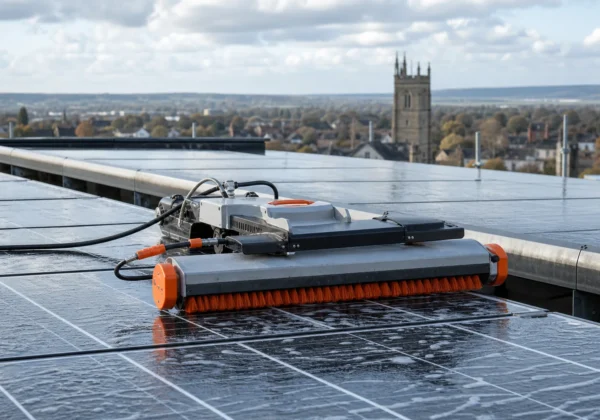
Most providers start with a visual walk‑over of the array. They check for obvious debris, cracked glass and any signs of damage before the water touches the panels. The next step is a pure‑water wash delivered through a telescopic pole, which removes dust, bird droppings and pollen without leaving mineral spots. A pure-water cleaning method is used on both residential and commercial roofs.
After the rinse, technicians often perform a quick inspection of the frame and mounting hardware. Tightening loose bolts prevents future movement that could stress the glass. They also look for shading from new foliage or nearby structures, because shade can drop output by up to 25%.
When a site has a self‑cleaning coating, the cleaning crew may skip the rinse and simply blow away loose grit. This respects the manufacturer’s warranty, which can be voided by harsh chemicals. Abrasive cleaners can damage anti‑reflective layers, so harsh products should be avoided. Technical information about solar panels is available for background.
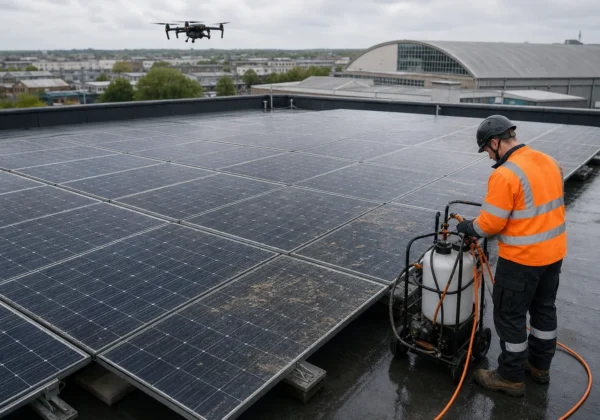
Our own drone‑based surveys can capture the roof layout before cleaning, so the crew knows which panels are hardest to reach. You’ll be in good hands.
When Panels Need Cleaning—and When They Need Investigation
Regular visual checks help you spot the early signs of reduced performance. If output drops suddenly, a quick clean often restores the lost kilowatts.
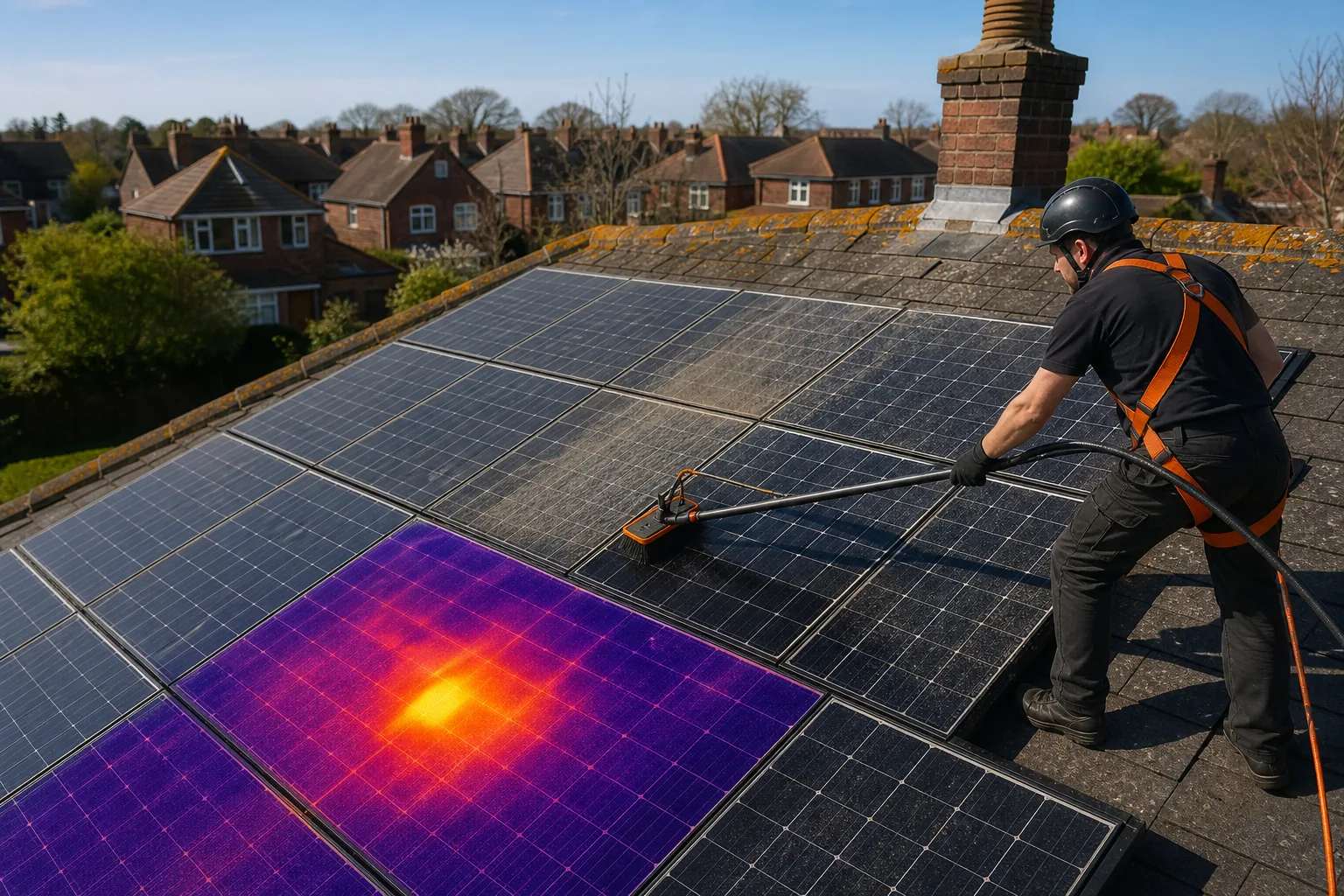
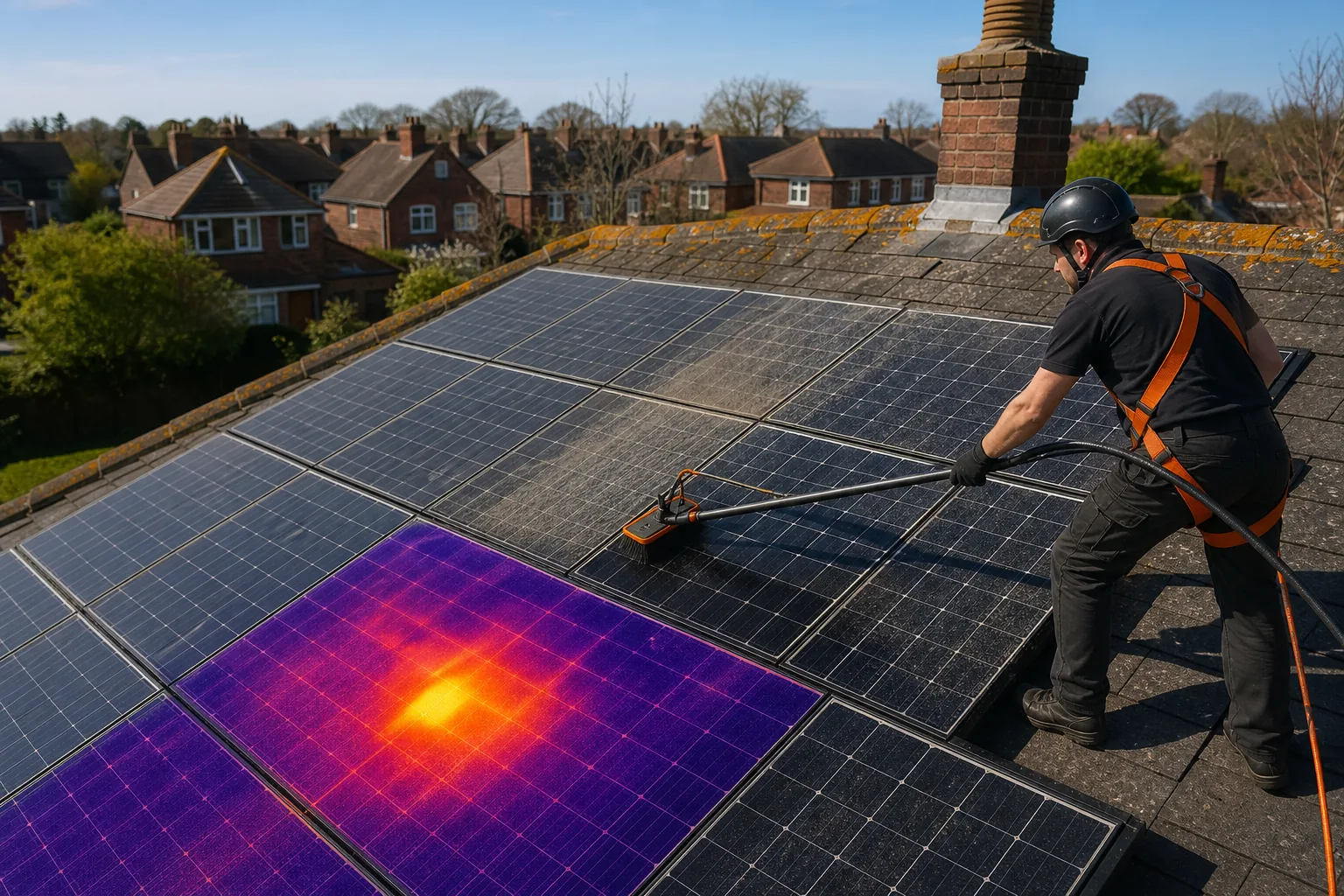
However, some solar panel problems aren’t solved by washing. Hotspots, localized areas that run hotter than the rest of the panel, indicate a cell that can’t generate power and is instead turning energy into heat. Hotspots can reach temperatures of 200 °C, risking permanent damage.
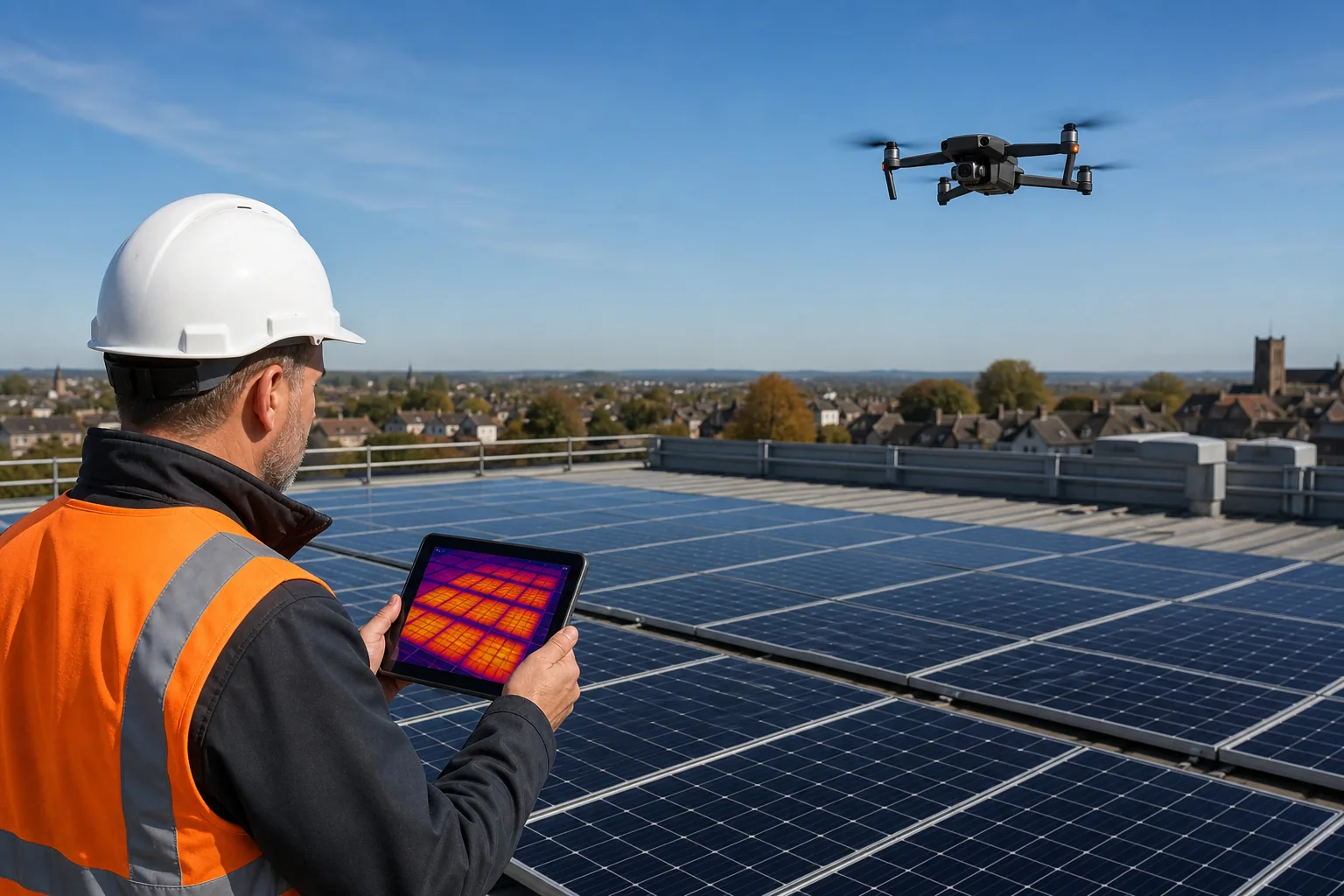
When you see a hotspot on a thermal image, you need a deeper fault investigation. That may involve bypass‑diode testing or string‑level electrical checks. Thermal imaging inspections can spot these hidden problems before they become safety hazards.
Typical triggers for a full investigation include:
- Sudden output loss of more than 10% after a clean.
- Visible discoloration or charring on a panel.
- Repeated cleaning with little improvement.
In those cases, a qualified thermographer will map the temperature profile and recommend repairs. You’ll be in good hands.
How Professional Cleaning Is Carried Out Safely
Safety starts with a risk assessment. Technicians confirm that the roof can bear the weight of equipment and that fall protection is in place. They also turn off the inverter and isolate the system to avoid electric shock.
We then roll out a van‑mounted pure‑water system. The water is de‑ionised, so it leaves no streaks. A soft-bristled brush attached to a water-fed pole scrubs each panel gently. This method preserves delicate anti‑reflective coatings.
After scrubbing, the system rinses the panels with a steady stream of pure water. No cloths are used, wiping can leave lint or scratches. The water dries naturally, leaving a spotless surface.
For steep roofs, we use a lightweight telescopic pole that reaches from the ground, removing the need for ladders. All work follows relevant guidance on work at height.
You’ll be in good hands.
What Affects Solar Panel Cleaning Costs in the UK?
Pricing isn’t a one‑size‑fits‑all figure. The main drivers are the size of the array, roof accessibility and the level of soiling.
Large commercial farms with hundreds of panels need more crew hours and often a van‑mounted water system. That pushes the price up, but the cost per panel drops compared with a small domestic job.
Hard‑to‑reach roofs, steep pitches, multiple levels or parapet walls, require extra safety gear and longer set‑up times. Those factors add to the quote.
Some owners choose a simple hose‑down, which is cheaper but can leave mineral spots and may void warranties. Professional services use de‑ionised water, which avoids those issues.
Seasonal demand also plays a role. Spring and early summer are peak cleaning periods, so rates can be higher. Booking in the off‑season may secure a lower price.
Because every project is unique, we provide a detailed, no‑surprise estimate after the initial survey. See our solar panel cleaning services for the range of work we cover.
You’ll be in good hands.
When to Combine Cleaning with an Independent Solar PV Inspection
Cleaning and inspection often go hand‑in‑hand. A clean surface gives a true thermal picture, so the inspector can spot genuine faults rather than heat from dirt.
If you’re due for a routine performance review, ask for a combined service. Our drone‑based thermal surveys capture the whole roof in seconds, then a technician follows up with a ground inspection.
Combining the two saves time and reduces disruption. It also means any defect uncovered, a cracked cell, a loose clamp or a failing bypass diode, can be addressed while the crew is already on site.
Public‑sector estates that need IEC 62446 compliance often schedule a joint visit. The inspection provides a report that meets warranty and insurance requirements, while the cleaning restores performance.
When you have a new warranty claim, a joint clean‑and‑inspect can produce the evidence insurers demand.
Our certified thermographers follow IEC 62446‑3:2017 standards, ensuring the data you receive is fit for audit. solar panel cleaning service
For large solar farms, we recommend a quarterly clean plus an annual IEC‑compliant inspection. solar panel cleaning information
You’ll be in good hands.
Frequently Asked Questions
What does ‘solar panel cleaning near me’ actually cover?
It covers a visual inspection, pure‑water washing with a water‑fed pole, and a quick hardware check. The service does not include electrical testing unless you request it.
How often should commercial panels be cleaned?
Most experts recommend a clean twice a year, after the dusty winter months and before the high‑generation summer period.
Can cleaning void my panel warranty?
Using the wrong chemicals or abrasive tools can breach warranty terms. Professional cleaners use de‑ionised water and soft brushes, which keep the warranty intact.
Do I need to shut the system down?
Yes. Technicians isolate the inverter and lock out the DC circuits to avoid electric shock.
Is drone cleaning a thing?
True drone‑based cleaning exists but is rare in the UK and usually too costly for small roofs. Most providers, including us, rely on ground‑based pure‑water methods.
Conclusion
Professional solar panel cleaning restores performance, protects warranties and reduces safety risk. Pair it with an independent IEC‑compliant inspection for the full picture. How to Use Solar Panel Monitoring Effectively can help you track the impact over time. Get in touch with Visual Perspectives to schedule your clean and inspection today.
Ready to put this into practice? Visual Perspectives Limited was built for exactly this.